2010 was one of the best years of my life. I fell in love, stumbled upon the greatest summer job that I could ever have asked for, and was graced by more unforgettable moments than I could ever fit into the space of this (already lengthy) blog post. As far as music was concerned, I think 2010 was a good year, if not a great one. I spent much of the summer listening to playlists, mixtapes, or older music (the back catalog of number-one-slot-winner Chad Perrone, which includes a few stellar records with his former band Averi, pretty much dominated the first few months), and that meant that, while there were many brilliant life moments for me in 2010, many of them were not actually accompanied by albums on this list. Still, what 2010 lacked in emotional connections, it made up for in pure eclecticism. The slate of records below is the most versatile and illustrious I have ever recorded as my personal favorites: the top ten alone ranges from a complete unknown independent singer/songwriter to the solo record from one of music's most recognizable frontmen, from emo/alternative legends to indie rock superstars, and from a platinum selling pop-country songstress to hip-hop's most flawed and fascinating figure. In other areas, the music that I listened to the most represented a full-bodied enthrallment into the career and work of Bruce Springsteen (who himself re-issued 1978's Darkness on the Edge of Town, with a slew of b-sides), and this list boasts more Boss-indebted acts that I ever again expect to see in a single year. Looking back, there were albums that lost ground, albums that gained it, and records (the top three) that remained as important to me as I expected they would.
1. Chad
Perrone - Release

I’ve spent the better part of the past decade looking for
music that connects to me in a personal way, music that appeals to my heart first and foremost. It’s
obvious that all of my favorite albums are made up of great songs (in my opinion, anyway), but they’ve also played as soundtrack for some pretty
unforgettable times of my life, whether they were personal crises or simply the
trials of growing up and trying to figure out who I wanted to be. Two summers ago,
just as I was falling in love for the first time, this record came into my
life. When I had to go back to school and was forced to do the long distance
relationship thing (and to work a job I hated during a semester where
everything I’d loved about college the year before seemed to evaporate into
thin air), this record hit me like a ton of bricks. Perrone sings about getting
older, about moving on from things that once meant the world to us, whether
they be places or relationships. He sings about love found, lost, broken and
unrequited, and he sings about the pain of separation, and all of those things
felt comforting to me. When I heard his desperation on “Under Different
Circumstances,” it was like I’d written the song myself about my own
experiences: I can still feel every single word he belts out in that song,
after hundreds of plays. And “Here For Good,” where he writes about his hometown
and his friends who he’s had to say goodbye to, that song collided with me in a
year where my best friend in the world packed up and moved to New York, where
my hometown started to slip away, and where high school seemed no more than a
distant memory. As I drove towards Kalamazoo
at the end of that summer, it was this record I listened to, and it cut to the
core of me. I was driving towards the place that was supposed to be teaching me
what I wanted to do with the rest of my life, but I was driving away from the person who I knew I wanted to
spend it with with. By the time the heartbreaking “So This Is How It Ends”
hit, I was in tears, drowning in uncertainty, despair, and love: every time I
listen to this record, that whirlwind of emotions captures me again, somewhere
between the tremendous hooks, the heart-on-your-sleeve lyrical content, and
Perrone’s unparalleled vocal prowess, and I can’t help but get choked up.
Key Tracks: “Under Different Circumstances,” “The Walking
Dead,” “Anything or Anyone”
2. Jimmy
Eat World - Invented
It’s still hard for me to separate
Invented from the
ridiculous anticipation I laid upon it leading up to its release. Jimmy Eat
World, perhaps even more than Butch Walker, is a band that I have an idealistic
approach to. My most definitive times listening to them undoubtedly came with
Futures, a record that changed my life (and some ways, saved it), and every
time a new JEW record comes along, I have hopes that it will make me feel the
same way I did in the fall of 2004.
Invented was the closest they’ve come. It was
hyped by some as
Futures Part II, and so of course, I had a picture of it in my
head that the real thing couldn’t possibly match. I wanted it to be the
soundtrack of my life, I wanted it to top
Futures, I wanted it to be the record
that would skyrocket into my all time top five and the one I’d want to
feel again,
years after the fact.
Invented wasn’t that album, but it was still a damn good one,
full of great songs that draw comparisons to every era of the band’s career,
and despite the fact that I never had the kind of vast personal connection to
it that I formed with
Futures, it’s still a record I could listen to on any day
and be impressed by. After all, have guitars ever
sounded as big as they do on “Evidence”? Has Jim ever been as innovative
lyrically as he is on songs like “Cut,” where he sings from a female point of
view? And does the one-two punch of “Invented” and “Mixtape” not stand in line
with the band’s tradition of closing albums out in epic fashion? All told,
this is a truly spectacular album, probably their most consistent to date, and
the fact that it doesn’t quite live up to their best work says more about the
immense love I have for the band than it does for any weakness in their latter day music.
Key tracks: "Heart is Hard to Find," "Invented," "Mixtape"
3. Butch
Walker - I Liked
It Better When You Had No Heart
Butch Walker has
been my mainstay favorite artist ever since I first heard his 2004 masterpiece
Letters, and anytime an album of his turns up, it’s a guaranteed album of the
year contender. Since the power-pop infused break-up songs that fueled
Letters, Butch has adopted Bowie-esque glam-rock (
The Rise & Fall...) and
plentiful folk and classic rock influences (2008’s fantastic
Sycamore Meadows).
In 2010, he made this record, which I now regard as probably his weakest
full-length: it still landed in my number three slot. Butch, traditionally a solo
writer, turns to his bandmates in The Black Widows (think Tom Petty’s
Heartbreakers or Elvis Costello’s Attractions) for inspiration and musical
ideas, and the resulting set of songs is both loaded with his fingerprints and
strikingly different than anything else he’s done before. The folk influences
hang around center stage here, with Butch taking his newly minted backing band
into the realms of alt-country (album highlight “Don’t You Think Someone Should
Take You Home,” “Canadian Ten”), country-rock rave ups (“She Likes Hair Bands”),
and acoustic lullabies (“Be Good Until Then”).
He references Johnny Cash on the raucous “Days/Months/Years,”
brings a requisite amount of twang into the near-anthemic opener “Trash Day,”
and even did a tongue-in-cheek cover of Taylor Swift’s “You Belong With Me” as
a one-off iTunes single around the time this record hit the streets (a “joke” that actually got him – and his banjolin arrangement of the song – on TV with
Swift herself during the 2010 Grammy Broadcast). But while his respect for the Nashville-scene
runs deep, Walker has never been a single-style kind of guy, and he fills in
the corners here with gorgeous splashes of Beatles pop (“Pretty Melody,” “House
of Cards”) and stunning explosions of vocal harmony (“Stripped Down Version”)
that almost make me want to forget that Butch has made better albums.
Key Tracks: “Don’t You Think Someone Should Take You Home,”
“She Likes Hair Bands,” “Days/Months/Years”
4. The
Gaslight Anthem - American Slang
After the brilliance of 2008’s
The ’59 Sound, it took me a
long time to truly appreciate the greatness of
American Slang. I can still
remember the day it leaked, over a month and a half ahead of it’s June release
date, and coinciding perfectly with the final week or two of my freshman year
of college. By all means, the themes of youth, fading and lost, should have fit
perfectly with my mindset at the time, but as many times as I listened (and I
played the album a solid dozen times, front-to-back, on that first day), I
couldn’t find the same musical allure that
’59 had; I couldn’t find the
desperation that had made “The Backseat” such an indelible closer; and I missed the
Springsteen references, the constant worship of one of my all-time musical
heroes. I wrote the record off, filed it off as disappointing, as repetitive
and a bit boring, and put it away, robbing my summer months of what could have
been a truly transcendent soundtrack. Months later, as December descended upon
my and I struggled to come up with the initial version of this very list,
American
Slang came back to me. And for whatever reason, what many had declared a summer
album for the ages only clicked with me as I drove through my snow-covered
hometown, letting the tremendous guitar hooks of songs like “Orphans” and “Old
Haunts” wash over me, glancing out across the ice-covered bay as I drove home
with the melancholic strains of “We Did it When We Were Young” serving as
soundtrack, or realizing, for the first time, how great it sounded to hear
Brian Fallon adopt classic soul and Motown influences like he once adopted the
E Street Band (“Bring it On”). Now, two years later, I can put on
American
Slang for a summer road trip, feel the title track’s hook and guitar lick pour
out of my speakers, and know what people meant when they were writing about
this record back around release time. That said, this summer album will always
hit me the hardest in the winter, when it can really take me back to those days
and nights where I first fell in love with it.
Key Tracks: “We Did it When We Were Young,” “American
Slang,” “The Queen of Lower Chelsea”
5. Brandon
Flowers - Flamingo
The Killers needed a break after 2008, the year where
Day
& Age, their third record, inspired everything from viciously hostile
critical assessments to a
Rolling Stone Readers Poll which named it that best album of the year.
My opinion on the album was somewhere in between those two extremes: I was
disappointed, but not horribly so. I thought the album was high on style and low on compelling musical ideas, but that it still had some great songs.
The band tried to blend the Springsteen-inspired heartland rock of
Sam's Town with the
synth-heavy, Vegas-centered pop that made
Hot Fuss such a smash, but the
combination was awkward. They were trying to please everyone, trying to do
damage control on frontman Brandon Flowers’ hubristic claim that
Sam’s Town
would be "one of the greatest records of the last 20 years," and attempting to
atone for all of the "sins" that
Rolling Stone had cited in their 2.5 star
review for that same record. The problem was that the band, Flowers at least,
didn’t want to just go back to the successful formula of
Hot Fuss: Flowers
wanted to explore the Springsteen influence further, and that showed through in
the fact that
Day & Age’s finest moments (“A Dustland Fairytale,” “This is
Your Life”) were essentially an evolution of the
Sam’s Town sound. So when his
band decided to take their long deserved break, Flowers turned around and made
a solo album that is, among other things, his most consistent and concise work
to date. There are certainly big moments here, moments like “Welcome to
Fabulous Las Vegas” and “Crossfire,” where the sound of Dave Keuning’s roaring
guitar might have elevated the proceedings even higher. But more often, Flowers
veers towards songs that would not have quite worked within the confines of his
band, whether he’s re-writing Springsteen’s mournful “Point Blank” (on “Playing
With Fire”), spinning subtle yet epic slowburners (“On the Floor”), or bringing
in Rilo Kiley’s Jenny Lewis for an effortlessly gorgeous duet (“Hard Enough”).
Key Tracks: “Welcome to Fabulous Las
Vegas,” “Hard Enough,” “On the Floor”
6. Cary
Brothers - Under Control
When I finally discovered Cary Brothers’ 2007 LP
Who You
Are in the summer if 2009, it immediately skyrocketed into the upper
echelons of my all-time favorite albums list. The songs had a vulnerable and
yet powerful atmosphere about them, and they resonated with me so perfectly at
the time that, for a few weeks, I listened to nothing else. That set of songs came along a week or so before my family had to put my first dog to sleep: those who have never truly loved a pet will view that statement as trivial, but for me, it was the first experience I'd really had with death. Her name was Jessie, and she'd been there for over 14 years of my life. Needless to say, since that was the summer following my high school graduation, I'd grown up with her. Back when I was a boy, my parents used to joke that Jessie was my "nanny," but she was really just a good friend, a constant companion that I could always count on being there, waiting for me when I got up in the morning or home from school every afternoon. The loss was devastating for me, and the delicate beauty of
Who We Are became instrumental in getting me through the grief and onto the next chapter of my life - few albums have ever had a more personal place in my heart. The follow-up is
nearly as good, and makes a case for Brothers as one of the best
singer-songwriters in the game today. Opener “Ghost Town” rests in an
unsettling ambiance of synths and pianos (befitting its title) before launching
into a massive chorus, while “Belong,” with its crashing piano chords and an epic,
chilling vocal build, positions itself as a unique and deeply expressive love
song. “Someday” rests in the same new wavy vein that made “The Last One” such
an irresistible number off this album’s predecessor, “Break off the Bow” shows
that Brothers can write a hook as well as anyone, and album closer “Can’t Take
My Eyes Off Of You” is a haunting acoustic number that makes me
want to hit play all over again, every time through. And always, Brothers writes with an honest and
entirely palpable emotional strength, giving us songs that sound so
autobiographical, so perfectly cinematic, that it feels like they could have
soundtracked moments of our lives, even if those moments have already passed.
Key Tracks: “Ghost Town,” “Belong,” “Someday”
7. Taylor
Swift - Speak Now
It only took a few short years for Taylor Swift to rise from
heartbroken teenager to one of pop music’s most bankable icons. She made the
transition on her girl-next-door demeanor, the strongly relatable aspect of her
lyrics, and a knack for delivering an infectious mix of pop hooks and country twang
that made her a crossover sensation waiting to happen. Swift didn’t escape the
voyage unscathed though, battling through cruel encounters (the Kanye West VMA
debacle), critical lambasting (comments concerning her performance at the 2010
Grammy Awards, where she also took the top prize), and premature tabloid
relationships (an especially doomed fling with John Mayer), all of which
threatened to tarnish her spotless, innocent reputation and image. All of those
things and more serve as songwriting fuel on Swift’s third full-length, the
aptly titled
Speak Now, which notched over a million album sales in its first
week back in 2010. And while
countless music snobs would write Swift off as a bubblegum commercial princess, to do so would ignore the fact that
Speak
Now is a traditional country music record masquerading as a pop music flagship.
The band sounds explosive and organic, the arrangements overflowing and
blissful, and the vocal harmonies ring with life. It doesn’t hurt that the songs are
incredibly well-executed, or that Taylor, who wrote every word and every
indelible hook on the record, sounds more mature, forceful, charismatic, and emotionally
centered than ever before. The result is one of the finest pop albums in recent
memory, a record that is served equally well by rootsy twang (“Mine” and
“Mean”), dance-floor rundowns (“The Story of Us”), rock ‘n’ roll kiss-offs
(“Better Than Revenge”), emotional acoustic breakdowns (“Last Kiss”), pure
school-girl pop songs ("Sparks Fly"), or pitch-perfect anthems (“Long Live”). Liking Taylor
Swift may not be cool, but when the albums sound this good, who the hell even
gives a shit?
Key Tracks: “Dear John,” “Last Kiss,” “Long Live”
8. Kanye
West - My Beautiful Dark Twisted Fantasy
Speaking of Mr. West,
My Beautiful Dark Twisted Fantasy earned rave reviews last
year upon its release, along with perfect scores aplenty and album of the year
titles across the board. It didn’t get those things because it was a perfect
record: there are flaws here, as in any album, and if you look hard enough, you
will find them, but you’d be missing the point.
Fantasy earned such acclaim
because it is a hip hop album for people who both love and hate hip hop, a rap
record for people who have never enjoyed more than a few songs in the genre (like
myself), and a pop album for an era where the label of “pop music” has been so utterly
defaced and slandered that we’ve almost forgotten what it means. It’s all
delivered by an artist who’s more of textbook rock star than just about anyone
making music today, a guy who combines massive melodic hooks (“Dark Fantasy,”
“All of the Lights”), indubitable flow and towering hubris (“Power”), and
deeply humanized self-reflection (“Runaway”) to form a sound that nobody can
touch. So while I wouldn’t call
My Beautiful Dark Twisted Fantasy perfect, it remains a record that defies
criticism, one so universally appealing and so easily likable (in complete
contrast to it’s creator, a complicated and flawed, but insanely talented
individual) that it’s damn near impossible to stop listening to it once you’ve
started.
Key Tracks: "Power," "Runaway," "Lost in the World
"
9. Arcade
Fire - The Suburbs
The Arcade Fire have always had a taste for the grandiose
and the dramatic: how could they not after coming out of the gate with 2004’s
Funeral, a loose concept
record about life, death, community, and healing that stands as one of the
greatest albums in modern music? It also spawned some of the best songs, like
the infectious “Rebellion (Lies)” or, especially, the rousing, tearful “Wake
Up,” with its expansive “whoa oh” melody and Win Butler’s massively emotional
vocal delivery.
The band never quite
reach those heights on their third full-length, but they put the same qualities
to work elsewhere, constructing a record that aims to be a document of what it
is to live, love, and work in the modern middle class. They do it fairly
effortlessly throughout, melding Springsteenian lyrical themes with musical
ideas that land somewhere between U2-sized stadium-sweep (“City With No
Children”) and sunsoaked, California folk (“Wasted Hours,” “Deep Blue”). Themes
coalesce on “Suburban War,” the album centerpiece where the tension in the narrative’s love story reaches a breaking point. “Choose your side, I’ll choose my
side” Butler sings, as the song reaches its cinematic climax, a battle of
instrumental ambition that ranks as one of the most musically striking moments
of the year. That same tension returns as the album climbs towards its grand
finale on the two-parter that is “Sprawl.” The tracks play out as a
conversation between lovers, pitting Butler (“Sprawl I (Flatland)”) against
wife and co-vocalist Régine Chassagne in “Sprawl II (Mountains Beyond Mountains”
as the two come to terms with their struggle. The former piece is a haunting
acoustic number, almost harrowing in its grim atmosphere, the latter a
disco-charged rave-up, reminiscent of the Bee Gees and Blondie in sound, but aligning
more with Springsteen in words. The two singers both come to the same
conclusion, that the boundless hope and opportunity of youth is gone, replaced
by responsibility, bills to pay, stagnant suburban life, and dreams dead or
dying. It plays like a
Darkness on the Edge of Town or
The River for a new
generation, and although
Funeral might be the better record, this one is
arguably just as resonant. The fact that it picked up a surprise Album of the
Year win at the 2011 Grammy Awards was just the cherry on top.
Key Tracks: "City With No Children," "Suburban War," "Sprawl II"
10. Valencia
- Dancing With A Ghost
Shane Henderson has always been an immensely personal and visceral
songwriter, from the shattering eulogy for a lost love that he delivered on
When the Flowers Bloom (with side-project The Promise of Redemption) to the
sadly nostalgic summertime hooks he was slinging on Valencia’s sophomore album,
We All Need a Reason to Believe.
Dancing With A Ghost
may not be his best
work to date, but it’s hard to find faults in this slick, short and
sweet
collection of songs that ranked as the best pop-punk album of 2010. Of
course, we still get the bouncy, catchy pop-punk tunes that wouldn't have been
out of place in some nostalgic teen movie ("Days Go By," "The Way"), but
it's Henderson's shots at maturity that really resonate. The band
shifts from Springsteenian-sized sweep (the title track) to rapidfire
punk-rock ("Stop Searching"), hitting upon gorgeously executed power pop ("Spinning Out") and massive arena-ready anthems ("Losing Sleep") along
the way. The latter, recorded at the end of a long studio session, rings
the truest, with Henderson shredding what's left of his voice in one of
his most powerful performances to date: "So if you checked the weather
report, then why the fuck are we driving north?/You know we're headed
into the storm to finish what we started," he sings: it's hard not
to belt along with him.
Key Tracks: "Spinning Out," "Losing Sleep," "The Way"
11. Donovan
Woods - The Widowmaker
Just as every year has its summer
soundtrack, every year
also has its “winter singer/songwriter" for me: in 2008, it was Bon
Iver, in 2009,
Michael McDermott, and in 2010, the title belonged to Donovan Woods. One
listen
to this record will leave no doubt as to why that is, since Woods possesses
the kind of warm yet fragile voice that feels so comforting around the
holidays. He’s also a damn-good songwriter, showing himself off as
equally adept with bitter acoustic rockers ("Won't Come Back") and
gorgeous, nostalgic ballads ("No Time Has Passed"). But even beyond the
immediate standouts, this record is a profusion of gorgeously subtle
melodies, fascinating lyrical perspectives, and the beautiful snowfall
of Woods' guitar playing, accented occasionally with icy piano lines
("Jail"), lo-fi production ("Lord, I'm Tryin'"), or any variety of
harmonicas, drums, banjos, or other folk music requisites. Due to
it's strongly seasonal appeal,
The Widowmaker will never be one of my
most played records, but when I do throw it in rotation, it captures me
completely.
12. The
National - High Violet
Matt Berninger might have the most distinctive voice of
anyone in music right now, a dark, deep, charismatic baritone that no one could
replicate without sounding like a caricature, and on The National’s fifth
full-length, that voice proves to be both their biggest strength and their
greatest limitation. There are songs here that Berninger’s voice can’t sell,
songs that come across as mediocre or dull on record, but which have reached
much greater heights in other hands (“Anyone’s Ghost," a relative throwaway, became
unexpectedly haunting when
Silver Swans covered it last fall). But when
the formula works, the band hits home run after home run. Just listen to the
gorgeous indie-pop of songs like “England,” “Runaway,” or “Vanderlyle Crybaby Geeks”,
the lo-fi crescendo of opener “Terrible Love”, or the straight-up anthem that
is “Bloodbuzz Ohio”. Throughout each style, Beringer sings in a voice that is
all at once warm, comforting, richly nostalgic, and deeply sympathetic. He
imbues his lyrics (which often discuss the mundane, everyday struggles of normal people) with a knowing and relatable purport, taking us on
an emotional journey that constantly stresses to listeners that they are not
alone. I think that’s why The National have gained so much respect within the
indie community: because more than just about any band out there, they’re a group of
down-to-earth, everyday guys who people can see as their friends, their
family...or even their self.
Key Tracks: "Terrible Love," "Bloodbuzz Ohio," "England"
13. The
Hold Steady - Heaven is Whenever
When the high-rise vocal harmonies explode on staples like
“The Weekenders” or “Hurricane J,” this album
sounds like summer.
Everything else about this band, about Craig Finn’s literate lyricism, about
his bellowing vocal style, about the Springsteenian sweep of their earlier
records (like 2006's career-defining
Boys & Girls in America), or
about former member Franz Nicolay’s sorely missed piano lines, it all
evaporates under the epic enormity of this album’s best moments. Fans wrote it
off and critics gave it a lukewarm response, but in my eyes, summer albums are
rarely more palpable or perfect than this one. Just listen to the dusky slide
guitar on opener “The Sweet Part of the City, the scorching guitar solo in
“Soft in the Center,” the raucous clarinet solo in “Barely Breathing” – and
yes, the expansive, anthemic hooks of the two aforementioned staples – and you
will understand. These are just a few of the moments here that evoke that
summertime atmosphere, that feeling of late night drives, sunset rock festivals,
fireworks across the night sky, hangouts with friends, or spontaneous road
trips down a sunburned state highway, belting along to your favorite songs.
This album seeks to be a companion for each of those situations, and whether or
not it’s the best that Finn and The Hold Steady have offered thus far is
immaterial for that reason alone.
Key Tracks: "Soft in the Center," "The Weekenders," "Hurricane J"
14. Anberlin - Dark Is The Way, Light Is A Place
Anberlin took a lot of flak on this record, their fifth
full-length and their second on a major label. I can recall the initial stream,
where many fans immediately pointed out a repetitive musical and lyrical
songwriting style that was a vast departure from some of their earlier work
(one need look no further than
Cities closer “Fin” to know why the criticism
was at least somewhat warranted). Despite that, though,
Dark is the Way, Light
is a Place remains, for me, the best and most consistent album these guys have
ever made. Brandon O’Brien mans the boards, bringing a slicker and more poppy
studio sheen to the proceedings, but the commercialization suits their interests
well, adding a requisite amount of punch to dark rockers like “We Owe This to
Ourselves” and “Closer” – both haunting and hard-hitting
– and then giving the album’s highlight
(“Impossible”) a U2-esque, stadium-ready atmosphere.
The chiming “You Belong Here” is reminiscent
of both Coldplay and
Clarity-era Jimmy Eat World, with lead vocalist Stephen
Christian (always an impressive frontman, both in vocal range and emotional
aggression) letting his voice soar on an anthemic chorus. The album, in ten
tracks, does what none of Anberlin’s records have ever done before, hitting
perfectly consistent ground on a tracklist stacked with memorable
moments, from the relationship that shatters on “Art of War” to the rousing percussion
build-up of “Pray Tell,” all the way to the tortured slow-burning acoustics of
“Down.” Then there’s “Take Me (As You Found Me),” an irresistible love song that
recalls ‘90s radio rock ballads to a tee. And while the band has vowed to go
back to a more aggressive style with their next album (called
Vital, out this
October), I’ll merely be hoping for a record with as many soaring hooks and
confessional moments as this one.
Key Tracks: "Impossible," "Take Me (As You Found Me)," "Down"
15. Jesse
Malin – Love It To Life
I've never
felt as strongly about Jesse Malin, a New York-based rocker, as my
brother has, and that remained true with the release of his fourth
full-length in 2010. While he named this record as the second or third
best of the year, I struggled to find the same appeal in it as I had
found (after a time) with
Glitter in the Gutter or
The Fine Art of
Self-Destruction. But that's not to say it's not a solid exercise: right
from the ringing, Clash-esque guitar that kicks off "Burning the
Bowery," this record is a blistering, raucous display of punk-rock
attitude and Springsteen storytelling. Malin, with his unique vocal
whine and throwback songwriting style, is basically a collision of a
dozen different classic rock heroes, from Joe Strummer to Lou Reed, from
Mick Jagger to Paul Westerberg, and while his songs aren't as great as
they have been in the past (nor is there a Springsteen appearance to
spice things up, like there was on
Gutter's "Broken Radio), there is
still plenty to love here. The wall of sound on "All the Way to Moscow,"
the ringing, Oasis-esque guitar solo on "St. Mark's Sunset," or the
gorgeous melodic elegy of "The Archer" are just a few of the highlights.
Occasionally, the muddy production hampers the effectiveness of the
music, but for a guy who obviously idolizes bands like The Replacements,
it almost feels like that aesthetic might be intentional.
Key Tracks: "Burning the Bowery," "The Archer," "Revelations"
16. The Alternate Routes - Lately

Equal parts
Counting Crows and U2, these roots-rock throwback boys have released a
trio of records, each with soaring melodies, nostalgic guitar solos, and
raucous classic rock energy. Lately might be their best work to date, encompassing everything from bluesy jam band atmospherics ("Love the Way")
to lilting folk balladry ("Raincoat"). The arena rock tendencies are
probably the most satisfying though: the album opens with a towering
intro track, a colossal swell of organ, guitar, and keyboard ambiance
that builds until it collapses into album-highlight "Carry Me Home."
Vocalist Tim Warren establishes himself as one of the most talented
frontmen in the genre here, belting out a gorgeous, towering
power-ballad that would be as well fit for stadiums as it is for
late-night road trips. And the penultimate number, the shimmering "Two
of a Kind," sounds like it could have been penned by Bono, circa The Unforgettable Fire. But even beyond their obvious strengths, the Routes
acquit themselves quite well: "Just the Same" sounds like the kind of
sunny alt-rock song that would have captivated the airwaves back in 1997
or so, "Tell Me Your Name" boasts an indulgent, shout-along chorus
truly meant for a live show, and "Rocking Chair" has the kind of
charismatic momentum needed to kick the album into high gear after it's mid-tempo overture. It's not a band or an album many people have taken
notice of over the years, but revisiting Lately today, for the first time in months, I love it even more
than I did the first time I heard it.
Key Tracks: "Carry Me Home," "Just the Same," "Two of a Kind"
17. Black Lab - Two Strangers
Ever since these '90s one hit wonders made a resounding
return with 2005’s
See the Sun, a collection of bright pop hooks and tortured
moments of heartbreak, Black Lab have been one of the most confusing bands on my
"favorite artists" roster. Since that album, they’ve churned out more of my favorite
songs than just about anyone, hitting me at the perfect time with classics like
“Weightless,” “Mine Again,” “Circus Lights,” and “Remember,” but they've never quite
had the consistency with their records to truly become an all-time great. Still Paul Durham, the frontman and brains of the operation, has a knack for
baring his soul in immensely catchy pop rock
songs, and T
wo Strangers might be his most accomplished work to date. There’s
something about songs like “This Ship Goes Down Deep” and “Love to Love You”
that just hits me in the perfect place, whether they’re arousing memories of
past summers, or simply connecting themselves to the place and time that I’m in
right now. And that’s to say nothing about Durham’s strength as a pop
songwriter, which shows itself in spades with nearly every song on this record,
from the anguished rockers (“Start a Fire”),
to the yearning power ballads (“Always”), all the way down
to the elegiac, acoustic torch songs
(“Say Goodbye”). Perhaps best of all is “The
Pain is Gone,” which, despite a common chord progression and a couple lyrical
cliches, thrives on the strength of Durham’s utterly passionate delivery.
Perhaps that’s why I love these guys so much: even if they’re not the
most original or innovative songwriters, they more than make up for that in
conviction, and in their best songs, I can always see a piece of myself reflected
back at me.
Key Tracks: "This Ship Goes Down Deep," "The Pain is Gone," "Love to Love You"
18. Sara Bareilles – Kaleidoscope Heart

In 2008, when Bareilles hit the airwaves with the infectious
“Love Song,” the hook masked what was, in essence, a fuck you to the singer’s
major label. It was a tirade against an overly commercialized system that tried
to wrest creative control out of her hands, and rather ironically, it became an
almost ubiquitous hit. On the follow-up album, the label hands almost entire
creative control over to Bareilles, and the result is a catchy, creative, and
endlessly heartfelt collection of songs that expose their songwriter’s quirks
and indulgences to a backdrop of slick, bombastic pop production. The hooks are
effortless (see the single “King of Anything” or the proper opener
“Uncharted”), but the truly breathtaking moments are the ones where Bareilles
drops the tempo. Multi-tracked vocals create an expansive a cappella texture on
the introductory title track, while “Hold My Heart” displays an achingly
gorgeous melody and vocal, and "Basket Case" is a masterclass in acoustic resignation. But the centerpiece is a “Breathe Again,” an
expressive piano ballad that feels like it has soundtracked a hundred separate
late night drives for me. “Car is parked, bags are packed/But what kind of
heart doesn’t look back?/At the comfortable glow from the porch/The one I will
still call yours,” she sings at the outset: the imagery is perfect, the sadness
palpable, and the nostalgic rivers that it inspires transform it into one of
the most personal and powerful “leaving songs” I’ve ever heard.
Key Tracks: "King of Anything," "Basket Case," "Breathe Again"
19. The
Tallest Man on Earth – The Wild Hunt
The
Tallest Man on Earth (the moniker for Swedish
singer-songwriter Kristian Matsson) is just about as no-frills as folk
music
gets. Throughout the majority of
The Wild Hunt, his second LP, Matsson
uses
little more than his acoustic guitar, his accomplished lyrical ability,
and
his harsh, yet richly emotional vocal style, but there’s never a moment
where
the sound doesn’t work. Matsson distinguishes himself among the modern
singer-songwriting crowd not by trying anything new, but by looking
back: his
music evokes the sound and fury of early Dylan records like
The Times
They Are
A-Changin’ and
The Freewheeling Bob Dylan, complete with the imperfect
vocal whine and sparse, basic production. The result is a record
that is predictable, but entrancing, derivative, but fiercely gorgeous.
Songs like "Burden of Tomorrow," "King of Spain," and "Thousand Ways"
crackle and burn with charisma, passionate energy, and palpable emotion.
And when Mattson closes things out with a power ballad of all things
("Kids on the Run"), played on a broken down, out-of-tune piano, it
sounds like the guy could actually be the voice of his generation. His
2012 return (
There's No Leaving Now) saw him playing it safe and delivering this same brand of
pretty folk, but I have hopes that he will realize what he is capable of
next time out.
Key Tracks: "A Thousand Ways," "Burden of Tomorrow," "Kids on the Run"
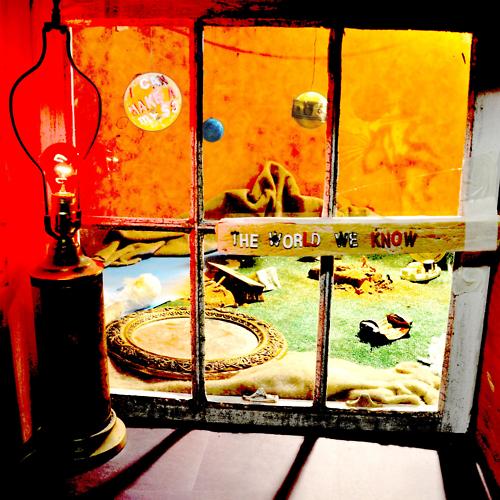
20. I Can
Make a Mess Like Nobody's Business – The World We Know
Ace Enders is a prolific guy: in recent years, The Early
November frontman has quietly built up quite the catalog, releasing (at
least) one record a year across three or four separate projects. 2010's
The World We Know is quite possibly his best work to date, an almost
impossibly gorgeous record of tortured break-up songs that, at its best
moments, hits with unparalleled emotive force. Opener "Sleep Means
Sleeping" finds Enders joined by a haunting female voice, amidst an
array of electronic sounds and orchestral sweep, while the dream-pop
loops that open "Old Man" indicate the direction of the song, as Enders
layers components on top of one another to create a stunning symphony of
sound. I remember the first time I heard this record: I was home for a
weekend around Easter time in the spring of 2010, and my year had, for
the most part, been devoid of new albums or musical discoveries. I
checked this out on a whim, and as I made the three hour drive back to
school, everything about the record, from the personal power of it, to
the all-encompassing production and interconnected flow, hit me like a
bomb. "Telling Me Goodbye" hit the hardest: it's a farewell to a loved
one, a confession of regret for taking that person for granted, and a
stirring, heart-shattering reminder of the brevity of life. Enders gives
himself over entirely to the emotional swell, and by the end of the
song, I was in tears.
The World We Know doesn't quite sustain that force
throughout, but when it reaches that level, the inconsistencies just
fade away.
Key Tracks: "Old Man," "You're Not So Good At Talking Anymore," "Telling Me Goodbye"
21. Wakey!Wakey!
– Almost Everything I Wish I'd Said The Last Time I Saw You
I discovered Michael Grubbs back in the summer of 2008, though I
can't exactly recall how I stumbled upon his music. He didn't have an
album out at the time, but what was available (a mixtape of covers and a
few odd tracks on his Myspace page) was fantastic. The two pieces `that hit me
the hardest - a tune called "Brooklyn" and an earnest piano take on Foo
Fighters' "Everlong" - made their way onto numerous mixtapes that
season, and I made a note to keep an eye out for Grubbs and his
Wakey!Wakey! project in following years. When he dropped
Almost
Everything... in early 2010, I snagged it almost immediately, and I wasn't
disappointed. Piano rock doesn't get a lot better than the opener
("Almost Everything," with ringing keyboard licks and a bombastic string
arrangement), but that's only the tip of the iceberg for a record that
explores surprisingly eclectic territory. Take the breezy island-pop of
"Twenty Two," the McCartney-esque slow-burn of "Dance So Good," or the
ice-cold grooves of "Feral Love." That same versatility can also prove
to be a bit frustrating, but when the album does settle into a groove
(the final three tracks), the results are quite pleasant, like on the
gorgeous "Light Outside," the yearning "Car Crash," or the jarring,
anthemic "Take it Like a Man." It's not an album I revisit much as a
whole, and the songs never add up to more than the sum of their (wildly
varied) parts, but there are a lot of great moments here.
Key Tracks: "Almost Everything," "Light Outside," "Take it Like a Man"
22. Motion
City Soundtrack – My Dinosaur Life
Motion City Soundtrack has a lot of records that are better than
this one (including this year's
Go, which is on a collision course with
my end-of-the-year top ten), but while
My Dinosaur Life suffers from
inconsistency, occasionally generic modern rock tropes, and numerous
grating choruses ("Delirium," "@!#?@!"), frontman Justin Pierre stumbles
upon a few of his best songs in the process. "Her Words Destroyed My
Planet" is how a modern rock single
should sound, while "The
Weakends" provides a bruising and scorching finale, "Worker Bee"
comes roaring out of the gates with a ferocity that is impossible to
forget, and "Pulp Fiction" is about as signature Motion City Soundtrack as songs come. On the whole,
My Dinosaur Life is a manifestation of Motion City
Soundtrack's more "aggressive" side, and while I prefer their poppier
records (again,
Go, but also 2007's
Even if it Kills Me), the occasional
trips to more subdued territory are welcome. Case in point is the
existentially ponderous "Skin and Bones" - one of the band's best songs
to date, and the highlight of a challenging and confusing, but ultimately
rewarding record.
Key Tracks: "Her Words Destroyed My Planet," "Skin and Bones," "The Weakends"
23. Ryan Bingham & The Dead Horses - Junky Star

Country
singer/songwriter Ryan Bingham had a big year in 2010. In addition to
winning the Academy Award for Best Original Song (for Crazy Heart's "The
Weary Kind," which appears as a bonus track here), he wrote and
recorded and released his third-full length with celebrated producer T.
Bone Burnett. And while
Junky Star isn't his best album (that
title still belongs to his debut,
Mescalito), Bingham is still a
troubadour worth watching. His gruff, weather-worn vocals, his deep,
storyteller manner of songwriting, and his acoustic/harmonica textures
fit very well alongside some of my all time favorite artists - Bruce
Springsteen, Will Hoge, Bob Dylan, to name a few - while the other
country music legends he cribs from - Hank Williams, especially - are well
on display here. Bingham's greatest strength here is the lyrical (take
the stunning opener, "The Poet"), but on haunting melodic numbers like
"Hallelujah" (NOT a Leonard Cohen cover), or the raucous rockers (like
"Depression," whose tempo and mood contrast its title and subject
matter), he pens some of his best moments to date. "Direction of the
Wind" sounds like it could have been on
Blonde on Blonde - right down to
the slide guitar intro - and "Lay My Head on the Rail" has a bluegrassy, Appalachian lilt that recalls some of the music Burnett snagged for the
O Brother, Where Art Thou? soundtrack. Meanwhile, the gorgeous "Weary Kind" is as
good as it's ever been, conjuring up images of the brilliant Jeff
Bridges performance it energized in
Crazy Heart. The truth is,
nobody is making music quite like this anymore, and even if Bingham has
better records (another one,
Tomorrowland, drops in a few weeks),
something about
Junky Star has continued to captivate me over the years.
24. Guster - Easy Wonderful
Ever since they first arrived on the scene in the mid-90s,
Guster have had a knack for writing catchy melodies and heartfelt songs that
have had no trouble appealing to college radio DJs, frat-boy bros, and folk-pop
enthusiasts alike. I first took notice of them when they scored a hit with
“Amsterdam” back in 2003 or so, and I even lucked into seeing them live at my
only summer at Interlochen Arts Camp. On their sixth full-length studio album,
the band taps into the same kind of breezy, summertime pop hooks that have
always been their cornerstone. They’ve morphed a bit over the years, shedding
some of their acoustic sensibilities, as well as the emphasis placed on their
unique percussion (their drummer plays bongos) and their capacity for rich
vocal harmonies, but the fact that they are a different band than they once
were hardly matters here.
Easy Wonderful kicks off with a pair of indelible
choruses (“Architects & Engineers” and “Do You Love Me?”) and never lets
up. The songs never reach the emotional force of the band’s best work (their
1999 album,
Lost and Gone Forever, will always be their magnum opus), and
there’s nothing here as good as “Parachute” (the closing number from their debut
album of the same name). But a few of these songs could have – and should have
– been massive radio hits, and sometimes, a great pop album really is exactly what you need.
Key Tracks: "Architects & Engineers," "Do You Love Me," "On the Ocean"
25. The
Morning Of – The Way You Fell In
While the full record is something I only revisit once in a blue moon, the finest tracks here have become embedded into my summer soundtracks for every year since, and it would be a shame to leave that off this list.
The Way You Fell In came into my life in the spring, shortly after my return home from my first year of college. I was searching for a definitive summer soundtrack in these songs, and I almost found it. The duel vocal style (between Justin Wiley and Jessica Leplon) doesn't always work, but when it does, the magic is there, like on the climactic one-two punch of "Bring Me Home" and "Heaven or Hell." Leplon occasionally oversings, and Wiley falls into generic pop-punk tendencies, but each gets one moment of perfection that shows off the massive potential inherent in this band. First is "The Time It Takes To Grow," a wistful farewell to summer love and possibility that rings with a gorgeous, dusky atmosphere. Wiley drops his pop-star charade, exchanging it for a more weathered, folk-driven vocal style, and the result is stunning. "I Know You Know" is almost as good, a crushing vocal tour-de-force from Leplon that makes all of her excesses feel forgivable. Two perfect songs don't make an album, but for this one, surrounded by a bunch of tracks that I like but don't quite love, they were enough to keep me coming back - even when records I liked more back in the day have faded a bit.
Key Tracks: "Jennesea," "The Time it Takes to Grow," "I Know You Know"
The Honorable Mentions
Bruce Springsteen gave fans an embarrassment of riches with The Promise, a collection of b-sides and leftovers from the Darkness on the Edge of Town sessions that stretches on for two discs. Since the songs are way older than the year, I never felt comfortable including it in the body of the list, but with songs as good as the title track or the alternate take of "Racing in the Street," it's easily a highlight of the year.
Hellogoodbye and Steel Train both released exquisitely well-crafted collections of pop-rock. Steel Train's finest songs ("Bullet," "Fall Asleep") landed it on my list the first time around, but I have only revisited the full album once or twice since. I wouldn't have felt right about splitting the two albums up.
Stars and LCD Soundsystem each released inconsistent works that, at their best, could easily have been with the upper echelons of this list. But filler material dictated that I had to leave them off.
I heard Locksley for the first time when they opened for a pair of Butch Walker shows in May of 2010. Their album, called Be In Love, was made up of the same kind of Beatles pop that Butch traded in on his album (see above), and was one of the last records I had to cut from the list.
Kings of Leon lost a lot of their radio appeal with Come Around Sundown, an attempt to return to their roots in southern rock, alt-country, and Eagles-esque Americana that most critics lambasted. But the songs are catchy and soulful, and "Back Down South" might be the best thing they've written.
The Maine released a fun album of throwaway pop music whose finest moments ("Growing Up," "Inside of You," "Saving Grace") became big summer soundtrack staples, but whose whole was less than the sum of its parts.
Ray LaMontagne and
Jakob Dylan both released stellar traditional folk albums. I never listened to either enough to merit them a place in the top 25, but perhaps I should make a note to revisit them.
The Rocket Summer released a bloated album of piano-driven rock music. I've never been a big fan of Bryce Avary's voice, but
Of Men and Angels is undeniably well-crafted.
Matt White and
Maroon 5 were poster-boys for catchy pop melodies and albums with a few emotionally striking moments thrown in for good measure. "Out of Goodbyes" and "Falling in Love (With My Best Friend)" were two of my favorite songs of the year.
And
Band of Horses traded a lot of their hipster appeal for alt-country textures on
Infinite Arms, but also soundtracked a lot of night drives for me along the way. I can't wait to see what they do or where they go next.