Sometimes, albums need to be made. Whether motivated by the break-up of a
long relationship, the death of a loved one, or some other
life-changing incident, there are certain records that aren't just
artistic choices for the musician making them, but artistic necessities.
Butch Walker is no stranger to these kinds of records. He made one of
them six years ago, after losing his home in a wildfire and getting a
new perspective on the things that really mattered; he did it again two
years ago, hurrying to finish a set of songs so that his father would
hear them before he died. Both of those albums, the 2008 LP Sycamore Meadows and the 2013 EP Peachtree Battle
dealt with heartbreaking situations, but turned them into
life-affirming statements. The former is a reminder that material
possession is never the most important thing in life, while the latter
is a love letter to Butch's father and the relationship the two shared;
both are the kind of personal and intimate records artists don't make
anymore.
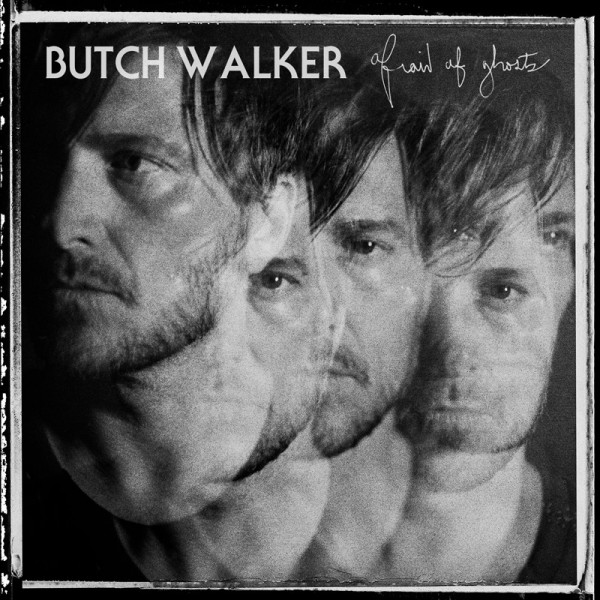
If Peachtree Battle was a loving farewell to a father, though, then Butch's seventh solo LP, titled Afraid of Ghosts, is the grieving process. And once again, it's a record that Butch needed
to make. Written in the tumultuous year that followed his dad's
passing, and recorded in just four days at Ryan Adams' Pax Am studios, Afraid of Ghosts
feels both measured and spontaneous. After making a pair of raucous
studio albums with his backing band, The Black Widows, Butch returns on Afraid of Ghosts to the well that provided his two most stirring accomplishments as a singer/songwriter: Letters and Sycamore Meadows.
Among Butch fans, those two records are remembered as his most personal
and introspective, and for good reason. On songs like "Joan," "Going
Back/Going Home," and "ATL," he blended the autobiographical with the
fictional, dreaming up down-on-their-luck characters as a means of
examining his own life. He follows those lines to Ghosts, and comes up with a record that dares to be even more personal than his previous high points.
Not that he's forgotten what he learned on those Black Widows records, though. Ever since his 2006 LP, The Rise and Fall of Butch Walker and the Lets Go Out Tonites, Walker has been showing more and more interest in country music. Those influences came to a head on 2010's I Liked it Better When You Had No Heart,
when he teamed up with Michael Trent—one half of Americana duo Shovels
& Rope—to write an album that completely departed from his earlier
style. And while he backed off the country a bit on 2011's The Spade,
in favor of loud summertime rock 'n' roll, the influence was still
there in songs like "Closest Thing to You I'm Gonna Find" and "Dublin
Crow."
With Afraid of Ghosts, Butch Walker has made his most
country/folk-influenced album yet. But those who view "country" as a
four-letter word needn't worry: this isn't a bro country LP in the vein
of Florida Georgia Line and Luke Bryan. Heck, it's not even comparable
to the arena-rock/country hybrid that was Keith Urban's recent Fuse—a very solid album that Butch himself helped to write and produce. Instead, Afraid of Ghosts
feels like classic alt-country, comparable to the work Nashville's most
legendary figures or in the vein of recent albums by the likes of Jason
Isbell or Ryan Adams. Perhaps even more apt would be a comparison to
Springsteen's Nebraska, since that album's stark hopelessness is mirrored in more than a few of this album's key tracks. Ghosts
is a record that explores similar settings to what modern radio country
has been all about—bars, the highway, the south as a whole—but twists
those themes in dark and often nightmarish ways.
On "21+", for instance, the narrator isn't the young gun sharing shots
with his bros on a Friday night, playing pool and celebrating the
limitlessness of life. Instead, he's the guy behind the bar, pouring
drinks for all those naïve kids. He's the guy who's trapped inside a
small town and a dead-end life, selling a little bit more of his soul
every day in an effort to keep going. In the song, he sits down after
work, raiding the bar for free beer and pondering an escape. "Daddy,
what will I be if I ever grow up?/Can I get out of a town that drowns
everything I love?/Come hell or high water, I'm gonna leave here when
I'm sober/Don't wanna be 21 and over." When movie star Johnny Depp
barrels in with a fractious and flammable electric guitar solo, it's a
moment that could easily be played as a publicity stunt, but instead, it
functions to underline the suffering and frustration of a crashed
American Dream. It's a knockout punch.
There's a lot of darkness on Afraid of Ghosts, and it doesn’t
disappear outside of the bar that's become a prison in "21+." In the
lead single, "Chrissie Hynde," the narrator is driving around town
listening to Pretenders records and basking in his final hours of
freedom before being hauled off to serve time in an actual
prison. When he bids farewell to his family in the second verse,
envisioning a better life somewhere on down the road, but knowing it's
too late for him to become the husband or father he wants to be, it's a
heartbreaking moment. Similarly shattering is "How Are Things, Love?",
which may or may not re-introduce us to the character from "Chrissie
Hynde" after he's been released. "Did you get rid of the ring, love?" he
asks on the final chorus, accompanied by a weeping steel guitar. It's a
question left hanging in the air as the song ends, with a simple and
wrenching "I hope you're well" as the sign off.
Longtime Butch fans—especially the ones who still hold his work with the Marvelous 3, or his first solo full-length, 2002's Left of Self-Centered, to be his highest accomplishments—might have a few gripes with Afraid of Ghosts.
Gone are the power pop choruses; gone are the big rock songs; gone are
the lyrics littered with sarcastic, tongue-in-cheek one-liners; long
gone is any indication that Butch was ever the lead guitarist in a
hair metal band. This is Walker's slowest, quietest, bleakest, and most
serious record ever. But that doesn't mean the sunlight never breaks
through the trees, or that anyone with ears could reasonably describe Afraid of Ghosts as "depressing."
On the contrary, there are a slew of incredibly life-affirming moments
on this record, thanks to the fact that, at the end of the day,
everything comes back around to Butch's dad. He's there in the mission
statement of a title track ("I'm gonna take what scares me the most, and
turn it into something real," Butch sings on the chorus). He's there in
the self-described "I Love You," the closest this album ever gets to
being jaunty or upbeat. He's definitely there in the funereal "Autumn
Leaves," a sobering song written about cancer. And then there's
"Father's Day," the best song on the record and probably one of the four
or five best songs Butch has written in his entire career. Suffice to
say that it's tough to get through the last verse—or to even read the
lyrics—without choking up.
"Sunday morning, Father's Day
The first without my dad
As I look into my little boy's eyes
It takes all I have
Not to break right down in front of him
When he smiles at me
See you don't become a man
Until you lose your dad, you see"
Butch has been unflinchingly honest in his music in the past. Whether he
was baring his soul on a breakup song ("Cigarette Lighter Love Song,"
"Best Thing You Never Had") or spilling his entire life story in a
two-minute rap breakdown ("Going Back/Going Home"), Butch Walker is one
of the only songwriters I can think of who has never wanted anything to
stand between himself and his fans. It's that kind of honesty that
allows for the intimate and electric connection he forges with the crowd
at live shows, and the same honesty that fuels Afraid of Ghosts.
It all culminates on "Father's Day," first with the chilling verse
above, and second with a bruising guitar solo, courtesy of Ryan Adams.
Husker Du guitarist Bob Mould is in there too, contributing rhythm
guitar and backing vocals, but it's the Adams solo that provides the
catharsis for the song, and for the album as a whole. Every emotion you
feel when you lose someone you love, from anger to grief, is conveyed in
that 60-second burst of noise. The subject matter of the song might be
intensely personal, but this moment at least is completely universal.
Which brings me to Ryan Adams. In the former Whiskeytown frontman, Butch
has found his Steve Van Zandt, his consigliere . Those who saw the two
tour together last fall know that they have a kind of rock 'n' roll
synergy that most full-time band members don't even share. That kinetic
chemistry is arguably what makes Afraid of Ghosts as perfect as
it is. After all, one of the best things about this record is how
incredibly great it sounds, from first note to last. Walker, of course,
is a heavyweight producer in his own right, but on this record, he
handed over the reigns to Adams. The result is a disc that is instantly
unique in his catalog, distinct from the already-diverse range of albums
he's made in the past. Adams brings a different sonic atmosphere to a
set of songs that needed it, trading what might have been a cleaner
production job from Walker for something more akin to the grimy,
reverb-heavy sheen that characterized his self-titled solo album from
last year. And like that record, this one feels instantly timeless.
Similarly to how Ryan Adams hearkened back to the golden days of Tom Petty and Fleetwood Mac, Afraid of Ghosts would be right at home in a stack of 1970s folk-leaning records: Carole King's Tapestry; anything by James Taylor; even a few albums that fall more into the "rock" genre, like George Harrison's All Things Must Pass or Springsteen's Darkness on the Edge of Town.
Part of it, of course, is that these are just great songs; another part
is the arrangements, which add splashes of glorious instrumental
color—the scorched-earth guitar solo in "Bed on Fire," the wall of
radiant vocal hums in "Still Drunk," the twinkling pianos of the title
track, and the haunting synths of album closer "The Dark"—to songs that
could have easily been grayscale acoustic affairs. And just as Ryan
Adams accomplished a rebirth of sorts on his recent self-titled record, Afraid of Ghosts manages to stay true to Walker's legacy while also standing out as something distinctly new and different in his catalog.
There will probably never come a day when I can rank any Butch Walker album above Letters.
Not only was that the first Butch record I ever heard, and not only did
it play a huge part in my own musical evolution, but it also balanced
everything that makes Butch Walker special into one album: big rock
songs, soaring power pop choruses, and sarcastic quips on one side;
sparse arrangements, tender storytelling, and raw intimate balladry on
the other side. Afraid of Ghosts is the first album from Butch
that doesn't include any of the former, which will probably alienate a
few longtime fans. But for those who are willing to go in without
preconceived notions, this album is a masterpiece: a stunning feat of
songwriting depth, emotional maturity, and melodic effortlessness that
stands as one of the best albums to come out in years.
It's also the album that Butch needed to make right now, an elegy
for a lost parent that, by its final lyric, has poetically reached the
acceptance stage: "Into the dark," Butch sings, "With my father at my
side." It's a fitting statement, because the people we love
most—parents, grandparents, family members, best friends—they're never
gone. They can't ever be gone because they live in us. They live
on in the things we do, and in the songs we write. And the fact that Big
Butch lives on in this remarkable LP, this staggering work of
heartbreak and celebration, that's the greatest compliment that could
ever be paid to the loving son who wrote it. Condolences to everyone
else, but 2015 already has its Album of the Year.
Showing posts with label Butch Walker Week. Show all posts
Saturday, March 26, 2016
Butch Walker - Peachtree Battle
“I just remember my dad flew out to see me and first thing he got off
the plane, I’d never seen him cry, and he just started crying. And it
was a big moment for me because I could see he was proud of having a boy
who could wipe his own ass and make his own way. And ever since then, I
wanted his respect, no matter how I looked and how I dressed. So I
tried to make him proud after that, and many, many years later and many
failed attempts later and different bands and trying to be successful,
and failing, he always had my back after that, and he would give me his
only twenty dollars in his pocket and say ‘let’s go get some beer and
hug it out.' And...this is for him.”
-Butch Walker, dedicating a song to his father at a recent concert
Over the past week, I’ve written ten reviews spanning ten different records from Butch Walker, my favorite living songwriter—or at very least, a guy I consider tied with Bruce Springsteen for that title. I’ve covered solo albums, full-band records, and side projects, and I’ve written about nearly every song that Walker has written in the past 15 years. I did it in some 16,000 words, in a feature I called “Butch Walker Week,” and for those who have made the journey with me—and survived that hefty word count to get to here, no less—I thank you for your attention. It’s been an adventure, to say the least, a walk through some of my favorite songs of all time and through records that have shaped my life since I first stumbled upon Letters eight and a half years ago. And today I reach the end—or hopefully, the middle—of Walker’s catalog with a new EP called Peachtree Battle, which releases to digital outlets today. Suffice to say, it feels like a good place to pause the music, lay down my pencil—er...laptop keyboard—and reflect. This album, I think, is a culmination.
For whatever unfair reason, great art—music especially—is often birthed from heartbreak and great personal suffering. Bob Dylan once wrote that “behind every beautiful thing, there’s been some kind of pain,” and while that statement is a bit reductive so as to fit the poetry of a folk song, it rings particularly true when it comes to music. When artists air their grievances through song and let us see them bleed, the result is transcendently powerful. It takes their suffering and makes it ours, reflects our own broken hearts back at us through the songs, and in the process, renders the music timeless. So many artists over the course of music history have proven this to be true, and Butch Walker is one of the most brilliant examples. As I’m sure I’ve made abundantly clear to anyone who has followed this long, meandering journey through his work with me over the past week, there are things I love about every Butch Walker record. I love the sweaty, carefree rock ‘n’ roll of The Spade, the folk-meets-Beatles-pop experimentation of I Liked You Better When You Had No Heart, and the glammed-up time machine of The Rise and Fall of Butch Walker and the Let’s-Go-Out-Tonites! They’re all great works.
But the albums that have stuck with me the longest are the introspective ones. 2004’s Letters was a break-up album for the ages, full of yearning verses and viscerally emotional choruses about love gone wrong, while 2008’s Sycamore Meadows caught Walker at another reflective moment after he lost his house and every material possession he’d ever owned in a California wildfire. Sure, both albums found me at important times in my life—Letters as I was first falling in love with music and Sycamore Meadows as endings and goodbyes started to rain down on me during my senior year of high school—but it was the emotion in the songs, put there by Walker and derived from his own loss and hurt, that has allowed them to resonate in my heart for so long.
I bring this all up here because Peachtree Battle is absolutely cut from the same cloth as those two masterful discs. Written and recorded in the months and weeks leading up to the death of Butch’s father—“Big Butch” passed away on August 21, a week before Peachtree Battle’s first single went out to the press—Peachtree Battle is reflective, heartbreaking, and celebratory in all the right ways. Following his father’s passing, Butch tweeted “You never become a man until you lose your dad. Rest In Peace “Big” Butch Walker I love you so much.” In 140 characters, Butch’s grief poured forth, and it does the same thing throughout these five songs and these 18 and a half minutes. It’s all too brief, of course, just like the lives of the people we love always seem to be, but while I so wanted this to be a full-length, it’s impossible to argue with Butch’s reasoning for keeping it an EP: he wanted his father to hear these songs in their finalized versions before he said goodbye, and we can’t blame him for that because they constitute one of the most beautiful farewells ever expressed through music.
Peachtree Battle also accomplishes in five tracks what really no other Butch Walker record has been able to do in 10 or 12, and that is to offer a retrospective look back at all of the sonic territory that Butch has traveled since he commenced his solo career in 2002. The blissful power pop of Letters is back on “Coming Home,” the set’s bittersweet first single. With its beat-heavy production and triumphant chorus, “Coming Home” sounds like it could be an absolute smash in the post-fun. version of mainstream pop music. It won’t get to radio, just because Dangerbird—Walker’s label—doesn’t have the resources to get it there, but its appeal is far-reaching nonetheless. “Favorite Son” is another earworm, with a glammy falsetto groove that wouldn’t have been out of place on The Rise and Fall and the same easygoing summertime flare that so defined The Spade, while the rousing lead-off track, the menacing classic rock rave-up of “I’ve Been Waiting For This,” has the same crowd sing-along potential that songs like “When the Canyons Ruled the City” and “3 Kids in Brooklyn” have always carried with ease.
But while Peachtree Battle feels like a “greatest hits, new songs” package on a sonic level, it is ultimately defined by its lyrical content. The wistful title track—which Butch premiered for the first time at the live show I saw in August—burns with a steel guitar ache and a chorus that describes, in perfect fashion, the pain of moving on when someone important has departed from our lives. “It gets hard to share the same streets I shared with you, hard to wipe the places from my mind,” Walker sings, an intimate and minimalistic layer of folk production bringing out every weather-worn pang in his voice. “Maybe I’ll discard it when I finish what I started, then I’ll know: wherever you are, that’s my home.” It’s a tearful ballad, and Butch’s decision to dial back the production makes all the difference in just how hard it hits.
“Let It Go Where’s It’s Supposed To,” the set’s grand finale, hits every bit as hard, building through a backwoods country-folk arrangement to a bridge that boasts the record’s most revealing lines. “Now that I’m a man myself and my father’s bones are turning into dust/I got a boy to raise through hell and just pray he turns out half the man he was,” Butch sings during the momentary break, the song’s Allman Brothers guitar scratch chugging away beneath him. “When you grow and think you’ve seen it all, nothing will prepare the fall/Please just take these words before I’m gone.” Moments later, the song explodes into its final chorus, a celebratory reverie loaded with handclaps and classic rock guitar sounds, and it takes me back to the first time I heard the song, at Chicago’s Bottom Lounge this past New Years Eve.
That night, early on in the show and vamping on a simple guitar riff, Butch borrowed a band member’s phone to call his parents. When his dad answered on speakerphone—with a simple, “hey buddy”—the crowd erupted in cheers of approval, and after Butch Sr. had wished the entire crowd a Happy New Year, Butch Jr. launched into a rousing take on “Let It Go Where It’s Supposed To.” It was a moment of laughter and connection for a father and son that, for many years, didn’t see eye to eye, and it was such a pleasure to see the happiness in Butch’s eyes as he made that call and played that song. Now that Butch Sr. has passed, it would be easy to see “Let It Go” and the rest of Peachtree Battle as sad songs, but I don’t think that description does this record justice. These songs are about love, resilience, catharsis, and celebration, and even though it’s hard not to wish there were about five more of them—if the strength of this material is any indication, a full-length Peachtree Battle would have easily stood alongside Letters and Sycamore Meadows as Butch’s best work—it’s equally hard to find fault with them.
-Butch Walker, dedicating a song to his father at a recent concert
Over the past week, I’ve written ten reviews spanning ten different records from Butch Walker, my favorite living songwriter—or at very least, a guy I consider tied with Bruce Springsteen for that title. I’ve covered solo albums, full-band records, and side projects, and I’ve written about nearly every song that Walker has written in the past 15 years. I did it in some 16,000 words, in a feature I called “Butch Walker Week,” and for those who have made the journey with me—and survived that hefty word count to get to here, no less—I thank you for your attention. It’s been an adventure, to say the least, a walk through some of my favorite songs of all time and through records that have shaped my life since I first stumbled upon Letters eight and a half years ago. And today I reach the end—or hopefully, the middle—of Walker’s catalog with a new EP called Peachtree Battle, which releases to digital outlets today. Suffice to say, it feels like a good place to pause the music, lay down my pencil—er...laptop keyboard—and reflect. This album, I think, is a culmination.
For whatever unfair reason, great art—music especially—is often birthed from heartbreak and great personal suffering. Bob Dylan once wrote that “behind every beautiful thing, there’s been some kind of pain,” and while that statement is a bit reductive so as to fit the poetry of a folk song, it rings particularly true when it comes to music. When artists air their grievances through song and let us see them bleed, the result is transcendently powerful. It takes their suffering and makes it ours, reflects our own broken hearts back at us through the songs, and in the process, renders the music timeless. So many artists over the course of music history have proven this to be true, and Butch Walker is one of the most brilliant examples. As I’m sure I’ve made abundantly clear to anyone who has followed this long, meandering journey through his work with me over the past week, there are things I love about every Butch Walker record. I love the sweaty, carefree rock ‘n’ roll of The Spade, the folk-meets-Beatles-pop experimentation of I Liked You Better When You Had No Heart, and the glammed-up time machine of The Rise and Fall of Butch Walker and the Let’s-Go-Out-Tonites! They’re all great works.
But the albums that have stuck with me the longest are the introspective ones. 2004’s Letters was a break-up album for the ages, full of yearning verses and viscerally emotional choruses about love gone wrong, while 2008’s Sycamore Meadows caught Walker at another reflective moment after he lost his house and every material possession he’d ever owned in a California wildfire. Sure, both albums found me at important times in my life—Letters as I was first falling in love with music and Sycamore Meadows as endings and goodbyes started to rain down on me during my senior year of high school—but it was the emotion in the songs, put there by Walker and derived from his own loss and hurt, that has allowed them to resonate in my heart for so long.
I bring this all up here because Peachtree Battle is absolutely cut from the same cloth as those two masterful discs. Written and recorded in the months and weeks leading up to the death of Butch’s father—“Big Butch” passed away on August 21, a week before Peachtree Battle’s first single went out to the press—Peachtree Battle is reflective, heartbreaking, and celebratory in all the right ways. Following his father’s passing, Butch tweeted “You never become a man until you lose your dad. Rest In Peace “Big” Butch Walker I love you so much.” In 140 characters, Butch’s grief poured forth, and it does the same thing throughout these five songs and these 18 and a half minutes. It’s all too brief, of course, just like the lives of the people we love always seem to be, but while I so wanted this to be a full-length, it’s impossible to argue with Butch’s reasoning for keeping it an EP: he wanted his father to hear these songs in their finalized versions before he said goodbye, and we can’t blame him for that because they constitute one of the most beautiful farewells ever expressed through music.
Peachtree Battle also accomplishes in five tracks what really no other Butch Walker record has been able to do in 10 or 12, and that is to offer a retrospective look back at all of the sonic territory that Butch has traveled since he commenced his solo career in 2002. The blissful power pop of Letters is back on “Coming Home,” the set’s bittersweet first single. With its beat-heavy production and triumphant chorus, “Coming Home” sounds like it could be an absolute smash in the post-fun. version of mainstream pop music. It won’t get to radio, just because Dangerbird—Walker’s label—doesn’t have the resources to get it there, but its appeal is far-reaching nonetheless. “Favorite Son” is another earworm, with a glammy falsetto groove that wouldn’t have been out of place on The Rise and Fall and the same easygoing summertime flare that so defined The Spade, while the rousing lead-off track, the menacing classic rock rave-up of “I’ve Been Waiting For This,” has the same crowd sing-along potential that songs like “When the Canyons Ruled the City” and “3 Kids in Brooklyn” have always carried with ease.
But while Peachtree Battle feels like a “greatest hits, new songs” package on a sonic level, it is ultimately defined by its lyrical content. The wistful title track—which Butch premiered for the first time at the live show I saw in August—burns with a steel guitar ache and a chorus that describes, in perfect fashion, the pain of moving on when someone important has departed from our lives. “It gets hard to share the same streets I shared with you, hard to wipe the places from my mind,” Walker sings, an intimate and minimalistic layer of folk production bringing out every weather-worn pang in his voice. “Maybe I’ll discard it when I finish what I started, then I’ll know: wherever you are, that’s my home.” It’s a tearful ballad, and Butch’s decision to dial back the production makes all the difference in just how hard it hits.
“Let It Go Where’s It’s Supposed To,” the set’s grand finale, hits every bit as hard, building through a backwoods country-folk arrangement to a bridge that boasts the record’s most revealing lines. “Now that I’m a man myself and my father’s bones are turning into dust/I got a boy to raise through hell and just pray he turns out half the man he was,” Butch sings during the momentary break, the song’s Allman Brothers guitar scratch chugging away beneath him. “When you grow and think you’ve seen it all, nothing will prepare the fall/Please just take these words before I’m gone.” Moments later, the song explodes into its final chorus, a celebratory reverie loaded with handclaps and classic rock guitar sounds, and it takes me back to the first time I heard the song, at Chicago’s Bottom Lounge this past New Years Eve.
That night, early on in the show and vamping on a simple guitar riff, Butch borrowed a band member’s phone to call his parents. When his dad answered on speakerphone—with a simple, “hey buddy”—the crowd erupted in cheers of approval, and after Butch Sr. had wished the entire crowd a Happy New Year, Butch Jr. launched into a rousing take on “Let It Go Where It’s Supposed To.” It was a moment of laughter and connection for a father and son that, for many years, didn’t see eye to eye, and it was such a pleasure to see the happiness in Butch’s eyes as he made that call and played that song. Now that Butch Sr. has passed, it would be easy to see “Let It Go” and the rest of Peachtree Battle as sad songs, but I don’t think that description does this record justice. These songs are about love, resilience, catharsis, and celebration, and even though it’s hard not to wish there were about five more of them—if the strength of this material is any indication, a full-length Peachtree Battle would have easily stood alongside Letters and Sycamore Meadows as Butch’s best work—it’s equally hard to find fault with them.
Butch Walker and the Black Widows - The Spade
After the release of and tour for 2010’s good-but-not-great I Liked It Better When You Had No Heart,
Butch Walker’s first album with a new backing band called the Black
Widows, a few things happened. First, Walker was signed to Dangerbird
records, which, after years of flitting between bona-fide major labels,
indie imprints, and numerous independent start-up labels, finally seemed
like the natural place for him. Second, the guys in the Black Widows
were having so much fun touring with Butch (and writing songs together)
that the majority of them decided to cut a new record. The resulting
album, 2011’s The Spade, was the fastest turnaround between Butch
Walker albums since the first two Marvelous 3 records. Walker,
songwriting partner Michael Trent, bassist Jake Sinclair, and guitarists
Fran Capitanelli and Chris Unck recorded The Spade in the space
of a week in the early summer of 2011. Drummer Darren Dodd was gone, off
to start a new band, and I never did hear what happened to keyboardist
Wes Flowers, but the guys who stuck around were the key players anyway,
and from the first time I streamed The Spade’s first single—a kinetic rush of a rock song called “Summer of ’89”—I knew that Butch was back on track.
If I Liked It Better When You Had No Heart was a fussed-over, meticulous winter album full of expansive vocal harmonies, lilting melodies, and wistful lyrics, then The Spade is the complete opposite side of the coin, a loud, raucous, messy, and spontaneous rock ‘n’ roll album meant to be played at full volume during the summer months. Right from the first moments of the record, where a blistering electric guitar breaks the silence on “Bodegas and Blood,” it’s clear that The Spade is a thoroughly different beast from its predecessor. The record hits the ground running and doesn’t slow down for the entirety of side one, flitting from shout-along rock song (“Every Single Body Else”) to shout-along rock song (“Sweethearts”).
“Summer of ‘89” immediately takes its place in the pantheon of great Butch Walker songs, with an anthemic “woah oh” refrain and a nostalgic spoken-word bridge section that transports us back to Butch’s youth, back to when he was playing rock shows and living life in the fast lane before even getting out of high school. As for the chorus, an explosive inquiry of “Can I go back to when I was a winner?/Way before the rain came and washed away the sinners,” it’s the kind of incendiary proclamation that can and should immortalize songs on summer playlists for years after they’ve stopped sounding shiny and new. Why the tune wasn’t blasting from every car radio in the country during the summer of 2011 is unanswerable, but for me at least, it will always remain a staple.
“Day Drunk” is every bit as good, a celebratory (and somewhat premature) farewell song that Butch wrote for his father. “It’s the most perfect time and the weather’s perfection/To watch as my father battles infection,” Butch sings during the verse, all building to a cathartic high-rise chorus built out of nothing more than the word “goodbye.” Fran Capitanelli gets the MVP award for the song (and frankly, for the record) with a gorgeous spiderweb of an outro guitar solo. My biggest problem with I Liked It Better When You Had No Heart was that it felt more like an overt piece of studio art than an actual rock ‘n’ roll album. Butch had just built a new studio, and that album was the sound of him breaking it in. Everything sounds far more organic on The Spade, and as Walker’s wordless wails rip through Capitanelli’s beautiful latticework of guitar during the final minute of “Day Drunk,” it’s clear that this is how the Black Widows were built to sound. Anyone who had seen them on the tour for the previous album already knew that, of course, but it was nice to see it realized on record.
Another problem that I had with I Liked It Better... was that, because Butch brought Michael Trent on board to co-write roughly half of the songs, it didn’t really sound like a Butch Walker album—at least not in the way that I had come to expect Butch Walker albums to sound. The Spade solves that problem, though not in the way I would have expected. Rather than ditching Trent, Walker goes full-speed in the other direction, inviting every member of the band to contribute writing ideas. This time around, there are actually songs where Butch doesn’t even get writing credits at all--a first, I think, for any album he had ever been a part of. The relentless ricochet of “Every Single Body Else” sounds more like a Chris Unck song than a Butch Walker one, with the former actually taking lead vocal duties for the majority of the song, while the swooning eighties pop of “Synthesizers” (a modern-day rewrite of “Come On, Eileen”) is patent Butch Walker—a remarkable feat considering the fact that it was a songwriting collaboration between Michael Trent and Jake Sinclair. The two former bandmates join together to construct something far catchier and more accessible than any of the songs they penned for the Films (their previous band), and the sarcastic lyrics and classic pure pop feel of “Synthesizers” posit it as this album’s most mainstream moment.
But while his Black Widows prove to be more accomplished writers and musicians on this record than they did on the first, Butch still takes center stage enough times to prove that he’s still one of the music industry’s foremost songwriting craftsmen. The three songs that come exclusively from Walker’s pen—“Summer of ‘89”, “Dublin Crow,” and “Closest Thing to You I’m Gonna Find”—are three of the best on the record, and all of them hit harder than anything on the last album. The late-album country-folk suite of “Dublin Crow” and “Closest Thing” is the most at home Walker has sounded on record since Sycamore Meadows. The former, a rambunctious slice of Irish folk-pop, loaded with communal handclaps and overflowing gang vocal harmonies, feels like an off-the-cuff street performance piece, while the latter borrows some of the anthemic sweep of career highlight, “When the Canyons Ruled the City” (from 2006’s The Rise and Fall of Butch Walker and the Let’s-Go-Out-Tonites!), for a song that has justifiably earned status as a Walker live show staple. Building from dusky back porch folk to rafter-raising southern rock—and using some terrific, weather-worn country music lyrics as the bridge between the two styles (“So I keep another night by this fire and drink some wine/It’s the closest thing to you I’m gonna find,” Butch sings in the first chorus refrain)—“Closest Thing” is the kind of sonic niche I would love to hear Butch build an entire album around.
But The Spade is neither a country record nor a collection of folk songs, and that’s made fundamentally clear by the way that the album concludes. The last two tracks unleash the loudest, most rip-roaring rock ‘n’ roll Walker has ever committed to tape. The tongue-in-cheek closing track, called “Sucker Punch,” was written after Butch was conked out by a drunk at a bar in Los Angeles, and serves as a particularly raucous finale to a particularly raucous album. On the live stage, the song reaches new heights, playing host to an epic electric guitar battle between Fran Capitanelli and Walker himself that crosses half a dozen genres, from Walker’s beloved hair metal to the song’s obvious Skynyrd-esque roots.
The penultimate track, however, is where The Spade reaches the apex of everything it’s supposed to be. “Bullet Belt” is a remarkably potent rock song, bursting with the kind of energy we hadn’t heard on a Butch Walker album in half a decade. From Jake Sinclair’s booming bass foundation to the relentless runaway train of a chorus, this paean to undying youth, massive nights, and bad decisions sounds utterly flammable from first note to last. It’s the kind of song that demands to be played at full volume, whether blasting from a stereo at an out-of-hand house party or ringing from the stage in the final moments of live show--a fact that makes it all the more upsetting that Butch has never played the song live. When this record first came out, I said to myself, “Well I don’t care what the setlist for the upcoming tour looks like, as long as ‘Bullet Belt’ is on it.” At the show I saw that October, the Black Widows played every single song on The Spade except “Bullet Belt,” leading me to believe that either Butch was reading my blog and wanted to spite me or didn’t feel like shredding his voice on the skyscraping chorus. Either way, “Bullet Belt” may well be the greatest live showstopper to never appear in a concert setlist, and I’m hoping that Butch corrects that error someday soon. I’m not holding my breath.
The Spade is not Butch Walker’s best album. Compared with the seminal masterpieces he released between 2004 and 2008, this album sounds positively minor, a gap record filled with quirky rock songs to fill the time in between more serious and weighty works of art. With that said, though, I adore The Spade. It’s one of my absolute favorite albums of the decade so far, and I don’t think Butch has made a more immediate or downright fun album in his entire career. The record dropped at the wrong time—the release date fell at the end of August, the day I drove back to college after a great summer in my hometown—and probably derailed its own chances of being a go-to summer soundtrack for a lot of people that year as a result. But for how much I played this album throughout the remainder of 2011, that fact hardly even mattered. From road-trip sing-alongs to celebratory rock shows, these songs have never failed to put a smile on my face, and while I like Butch best in his more balladic, introspective territory, I wouldn’t mind the Black Widows coming out of the woodwork every couple of years for the rest of his career if the albums they create together are going to be half as exciting as this one.
If I Liked It Better When You Had No Heart was a fussed-over, meticulous winter album full of expansive vocal harmonies, lilting melodies, and wistful lyrics, then The Spade is the complete opposite side of the coin, a loud, raucous, messy, and spontaneous rock ‘n’ roll album meant to be played at full volume during the summer months. Right from the first moments of the record, where a blistering electric guitar breaks the silence on “Bodegas and Blood,” it’s clear that The Spade is a thoroughly different beast from its predecessor. The record hits the ground running and doesn’t slow down for the entirety of side one, flitting from shout-along rock song (“Every Single Body Else”) to shout-along rock song (“Sweethearts”).
“Summer of ‘89” immediately takes its place in the pantheon of great Butch Walker songs, with an anthemic “woah oh” refrain and a nostalgic spoken-word bridge section that transports us back to Butch’s youth, back to when he was playing rock shows and living life in the fast lane before even getting out of high school. As for the chorus, an explosive inquiry of “Can I go back to when I was a winner?/Way before the rain came and washed away the sinners,” it’s the kind of incendiary proclamation that can and should immortalize songs on summer playlists for years after they’ve stopped sounding shiny and new. Why the tune wasn’t blasting from every car radio in the country during the summer of 2011 is unanswerable, but for me at least, it will always remain a staple.
“Day Drunk” is every bit as good, a celebratory (and somewhat premature) farewell song that Butch wrote for his father. “It’s the most perfect time and the weather’s perfection/To watch as my father battles infection,” Butch sings during the verse, all building to a cathartic high-rise chorus built out of nothing more than the word “goodbye.” Fran Capitanelli gets the MVP award for the song (and frankly, for the record) with a gorgeous spiderweb of an outro guitar solo. My biggest problem with I Liked It Better When You Had No Heart was that it felt more like an overt piece of studio art than an actual rock ‘n’ roll album. Butch had just built a new studio, and that album was the sound of him breaking it in. Everything sounds far more organic on The Spade, and as Walker’s wordless wails rip through Capitanelli’s beautiful latticework of guitar during the final minute of “Day Drunk,” it’s clear that this is how the Black Widows were built to sound. Anyone who had seen them on the tour for the previous album already knew that, of course, but it was nice to see it realized on record.
Another problem that I had with I Liked It Better... was that, because Butch brought Michael Trent on board to co-write roughly half of the songs, it didn’t really sound like a Butch Walker album—at least not in the way that I had come to expect Butch Walker albums to sound. The Spade solves that problem, though not in the way I would have expected. Rather than ditching Trent, Walker goes full-speed in the other direction, inviting every member of the band to contribute writing ideas. This time around, there are actually songs where Butch doesn’t even get writing credits at all--a first, I think, for any album he had ever been a part of. The relentless ricochet of “Every Single Body Else” sounds more like a Chris Unck song than a Butch Walker one, with the former actually taking lead vocal duties for the majority of the song, while the swooning eighties pop of “Synthesizers” (a modern-day rewrite of “Come On, Eileen”) is patent Butch Walker—a remarkable feat considering the fact that it was a songwriting collaboration between Michael Trent and Jake Sinclair. The two former bandmates join together to construct something far catchier and more accessible than any of the songs they penned for the Films (their previous band), and the sarcastic lyrics and classic pure pop feel of “Synthesizers” posit it as this album’s most mainstream moment.
But while his Black Widows prove to be more accomplished writers and musicians on this record than they did on the first, Butch still takes center stage enough times to prove that he’s still one of the music industry’s foremost songwriting craftsmen. The three songs that come exclusively from Walker’s pen—“Summer of ‘89”, “Dublin Crow,” and “Closest Thing to You I’m Gonna Find”—are three of the best on the record, and all of them hit harder than anything on the last album. The late-album country-folk suite of “Dublin Crow” and “Closest Thing” is the most at home Walker has sounded on record since Sycamore Meadows. The former, a rambunctious slice of Irish folk-pop, loaded with communal handclaps and overflowing gang vocal harmonies, feels like an off-the-cuff street performance piece, while the latter borrows some of the anthemic sweep of career highlight, “When the Canyons Ruled the City” (from 2006’s The Rise and Fall of Butch Walker and the Let’s-Go-Out-Tonites!), for a song that has justifiably earned status as a Walker live show staple. Building from dusky back porch folk to rafter-raising southern rock—and using some terrific, weather-worn country music lyrics as the bridge between the two styles (“So I keep another night by this fire and drink some wine/It’s the closest thing to you I’m gonna find,” Butch sings in the first chorus refrain)—“Closest Thing” is the kind of sonic niche I would love to hear Butch build an entire album around.
But The Spade is neither a country record nor a collection of folk songs, and that’s made fundamentally clear by the way that the album concludes. The last two tracks unleash the loudest, most rip-roaring rock ‘n’ roll Walker has ever committed to tape. The tongue-in-cheek closing track, called “Sucker Punch,” was written after Butch was conked out by a drunk at a bar in Los Angeles, and serves as a particularly raucous finale to a particularly raucous album. On the live stage, the song reaches new heights, playing host to an epic electric guitar battle between Fran Capitanelli and Walker himself that crosses half a dozen genres, from Walker’s beloved hair metal to the song’s obvious Skynyrd-esque roots.
The penultimate track, however, is where The Spade reaches the apex of everything it’s supposed to be. “Bullet Belt” is a remarkably potent rock song, bursting with the kind of energy we hadn’t heard on a Butch Walker album in half a decade. From Jake Sinclair’s booming bass foundation to the relentless runaway train of a chorus, this paean to undying youth, massive nights, and bad decisions sounds utterly flammable from first note to last. It’s the kind of song that demands to be played at full volume, whether blasting from a stereo at an out-of-hand house party or ringing from the stage in the final moments of live show--a fact that makes it all the more upsetting that Butch has never played the song live. When this record first came out, I said to myself, “Well I don’t care what the setlist for the upcoming tour looks like, as long as ‘Bullet Belt’ is on it.” At the show I saw that October, the Black Widows played every single song on The Spade except “Bullet Belt,” leading me to believe that either Butch was reading my blog and wanted to spite me or didn’t feel like shredding his voice on the skyscraping chorus. Either way, “Bullet Belt” may well be the greatest live showstopper to never appear in a concert setlist, and I’m hoping that Butch corrects that error someday soon. I’m not holding my breath.
The Spade is not Butch Walker’s best album. Compared with the seminal masterpieces he released between 2004 and 2008, this album sounds positively minor, a gap record filled with quirky rock songs to fill the time in between more serious and weighty works of art. With that said, though, I adore The Spade. It’s one of my absolute favorite albums of the decade so far, and I don’t think Butch has made a more immediate or downright fun album in his entire career. The record dropped at the wrong time—the release date fell at the end of August, the day I drove back to college after a great summer in my hometown—and probably derailed its own chances of being a go-to summer soundtrack for a lot of people that year as a result. But for how much I played this album throughout the remainder of 2011, that fact hardly even mattered. From road-trip sing-alongs to celebratory rock shows, these songs have never failed to put a smile on my face, and while I like Butch best in his more balladic, introspective territory, I wouldn’t mind the Black Widows coming out of the woodwork every couple of years for the rest of his career if the albums they create together are going to be half as exciting as this one.
Butch Walker and the Black Widows - I Liked It Better When You Had No Heart
When Butch Walker released Sycamore Meadows in
2008, it felt like both a new beginning for and the end of an era.
Walker’s house had burned to the ground the year before, and he spent
the songs on Sycamore reinventing his sound and injecting more
and more layers of classic rock, folk Americana, and country twang into
his writing than ever before. The result was arguably his best record,
but for those who had followed Butch from the Marvelous 3 days, or
jumped aboard with his early solo power pop albums, hearing him as he
got older, wiser, and softer was somewhat of a bittersweet
transformation. The shows on the Sycamore Meadows tour were still as rafter-raising and life-affirming as ever, but they couldn’t mask the feeling I had that Sycamore was the ending of the southern California trilogy that had kicked off with Letters and continued with The Rise and Fall. Where Letters was an album about falling in love and falling apart on the west coast, and where much of Rise was concerned with the cathartic and communal backdrop of the L.A. party scene, Sycamore left
the ashes of Butch’s life in Malibu, on the street where he used to
live, and no matter how good the music sounded, there was no denying
that the man behind it had changed. He was looking for something new.
Butch found that “something new” in the form of a backing band called the Black Widows. While his previous four records had all supposedly been “solo albums,” Butch was never the kind of guy to pull a Billy Corgan and record every instrument by himself (though he easily could have done just that). Take a look through the album credits of each Walker solo record, and you will always a substantial list of players, many of which overlap from one album to the next. Butch also only intermittently plays acoustic shows, even though much of his music lends itself particularly well to sparse orchestration. Quite simply, ever since he built up the courage to step up to the microphone in the wake of the Southgang days, Butch has been a purebred frontman at heart, and while, in 2010, he hadn’t had a consistent band at his back since the Marvelous 3 days, it was hardly surprising when he brought together a slate of musicians, both new and old, to be his “Black Widows.”
One of those musicians was Fran Capitanelli, a guitarist who had played on Letters and joined back up with Butch for the Sycamore Meadows tour. Another was Darren Dodd, who had arrived for The Rise and Fall and played drums with Walker’s 1969 side project as well. Keyboardist Wes Flowers had also appeared on Rise, while multi-instrumentalist Chris Unck was new to Butch’s recording team, but had been there for the Sycamore Meadows tour, memorably adding a layer of lap steel wistfulness to “Best Thing You Never Had.”
But the key members of the Black Widows—and the guys who would most heavily influence the next stage of Butch’s career—were the latest additions. In 2009, as Butch flitted from one side of the country to the other on the Sycamore Meadows tour, he brought along a pop-glam act called the Films to open for him. He was in the process of producing the band’s new album—a solid set of songs called Oh Scorpio, which dropped later that year—and since the Films fit pretty well into Butch’s kind of scene anyway, they made for an effective opener. It’s unclear now whether or not the Films still exist as a band, but Butch more or less stole two of their members for his own. The first, bassist Jake Sinclair, has pretty much become Butch’s protege, assisting with the studio work for the latest Fall Out Boy album (he was the primary engineer for the record) and sticking around for this year’s Peachtree Battle tour, even as the rest of the Black Widows have seemingly gone their separate ways.
The second new guy, Films frontman Michael Trent, was never actually a full-time member of the Black Widows, but still became Butch’s songwriting partner around the time I Liked It Better When You Had No Heart was gestating. He gets co-writing credits on half the album’s songs, and the result is a record that is immeasurably different from anything Walker had ever made before. In the three and a half years since the album first graced my ears, I’ve gone back and forth on how I feel about I Liked It Better When You Had No Heart. On one hand, it’s got my favorite title of any Butch Walker record (and one of my favorite album titles period). On the other, it just doesn’t really feel like a Butch Walker record to me, at least not in the sense that the albums in the SoCal trilogy did, and it was the first album of his that I did not crown as my album of the year as a result.
Part of the reason is that I Liked It Better... can’t quite decide what it wants to be. Trent brings a passion for vaudevillian Beatles pop to the table, and many of the songs he co-writes, from the gorgeous orchestral explosion of “Pretty Melody”—the album’s most readymade pop single—to the Rubber Soul/Revolver-era McCartney swirl of “House of Cards,” add candy-coated dimensions to Walker’s songwriting that had only been hinted at once or twice on The Rise and Fall. Meanwhile, Butch seems more interested in continuing to pursue the country and folk sounds he had so thoroughly focused on with Sycamore Meadows, and songs like “Canadian Ten,” a dusky piece of alt-country awash in vocal harmonies, and “She Likes Hair Bands,” a southern-pop-rock rave-up that sounds tailor-made for a live sing-along, force a sort of disconnect in the overall cohesion the record. Sycamore Meadows and The Rise and Fall were great albums partially because they were able to distill myriad genres, moods, and directions into collections of songs that were greater than the sums of their already great parts. I Liked It Better When You Had No Heart still holds together as a record, but it doesn’t have the kind of ebb and flow that Butch’s best albums do.
Why is that? Quite simply, I Liked It Better When Had No Heart isn’t the parade of near-perfect songs that its three predecessors were. There’s no anthem like “Closer to the Truth and Further from the Sky” or “When the Canyons Ruled the City” here, no chilling ballad as stratospheric as “Don’t Move” or “Stateline.” Instead, the album highlights are songs like “Trash Day,” the lilting piece of societal commentary that kicks off the disc, or “Days/Months/Years” a tongue-in-cheek, Johnny Cash-referencing rocker that absolutely should be a live show staple. Neither stand up to Walker’s best work. Meanwhile, beautiful acoustic ballads like “Don’t You Think Someone Should Take You Home” and “Be Good Until Then” have long been my personal favorite songs from the album, even though I think both sound a bit too clean and airbrushed for the musical styles they reflect. I first heard “Don’t You Think Someone Should Take You Home” on an audience bootleg, and I fell in love with the muggy atmosphere that the fuzzy recording built out of Walker’s voice, his acoustic guitar, and an ever-present layer of Chris Unck’s lap steel. On record, that muggy summer night feeling is gone, and while the song is still wonderful, it doesn’t have the devastating ache that could transport the song to the next level.
“Be Good Until Then,” on the other hand, is no more than a hushed lullaby that Butch wrote for his son. The lyrics are simple and beautiful (“All these things will mean more when I’m gone, just be good until then,” Butch sings in the chorus, a line that feels all the more heartwrenching now that he has lost his own father), but I’ve never felt that the live version allowed the emotion in Walker’s voice to really come to the forefront. Butch is a world-class producer, and by this point in his career, he was rightfully in-demand by all sectors of the music industry. But on I Liked It Better When You Had No Heart, I have always felt like he over-produced his own vocals a bit, and the result is that, on close-to-home songs like “Be Good Until Then,” we don’t get the kind of goosebump-inducing moments that were so prevalent on Letters and Sycamore Meadows. It’s a small complaint—the song still sounds great, after all—but it’s one of the reasons why this album isn’t as near and dear to my heart as virtually everything else in Butch’s discography.
All criticisms aside, I really do enjoy I Liked You Better When You Had No Heart. I love the glammy synth groove of “They Don’t Know What We Know” and how it brings the album into its final act so brilliantly. I love the expansive vocal harmonies that open up during the break of the beautifully melancholic “Stripped Down Version.” I love the rollicking sensibility of “Temporary Title,” a song that splits the album down the middle between the lyrical grace of “Canadian Ten” (“I told myself ‘don’t fall in love if you don’t know their name’/But my eyes are straight wired to my heart and bypass my brain”) and the hand-clap grandiosity of “She Likes Hair Bands.” And I love the pure old-fashioned pop feel “Pretty Melody” and how much fun Butch seems to have while singing that song (he kicks the tar out of it, too). There’s a lot to adore here, and from pretty much any other artist, I think this album would be a high watermark. The fact that it’s the weakest “solo” record Walker ever made is almost moot. Tonally, it’s unique from everything else he’s done, a winterish album filled with chilly landscapes and wandering arrangements, taking Butch’s past pop and folk sounds in new directions while still retaining a few moments that are definitively “him.” The Black Widows would become more tightly-knit on the next album, and the career high period of the SoCal trilogy was clearly over, but I Liked It Better When You Had No Heart showed just how unpredictable Butch Walker could be, and even if I don’t love the result, it’s still nice to see his versatility on display.
Butch found that “something new” in the form of a backing band called the Black Widows. While his previous four records had all supposedly been “solo albums,” Butch was never the kind of guy to pull a Billy Corgan and record every instrument by himself (though he easily could have done just that). Take a look through the album credits of each Walker solo record, and you will always a substantial list of players, many of which overlap from one album to the next. Butch also only intermittently plays acoustic shows, even though much of his music lends itself particularly well to sparse orchestration. Quite simply, ever since he built up the courage to step up to the microphone in the wake of the Southgang days, Butch has been a purebred frontman at heart, and while, in 2010, he hadn’t had a consistent band at his back since the Marvelous 3 days, it was hardly surprising when he brought together a slate of musicians, both new and old, to be his “Black Widows.”
One of those musicians was Fran Capitanelli, a guitarist who had played on Letters and joined back up with Butch for the Sycamore Meadows tour. Another was Darren Dodd, who had arrived for The Rise and Fall and played drums with Walker’s 1969 side project as well. Keyboardist Wes Flowers had also appeared on Rise, while multi-instrumentalist Chris Unck was new to Butch’s recording team, but had been there for the Sycamore Meadows tour, memorably adding a layer of lap steel wistfulness to “Best Thing You Never Had.”
But the key members of the Black Widows—and the guys who would most heavily influence the next stage of Butch’s career—were the latest additions. In 2009, as Butch flitted from one side of the country to the other on the Sycamore Meadows tour, he brought along a pop-glam act called the Films to open for him. He was in the process of producing the band’s new album—a solid set of songs called Oh Scorpio, which dropped later that year—and since the Films fit pretty well into Butch’s kind of scene anyway, they made for an effective opener. It’s unclear now whether or not the Films still exist as a band, but Butch more or less stole two of their members for his own. The first, bassist Jake Sinclair, has pretty much become Butch’s protege, assisting with the studio work for the latest Fall Out Boy album (he was the primary engineer for the record) and sticking around for this year’s Peachtree Battle tour, even as the rest of the Black Widows have seemingly gone their separate ways.
The second new guy, Films frontman Michael Trent, was never actually a full-time member of the Black Widows, but still became Butch’s songwriting partner around the time I Liked It Better When You Had No Heart was gestating. He gets co-writing credits on half the album’s songs, and the result is a record that is immeasurably different from anything Walker had ever made before. In the three and a half years since the album first graced my ears, I’ve gone back and forth on how I feel about I Liked It Better When You Had No Heart. On one hand, it’s got my favorite title of any Butch Walker record (and one of my favorite album titles period). On the other, it just doesn’t really feel like a Butch Walker record to me, at least not in the sense that the albums in the SoCal trilogy did, and it was the first album of his that I did not crown as my album of the year as a result.
Part of the reason is that I Liked It Better... can’t quite decide what it wants to be. Trent brings a passion for vaudevillian Beatles pop to the table, and many of the songs he co-writes, from the gorgeous orchestral explosion of “Pretty Melody”—the album’s most readymade pop single—to the Rubber Soul/Revolver-era McCartney swirl of “House of Cards,” add candy-coated dimensions to Walker’s songwriting that had only been hinted at once or twice on The Rise and Fall. Meanwhile, Butch seems more interested in continuing to pursue the country and folk sounds he had so thoroughly focused on with Sycamore Meadows, and songs like “Canadian Ten,” a dusky piece of alt-country awash in vocal harmonies, and “She Likes Hair Bands,” a southern-pop-rock rave-up that sounds tailor-made for a live sing-along, force a sort of disconnect in the overall cohesion the record. Sycamore Meadows and The Rise and Fall were great albums partially because they were able to distill myriad genres, moods, and directions into collections of songs that were greater than the sums of their already great parts. I Liked It Better When You Had No Heart still holds together as a record, but it doesn’t have the kind of ebb and flow that Butch’s best albums do.
Why is that? Quite simply, I Liked It Better When Had No Heart isn’t the parade of near-perfect songs that its three predecessors were. There’s no anthem like “Closer to the Truth and Further from the Sky” or “When the Canyons Ruled the City” here, no chilling ballad as stratospheric as “Don’t Move” or “Stateline.” Instead, the album highlights are songs like “Trash Day,” the lilting piece of societal commentary that kicks off the disc, or “Days/Months/Years” a tongue-in-cheek, Johnny Cash-referencing rocker that absolutely should be a live show staple. Neither stand up to Walker’s best work. Meanwhile, beautiful acoustic ballads like “Don’t You Think Someone Should Take You Home” and “Be Good Until Then” have long been my personal favorite songs from the album, even though I think both sound a bit too clean and airbrushed for the musical styles they reflect. I first heard “Don’t You Think Someone Should Take You Home” on an audience bootleg, and I fell in love with the muggy atmosphere that the fuzzy recording built out of Walker’s voice, his acoustic guitar, and an ever-present layer of Chris Unck’s lap steel. On record, that muggy summer night feeling is gone, and while the song is still wonderful, it doesn’t have the devastating ache that could transport the song to the next level.
“Be Good Until Then,” on the other hand, is no more than a hushed lullaby that Butch wrote for his son. The lyrics are simple and beautiful (“All these things will mean more when I’m gone, just be good until then,” Butch sings in the chorus, a line that feels all the more heartwrenching now that he has lost his own father), but I’ve never felt that the live version allowed the emotion in Walker’s voice to really come to the forefront. Butch is a world-class producer, and by this point in his career, he was rightfully in-demand by all sectors of the music industry. But on I Liked It Better When You Had No Heart, I have always felt like he over-produced his own vocals a bit, and the result is that, on close-to-home songs like “Be Good Until Then,” we don’t get the kind of goosebump-inducing moments that were so prevalent on Letters and Sycamore Meadows. It’s a small complaint—the song still sounds great, after all—but it’s one of the reasons why this album isn’t as near and dear to my heart as virtually everything else in Butch’s discography.
All criticisms aside, I really do enjoy I Liked You Better When You Had No Heart. I love the glammy synth groove of “They Don’t Know What We Know” and how it brings the album into its final act so brilliantly. I love the expansive vocal harmonies that open up during the break of the beautifully melancholic “Stripped Down Version.” I love the rollicking sensibility of “Temporary Title,” a song that splits the album down the middle between the lyrical grace of “Canadian Ten” (“I told myself ‘don’t fall in love if you don’t know their name’/But my eyes are straight wired to my heart and bypass my brain”) and the hand-clap grandiosity of “She Likes Hair Bands.” And I love the pure old-fashioned pop feel “Pretty Melody” and how much fun Butch seems to have while singing that song (he kicks the tar out of it, too). There’s a lot to adore here, and from pretty much any other artist, I think this album would be a high watermark. The fact that it’s the weakest “solo” record Walker ever made is almost moot. Tonally, it’s unique from everything else he’s done, a winterish album filled with chilly landscapes and wandering arrangements, taking Butch’s past pop and folk sounds in new directions while still retaining a few moments that are definitively “him.” The Black Widows would become more tightly-knit on the next album, and the career high period of the SoCal trilogy was clearly over, but I Liked It Better When You Had No Heart showed just how unpredictable Butch Walker could be, and even if I don’t love the result, it’s still nice to see his versatility on display.
Butch Walker - Sycamore Meadows
“I’m not happy with myself these days, I took the best parts of the
script and I made them all cliche/And this red bandana’s surely gonna
fade, even though it’s the only thing the fire didn’t take.” Butch
Walker sings those lines on “Going Back/Going Home,” one of the standout
tracks from his fourth solo studio album, 2008’s Sycamore Meadows.
That’s not a metaphorical fire, either. In November 2007, Walker lost
his Malibu home, along with every guitar he’d ever owned and every
master tape of every song he’d ever recorded, in a vicious assault of
California wildfires. Pieces of recording equipment, cars, motorcycles,
family heirlooms, photographs from happier times—they all turned to
ashes on November 24 of that year. Luckily, Butch and his family were on
tour in New York and no one was hurt, but the songwriter was suddenly
cut adrift from all material possessions, forced to start over. The
L.A. party of his previous record, 2006’s The Rise and Fall of Butch Walker and the Let’s-Go-Out-Tonites!,
was more than over: it was a distant memory, a piece of another life.
In his first public statement following the fire, Butch said “I feel
like I finally know the difference between ‘going back’ and ‘going
home.’” It wouldn’t be long before he would channel that sentiment into a
song and album that were arguably career-defining moments for him.
The way Butch tells it in his 2011 memoir, Drinking with Strangers, the fire came along and shook him awake. Throughout the fall of 2007, the artist had been taking advantage of social media (remember Myspace?) to disseminate some of his latest demos to fans. Boy, was this new stuff sounding great. I remember coming home from school on the first or second day of my junior year of high school and logging into my email or Facebook or some other source that told me Butch had posted a new song. When I started listening, I was blown away: this particular tune was a slow, somber, and emotional piano ballad that I immediately thought was one of the best songs he had ever written. The power in his voice, the sparse arrangement, it reminded me of the first time I had heard Letters, and I couldn’t wait to see what Butch Walker had in store for his new record. That song was “ATL,” which would become the closing track on Sycamore Meadows a year later when the album finally made it to official release. And it wasn’t the only song that Butch premiered to fans online that fall. One day, the after-school discovery was a chiming ode to two lovers losing their connection; another week, it was a raucous rock ‘n’ roll track played on a 12-string guitar; and a fourth song sounded like it had potential to be Butch’s next big shot at mainstream radio. Those songs, “Vessels,” “3 Kids in Brooklyn,” and “Here Comes The...,” were all terrific, and the more I heard, the more I though that Butch might have his best album on his hands.
Apparently, though, Butch wasn’t feeling the same way. Despite the constant surge of great material that was finding its way to his Myspace page that fall, the songwriter claims he was struggling with writer’s block at the time and was having trouble finishing songs at all, let alone writing about anything meaningful. He was still touring and putting on a brave face, though, and from how great the shows were sounding, it would have been hard for anyone to notice that something was wrong. On November 23, 2007, Butch took the stage at Maxwell’s in Hoboken, New Jersey to play a slew of new songs in an intimate and acoustic setting. During the show’s standout moment, a chilling take on another recent Myspace demo called “Ships in a Bottle,” Butch bled emotion onto the stage, singing the song’s chorus like it was all he had left:
I don’t want to know if there’s another part of me, don’t want to feel if I’m alive
Don’t want to smell the bed where you used to sleep, I’m gonna miss it again
I just want to walk away from the ashes, and take the fact that I’ve been burned
And maybe let you know I’m still standing, and if you miss it again, I’m around.
It was prophetic and ironic in the cruelest sense. One night, those were just lines in another heart-wrenching break-up song. The next day, Butch’s life was ashes and he had been burned. Suddenly, everything had changed. No one was talking about a new album or a world tour. Everyone was just wondering just how much Butch had lost in that fire, both quantifiable and unquantifiable, and what our favorite songwriter was going to look like when he finished digging through the wreckage.
It would be almost an entire year before Sycamore Meadows—named after the street where Butch’s house had once stood—would finally arrive, but when it did, it was worth the wait. For me, it was also a confusing release, though. By the time Sycamore Meadows arrived, I had heard 10 of the 12 songs already, either as Myspace demos or live recordings from the only shows Butch had played that entire year (he cancelled his “one man band” tour with Jesse Malin to re-record Sycamore Meadows from scratch, but still played a pair of Atlanta dates). When you’ve been listening to raw versions of songs for months at a time, it’s hard to get on board with the more fleshed out studio versions, and that was the case for me with Sycamore Meadows, at least for the first few days. Some of the songs—“3 Kids” and “Vessels,” in particular—hadn’t changed much, and actually really benefited from a bit of extra studio work. They’re still two of my favorite Butch songs, the former because it’s arguably Butch’s best live song, the latter because it distills heartbreak so thoroughly into a single line: “we don’t get along anymore.”
Other songs got more dramatic transformations that felt more jarring. “Ships in a Bottle” was one that took me a long time to really enjoy on record, simply because I had listened to it so many times as a blisteringly emotional acoustic song that I thought hearing it covered in horns, pianos, 1970s electric guitar tones, and back-up vocals lessened the impact of the lyrics or Butch’s vocal delivery. (It didn’t.) Nowadays, I adore both versions of “Ships in a Bottle,” but I also understand that the full-band studio recording is a much better sonic match with the rest of Sycamore Meadows, which is a lively, organic, and fascinating record, as loaded with interesting musical textures as any record in the Butch catalog. Back then, though, I needed some time to adjust, and as a result, I really spent a lot of time with the songs that were actually new to me.
One of those was “The Weight of Her,” which I had technically heard prior to the album’s release, but not in a live or acoustic version (it was the first single). To this day, “The Weight of Her” remains my favorite opening track on any Butch record, thanks to a chorus that deftly balances power pop with the folk and Americana influences that were introduced on the last record. I like to think of Sycamore Meadows as Butch’s “classic singer songwriter” record. Walker makes some very obvious tributes to his major idols throughout this record, and those result in a collection of songs that feel wonderfully varied without ever sacrificing a cohesive feel. For example, one of the album’s ballads, the electric-piano-and-drum-machine slow-burn of “Passed Your Place, Saw Your Car, Thought of You” is a dead-ringer for My Aim is True-era Elvis Costello. Similarly, “The Weight of Her” is Butch’s attempt to write a feel-good rock song in the vein of Tom Petty’s 1977 classic, “American Girl.” Needless to say, it works.
The other major 1970s influence at play here appears on penultimate barnstormer, “Closer to the Truth and Further from the Sky,” which rapidly became my go-to favorite song on Sycamore Meadows. For awhile, I couldn’t put my finger on precisely why I loved the song so much, I just knew that I couldn’t stop listening to it while I drove around my hometown that year as fall turned to winter. I felt like this was a different kind of song for Butch, falling somewhere between classic heartland rock and age-old folk music traditions; I knew that couplets like “Roadside venue all papered in menus in a town that forgot its own name/We were hungry for anything that had a pulse as we freed ourselves from the rain” sounded timeless, even from the first time they drifted over my iPod headphones and stopped me in my tracks; and I knew that the song’s chorus was arguably the best, most anthemic thing that Butch had ever written.
The more time I spent with the song, the more obvious the inspiration behind it became: we’d had a Petty song and a Costello song, and now here was Butch attempting at a Bruce Springsteen, Born to Run or Darkness on the Edge of Town-style anthem. On record, Butch removed the drums, leaving it more stripped down than we expect an epic, tear-down-the-walls hymn to sound. It doesn’t matter: “Closer to the Truth” remains a pulse-pounding and life-affirming song that stands as a “Badlands” or a “Born to Run” for a modern age. When I first heard it, I wasn’t the Bruce fan I am now, but “Closer to the Truth” made me look closer. A month later, I was diving headfirst into Springsteen’s back catalog and the rest is history. For those that know me around these parts, that says a lot about how big a role this song played in my life, and it remains my favorite part of this album.
Listening back as I write these words, with iTunes play counts of “100” or more staring at me from every song on this record, I can’t believe I ever had reservations about Butch’s production and instrumentation choices. Sure, “ATL” gets a heavier layer of reverb than the demo had, but the resulting product is only more haunting and ghostly as a result. And yeah, “Here Comes The...” didn’t need a Pink guest feature, but who can fault that decision when it earned Butch some well-deserved mainstream attention? (Pink also deserves to be on this record, if only because she met Butch at the ruins of his old house with a gorgeous Gibson Les Paul.) Elsewhere, older songs were either built up (“Summer Scarves,” a wistful and melancholic tune which evolved from an early electric guitar solo song into a full-band number with an unorthodox oboe intro) or left sparse (“Song for the Metalheads,” an acoustic guitar/harmonica ditty where Walker memorably croons, “the record business is fucked, and it’s kind of funny”), while another brand-new song (“Ponce De Leon Ave.”) added some percussive, Prince-flavored funk-pop into the middle of the album to mix things.
But even despite all of its wonderful new directions and beautifully refined twists on the older ones, Sycamore Meadows always comes back around to one song and that’s “Going Back/Going Home.” The first thing that Butch wrote after the fire, the song that broke the ice of his alleged writer’s block and convinced him that he had something to say again, something to prove, “Going Back/Going Home” is, I think, the song from this record that remains nearest and dearest to Butch’s heart. To this day, he plays it at every live show, always making jokes about fucking up the “rap” section—halfway through the song, he does an entire, spoken-word recap of his life and his trials and tribulations in the music industry, all in less than a minute and a half—and always inspiring massive cheers when he sings the final couple of lines: “Every time I come back in this town I know/That I finally know the difference between going back and going home.”
“Going Back/Going Home” is a bittersweet song, not just because of the personal meaning it has to Butch, but also just because the lyrics paint portraits of people leaving behind something broken to start anew (“She tells her song she did the best she could as she buries dad/Maybe he’ll grow up to be a man, unlike his father did,” Butch sings in one of the verses). Regardless though, the ultimate impact of “Going Back/Going Home” is a hopeful and resilient one. The triumphant guitar riff, punctuated here by sparkling bells and a simple acoustic chord progression, feels like a rise from the ashes, and that’s really what this album is all about. Upon release, many—myself included—were ready to call Sycamore Meadows a sequel of sorts to Letters, but I no longer think that’s the case. This record is its own beast: a similar blend of loud and soft, sarcastic and serious, introspective and forward-thinking, to be sure, but with an entirely different musical palette and a mood that—despite the broken resignation of “ATL” and “Voice and Piano,” the album’s dream sequence of a hidden track—feels far more interested in leaving the past behind than languishing in it. Letters will always be my favorite Butch Walker album, largely because of when it first came into my life, but Sycamore Meadows is a damn-near perfect record on its own, and, because of what it meant to Butch, arguably the most “important” work of his career. It’s got “classic” written all over it.
The way Butch tells it in his 2011 memoir, Drinking with Strangers, the fire came along and shook him awake. Throughout the fall of 2007, the artist had been taking advantage of social media (remember Myspace?) to disseminate some of his latest demos to fans. Boy, was this new stuff sounding great. I remember coming home from school on the first or second day of my junior year of high school and logging into my email or Facebook or some other source that told me Butch had posted a new song. When I started listening, I was blown away: this particular tune was a slow, somber, and emotional piano ballad that I immediately thought was one of the best songs he had ever written. The power in his voice, the sparse arrangement, it reminded me of the first time I had heard Letters, and I couldn’t wait to see what Butch Walker had in store for his new record. That song was “ATL,” which would become the closing track on Sycamore Meadows a year later when the album finally made it to official release. And it wasn’t the only song that Butch premiered to fans online that fall. One day, the after-school discovery was a chiming ode to two lovers losing their connection; another week, it was a raucous rock ‘n’ roll track played on a 12-string guitar; and a fourth song sounded like it had potential to be Butch’s next big shot at mainstream radio. Those songs, “Vessels,” “3 Kids in Brooklyn,” and “Here Comes The...,” were all terrific, and the more I heard, the more I though that Butch might have his best album on his hands.
Apparently, though, Butch wasn’t feeling the same way. Despite the constant surge of great material that was finding its way to his Myspace page that fall, the songwriter claims he was struggling with writer’s block at the time and was having trouble finishing songs at all, let alone writing about anything meaningful. He was still touring and putting on a brave face, though, and from how great the shows were sounding, it would have been hard for anyone to notice that something was wrong. On November 23, 2007, Butch took the stage at Maxwell’s in Hoboken, New Jersey to play a slew of new songs in an intimate and acoustic setting. During the show’s standout moment, a chilling take on another recent Myspace demo called “Ships in a Bottle,” Butch bled emotion onto the stage, singing the song’s chorus like it was all he had left:
I don’t want to know if there’s another part of me, don’t want to feel if I’m alive
Don’t want to smell the bed where you used to sleep, I’m gonna miss it again
I just want to walk away from the ashes, and take the fact that I’ve been burned
And maybe let you know I’m still standing, and if you miss it again, I’m around.
It was prophetic and ironic in the cruelest sense. One night, those were just lines in another heart-wrenching break-up song. The next day, Butch’s life was ashes and he had been burned. Suddenly, everything had changed. No one was talking about a new album or a world tour. Everyone was just wondering just how much Butch had lost in that fire, both quantifiable and unquantifiable, and what our favorite songwriter was going to look like when he finished digging through the wreckage.
It would be almost an entire year before Sycamore Meadows—named after the street where Butch’s house had once stood—would finally arrive, but when it did, it was worth the wait. For me, it was also a confusing release, though. By the time Sycamore Meadows arrived, I had heard 10 of the 12 songs already, either as Myspace demos or live recordings from the only shows Butch had played that entire year (he cancelled his “one man band” tour with Jesse Malin to re-record Sycamore Meadows from scratch, but still played a pair of Atlanta dates). When you’ve been listening to raw versions of songs for months at a time, it’s hard to get on board with the more fleshed out studio versions, and that was the case for me with Sycamore Meadows, at least for the first few days. Some of the songs—“3 Kids” and “Vessels,” in particular—hadn’t changed much, and actually really benefited from a bit of extra studio work. They’re still two of my favorite Butch songs, the former because it’s arguably Butch’s best live song, the latter because it distills heartbreak so thoroughly into a single line: “we don’t get along anymore.”
Other songs got more dramatic transformations that felt more jarring. “Ships in a Bottle” was one that took me a long time to really enjoy on record, simply because I had listened to it so many times as a blisteringly emotional acoustic song that I thought hearing it covered in horns, pianos, 1970s electric guitar tones, and back-up vocals lessened the impact of the lyrics or Butch’s vocal delivery. (It didn’t.) Nowadays, I adore both versions of “Ships in a Bottle,” but I also understand that the full-band studio recording is a much better sonic match with the rest of Sycamore Meadows, which is a lively, organic, and fascinating record, as loaded with interesting musical textures as any record in the Butch catalog. Back then, though, I needed some time to adjust, and as a result, I really spent a lot of time with the songs that were actually new to me.
One of those was “The Weight of Her,” which I had technically heard prior to the album’s release, but not in a live or acoustic version (it was the first single). To this day, “The Weight of Her” remains my favorite opening track on any Butch record, thanks to a chorus that deftly balances power pop with the folk and Americana influences that were introduced on the last record. I like to think of Sycamore Meadows as Butch’s “classic singer songwriter” record. Walker makes some very obvious tributes to his major idols throughout this record, and those result in a collection of songs that feel wonderfully varied without ever sacrificing a cohesive feel. For example, one of the album’s ballads, the electric-piano-and-drum-machine slow-burn of “Passed Your Place, Saw Your Car, Thought of You” is a dead-ringer for My Aim is True-era Elvis Costello. Similarly, “The Weight of Her” is Butch’s attempt to write a feel-good rock song in the vein of Tom Petty’s 1977 classic, “American Girl.” Needless to say, it works.
The other major 1970s influence at play here appears on penultimate barnstormer, “Closer to the Truth and Further from the Sky,” which rapidly became my go-to favorite song on Sycamore Meadows. For awhile, I couldn’t put my finger on precisely why I loved the song so much, I just knew that I couldn’t stop listening to it while I drove around my hometown that year as fall turned to winter. I felt like this was a different kind of song for Butch, falling somewhere between classic heartland rock and age-old folk music traditions; I knew that couplets like “Roadside venue all papered in menus in a town that forgot its own name/We were hungry for anything that had a pulse as we freed ourselves from the rain” sounded timeless, even from the first time they drifted over my iPod headphones and stopped me in my tracks; and I knew that the song’s chorus was arguably the best, most anthemic thing that Butch had ever written.
The more time I spent with the song, the more obvious the inspiration behind it became: we’d had a Petty song and a Costello song, and now here was Butch attempting at a Bruce Springsteen, Born to Run or Darkness on the Edge of Town-style anthem. On record, Butch removed the drums, leaving it more stripped down than we expect an epic, tear-down-the-walls hymn to sound. It doesn’t matter: “Closer to the Truth” remains a pulse-pounding and life-affirming song that stands as a “Badlands” or a “Born to Run” for a modern age. When I first heard it, I wasn’t the Bruce fan I am now, but “Closer to the Truth” made me look closer. A month later, I was diving headfirst into Springsteen’s back catalog and the rest is history. For those that know me around these parts, that says a lot about how big a role this song played in my life, and it remains my favorite part of this album.
Listening back as I write these words, with iTunes play counts of “100” or more staring at me from every song on this record, I can’t believe I ever had reservations about Butch’s production and instrumentation choices. Sure, “ATL” gets a heavier layer of reverb than the demo had, but the resulting product is only more haunting and ghostly as a result. And yeah, “Here Comes The...” didn’t need a Pink guest feature, but who can fault that decision when it earned Butch some well-deserved mainstream attention? (Pink also deserves to be on this record, if only because she met Butch at the ruins of his old house with a gorgeous Gibson Les Paul.) Elsewhere, older songs were either built up (“Summer Scarves,” a wistful and melancholic tune which evolved from an early electric guitar solo song into a full-band number with an unorthodox oboe intro) or left sparse (“Song for the Metalheads,” an acoustic guitar/harmonica ditty where Walker memorably croons, “the record business is fucked, and it’s kind of funny”), while another brand-new song (“Ponce De Leon Ave.”) added some percussive, Prince-flavored funk-pop into the middle of the album to mix things.
But even despite all of its wonderful new directions and beautifully refined twists on the older ones, Sycamore Meadows always comes back around to one song and that’s “Going Back/Going Home.” The first thing that Butch wrote after the fire, the song that broke the ice of his alleged writer’s block and convinced him that he had something to say again, something to prove, “Going Back/Going Home” is, I think, the song from this record that remains nearest and dearest to Butch’s heart. To this day, he plays it at every live show, always making jokes about fucking up the “rap” section—halfway through the song, he does an entire, spoken-word recap of his life and his trials and tribulations in the music industry, all in less than a minute and a half—and always inspiring massive cheers when he sings the final couple of lines: “Every time I come back in this town I know/That I finally know the difference between going back and going home.”
“Going Back/Going Home” is a bittersweet song, not just because of the personal meaning it has to Butch, but also just because the lyrics paint portraits of people leaving behind something broken to start anew (“She tells her song she did the best she could as she buries dad/Maybe he’ll grow up to be a man, unlike his father did,” Butch sings in one of the verses). Regardless though, the ultimate impact of “Going Back/Going Home” is a hopeful and resilient one. The triumphant guitar riff, punctuated here by sparkling bells and a simple acoustic chord progression, feels like a rise from the ashes, and that’s really what this album is all about. Upon release, many—myself included—were ready to call Sycamore Meadows a sequel of sorts to Letters, but I no longer think that’s the case. This record is its own beast: a similar blend of loud and soft, sarcastic and serious, introspective and forward-thinking, to be sure, but with an entirely different musical palette and a mood that—despite the broken resignation of “ATL” and “Voice and Piano,” the album’s dream sequence of a hidden track—feels far more interested in leaving the past behind than languishing in it. Letters will always be my favorite Butch Walker album, largely because of when it first came into my life, but Sycamore Meadows is a damn-near perfect record on its own, and, because of what it meant to Butch, arguably the most “important” work of his career. It’s got “classic” written all over it.
1969 - Maya
2008 was the most prolific year of Butch Walker’s career, a remarkable
feat considering what was going on in the singer/songwriter’s personal
life at the time (more on that in today’s other review). February
brought the release of a terrific live album called Leavin’ the Game on Luckie Street,
which had been recorded at a marathon Atlanta show the previous year.
It wouldn’t be until November that Butch’s next proper solo album would
drop, but in the meantime, fans were treated to the first (and thus far,
only) side project in his discography. The album in question, called Maya,
was released under the moniker of 1969 (Walker’s birth year) and
features Butch on vocals, Michael Guy Chislett on lead guitar, and
Darren Dodd on drums. Both Dodd and Chislett had played on Butch’s
previous solo record, 2006’s The Rise and Fall of Butch Walker and the Let’s-Go-Out-Tonites,
and Dodd would remain a core member of Walker’s band until 2011.
Chislett, meanwhile, ended up joining up with scene favorites The
Academy Is... after The Rise and Fall, playing on two of the band’s albums (the Walker-produced Santi and the pop-heavy swansong, Fast Times at Barrington High) before they called it quits.
Needless to say, Maya is a one-off, and while it’s an interesting experiment, I’m fairly glad it didn’t take up much of Butch’s time. I have mixed feelings on side projects in general: sometimes, I think a frontman getting away from his band or his common patterns of songwriting is a very good thing that can reveal previously-undiscovered potential (see Brian Fallon’s album with The Horrible Crowes). However, when you love a band or a performer, you want to get as many albums and as many tours from them as possible, and side projects can distract from that. The best thing about 1969, then, is that it didn’t distract much from Butch’s main thing: we still got a new solo album in 2008, right on the every-two-year schedule that Walker had been working with ever since Marvelous 3 dropped Readysexgo! in 2000. The worst thing about Maya, on the other hand, is that it’s the most disposable album in the Butch Walker discography.
Don’t get me wrong, there are still some great, great songs here. “Wreck Me,” for one, is an all-time-great Butch Walker song. By the time this record came out, the propulsive “Wreck Me” had already been floating around in demo or live form for a few years, but getting a high-fidelity recording of it here made Maya more than worth the price of admission. Chislett’s effect-laden guitar sound is on fine display here, ringing through the arena-ready texture like bell; the Edge would be proud. “Wreck Me” is also the closest Maya gets to sounding like a Butch Walker solo album (or, more accurately, like a Marvelous 3 album), which, as the record moves forward, is something that die-hard fans will likely yearn for. “Drunk like a solider on an enemy line, drawing down heaven with an absinthe mind, it’s you,” Butch sings on the second verse, one of the many terrific lines in world-class song. Fans who were looking for Butch to do a straight-up rock song again after the idiosyncratic glam of The Rise and Fall or the emotive power pop of Letters were undoubtedly pleased.
Of course, “Wreck Me” is “Butch Walker 101” by this point—he even played it at a few of his “fan request shows” a few years back—but it isn’t the only redeeming thing about this very guitar-heavy side project. 1969 save a pair of spectacular ballads for the end of the record that, even if the mid-section is a bit dodgy, will still make you want to hit repeat. “Save a Place” is a gorgeously spacey gem that sounds like it was written specifically to raise tens of thousands of cigarette lighters (or cellphones, I suppose) into the air at the end of a stadium rock show. Chislett’s wall of guitars at the climax sounds like it was borrowed from a Coldplay record, while Butch’s careening falsetto is probably the closest he’s ever come to sounding like Bono (though his vocals on this album's "Ready to Explode," a song built on repetitious piano chords and a '90s-alt-rock chorus, come close). The proper album closer, “Am I Still On,” is every bit as a good, a spacious, echoing song filled with heavenly vocal harmonies, distant guitar feedback, and a memorable keyboard loop. At the end of the song, the album’s potent mission statement—a repeated cry of “don’t let your heart slip away,” which also rang through album intro track, “Why the Suspense”—is reprised for a satisfying and effective conclusion.
I always like when albums bring back bits and pieces of earlier songs right in the heart of the grand finale. There are so many wonderful album closers—“Keep Us Around” from Chad Perrone’s Wake, “Free” from Valencia’s We All Need a Reason to Believe, “Holiday” from the first Boys Like Girls album, to name a few—that use the reprisal technique to become even more epic and all-encompassing, and it always adds a nice touch of cohesion to the proceedings. No one could say that Maya isn’t a cohesive record—from full tracks to interludes, the album maintains a very specific mood throughout. The problem is that, for the bulk of its runtime, Maya just isn’t a very interesting record. The most compelling thing about this album is that it puts Butch in completely different territory from where we’re used to hearing him. Instead of bright pop hooks, shiny studio sheen, and fun, tongue-in-cheek lyrics, Maya is dark, abrasive, electronic, industrial, and serious.
Credit Chislett for the shift, since he wrote the vast majority of the music by himself, only recruiting Butch later—during the impromptu jam session that birthed “Wreck Me”—to add mood-appropriate lyrics. The mood is one of dingy intoxication, which sometimes works—the late-night-Vegas cruise of “Wednesday" sounds like it could be a lost outtake from the first Killers record, while “Offline” is a cinematic exercise in jarring tempo shifts—but more often than not, it just feels like Walker is being held back by Chislett’s meandering compositions. Chislett is a wizard of a guitar player, no doubt, and this album shows that on every track, but to say he lacks Butch’s gift for melody is a vast understatement. Butch still does what he can to wring compelling hooks and memorable verses out of these arrangements, but he’s out of his element most of the time, and it shows in how forgettable the album’s middle section is. (One listen to the bonus track, a gleeful run-through of the sleazy James classic, “Laid,” displays just how much this album could have done with an injection of pop sensibility.) I still revisit the highlights frequently and I appreciate the talent of these three guys in every note played on this record—Butch does some great work as a pick-up bass player, and Darren Dodd’s thunderous drum fills are welcome anywhere—but Maya is probably the only post-1997 Butch Walker album that I don’t love.
Needless to say, Maya is a one-off, and while it’s an interesting experiment, I’m fairly glad it didn’t take up much of Butch’s time. I have mixed feelings on side projects in general: sometimes, I think a frontman getting away from his band or his common patterns of songwriting is a very good thing that can reveal previously-undiscovered potential (see Brian Fallon’s album with The Horrible Crowes). However, when you love a band or a performer, you want to get as many albums and as many tours from them as possible, and side projects can distract from that. The best thing about 1969, then, is that it didn’t distract much from Butch’s main thing: we still got a new solo album in 2008, right on the every-two-year schedule that Walker had been working with ever since Marvelous 3 dropped Readysexgo! in 2000. The worst thing about Maya, on the other hand, is that it’s the most disposable album in the Butch Walker discography.
Don’t get me wrong, there are still some great, great songs here. “Wreck Me,” for one, is an all-time-great Butch Walker song. By the time this record came out, the propulsive “Wreck Me” had already been floating around in demo or live form for a few years, but getting a high-fidelity recording of it here made Maya more than worth the price of admission. Chislett’s effect-laden guitar sound is on fine display here, ringing through the arena-ready texture like bell; the Edge would be proud. “Wreck Me” is also the closest Maya gets to sounding like a Butch Walker solo album (or, more accurately, like a Marvelous 3 album), which, as the record moves forward, is something that die-hard fans will likely yearn for. “Drunk like a solider on an enemy line, drawing down heaven with an absinthe mind, it’s you,” Butch sings on the second verse, one of the many terrific lines in world-class song. Fans who were looking for Butch to do a straight-up rock song again after the idiosyncratic glam of The Rise and Fall or the emotive power pop of Letters were undoubtedly pleased.
Of course, “Wreck Me” is “Butch Walker 101” by this point—he even played it at a few of his “fan request shows” a few years back—but it isn’t the only redeeming thing about this very guitar-heavy side project. 1969 save a pair of spectacular ballads for the end of the record that, even if the mid-section is a bit dodgy, will still make you want to hit repeat. “Save a Place” is a gorgeously spacey gem that sounds like it was written specifically to raise tens of thousands of cigarette lighters (or cellphones, I suppose) into the air at the end of a stadium rock show. Chislett’s wall of guitars at the climax sounds like it was borrowed from a Coldplay record, while Butch’s careening falsetto is probably the closest he’s ever come to sounding like Bono (though his vocals on this album's "Ready to Explode," a song built on repetitious piano chords and a '90s-alt-rock chorus, come close). The proper album closer, “Am I Still On,” is every bit as a good, a spacious, echoing song filled with heavenly vocal harmonies, distant guitar feedback, and a memorable keyboard loop. At the end of the song, the album’s potent mission statement—a repeated cry of “don’t let your heart slip away,” which also rang through album intro track, “Why the Suspense”—is reprised for a satisfying and effective conclusion.
I always like when albums bring back bits and pieces of earlier songs right in the heart of the grand finale. There are so many wonderful album closers—“Keep Us Around” from Chad Perrone’s Wake, “Free” from Valencia’s We All Need a Reason to Believe, “Holiday” from the first Boys Like Girls album, to name a few—that use the reprisal technique to become even more epic and all-encompassing, and it always adds a nice touch of cohesion to the proceedings. No one could say that Maya isn’t a cohesive record—from full tracks to interludes, the album maintains a very specific mood throughout. The problem is that, for the bulk of its runtime, Maya just isn’t a very interesting record. The most compelling thing about this album is that it puts Butch in completely different territory from where we’re used to hearing him. Instead of bright pop hooks, shiny studio sheen, and fun, tongue-in-cheek lyrics, Maya is dark, abrasive, electronic, industrial, and serious.
Credit Chislett for the shift, since he wrote the vast majority of the music by himself, only recruiting Butch later—during the impromptu jam session that birthed “Wreck Me”—to add mood-appropriate lyrics. The mood is one of dingy intoxication, which sometimes works—the late-night-Vegas cruise of “Wednesday" sounds like it could be a lost outtake from the first Killers record, while “Offline” is a cinematic exercise in jarring tempo shifts—but more often than not, it just feels like Walker is being held back by Chislett’s meandering compositions. Chislett is a wizard of a guitar player, no doubt, and this album shows that on every track, but to say he lacks Butch’s gift for melody is a vast understatement. Butch still does what he can to wring compelling hooks and memorable verses out of these arrangements, but he’s out of his element most of the time, and it shows in how forgettable the album’s middle section is. (One listen to the bonus track, a gleeful run-through of the sleazy James classic, “Laid,” displays just how much this album could have done with an injection of pop sensibility.) I still revisit the highlights frequently and I appreciate the talent of these three guys in every note played on this record—Butch does some great work as a pick-up bass player, and Darren Dodd’s thunderous drum fills are welcome anywhere—but Maya is probably the only post-1997 Butch Walker album that I don’t love.
Butch Walker - The Rise and Fall of Butch Walker and the Let's-Go-Out-Tonites!
For a long time, I’ve thought that The Rise and Fall of Butch Walker and the Let’s-Go-Out-Tonites! was the most overlooked album in Butch Walker’s discography. Maybe that’s because it was the first Butch album that came out after
I had become a die hard fan, and was, as such, probably the most I’ve
ever anticipated an album. Or because Butch doing glam rock (and making
incredibly obvious David Bowie references) produced the most exciting
live set I think I’ve ever seen him play. Or maybe the underrated feel I
get from this record is the result of the vast majority of these songs
never showing up on “favorite” lists when I chat with other Butch fans.
Whatever the reason, The Rise and Fall doesn’t get a lot of talk,
and it never has. After this record started landing in fan mailboxes in
early July 2006, many of the places that had reviewed Letters favorably
stayed silent; one of my fellow bloggers, a guy who loves Butch every
bit as much as I do, hardly mentioned the album at all until 2009, when
it was one of the records Butch played in full during his winter
“residency” concerts that year; and pretty much every Butch fan I’ve met
on this very site will wax poetic on Letters or Sycamore Meadows, but will seemingly pretend that this album doesn’t exist.
Despite all of this, I absolutely adore The Rise and Fall, and have, at certain times, considered it as Walker’s second greatest album. I love serious, emotive Butch as much as the next fan—and we get a certain amount of that here: see the gorgeously elegiac piano ballad that is “Dominoes”—but you can’t fault a man for being happy, and the Butch Walker on The Rise and Fall sounds like a guy who is ready to throw the biggest, loudest, rowdiest, and glammiest summer rock party of all time. Dropping in the middle of a summer that I still hold among my most memorable—that was the first year I saw Butch live, after all—The Rise and Fall has struck me ever since as the perfect summer party record. The short-lived backing band that was the Lets-Go-Out-Tonites had a lot to do with that, contributing mountainous back-up vocals (the operatic “Oooh...Aaah...” intro track, which hypnotically weaves itself in and out of infectious opener, “Hot Girls in Good Moods”), baroque pop arrangements (“Ladies and Gentlemen,” which features vintage piano, guitar, and bass sounds that could have been on a Beatles record), and plenty of hand claps to go around (the especially glammy lead-off single, “Bethamphetamine”). The band brings a lot to these songs, making them sound explosive and out-of-control in the best way possible. Next to the perfect arrangements and studio sheen of Letters, The Rise and Fall legitimately sounds like it could have been made by a different artist in a different decade. It was the beginning of a streak of records where Butch would remake himself every time he entered the studio.
The album doesn’t get any more conventional as it crashes headlong into its second act, either. Abbey Road strings drench “We’re All Going Down” and “Dominoes,” to the point where they both sound like they could have been extricated right from the center of a classic Broadway musical (especially the latter). “Paid to Get Excited” is an anti-conformist, anti-religion, anti-government tirade, and the loudest, angriest, and most political song Butch has ever written. He hates and regrets the song now, but what would a spontaneous knee-jerk album like this one be without a blazingly misguided moment of indulgence? Speaking of indulgence, is that a backwoods alt-country hymn on “Rich People Die Unhappy”? And is Butch seriously duetting with a major label pop star (Pink) on “Song Without a Chorus,” an anthem about the inequities of pop music and mainstream radio? Yep, Butch pretty much did whatever the hell he wanted on this album, and while the results aren’t half as cohesive as Letters or Sycamore Meadows, there’s an undeniable charm to hearing him hit half a dozen genres in under 45 minutes. The fact that he knocks the ball out of the park most of the time anyway only makes The Rise and Fall’s bizarre mission statement that much more lovable. As Butch sings on one of this album’s songs, “we’re hotter when we don’t give a damn.”
All that said, The Rise and Fall is far from a “fucking around” kind of record. Some of the styles Butch tried here would turn into entire career directions on future albums. “Rich People Die Unhappy” and the anthemic, California-folk finale, “When the Canyons Ruled the City,” unveiled a passion for throwback roots and country music that Butch would explore heavily on Sycamore Meadows (and at least passingly on every other record he’s made since), while it isn’t difficult to hear a “la-la-la” kick-box rocker like “Too Famous to Get Fully Dressed” as the genesis stone that inspired 2011’s The Spade. And if the agile string arrangements and sunny guitar solos of “The Taste of Red”—which boasts the record’s most blissful hook—didn’t lead to the Beatles pop pomp of 2010’s I Liked It Better When You Had No Heart, then the resemblance was certainly still obvious enough for Butch to make it a live show staple during that era.
Of all the Butch Walker albums, The Rise and Fall is the most dynamic, if only because it concludes in a completely different place than where it starts. Storming out of the gate with loud, early-1970s flamboyance, this record somehow finds its way from the decadent party scene of Los Angeles to the sun-soaked valleys and arches of Laurel Canyon. The conclusion of the trip is hinted at in the balladic penultimate track, “This is the Sweetest Little Song,” a delicate lullaby awash in falsetto vocals, relaxed acoustic chords, and yet another string arrangement. But instead of ending the record on a gentle note, Walker saves the best and most ambitious song for last. “When the Canyons Ruled the City” is a ringing 1970s singer/songwriter anthem, complete with a rafter-raising sing-along refrain and verses that personify the canyons of Hollywood Hills. It’s not an idea that sounds strong on paper, and in lesser hands—or in pretty much any other hands this side of Laurel Canyon natives like Dawes—the song wouldn’t work at all. But thanks to Butch’s oft-present hint of sarcasm and a dramatic, larger-than-life vocal delivery, we can buy into a tale of Laurel as a girl who was “pretty hip in younger years,” or Beachwood as a “boheme from the sexy ‘60s scene,” and the arguments the two often have “on the terms of selling out.” It’s a patent ‘70s stoner anthem, transplanted to an album that came out in 2006, written and sung by a guy who was born at the tail end of the ‘60s and grew up enthralled with ‘80s hair metal. In short, it’s a song full of contradictions, but by the time it reaches its triumphant, Queen-sized climax, it’s hard to imagine anything sounding more authentic. It’s no surprise fans still yell for “Canyons” at the end of every Butch Walker encore.
I remember the day this record arrived in my mailbox, the first album I had ever gotten my hands on prior to the release date. I remember blasting these songs on repeat—in sequence, on shuffle, whatever—for days and weeks straight. I remember the night of August 1st that year, the night Butch came to Detroit on a 110-degree day and stormed onstage to the opening riff of “Hot Girls in Good Moods.” To say this album means a lot to me is an understatement. It captures that summer—a snapshot of my youth, a parade of long, hot days, filled with promise and the best soundtrack imaginable—and refuses to let it go, even seven years on. I think that’s why The Rise and Fall of Butch Walker and the Lets-Go-Out-Tonites! is still my brother’s favorite Butch Walker album. We built memories around this record, around playing it religiously and around seeing Butch live for the first time, that we’ve been trying to duplicate ever since, with every record we share and every live show we take in together. When I hear these songs, they remind me of him and how, as brothers five and a half years apart in age, we found connection and shared some of the happiest moments of our lives through music. And I know that sounds cheesy and overly sentimental, but that’s what music can do: it can give us the best of ourselves when we’re alone and broken and the best of the people around us when we’re sharing a triumphant moment with others. At different times, Butch’s music has consoled me in solitude and soundtracked communal euphoria, and The Rise and Fall is absolutely his most communal record to date. If you’ve overlooked this one in the past, listen again.
Despite all of this, I absolutely adore The Rise and Fall, and have, at certain times, considered it as Walker’s second greatest album. I love serious, emotive Butch as much as the next fan—and we get a certain amount of that here: see the gorgeously elegiac piano ballad that is “Dominoes”—but you can’t fault a man for being happy, and the Butch Walker on The Rise and Fall sounds like a guy who is ready to throw the biggest, loudest, rowdiest, and glammiest summer rock party of all time. Dropping in the middle of a summer that I still hold among my most memorable—that was the first year I saw Butch live, after all—The Rise and Fall has struck me ever since as the perfect summer party record. The short-lived backing band that was the Lets-Go-Out-Tonites had a lot to do with that, contributing mountainous back-up vocals (the operatic “Oooh...Aaah...” intro track, which hypnotically weaves itself in and out of infectious opener, “Hot Girls in Good Moods”), baroque pop arrangements (“Ladies and Gentlemen,” which features vintage piano, guitar, and bass sounds that could have been on a Beatles record), and plenty of hand claps to go around (the especially glammy lead-off single, “Bethamphetamine”). The band brings a lot to these songs, making them sound explosive and out-of-control in the best way possible. Next to the perfect arrangements and studio sheen of Letters, The Rise and Fall legitimately sounds like it could have been made by a different artist in a different decade. It was the beginning of a streak of records where Butch would remake himself every time he entered the studio.
The album doesn’t get any more conventional as it crashes headlong into its second act, either. Abbey Road strings drench “We’re All Going Down” and “Dominoes,” to the point where they both sound like they could have been extricated right from the center of a classic Broadway musical (especially the latter). “Paid to Get Excited” is an anti-conformist, anti-religion, anti-government tirade, and the loudest, angriest, and most political song Butch has ever written. He hates and regrets the song now, but what would a spontaneous knee-jerk album like this one be without a blazingly misguided moment of indulgence? Speaking of indulgence, is that a backwoods alt-country hymn on “Rich People Die Unhappy”? And is Butch seriously duetting with a major label pop star (Pink) on “Song Without a Chorus,” an anthem about the inequities of pop music and mainstream radio? Yep, Butch pretty much did whatever the hell he wanted on this album, and while the results aren’t half as cohesive as Letters or Sycamore Meadows, there’s an undeniable charm to hearing him hit half a dozen genres in under 45 minutes. The fact that he knocks the ball out of the park most of the time anyway only makes The Rise and Fall’s bizarre mission statement that much more lovable. As Butch sings on one of this album’s songs, “we’re hotter when we don’t give a damn.”
All that said, The Rise and Fall is far from a “fucking around” kind of record. Some of the styles Butch tried here would turn into entire career directions on future albums. “Rich People Die Unhappy” and the anthemic, California-folk finale, “When the Canyons Ruled the City,” unveiled a passion for throwback roots and country music that Butch would explore heavily on Sycamore Meadows (and at least passingly on every other record he’s made since), while it isn’t difficult to hear a “la-la-la” kick-box rocker like “Too Famous to Get Fully Dressed” as the genesis stone that inspired 2011’s The Spade. And if the agile string arrangements and sunny guitar solos of “The Taste of Red”—which boasts the record’s most blissful hook—didn’t lead to the Beatles pop pomp of 2010’s I Liked It Better When You Had No Heart, then the resemblance was certainly still obvious enough for Butch to make it a live show staple during that era.
Of all the Butch Walker albums, The Rise and Fall is the most dynamic, if only because it concludes in a completely different place than where it starts. Storming out of the gate with loud, early-1970s flamboyance, this record somehow finds its way from the decadent party scene of Los Angeles to the sun-soaked valleys and arches of Laurel Canyon. The conclusion of the trip is hinted at in the balladic penultimate track, “This is the Sweetest Little Song,” a delicate lullaby awash in falsetto vocals, relaxed acoustic chords, and yet another string arrangement. But instead of ending the record on a gentle note, Walker saves the best and most ambitious song for last. “When the Canyons Ruled the City” is a ringing 1970s singer/songwriter anthem, complete with a rafter-raising sing-along refrain and verses that personify the canyons of Hollywood Hills. It’s not an idea that sounds strong on paper, and in lesser hands—or in pretty much any other hands this side of Laurel Canyon natives like Dawes—the song wouldn’t work at all. But thanks to Butch’s oft-present hint of sarcasm and a dramatic, larger-than-life vocal delivery, we can buy into a tale of Laurel as a girl who was “pretty hip in younger years,” or Beachwood as a “boheme from the sexy ‘60s scene,” and the arguments the two often have “on the terms of selling out.” It’s a patent ‘70s stoner anthem, transplanted to an album that came out in 2006, written and sung by a guy who was born at the tail end of the ‘60s and grew up enthralled with ‘80s hair metal. In short, it’s a song full of contradictions, but by the time it reaches its triumphant, Queen-sized climax, it’s hard to imagine anything sounding more authentic. It’s no surprise fans still yell for “Canyons” at the end of every Butch Walker encore.
I remember the day this record arrived in my mailbox, the first album I had ever gotten my hands on prior to the release date. I remember blasting these songs on repeat—in sequence, on shuffle, whatever—for days and weeks straight. I remember the night of August 1st that year, the night Butch came to Detroit on a 110-degree day and stormed onstage to the opening riff of “Hot Girls in Good Moods.” To say this album means a lot to me is an understatement. It captures that summer—a snapshot of my youth, a parade of long, hot days, filled with promise and the best soundtrack imaginable—and refuses to let it go, even seven years on. I think that’s why The Rise and Fall of Butch Walker and the Lets-Go-Out-Tonites! is still my brother’s favorite Butch Walker album. We built memories around this record, around playing it religiously and around seeing Butch live for the first time, that we’ve been trying to duplicate ever since, with every record we share and every live show we take in together. When I hear these songs, they remind me of him and how, as brothers five and a half years apart in age, we found connection and shared some of the happiest moments of our lives through music. And I know that sounds cheesy and overly sentimental, but that’s what music can do: it can give us the best of ourselves when we’re alone and broken and the best of the people around us when we’re sharing a triumphant moment with others. At different times, Butch’s music has consoled me in solitude and soundtracked communal euphoria, and The Rise and Fall is absolutely his most communal record to date. If you’ve overlooked this one in the past, listen again.
Butch Walker - Letters
Letters is the best album of the past ten years, and the best
album of the millennium thus far. How’s that for kicking off today’s
installment of my “Butch Walker Week”
coverage with a bit of hyperbolic praise? Except that I don’t think
it’s a hyperbolic statement at all, nor do I think there is a record on
the planet—with the possible exception of Born to Run—that has meant more to me in my life than this one. Over the past two days, I’ve discussed four great records and dozens of terrific songs, music that I love and hold very near and dear to my heart. Letters blows
all of that away in 14 songs and 50-some minutes of the most stunning
and mature music that Walker has ever made. To date, Letters is
the most cohesive record in the Butch Walker discography. It’s a
stunningly gorgeous and sinfully catchy portrait of heartbreak and love
on the west coast, sequenced perfectly to represent the ups and downs of
a relationship. It’s lyrically brilliant and loaded with hooks,
beautifully written and arranged to take advantage of fuller
instrumental textures than ever before. The production is lush and
enveloping, quite possibly my favorite example of studio work on any
record that has ever graced my ears. And Butch’s flawless vocal
performance towers above the whole thing, wrapping these songs in grand
emotion, laugh-out-loud sarcasm, subtle sadness, and euphoric
grandiosity; he has never sounded better.
The tongue-in-cheek opening of the last record is traded here for a quick burst of sun-soaked, Beach Boys-esque harmony, buoyed along in the intro track—called “Sunny Day Real Estate”—by rustic vinyl cracks and dreamy falsetto vocals. On record, the track leads into “Maybe It’s Just Me,” a bittersweet anthem of regret and residual feelings of love, surrendered up into the arms of closure. Fans will also know the “Sunny Day Real Estate” intro as the first few seconds of a fantastic b-side (simply called “Sunny Day”), which is better than most artists’ singles. The fact that Butch left this infectiously catchy gem on the cutting room floor shows just how much amazing content he already had in place for Letters. However, the track is absolutely worth tracking down and has played, for me at least, as the de facto Letters opener for almost as long as I’ve been listening to the album. When the CD in my car skips to “Maybe It’s Just Me” after 30 seconds instead of going into the keyboard groove of “Sunny Day,” it still throws me for a loop.
With that said, “Maybe It’s Just Me” does make sense as proper opener. Despite plenty of upbeat tempos and blissful power pop choruses (the first of which appears right here), Letters is an introspective and emotionally downbeat record, and one listen to the lyrics on “Maybe” revealed to fans that this album wasn’t going to be an album full of party anthems or Marvelous 3 re-treads. “I can’t live if you’re not happy, I can’t live if you cry/But I can live without you if it makes you smile,” Butch belts during the rousing chorus, singing in a higher register than we’d heard from him before. The Butch Walker on display here is sad, sober, and grown up. As I mentioned in yesterday’s review for Left of Self-Centered, Butch had already been divorced by the time the Marvelous 3 were blowing up, but Letters is really the first time he channeled those emotions into song. By the time this album hit the streets, Butch was already with the woman he was going to marry, but the fragments of his former relationships, of all the other girls he’d ever had, loved, or let slip through his fingers, they manifested themselves as songs right here on this record. In his 2011 memoir, Butch explained how, for years, he refused to write love songs because he thought they were a worn-out cliche of an industry he had come to loathe. On Letters, he finally ditched that rule, and the result was a record full of love songs.
One of those is “Mixtape,” the first Butch Walker song I ever heard. Every once in awhile, songs come along and force a titanic shift in your life. For me, those kinds of songs have always fit into one of three categories: songs that made me understand, initially, the power that music could have; songs that coincided so perfectly with significant life moments that they became immortal life soundtrack staples; and songs that made me fall in love with the artists that would form the backbone of my musical obsession for years to come. At different times, “Mixtape” was all three of those things, wrapped up into one perfect, four-minute pop opus. I still remember the first time I heard that song, on some lonely February Sunday in 2005.
I was a mere 14 years old at the time, bored out of my mind, probably wishing I could go hang out with friends, but ending up stranded at home instead because I clearly couldn’t drive myself anywhere. “Mixtape” was a Limewire discovery, a song I stumbled on while searching around for more sounds to satiate my burgeoning thirst for new music. From the moment the song’s core piano melody and opening lyric hit my ears (“You say hello, inside I’m screaming I love you”) I was hooked. Everything about the song sounded amazing to me, from the emotion in Butch’s voice to the way the songwriting teetered in this fascinating no man’s land between ballad and rock song. The idea of this song, the thought that music and mixtapes and song lyrics could communicate things between people that couldn’t be spoken otherwise, that fucking knocked me on my ass, and I’ve been shamelessly soundtracking my life and religiously making mixtapes ever since
One of the things that really elevates “Mixtape” above the songs that were big on the radio at the time—and “Mixtape” SHOULD have been a huge radio hit; everyone I introduced this song to back in the day, whether they became a big Butch fan or not, still has this one in regular rotation on their iPods—is the production. More than anything else he’s ever produced, more than the songs he wrote with Avril Lavigne or those records he did with Fall Out Boy or Dashboard Confessional, and more, I think, than any of his own work since, “Mixtape” is the perfect representation of the apex that Butch’s producing skills reached with this record. From the subtle acoustic chords that wash over the piano at the beginning of the song to the rootsy slide guitar moan that carries the song into its second verse, from the punchy breakdown of a bridge to the army of back-up vocalists on the final chorus—listen to the last “so much more than that” and prepare to swoon—“Mixtape” sounds flawless without ever sacrificing emotion or intimacy.
In fact, everything on this album sounds like a million bucks, from the big, upbeat pop songs—the windows-down-sing-along of “#1 Summer Jam," the pure kinetic rush of “Uncomfortably Numb”—to the ballads. The scenic dusk pop of “So At Last” sounds like it was ripped right from the middle of a Jackson Browne record, while “Joan” brings storytelling poetry, a grand piano, and a dramatic string arrangement on board for the album’s first big emotional wallop. Those wondering why Letters is considered to be Butch’s most introspective or “depressing” album need look no further than the ballad-heavy back half, which even years after the first time I heard it, still hits like a bag of bricks. Sure, the album’s loudest rocker is thrown in to break up the emotional intensity (see “Lights Out”), while a pair of relatively lightweight three-minute ditties (the lively “Race Cars and Goth Rock” and a simplistic, enduring love song called “Promise”) fill the penultimate slots. “Race Cars” is especially fun, loaded with tongue-in-cheek lyrics and a downright infectious chorus: it’s nice to see that the sarcastic and cynical Butch from the old days was still alive and well here.
But pain, loss, and heartbreak abound on the rest of the songs that make up Letters. “Best Thing You Never Had” is a fan favorite and a live staple that, until very recently, was Butch’s go-to showstopper. It’s the ultimate bitter break-up anthem, a rage-fueled epic that somehow spits venom and tears at the same time. The ragged acoustic chords that herald the song’s arrival sound like the final tenuous threads of a relationship tearing apart, and the way the song just goes on and on, building in texture and volume, Butch’s voice getting higher and more strained, is supremely visceral. Seeing this song live is a religious experience and an exercise in raw emotion. Walker goes famously over the top, jumping off drum kits, breaking guitar strings, and on some nights, still singing himself close to tears on the song’s blisteringly cathartic climax, repeated cries of the words “YOU NEVER HAD,” soaring over everything like the pain of a broken heart that feels like it’s never going to mend.
“Best Thing” is not the best song on Letters, though I think many people hold it as the Butch Walker gold standard. Years of live performances, each with a more frenzied routine than the last—picture Marty McFly jamming the “Johnny B. Goode” guitar solo at the end of Back to the Future and you’ll have a pretty good idea of what Butch does when this song hits the climactic section—have, I think, dulled the impact for me. And while I’ve still returned to “Best Thing” to soundtrack every romantic disaster I’ve ever had in my life, there are songs on Letters that mean infinitely more to me.
The first of those is “Don’t Move,” in my opinion the greatest song Butch Walker ever laid down on record. It’s a fiercely powerful love song, loaded with vocal acrobatics, chiming instrumentation, and a luminescent studio sheen that makes it feel both expansive and claustrophobic at the same time. The chorus is pristine, but it’s not until the song hits the bridge that it really enters the stratosphere. Over the past decade, I’ve fallen in love with artists who save their best, most emotional songwriting moments for the bridges of their songs. From Chad Perrone’s Wake to the Dangerous Summer’s War Paint, some of my favorite albums are defined by that short 30-second break that comes between a song’s last two choruses. “Don’t Move” was the beginning of that obsession, and it remains, to this day, the perfect example of just how chilling a well-executed bridge can be. “I can move you like an earthquake, listen to me as my hands shake/’Cause I want you, I need you, I can’t live without you, baby,” Butch belts at the peak of the song. The sheer vocal prowess is enough to make it an amazing moment (Butch hits a high C), but it’s so much more than that. Lovers connect, empires fall, and stars explode as “Don’t Move” barrels toward its conclusion, and Butch remains at the eye of the storm, singing with the kind of honesty and reckless abandon that is all too rare in pop music. It’s my favorite vocal performance ever captured on record.
If “Don’t Move” wins that title, though, then “Stateline” certainly contends for it. How many artists would relegate what is arguably their best song to hidden track status? Not many, but even coming after the album’s proper closer—a simple and wrenching piano ballad about death, called “Thank You Note”—“Stateline” is the perfect way to lay Letters to rest. Most artists are lucky to attain the emotional heights of this song once on record, maybe even once in an entire career. By the time “Stateline” expands and crescendos past its hushed acoustic opening, Letters has reached those levels time and time again. Where much of the record is covered in pristine pop production, though, “Stateline” is unapologetically raw and intimate. You can almost hear Butch’s voice straining and echoing through the room where he pushed record, building to wordless wails halfway through that recall “Jungleland,” “With or Without You,” and countless other classic songs where the singer really lets loose. The song, which is about an absentee father and the pain he feels in knowing that he will never know his kid, rings as a resoundingly personal statement, even though the story isn’t even Butch’s to tell. Walker wrote “Stateline” about a friend’s situation, but the way that he manages to dig deep down and capture the persona and emotion of another person’s story is a surefire sign that, on this record, he had become a world class songwriter.
Many artists find their golden moment by writing about heartbreak and strife. My favorite Bob Dylan album is Blood on the Tracks, written about his own divorce; my favorite Fleetwood Mac record is Rumours, recorded by a band that was tearing itself apart from within. The best album of 2013 is The Civil Wars, which chronicles a fraying relationship in real time. With Letters, Butch Walker tapped into his past and channeled all of these emotions he had been building up for years--stress, exhaustion, pain, frustration, anger, guilt, and yes, love--into his own reflective heartbreak album, and it's single best record he would ever make. Letters came out in 2004, the year that I really got into music thanks to albums like Jimmy Eat World’s Futures and the Killers’ Hot Fuss, but it’s stayed near and dear to my heart in a way that really no other record—except, again, Born to Run—ever has. Butch has put out a lot of great music since this one, but Letters continues to resonate with me like few records do because Walker dares to be completely intimate and personal and because he holds nothing back. In turns heartbreaking, uplifting, and cathartic, Letters is arguably the most complete record of the millennium so far; it’s certainly my favorite.
The tongue-in-cheek opening of the last record is traded here for a quick burst of sun-soaked, Beach Boys-esque harmony, buoyed along in the intro track—called “Sunny Day Real Estate”—by rustic vinyl cracks and dreamy falsetto vocals. On record, the track leads into “Maybe It’s Just Me,” a bittersweet anthem of regret and residual feelings of love, surrendered up into the arms of closure. Fans will also know the “Sunny Day Real Estate” intro as the first few seconds of a fantastic b-side (simply called “Sunny Day”), which is better than most artists’ singles. The fact that Butch left this infectiously catchy gem on the cutting room floor shows just how much amazing content he already had in place for Letters. However, the track is absolutely worth tracking down and has played, for me at least, as the de facto Letters opener for almost as long as I’ve been listening to the album. When the CD in my car skips to “Maybe It’s Just Me” after 30 seconds instead of going into the keyboard groove of “Sunny Day,” it still throws me for a loop.
With that said, “Maybe It’s Just Me” does make sense as proper opener. Despite plenty of upbeat tempos and blissful power pop choruses (the first of which appears right here), Letters is an introspective and emotionally downbeat record, and one listen to the lyrics on “Maybe” revealed to fans that this album wasn’t going to be an album full of party anthems or Marvelous 3 re-treads. “I can’t live if you’re not happy, I can’t live if you cry/But I can live without you if it makes you smile,” Butch belts during the rousing chorus, singing in a higher register than we’d heard from him before. The Butch Walker on display here is sad, sober, and grown up. As I mentioned in yesterday’s review for Left of Self-Centered, Butch had already been divorced by the time the Marvelous 3 were blowing up, but Letters is really the first time he channeled those emotions into song. By the time this album hit the streets, Butch was already with the woman he was going to marry, but the fragments of his former relationships, of all the other girls he’d ever had, loved, or let slip through his fingers, they manifested themselves as songs right here on this record. In his 2011 memoir, Butch explained how, for years, he refused to write love songs because he thought they were a worn-out cliche of an industry he had come to loathe. On Letters, he finally ditched that rule, and the result was a record full of love songs.
One of those is “Mixtape,” the first Butch Walker song I ever heard. Every once in awhile, songs come along and force a titanic shift in your life. For me, those kinds of songs have always fit into one of three categories: songs that made me understand, initially, the power that music could have; songs that coincided so perfectly with significant life moments that they became immortal life soundtrack staples; and songs that made me fall in love with the artists that would form the backbone of my musical obsession for years to come. At different times, “Mixtape” was all three of those things, wrapped up into one perfect, four-minute pop opus. I still remember the first time I heard that song, on some lonely February Sunday in 2005.
I was a mere 14 years old at the time, bored out of my mind, probably wishing I could go hang out with friends, but ending up stranded at home instead because I clearly couldn’t drive myself anywhere. “Mixtape” was a Limewire discovery, a song I stumbled on while searching around for more sounds to satiate my burgeoning thirst for new music. From the moment the song’s core piano melody and opening lyric hit my ears (“You say hello, inside I’m screaming I love you”) I was hooked. Everything about the song sounded amazing to me, from the emotion in Butch’s voice to the way the songwriting teetered in this fascinating no man’s land between ballad and rock song. The idea of this song, the thought that music and mixtapes and song lyrics could communicate things between people that couldn’t be spoken otherwise, that fucking knocked me on my ass, and I’ve been shamelessly soundtracking my life and religiously making mixtapes ever since
One of the things that really elevates “Mixtape” above the songs that were big on the radio at the time—and “Mixtape” SHOULD have been a huge radio hit; everyone I introduced this song to back in the day, whether they became a big Butch fan or not, still has this one in regular rotation on their iPods—is the production. More than anything else he’s ever produced, more than the songs he wrote with Avril Lavigne or those records he did with Fall Out Boy or Dashboard Confessional, and more, I think, than any of his own work since, “Mixtape” is the perfect representation of the apex that Butch’s producing skills reached with this record. From the subtle acoustic chords that wash over the piano at the beginning of the song to the rootsy slide guitar moan that carries the song into its second verse, from the punchy breakdown of a bridge to the army of back-up vocalists on the final chorus—listen to the last “so much more than that” and prepare to swoon—“Mixtape” sounds flawless without ever sacrificing emotion or intimacy.
In fact, everything on this album sounds like a million bucks, from the big, upbeat pop songs—the windows-down-sing-along of “#1 Summer Jam," the pure kinetic rush of “Uncomfortably Numb”—to the ballads. The scenic dusk pop of “So At Last” sounds like it was ripped right from the middle of a Jackson Browne record, while “Joan” brings storytelling poetry, a grand piano, and a dramatic string arrangement on board for the album’s first big emotional wallop. Those wondering why Letters is considered to be Butch’s most introspective or “depressing” album need look no further than the ballad-heavy back half, which even years after the first time I heard it, still hits like a bag of bricks. Sure, the album’s loudest rocker is thrown in to break up the emotional intensity (see “Lights Out”), while a pair of relatively lightweight three-minute ditties (the lively “Race Cars and Goth Rock” and a simplistic, enduring love song called “Promise”) fill the penultimate slots. “Race Cars” is especially fun, loaded with tongue-in-cheek lyrics and a downright infectious chorus: it’s nice to see that the sarcastic and cynical Butch from the old days was still alive and well here.
But pain, loss, and heartbreak abound on the rest of the songs that make up Letters. “Best Thing You Never Had” is a fan favorite and a live staple that, until very recently, was Butch’s go-to showstopper. It’s the ultimate bitter break-up anthem, a rage-fueled epic that somehow spits venom and tears at the same time. The ragged acoustic chords that herald the song’s arrival sound like the final tenuous threads of a relationship tearing apart, and the way the song just goes on and on, building in texture and volume, Butch’s voice getting higher and more strained, is supremely visceral. Seeing this song live is a religious experience and an exercise in raw emotion. Walker goes famously over the top, jumping off drum kits, breaking guitar strings, and on some nights, still singing himself close to tears on the song’s blisteringly cathartic climax, repeated cries of the words “YOU NEVER HAD,” soaring over everything like the pain of a broken heart that feels like it’s never going to mend.
“Best Thing” is not the best song on Letters, though I think many people hold it as the Butch Walker gold standard. Years of live performances, each with a more frenzied routine than the last—picture Marty McFly jamming the “Johnny B. Goode” guitar solo at the end of Back to the Future and you’ll have a pretty good idea of what Butch does when this song hits the climactic section—have, I think, dulled the impact for me. And while I’ve still returned to “Best Thing” to soundtrack every romantic disaster I’ve ever had in my life, there are songs on Letters that mean infinitely more to me.
The first of those is “Don’t Move,” in my opinion the greatest song Butch Walker ever laid down on record. It’s a fiercely powerful love song, loaded with vocal acrobatics, chiming instrumentation, and a luminescent studio sheen that makes it feel both expansive and claustrophobic at the same time. The chorus is pristine, but it’s not until the song hits the bridge that it really enters the stratosphere. Over the past decade, I’ve fallen in love with artists who save their best, most emotional songwriting moments for the bridges of their songs. From Chad Perrone’s Wake to the Dangerous Summer’s War Paint, some of my favorite albums are defined by that short 30-second break that comes between a song’s last two choruses. “Don’t Move” was the beginning of that obsession, and it remains, to this day, the perfect example of just how chilling a well-executed bridge can be. “I can move you like an earthquake, listen to me as my hands shake/’Cause I want you, I need you, I can’t live without you, baby,” Butch belts at the peak of the song. The sheer vocal prowess is enough to make it an amazing moment (Butch hits a high C), but it’s so much more than that. Lovers connect, empires fall, and stars explode as “Don’t Move” barrels toward its conclusion, and Butch remains at the eye of the storm, singing with the kind of honesty and reckless abandon that is all too rare in pop music. It’s my favorite vocal performance ever captured on record.
If “Don’t Move” wins that title, though, then “Stateline” certainly contends for it. How many artists would relegate what is arguably their best song to hidden track status? Not many, but even coming after the album’s proper closer—a simple and wrenching piano ballad about death, called “Thank You Note”—“Stateline” is the perfect way to lay Letters to rest. Most artists are lucky to attain the emotional heights of this song once on record, maybe even once in an entire career. By the time “Stateline” expands and crescendos past its hushed acoustic opening, Letters has reached those levels time and time again. Where much of the record is covered in pristine pop production, though, “Stateline” is unapologetically raw and intimate. You can almost hear Butch’s voice straining and echoing through the room where he pushed record, building to wordless wails halfway through that recall “Jungleland,” “With or Without You,” and countless other classic songs where the singer really lets loose. The song, which is about an absentee father and the pain he feels in knowing that he will never know his kid, rings as a resoundingly personal statement, even though the story isn’t even Butch’s to tell. Walker wrote “Stateline” about a friend’s situation, but the way that he manages to dig deep down and capture the persona and emotion of another person’s story is a surefire sign that, on this record, he had become a world class songwriter.
Many artists find their golden moment by writing about heartbreak and strife. My favorite Bob Dylan album is Blood on the Tracks, written about his own divorce; my favorite Fleetwood Mac record is Rumours, recorded by a band that was tearing itself apart from within. The best album of 2013 is The Civil Wars, which chronicles a fraying relationship in real time. With Letters, Butch Walker tapped into his past and channeled all of these emotions he had been building up for years--stress, exhaustion, pain, frustration, anger, guilt, and yes, love--into his own reflective heartbreak album, and it's single best record he would ever make. Letters came out in 2004, the year that I really got into music thanks to albums like Jimmy Eat World’s Futures and the Killers’ Hot Fuss, but it’s stayed near and dear to my heart in a way that really no other record—except, again, Born to Run—ever has. Butch has put out a lot of great music since this one, but Letters continues to resonate with me like few records do because Walker dares to be completely intimate and personal and because he holds nothing back. In turns heartbreaking, uplifting, and cathartic, Letters is arguably the most complete record of the millennium so far; it’s certainly my favorite.
Butch Walker - Left of Self-Centered
“Just think, with Rock Vocal Power, you’ll never have to sound like this guy again!”
It’s hardly surprising that Butch Walker’s debut solo album—titled Left of Self-Centered and released by Arista Records in 2002—opens with a fair dose of sarcasm, cynicism, and self-deprecation. The above line comes from “Rock Vocal Power,” the introductory spoken-word track that kicks off the album. The song is satire, playing like a mock infomercial for an instructional audio series that can turn you into a famous rock singer for just six easy installments of $69.95(!) Butch makes fun of well-known and oft-imitated rock frontmen by offering to reveal their secrets (like Eddie Vedder’s “pickle-in-mouth technique,” or Kidd Rock’s “ever-popular hey-look-at-me-I-can’t-sing-so-run-me-through-the-computer” maneuver), and a fake Scott Stapp (the Creed guy) even provides a laugh-out-loud testimonial about going from a “bar singer playing Pearl Jam covers” to the frontman of his own original music band, all thanks to the series. The line quoted above is the final part of the comedy number, acting perfectly as a fade-in to the proper album opener (an energetic, sing-along rocker called “My Way”), and even years later, the bit is still funny because its music-industry-oriented jokes have yet to go out of date. Unorthodox as it is in the opening slot, “Rock Vocal Power” is a patent Butch Walker number, a reminder of both how fickle the music industry is and of Butch’s refreshing decision as a performer to never take himself too seriously.
The rest of Left of Self-Centered more or less follows suit on the promise of the song. After watching his dreams for major label success go down in flames—not once, but twice, with previous bands Southgang and the Marvelous 3—Butch dialed it back a bit for his first solo disc. This isn’t quite a rebirth or a rise from the ashes. Rather, it’s a very solid back-to-basics rock record with bits of Butch’s beloved power pop thrown in for good measure. More than perhaps anything else, though, Self-Centered is where Walker’s prowess as a producer really came to the forefront. Using this album as a playground for learning the ropes behind the boards, Butch finally crossed the line here from amateur producer just trying to record his own band to the guy he is today, the guy who realized he could make good money as a “day job” producer and still find the time and freedom to play his own music by night. In the years following the release of Left of Self-Centered, a lot of artists would call Butch up to produce their stuff based on how great this record sounded, one of which was a little Canadian pop princess named Avril Lavigne. As they say, the rest was history.
However, while Left of Self-Centered is certainly a showcase of everything Butch could do with Pro Tools, it was also the place where he started getting comfortable as a go-it-alone solo artist. Throughout his years with the Marvelous 3, Butch had always been the primary or sole songwriter, but here, he was finally free of the expectations of bandmates or label execs who wanted him to write certain types of songs. That freedom still led to plenty of tunes that wouldn’t have been out of place on a Marvelous 3 record, especially the propulsive “My Way” (which Butch hates and will never play again), the sing-along storytelling of “Alicia Amnesia” (about a beautiful girl who can never remember his name), and the dark one-two punch of “Into the Black” and “Get Down” (both of which take a cue from the sweaty nightclub romp “I’m Losing You” from the last M3 record), but those songs were probably more about holding onto the Marvelous 3 fanbase than anything else.
In most cases, Butch took his newfound independence as an opportunity to write in a more serious and introspective vein. “Sober” is about alcoholism and the way it can destroy lives or wear away at relationships over time; “Trouble” is about a young couple who find themselves alone, afraid, and expecting a child after a one night stand; and the album’s body count escalates throughout, even on the upbeat pop gems. “Diary of a San Fernando Sexx Star” is a hook-heavy rock song, written about a girl from Butch’s high school who became a porn star before dying of a drug overdose. Meanwhile, bullets fly and rock stars die on “Suburbia,” a tongue-in-cheek anthem about all the fucked up things going on beneath a facade of normalcy in small town America. And somehow, Butch wraps it all up in melodies that you can’t help but hum along to.
The best thing about Left of Self-Centered, though, is that Butch had never been this honest and open in his songs before. He really examined his past on this record—his years spent growing up in the redneck suburbs of Cartersville and Rome, Georgia, and all of the weird, idiosyncratic people he met there—and he grew monumentally as a songwriter in the process. Nowadays, not many people consider Left of Self-Centered among Butch’s best—least of all Butch himself, who condensed his thoughts about the record into a single dismissive line (“Great title, dodgy album”) in his 2011 memoir, Drinking With Strangers—but I personally still have a strong fondness for this record, and think that, on the whole, it was the first appearance of the more grown-up Butch who has become such an interesting artist in the years since. The best songs on this record sound as good now as they did the first time I heard them, from the chiming energy of “Far Away From Close”—still one of the purest pop songs Butch ever committed to tape—to the climactic one-two punch of “If (Jeannie’s Song)” and “Take Tomorrow (One Day at a Time),” songs that somehow manage to sound both heartbreaking and hopeful at the same time. Butch wrote those last two about his girlfriend’s mom, shortly before she lost her battle with cancer, and the emotion in his voice as he sings them tears down walls and cuts right to the bone.
“If I could turn the time back just one day/It might just be enough to say all the things I never said to you,” Butch sings on “If,” first in a lower register and later in a crackling howl. This was the sound of a guy who, after spending most of the ‘80s and ‘90s as a cynical not-quite-rock-star, was repeatedly learning how to lose. At 32 years old, he’d already watched two major label bands crumble into dust; he’d been divorced and screwed up more relationships than he cared to count; and now, he was being confronted with death and loss in a whole new way. Butch would go on to convey pain and loss in more mature and interesting ways on later records, but Left of Self-Centered is still a remarkable album for the way that it allowed him to start dismantling fan expectations for what his solo career was going to be. Without this record, we would never have gotten Letters or Sycamore Meadows, which, as we’ll see in the coming days, are where the magic really started to happen. It’s worth celebrating for that reason alone, even if 70 percent of these songs will never make their way into another Butch Walker live set.
It’s hardly surprising that Butch Walker’s debut solo album—titled Left of Self-Centered and released by Arista Records in 2002—opens with a fair dose of sarcasm, cynicism, and self-deprecation. The above line comes from “Rock Vocal Power,” the introductory spoken-word track that kicks off the album. The song is satire, playing like a mock infomercial for an instructional audio series that can turn you into a famous rock singer for just six easy installments of $69.95(!) Butch makes fun of well-known and oft-imitated rock frontmen by offering to reveal their secrets (like Eddie Vedder’s “pickle-in-mouth technique,” or Kidd Rock’s “ever-popular hey-look-at-me-I-can’t-sing-so-run-me-through-the-computer” maneuver), and a fake Scott Stapp (the Creed guy) even provides a laugh-out-loud testimonial about going from a “bar singer playing Pearl Jam covers” to the frontman of his own original music band, all thanks to the series. The line quoted above is the final part of the comedy number, acting perfectly as a fade-in to the proper album opener (an energetic, sing-along rocker called “My Way”), and even years later, the bit is still funny because its music-industry-oriented jokes have yet to go out of date. Unorthodox as it is in the opening slot, “Rock Vocal Power” is a patent Butch Walker number, a reminder of both how fickle the music industry is and of Butch’s refreshing decision as a performer to never take himself too seriously.
The rest of Left of Self-Centered more or less follows suit on the promise of the song. After watching his dreams for major label success go down in flames—not once, but twice, with previous bands Southgang and the Marvelous 3—Butch dialed it back a bit for his first solo disc. This isn’t quite a rebirth or a rise from the ashes. Rather, it’s a very solid back-to-basics rock record with bits of Butch’s beloved power pop thrown in for good measure. More than perhaps anything else, though, Self-Centered is where Walker’s prowess as a producer really came to the forefront. Using this album as a playground for learning the ropes behind the boards, Butch finally crossed the line here from amateur producer just trying to record his own band to the guy he is today, the guy who realized he could make good money as a “day job” producer and still find the time and freedom to play his own music by night. In the years following the release of Left of Self-Centered, a lot of artists would call Butch up to produce their stuff based on how great this record sounded, one of which was a little Canadian pop princess named Avril Lavigne. As they say, the rest was history.
However, while Left of Self-Centered is certainly a showcase of everything Butch could do with Pro Tools, it was also the place where he started getting comfortable as a go-it-alone solo artist. Throughout his years with the Marvelous 3, Butch had always been the primary or sole songwriter, but here, he was finally free of the expectations of bandmates or label execs who wanted him to write certain types of songs. That freedom still led to plenty of tunes that wouldn’t have been out of place on a Marvelous 3 record, especially the propulsive “My Way” (which Butch hates and will never play again), the sing-along storytelling of “Alicia Amnesia” (about a beautiful girl who can never remember his name), and the dark one-two punch of “Into the Black” and “Get Down” (both of which take a cue from the sweaty nightclub romp “I’m Losing You” from the last M3 record), but those songs were probably more about holding onto the Marvelous 3 fanbase than anything else.
In most cases, Butch took his newfound independence as an opportunity to write in a more serious and introspective vein. “Sober” is about alcoholism and the way it can destroy lives or wear away at relationships over time; “Trouble” is about a young couple who find themselves alone, afraid, and expecting a child after a one night stand; and the album’s body count escalates throughout, even on the upbeat pop gems. “Diary of a San Fernando Sexx Star” is a hook-heavy rock song, written about a girl from Butch’s high school who became a porn star before dying of a drug overdose. Meanwhile, bullets fly and rock stars die on “Suburbia,” a tongue-in-cheek anthem about all the fucked up things going on beneath a facade of normalcy in small town America. And somehow, Butch wraps it all up in melodies that you can’t help but hum along to.
The best thing about Left of Self-Centered, though, is that Butch had never been this honest and open in his songs before. He really examined his past on this record—his years spent growing up in the redneck suburbs of Cartersville and Rome, Georgia, and all of the weird, idiosyncratic people he met there—and he grew monumentally as a songwriter in the process. Nowadays, not many people consider Left of Self-Centered among Butch’s best—least of all Butch himself, who condensed his thoughts about the record into a single dismissive line (“Great title, dodgy album”) in his 2011 memoir, Drinking With Strangers—but I personally still have a strong fondness for this record, and think that, on the whole, it was the first appearance of the more grown-up Butch who has become such an interesting artist in the years since. The best songs on this record sound as good now as they did the first time I heard them, from the chiming energy of “Far Away From Close”—still one of the purest pop songs Butch ever committed to tape—to the climactic one-two punch of “If (Jeannie’s Song)” and “Take Tomorrow (One Day at a Time),” songs that somehow manage to sound both heartbreaking and hopeful at the same time. Butch wrote those last two about his girlfriend’s mom, shortly before she lost her battle with cancer, and the emotion in his voice as he sings them tears down walls and cuts right to the bone.
“If I could turn the time back just one day/It might just be enough to say all the things I never said to you,” Butch sings on “If,” first in a lower register and later in a crackling howl. This was the sound of a guy who, after spending most of the ‘80s and ‘90s as a cynical not-quite-rock-star, was repeatedly learning how to lose. At 32 years old, he’d already watched two major label bands crumble into dust; he’d been divorced and screwed up more relationships than he cared to count; and now, he was being confronted with death and loss in a whole new way. Butch would go on to convey pain and loss in more mature and interesting ways on later records, but Left of Self-Centered is still a remarkable album for the way that it allowed him to start dismantling fan expectations for what his solo career was going to be. Without this record, we would never have gotten Letters or Sycamore Meadows, which, as we’ll see in the coming days, are where the magic really started to happen. It’s worth celebrating for that reason alone, even if 70 percent of these songs will never make their way into another Butch Walker live set.
Subscribe to:
Posts (Atom)


