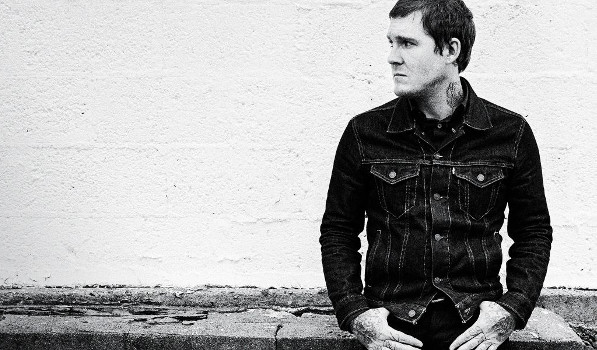
Showing posts with label The Gaslight Anthem. Show all posts

Wednesday, March 30, 2016

Interview: Brian Fallon (February 4th, 2016)

Last week, I had the chance to sit down and chat on the phone with the great Brian Fallon. The interview runs a range of topics, including the inspiration behind Fallon's folk-heavy new solo album Painkillers (due March 11th), working with Butch Walker, the uncertain future of The Gaslight Anthem, favorite Springsteen songs, and the intriguing possibility of an Elsie: Part II.
 
 
You've done a bunch of solo shows already, where you've been playing all of the songs on this record, plus some Horrible Crowes stuff and a cover or two, but no Gaslight material. How did you feel fans were responding to the songs?

So far, it's been good. You know, it's a lot to ask of people to go out and just play new songs that they don't know, and expect them to be quiet and have an attention span of any kind. But they've been doing really well, and they've been just kind of absorbing the music, which is cool because I've always kind of thought of myself and my friends as music listeners. We kind of absorb everything and pay attention to what's going on, and I'm finding out the audience is doing that as well. They're kind of shifting with me, which is really more than you could ever ask of anybody.

You've always had a folk-leaning song or two on the Gaslight albums, and there's plenty of Americana influence, but you guys have never gone full folk or alt-country. What drove you in that singer/songwriter direction for this album?

Well I think that's where I started playing music, in general, when I was really young and before I'd decided anything on my own about what musical taste I had. So, it kind of seemed natural, if you're going to try something new, to start from the beginning. And go back to "what did I get into music for in the beginning?" And it was also a little bit of a re-focusing as well. You know, why did I start doing this in the beginning? And what made me happy about it? And what did I get enjoyment from?

A few of these songs turned up, in different forms, as part of the Molly and the Zombies project a few years ago, but you made it clear at the time that you weren't planning on doing an album for Molly. What's the story behind that side project and how did you know that...I mean, were you saving those songs for the solo record, or did you just not think you were ever going to end up using them for an album project?

I knew that, at the time, I wasn't going to do anything with it. And I was just sitting there, thinking of the songs as I was going, because we got a show offer from the Bouncing Souls to do the Home for the Holidays thing, and they wanted me to do it by myself. But I didn't really have songs, and I didn't want to just go and do acoustic Gaslight songs, because I didn't think that would be that cool for that kind of crowd. So I decided, "I'm just going to kind of make up a band."

And then I called a couple of my friends to play in it, and it sort of...quickly, I had the idea that when I used to go to shows—and like house shows and VFW Hall shows—and I would see bands. You know, you would see a new band and you couldn't...maybe they had a demo tape and that was it. And you had to wait for a record and there wasn't any record, and it was just, if you liked the songs, you went and saw them again.

So I kind of had this idea that, what if we just made a band and played some songs and I don't know if there's ever going to be a record or any kind of recorded versions. And if people want to see it again, they just come check it out.

That was the initial idea behind Molly and the Zombies. And then it kind of fizzled because I was just so busy with Gaslight, and then I decided...like, I didn't really want to do another band. It's just...it's a lot of bands, you know?! I can't do them all at once, so I sort of said...once I knew that Gaslight was going to take a break and I was going to do some sort of record—because right away, well I gotta do something. I'm not just going to sit here and do nothing for a while.

So I decided that I would take all the bands that I had, the side projects, and kind of wrap them into one. And then I thought awhile about recording those Molly and the Zombies songs. I was like, "Maybe I shouldn't? Maybe I should just make new songs and have it only be new songs?" But then I was like, "Well these songs are good though, I don't want to throw them out." And the people who know Molly and the Zombies is...I mean, there might be 200 people who know who that is. (Laughs) You know, I don't think that the rest of the world is going to be too disappointed. You know what I mean? Like, it's gonna be a new song! The reach of Molly and the Zombies is not that far. (Laughs)

Right, yeah, the version of those songs I have on my computer I think is like the Red Bull Sessions or something, so...

Yeah, they're just live. We just went in there and played them. And the thing is that the songs sound a little bit different now. They're not so...country-ish.

Yeah, they're definitely not the same.

No. And they kind of feel different, and I felt good about that. You know, I explained that to [producer] Butch [Walker] when I was going to go record them. I was like, "You gotta make 'em sound different, or else there's no point in recording them."

Right. Yeah, one of them...is it "Long Drives" that has different verses completely?

Yes, it's a totally different song. That one, I just kind of...I was like "I don't know if I'm just going to...if I'm going to put this one on there"—I struggled with whether to put it on there or not—and I said "Alright, well this one I'm going to draw the line at." If I'm going to put this on there, I can't record it the way that it was, because I didn't feel that it went along with the rest of the songs. And there's people who would probably disagree with that, but...you know, I was kind of the only one there to ask! I figured it would be better if I was going to put three of them on there that I would change the whole thing and rewrite it right now, as a fresh song.

Yeah, because I was listening to it, and I think "Long Drives" was the one I liked the most from the Molly and the Zombies thing, but I hadn't listened to it in awhile...

Yeah, it's one of my favorites too.

So then I put it on, and when the verse came on I was like, "...is this even the same song?" And then it got to the chorus, which was familiar. But yeah, that was pretty cool to hear.

It's like a little adjustment period. But then I think, once it settles in...I would say to people that like the old version, I would say I like the old version too. I like them both. But just give it a second, because once it sinks in with you I think it's kind of cool.

So, speaking of Butch, full disclosure: I'm a huge fan of his music, been a huge fan for like a decade, and I interviewed him last year when he released Afraid of Ghosts, so I was excited when I heard you were recording with him. I was wondering how you ended up working with him and what that was like compared to some of the people who have produced the Gaslight albums, like Brendan O'Brien and Mike Crossey and Ted Hutt.

Well, Butch came about mostly through friend recommendations. That's how his name got thrown in the pot. Because I was sort of looking around for a producer, and I said "You know, I probably should work with somebody that I haven't worked with before, because I don't want to repeat anything that I've done." I didn't want it to be...I didn't want it to get the Gaslight treatment. I didn't want the record to have that, which people will automatically do. I find that, if you've done a band for a long time, people will...before you've even played a note...you could have a disco record and they would put the slapback vocal on it, because that's what Gaslight does. And you'd just be like, "No, come on!" Don't just rehash the same thing. Then we might as well call up the guys and get them in here.

Right, for sure.

And if you're going to do something different...you know, I figured we would try something different. And when I talked to Butch, it was real easy. He started coming up with ideas right away. He was like "Okay, you've always done a little bit of reverb or echo on the vocals, so we're going to do nothing on the vocals." You know, we're gonna leave them...just bare. And then, he was just like "We're just going to go in and record it, pretty much on the floor, and see how we do with it." And it was pretty immediate. So running into him and having him be such a fan of...of music in general, that was really easy to work with.

A lot of guys that we've worked with...like, Brendan is super good at the rock thing. He's really great at big rock sounds and stuff like that. And Ted is kind of...he's just another world. Ted's really...he does everything from the heart. Ted's really artistic and he's got a whole way about him. I love working with Ted, actually. And Mike is like a sound guy. Mike loves sounds. And this, it was totally like...get in there and don't worry about anything and just sort of sit down, and do it, and leave the mistakes in. That's foreign to me: usually the mistakes are gone.

Right, yeah! That's really cool. And Butch plays some guitar on this record too, right?

Yeah, it was like me and Butch just playing guitar! Pretty much the whole record is just me and Butch playing guitar. (Laughs)

That's really cool. So, I personally really enjoyed Gaslight's last record, Get Hurt. And I think I spoke to Benny for that one the morning it came out, and he was super excited about it. And then it got super mixed reviews and some pretty harsh pans from like Pitchfork and Slant and those guys. Did that in any way lead to the band's decision to go on a hiatus instead of keeping up with the every-two-year release strategy?

I wouldn't say that those reviews gave any...you know, they didn't come into the band. I don't think you can make your band decisions based on what one or two people think. And I would definitely say that...that kind of thing, you can't let that play into what your band's decisions are. But I'm not going to sit here and say, personally, that that didn't bother me. I mean, for sure it did. And I think the guys took it a lot better than I did. Like Benny for instance, he's got a great head on his shoulders where he...he kind of was like "Yeah, but that's just what a few people think." Like, we were doing something a little oddball-y. Of course people are going to do that. And he's like "Some people are gonna love it, some people are gonna hate it," but he's like "I was ready for that."

And, you know...I agreed with him on that aspect. But I also felt that it got a little personal. It got a little bit more...not necessarily about the band or the record, but about what [the critics] thought I was doing. You know, like what my intentions were on some of them. And I was like...these are people I've never met. That's a low blow to be throwing on somebody you've never met. I wouldn't say that kind of stuff about someone I hadn't spoken to, or done an interview with, or whatever. I think you can make an assessment based on a record, but you can't make an assessment on a person's intentions, you know? That seems a little far-fetched, and to be honest, a little self-righteous.

But you guys toured a lot in support of that record, right? Like, I don't know if it was the most touring you ever did, but it seemed like you were on the road for awhile and there were multiple tours. And at the shows I went to, at least, it seemed like the fan reception for those songs was pretty good still.

Yeah, it was a divided thing. I don't want to say it was like, all of the critics didn't like it, because some people said it was awesome. And that seemed to be the dividing line: it was either people thought it was awesome, or people just didn't like it at all. So there wasn't really a middle ground which...I guess that's good? But the kids at the shows seemed to like it, and that was, I thought, encouraging.
Because truthfully, I'm not writing songs for reviewers or magazines. I'm writing songs for myself and for the audience that we play for. That's who I feel matters in the big picture. That's always been the start of it: you're trying to communicate with your audience directly. And so those are the people that you're shooting for. And so they seemed to embrace it, which is cool. But yeah, there was definitely a divide. I think we got some of the harshest criticism but then some of the praise was pretty good too. It was mixed, and we hadn't done that in awhile. People kind of tend to like the records that we had put out prior to that. We were lucky in that sense, that people seemed to really gravitate toward the other records.

So what is the...is there a next thing for Gaslight right now, or are you sort of just playing it by ear? I know Sink or Swim turns 10 next year, so I was wondering if you guys were going to get into the 10-year tour thing?

Oh no. We're not usually the kind of band to sit around and dwell on those sort of things. I think it's cool if people do that. Mile-markers and stuff like that. But I don't know if that would be something that we would do, because it would just be doing it "Just because." Like, unless there was a reason to do it. You know, unless we all got super pumped on it and were like, "Alright, we're gonna go out and do this."

But as of right now, there's not really plans to do anything, because there hasn't been...there's just not the "What's next?" feeling, you know? What do you do now? To me, if you ask me, I can't imagine a record that we could write that would be better than 59 Sound or Senor and the Queen, actually. Those two records to me—I like all the records—but those two records to me are great. I love them. And I don't know what I can do that's better than that. And I think that, until I found something that I think is on par to that, I don't think I would try to touch it, because I don't want to do anything that's gonna damage the band as we go on. And I feel that everyone else kind of agrees with me on that. And they sort of said, "Well, if we don't have another idea that we all feel strongly about, then maybe we should just do nothing and that's the best bet." You know, rather than just ruin something. Especially half-hearted. That just seems like a big slap in the face to everybody, including the band and myself.

Yeah, especially because you sort of had the routine going where you did a record, and then you went and toured for awhile, and had maybe a few months off, and then you did another record. And it was two years, pretty much down the line. So...

Yeah. I don't think you can do that over and over.

At some point you earn yourself a break.

I do think that. Because, if you just do it just for the sake of...like, why are you doing it? Are you doing it to pay your bills? And then I don't think that's that cool, you know? I don't think it's something you should do. Bill Armstrong from Side One Dummy said the coolest thing to me one time, like, years ago. And this was when there was no money coming in at all, so it was a funny thing to say. But he said "Never put your commerce before your art." And I just always remembered that. I was like...art before commerce, that's the thing. And you have to make the music first from a love of doing the music, rather than "Oh, well, I've got my bills to pay so I better put out a record so people can buy it." That sounds disgusting to me right now, actually saying that out loud. (Laughs)

And, look, I'm not trying to say...we're not a punk band, as far as being...because I don't want to be disrespectful to bands that are punk bands, you know? And that's why I say that. But we do have an ethic that we came up with that's like: look, you don't do this on somebody else's back. You do it for the love, and that's why you do it. And like Tim Barry says, "You play for the lovers, that's what you do." And you know, unless you're 100% sure and backing it, then I don't think you should do anything.

So that's why it's more like, Gaslight decided "Okay, let's just shut up for now, because we don't have anything on the plate that we're pumped about." I'm not sitting on American Idiot in my back pocket or something. I'm not going to release record like that. I think that's an awesome record, American Idiot. Green Day had this big long career, and then they did that, which was pretty...that's surprising. Late in a band's career, to have such a great record come out of them? And so inspired? And I'm not sitting on that right now. (Laughs) I'm kind of sitting on nothing. I don't have any ideas. So that's why, I think...the only idea I would have is to sort of be like, "Alright, I guess that Gaslight sounds like 59 Sound, so let's kind of rehash that." But, to me, that sounds awful. I don't think anybody would want to hear that.

Wow, yeah, I think that's a good way of looking at it. Getting back to the solo record a bit, what inspired your songwriting this time around? I did notice there were a few songs coming from a female perspective, which I thought was interesting.

The whole thing came from the old songwriting tradition that I grew up on, like folk music and singer/songwriter music and that kind of stuff. Because I don't really...like Tom Petty and Bruce Springsteen, I guess they're rock bands, but they're more singer/songwriters. That's what they are. And those guys and all the folk music and even like Wilco and that kind of stuff...I was going back to where I started writing songs from for this one. So it sort of felt really fresh to me—fresh and familiar at the same time—that I could go and delve into these things I hadn't fully gotten to explore previously in my career.

Someone from the site wanted me to ask this: do you have a favorite Bruce Springsteen song?

Oh yeah, I've got a ton of them, actually. A lot of my favorites are really on the Tracks box set. Like that first CD of the Tracks box set. There's this one tune that I always go back to called "Zero and Blind Terry." And I just...I love that song. I feel like it encapsulates everything that Bruce was doing that was different and new, all in one song. It's six or seven minutes long, but it's...it's so rad. And when you listen to that song, you can totally hear how songs like "Jungleland" and "Born to Run" and Thunder Road" and these epics that would come in later. But this song is like the rawest version of a beginning of that, and to me, that's so exciting. It's like hearing the first Against Me! record: it's so rad and raw.

Yeah, it's nuts some of the stuff he didn't put on records.

I know right? (Laughs) There's some good songs!

Are you catching this River tour, by any chance?

I'm not, because I've been traveling around so much. I keep going on tour and I keep missing the shows. But I did just get the box set, that River box set?

Yeah, my brother got that for Christmas. It looked pretty great.

Yeah, I haven't watched [the DVDs] yet, but it's pretty cool. I just bought it.

Yeah, I'm heading down...my brother and I are going to see him in Kentucky I think in two weeks now? Which...I mean, I haven't seen him in like four years, so I'm pretty excited about that.

That's awesome. Last time I saw him was in Nashville. We were recording Get Hurt and he played down at the area there, the Bridgestone Arena. And we all took off early in the session. We were like "Let's go!" And we all went to see Bruce Springsteen. It was cool.

That's great!

(Laughs) We just like, bailed out of our own record to go see Bruce. Like "Forget this, let's go."

Did he know you guys were there? Did he like, call you up to the stage or anything?

Yeah! No, he didn't call me up to the stage, but he knew we were there. We let him know that we were coming and then he was being cool to us and it...he's really cool. I mean, he's real cool to us too, which is nice.

So Jason Tate, I think you've talked to him before, he runs AbsolutePunk. And his favorite record of yours is Elsie, the Horrible Crowes record. So I was wondering, on his behalf, do you ever see there being another Horrible Crowes record? Or is it sort of at this point like, if you're going to write something that's not Gaslight it's probably just going to be solo?

Well, I mean, if I was going to do another Horrible Crowes record, it would probably be under my own name, just for the reason that I gave before, so that it's all wrapped up into one. But I definitely have a desire to do a "part two" of that, and that was my first idea when Gaslight was like "Okay, we're gonna take a break." My first idea was like, "Maybe I can do another Horrible Crowes record. But I couldn't think of anything in that genre that would be better than Elsie, so I was like...I don't know if I want to start diving into that one. Because that's special to me. That record is...I love that record! And I still listen to it, even. So for me, I would have to get into it, and really see if I could find something that was as good as that. I would probably just do it under my name, but it's definitely on the plate to do something like that again.

And Ian Perkins is still touring with you for this anyway, right?

Yeah, he's always there. So yeah, it wouldn't change anything. Like, Ian would still have a part of it, and he would still...everything would stay the same. It would just be the name on the record that would be different, but everything else would still be the same record. I mean, I'd probably call Ted for that too, and say "Well, you gotta do this next one, because we did the first one." I would probably get exactly the same people and not change a thing.

Right, yeah, totally. But I'm pretty pleased that you went the country route more for this one, because I think it really suits...like, the instrumentation is really nice. On songs like "Honey Magnolia," like, I really like that guitar solo in there.

Yeah, me too! That's the thing: you sort of have to just obey what you feel is coming out of you at the time. You can't really control it. So, I felt like [the Americana-influenced sound] was the thing, and I had a lot of things that I'd always wanted to do—like what you were saying, writing in the perspective of a girl. And that's part of the folk tradition: taking on characters and trying to empathize and see from their point of view. And that was really calling and gnawing at me, and I really...I just knew that this was the time and I had to sit down and do this record.

Monday, March 28, 2016

Interview: Benny Horowitz of The Gaslight Anthem (August 5th, 2014)

Last Tuesday, on the morning The Gaslight Anthem's Get Hurt started streaming on iTunes, I got the chance to speak with drummer Benny Horowitz on the phone. Over the course of 25 minutes, Horowitz talked about the new record, Gaslight's attempt to move in a new stylistic direction, the band's recent influences and producers, and the difficulty of properly capturing the full effect of drums with modern recording technology. Horowitz also opened up about how surreal it is to share a concert bill with the likes of Jimmy Eat World and Against Me!, and explained why fans shouldn't be expecting another The '59 Sound anytime soon.


Craig Manning: Hey Benny, this is Craig from AbsolutePunk.

Benny Horowitz: How you doing? Sorry about that, I was literally holding my phone in my hand, I don’t know why I didn’t get it.

CM: Oh, that’s no problem at all, how are you doing?

BH: Oh, I’m not bad! Went to the diner; had some breakfast. How you doing?

CM: I’m doing great!

BH: Where you calling from, Minnesota?

CM: I’m in Illinois, my number’s Michigan, I just haven’t gotten a new phone since I moved.

BH: Ahh, what’s Minnesota? MN?

CM: Yes, I think that’s right.

BH: I got a call from an MI: Michigan.

CM: Yep, it’s a Michigan number. So, the album’s streaming today! How do you feel about the early reactions?

BH: Uhh, it feels pretty good! I mean, it’s kind of what I expected I guess. I think like, you know, there’s a lot of positive, there’s some that are not sure what to do with it yet, and then there’s some people that don’t seem to like it. So, it’s like, if it was universally one of the things I just mentioned, that would be a surprise, but the fact that it’s getting what it’s getting, it makes sense to me. But I think it’s been mostly good!

CM: Okay, great. So, Brian said in a bunch of pre-release interviews that this record was sort of meant as a career game changer for you guys. I was wondering: do you share that view? And if so, which songs do you think are really new territory for the band?

BH: Well, I mean, think when he said “career game-changer,” it’s more just like, setting off on a different course, you know? I don’t think anyone wanted to do something that was so out of step with what we’re good at that, A) maybe we won’t be good at doing another kind of music…you know, you have to ease into stuff. You can’t just overnight be like, “Aww, we’re going to be a soul band,” or something, and then expect to be good at playing soul music. I think it’s kind of presumptuous of a band to do that. So, there’s definitely an effort to move things in a different direction, but also to keep a foot in what we’re good at and make sure things didn’t get too out of step.

I think some of the songs that are a little bit more of a push would be like, “Stay Vicious,” and “Get Hurt,” “Underneath the Ground”…you know, some songs like that, I think are songs where we were testing our limits and pushing our luck a little bit, and then I think there’s a bunch of the songs that you would probably, unsurprisingly, hear on another Gaslight album. So, I don’t know if anything was overstated [by Brian] in the beginning, but it’s definitely an intentional move in a different direction, though, for sure. Where it counts, you know what I mean?

CM: Yeah. So, what records were you guys listening to while this album took form? I know in the past you’ve really been…Springsteen and Petty, those guys have been big influences. Who were the big influences this time around?

BH: Well as usual, I think through the course of the band, you’re going to hear a super wide array of influences of what anybody is listening to at any one time. But I know we were paying attention to a lot of bands who made some shifts in their careers, and I guess bands that successfully did it, you know? But then there was also a lot of listening to some listening to some good classic rock. There was a lot of Hendrix talk going on, and a lot of Floyd talk, and things people…that’s always theme for us, it’s like a universal type of music we all love. But I don’t know, it’s kind of a tough question to answer, because if you ask every specific person, I think they would have been drawing sort of a separate set of influences. We weren’t all just sitting around a discussion table with a record saying, “Yeah, that’s what we need to do.”

CM: Gotcha. You’ve been working with some different producers on your last couple albums after doing The 59 Sound and American Slang with the same person, first with Brendan O’Brien on Handwritten, and now with Mike Crossey on Get Hurt. Can you tell me a little bit about the differences between working with those two guys and sort of how they helped you go in the direction you wanted to with these two records?

BH: Well I mean, Brendan was one of those guys we were just excited to get in a room with, you know? We knew his track record, we knew the kind of records he’d made, and we wanted to make a record like that. So it was the perfect fit when we were doing it. When he’s in the studio, he has a super clear vision on kind of how he wants things to sound and things like that, and he’s got really great ideas with notes and melodies and…I mean, the guy’s a real musician, so he definitely had a lot to offer with stuff like that too.

And, you know, it’s a little bit…the one thing that we needed, though, was to be a little more hands on with everything that we were doing. And that was one of the reasons that we felt the need to switch to somebody like Mike. Because when we were thinking about how we wanted this record to sound, it maybe didn’t exactly sound like a Brendan O’Brien record. So we thought it would be smart and kind of fun and interesting, almost, to go with somebody new while we’re trying to do these different things.

So we got to Mike, and you know, he’s our age and he’s like, a really chill dude. A really creative guy. And he’s open to just anything, and when you’re in the studio…I found it to be a really interactive environment where everyone was really vocal and everyone had their hands on everything again. And I think that definitely shows. I think this record is a lot livelier than the last record.

CM: I’d agree with that.

BH: And I think a part of it is just the feeling we had when we were [in the studio] and when we were writing. [The music] was coming from a bit of a different place, and Mike was really good at [capturing it]. Not to mention Mike, his engineer, and this guy Jon….Gilmore, who was doing the edits and stuff…it was just a really easy group of guys to be around and a cool, cool scenario.

CM: So, I think it was in a Rolling Stone interview, Brian mentioned that you recorded most of the drum parts by yourself in a silo. I was wondering if you could tell me a little bit about that experience, and sort of about how about…how that was a different approach to your contributions to the record, and whether or not you liked doing that, or if you prefer being in the same room with the other guys and sort of playing off each other.

BH: It’s an interesting thing that’s happened to me recording is that, you know, I used to not record or play to a click ever when I was younger. I mean, up until just a few years ago, I never was in a situation where I had to play to a click. So like, through the last couple records, I’ve kind of needed to learn how to do it and be comfortable with it, and to know how to give something some feeling while you’re playing on a metronome.

‘Cause I came from this whole school of just push and pull, you know? If you’d asked me five years ago if I cared about timing, I would have said, "like, Sort of" But I care a lot more about making the music feel energetic and good…and about moving it, you know, like I always feel like that’s the drummer’s job. It's like, to keep the music moving forward. Then, you get to something that’s a little more paced…on a metronome, and if you don’t feel comfortable playing to a metronome, then you’re going to play like, really, really…you know, like an anal retentive person, or something. You play like you have OCD because you’re just focusing on the click.

So most of the songs we’d record on the last couple of albums, the easiest way I would find it, is…we do get in a room and we play together. And a lot of the songs [on Get Hurt] were…well, some of the takes were us playing together for the drums. But there were also these other takes, where we'd play four, five, six times with everybody, and then everyone just leaves and I play to the click by myself. And I find in a way that, when I know exactly what I want to do and I’m playing on the click, I find it easier to play in and out of it, if that makes sense? Like, I’ve learned that there’s a way to make music move forward and back, even when you’re on a click. You can sort of, on some parts, go more toward the front of it and push it, and then some parts you can go more toward the back of it and lay it back a little. But I have a hard time hearing that when everyone else is playting. So for some songs, I do find it easier to [play to a click] now.

And then the silo thing, is like…I mean, I wish I had it in my house because it sounds so cool (Laughs). I could sit in that thing playing drums all day, 'cause it just sounds…like, like Physical Graffiti or some shit like that. Basically this studio has this 6x6 room with an adjustable ceiling that goes up to…fuck, maybe 20 or 30 feet? And basically it’s a natural reverb chamber, so you put a mic in there, and based on how high or low you put the ceiling, that's like, how long your reverb becomes. So, typically they’ll just have [the band] in the next room, put a mic in [the silo room], set it how high they want it for the reverb, and then that’s how they get the noise. In this case, we thought it would be a fun or cool idea to actually put me in this room. You can't fit much in there because it’s so small, and the floor is actually slanted too, so that was tricky. But I got this really old, big kick drum in there, and a snare and high-hats, and yeah, I did a bunch of takes in there. And…yeah, it sounds fucking cool, man. I could sit in there and play all day. It sounds so epic.

CM: Well, I sort of felt like this record was more…I felt the drums more, I guess when I listened, especially on tracks like "Stay Vicious," where you actually open the record, or something like “Dark Places,” where you’re really pushing the intensity on there. Was there a conscious effort to sort of emphasize your contributions more, or was that just basically the style of the music dictating what was happening?

BH: I think it was both. There’s definitely some songs that just…I mean, you don’t have a choice but to play good, active, lively drums, ‘cause that’s just the nature of the song. And there are a bunch of songs on Handwritten where the nature of the song was…to leave a lot of fucking space and let it open up.

So there was a bit of a change in approach as far as that goes, but also, I think technology has bit us in the ass a couple times with drums, where people in the past have maybe taken a few too many liberties with cutting things up and making them perfect, when they really don’t necessarily have to be, and really shouldn’t be, because the feel of the part is so much more important.

There’s this thing on ProTools called Beat Detective that I think is the fucking devil for drums. It just takes any personality a drummer could possibly have and it just sucks it right out of them to try and make some version of perfection. But, you know, like, what we do isn’t perfection, or to me, shouldn’t be perfection. It’s about vibes. It’s about feeling. I think that was something that we suffered from in the past and learned from in this case, so there was a conscious effort, actually, this time, to make sure that didn’t happen again. I was like a hawk over the dude editing, making sure things weren’t getting done [the Beat Detective] way.

CM: Okay, cool. So my next question is about, this fall, you guys are heading out a pretty big tour, and you’ll be sharing the bill with the likes of Against Me! and Jimmy Eat World. Is that, like, surreal to paly with bands like that?

BH: (Laughs) Yeah, dude, I can’t even…it’s not only surreal to play with bands like that. It’s like, to play over bands like that [on the bill], it almost makes me feel guilty, you know? I feel like shit playing over Jimmy Eat World, like…(Laughs) I do, it’s weird. It’s fucking weird to me. And playing over Against Me! is fucking weird to me too, that’s never happened before. You know, especially a band that was clearly like, our senior and like, somebody we really looked up to, especially at the beginning. So it’s a…yeah, it’s totally surreal and it’s totally weird.

I mean, I've been a Jimmy Eat World fan for…shit, I mean, it’s a scary number to say. At least 15 years, you know, and I’d say even longer. I had some 7-inch, like a three-way 7-inch with Jimmy Eat World and Sense Field and Mineral when I was…fuck, like 15 or 16. And I remember thinking, like, the funniest thing about the band was that their acronym was JEW.

But yeah, I’ve been a huge fan of both of those bands, and they each have records that are like…you know how you have those records in your life that are like…you think about and it brings you to some specific place in time, and they’re just that memorable?

CM: Oh hell yeah.

BH: Like, Bleed American for Jimmy Eat World and Reinventing Axl Rose for Against Me! are two of those records for me. Those are two very, very important records for me. So, yeah, it’s just crazy that we get to do this now.

CM: So do you have a favorite song on Get Hurt, and/or one that you’re really looking forward to playing live this fall?

BH: Well, I think it’s gonna piss off a lot of fans, cause from early reviews, I don’t think it’s the one they like, but I love “Underneath the Ground.” I think it’s so much fun to play, and I love playing it live. It’s just really nice and “in the cut.” Me and Alex have this nice little rhythm going on, so that’s my favorite. We’ve just been rehearsing recently, the last couple of weeks, and I’ve been having a really great time playing that song.

CM: Yeah, that one’s a completely different mood from pretty much everything else you’ve done, so I can imagine it’s a bit of a standout.

BH: Yeah, I like it a lot, man. And I’m a big hip-hop fan, and there’s very, very few times where I find any kind of window in Gaslight Anthem, you know (Laughs), you know, where I can bring my love of something like that into it. And there’s a couple of times in that song where, when I’m listening back, I think “ahh, I might have gotten that from [hip hop].” You know, there’s a little room in there, so it’s definitely fun for me.

CM: Well, that’s a good segue into the next question, actually, because there’s been some talk from people who got the advance or who are listening for the first time today, about how that song and a few others on here sort of recall Brian’s side-project, the Horrible Crowes. Was that intentional, do you think, or was it more like the attempt to write in a darker, more melancholy style led sort of led to echoes of Elsie?

BH: Yeah, I mean, among the other guys in the band, I don’t think anybody made any attempt to make it sound like that. You know, I’ve been reading that this morning and I didn’t really know what to do with it. I was like, “Oh, okay…” because none of us really had anything to do with [Elsie]. But, I mean, maybe there’s just a theme, and when Brian gets dark and moody, like he did on that record and like he does a couple times on this record, it could sound similar. But, yeah, I honestly don’t really know what to do with that. But I don’t think it’s a bad thing. I think that record’s good.

CM: Oh yeah, that record’s great.

BH: And if something reminded people of a good record or something they liked, I don’t really care. But I don’t think there was some direction to go that way.

CM: There was no attempt to blend the two bands into one, or something.

BH: No, it never came up. It definitely never came up, so, if that’s happening, I guess it’s naturally happening.

CM: So I think fans would generally point to The 59 Sound as The Gaslight Anthem’s best album, and Brian commented a few years ago that he wasn’t interested in chasing that album anymore, or trying to make something like that again. What are your thoughts on that?

Yeah, I couldn’t agree more with brian in that regard. I think that, if you take a bunch of guys six or seven years later, who are six or seven years older and six or seven years different, in a totally different time in your life and a totally different place, and then you try to recreate something that you sort of struck a little gold on, then I think you’re going to tread water and you’re not going to pull it off.

I think it would be a mistake to try to chase something like that, because I hear that record and I love that record when I listen to it, but do I want to try and do that again right now? I don’t think so. I think that would be dishonest. And I think the record you got is the honest portrayal of where we are right now. And if people don’t want to follow us there and they’re just in love with [The 59 Sound], dude, I get it. I really do. I’m the same kind of music fan from an outside perspective. I fall in love with albums and if someone does something I’m not so sure of, I might lose interest for awhile. And it is what it is, you know, but you can’t go into the studio and you can’t write songs based on all of that. You gotta do what you want to do. You gotta do something you think is challenging and fun and creative. And you gotta do something that’s comfortable with everybody you’re doing it with, and then just hope that people are gonna see it for what it is, and that they’re gonna enjoy it for how they’re gonna enjoy it. But I think putting that kind of expectation on something, I just don’t think it’s wise and I don’t think we’d get anywhere doing it.

CM: Yeah, I’d agree. So one last thing I wanted to ask and then I’ll let you go. You guys sort of have two lead singles on this, I feel like. You released “Rollin' and Tumblin'” first and then you dropped the title track, and I believe they both have videos now. Are they supposed to sort of just be two lead singles? Or did you mean for them to overlap like that? Or were you trying to represent the different sides of the album? Like, I’m very interested in how that sort of came about.

BH: Well, I think if you asked everyone in the band, we would have been pretty comfortable leading everything off with "Get Hurt." And I think part of the logic of doing it the way it was done was like, just a straight business thing from the label. Because I think U.K. singles burn out way way faster than American ones do, because they have like, one radio station. (Laughs) So, the idea is that, ["Rollin' and Tumblin'"] will start there and “Get Hurt” will start here, and by the time the time “Get Hurt” is going in the U.K., it will still be going here. From my understanding, I think that’s the bulk of the reason that happened. I wish it was a sexier answer, but to be honest, I think that’s why.

CM: Yeah, I was just interested because "Rollin' and Tumblin'," to me, is more representative of the old Gaslight, and "Get Hurt" is very much the core of this album and what it sounds like and represents.

BH: Yeah, for sure.

CM: So I was interested that they were both out there and both sort of “leading the way” for this new album.

BH: Yeah, I mean, maybe the business side just got cold feet and got too scared of going first with something that was more left-field. But yeah, these days man, I don’t…I don’t really care, you know? (Laughs)

CM: You're not worried about the singles!

BH: Well, it's like, I care about which ones go out, but I trust the fact that these people that are hired to do these jobs at all these places know better than I do. They went to school to study the demographics of our minds, and all those crazy mind control things that you gotta do to sell things to people. (Laughs) So who knows what they’re up to, man. I maybe don’t even want to know!

Saturday, March 26, 2016

Brian Fallon - Painkillers

There aren't many people in music right now who are under more pressure than Brian Fallon. Labeled as the torchbearer of the classic rock tradition upon the release of 2008's The '59 Sound—the sophomore album from his Jersey-based quartet, The Gaslight Anthem—Fallon has spent the better part of his career not just having to live up to the quality of his own albums and songs, but to his idols as well. A lot of people got into Bruce Springsteen, Tom Petty, and Bob Dylan after hearing consistent references to each in Gaslight's early music. In fact, Gaslight's legacy got so entwined in the "inspired by Springsteen" narrative that fans started requesting Bruce songs at shows. Even Fallon's side project, the Horrible Crowes, got whipped up in the Springsteen tornado, drawing at least a handful of parallels to Nebraska. Let's be honest: figuring out a way to live up to an album as terrific as The '59 Sound is hard enough. Doing it when everyone is comparing your stuff to albums like Born to Run and Damn the Torpedoes is just downright unfair.

In a weird way, then, Painkillers, Fallon's first solo LP, is his opportunity to check all of that baggage at the door. Freed from the shackles of his bands and the fan expectations that go along with them, Fallon finally has the opportunity to sit back, slow things down, and re-evaluate. Solo albums have their own sort of mythos and preconceived notions, but they also come with the assumption that things are going to be different. No one's approaching this album expecting another '59 Sound, because it's not a Gaslight Anthem record. No one's expecting an Elsie part two, either, because The Horrible Crowes isn't the name on the sleeve. By making a record under his own name, Fallon finally has the chance to stop being "Brian Fallon: the next Springsteen" or "Brian Fallon: the savior of rock 'n' roll" and to focus instead on being "Brian Fallon: the songwriter."

With Painkillers, I had an opportunity that music writers don't normally get: the opportunity to hear the album early, absorb the songs, fall in love with them, and then stop listening—all before putting pen to paper to write a single word in judgment of it. I got this album in my inbox before Christmas; I interviewed Brian about it at the beginning of February; then I let it sit for a full month before finally pushing play again. What I discovered when I returned to Painkillers last week was that it already felt like an old favorite. These songs—which straddle the line between folk, alt-country, and classic rock—are so innately well-crafted that they feel like they've been here for years. Once a student of all things rock 'n' roll, Fallon has grown as a songwriter to the point where, on Painkillers, he's become the teacher, and there's no bigger compliment that can be paid to him than that.

The '59 Sound was a great record partially because it was so steeped in homage. If Bob Dylan hadn't already used the title, Love & Theft might have been a fitting name for The Gaslight Anthem's sophomore record, for how frequently Fallon pilfered lyrics wholesale from his favorite artists. It was a trick that could have easily become gimmicky or imitative in lesser hands, but Fallon used it to imbue his music with the vibrancy of a life lived with rock and roll as its guiding light. Listening to The '59 Sound was thrilling not just because it was a great rock record, but also because it so perfectly captured what rock 'n' roll music can be when you love it to the point of insanity. It was a record for soundtracking your life, about music that soundtracked lives.

Painkillers is slightly less meta in its execution, but the spirit of Fallon's songwriting hasn't lost any of its color or life. Right from the glockenspiel chimes of leadoff track and first single "A Wonderful Life," you can tell from every note of this album that it was a labor of love for Fallon. In our interview last month, the frontman-turned-solo-artist told me that, for his first go-it-alone project, he wanted to go back to his roots and channel the classic singer/songwriters he loved in his youth. Perhaps it's because I started my musical journey in a similarly Americana-drenched place, but to me, this record really does feel like coming home. From dusky folk ballads like "Steve McQueen" and "Honey Magnolia" to raucous kick-drum stompers like "Smoke" and "Red Lights" (both repurposed here from Brian's second side project, Molly and the Zombies), Painkillers finds Fallon resting in a pleasant traditional realm. Butch Walker, meanwhile, does career-best work in the producer's chair, giving the songs enough gloss to reflect their classic rock and vintage pop influences, but also leaving in enough dust and dirt to honor the folk music tradition Brian was chasing.

Painkillers always sounds familiar and welcoming, but contrary to what a few fans and critics will say, it only rarely sounds like a Gaslight Anthem album. The clearest reference point is "Rosemary," a rousing rock number that plays like a spiritual cousin to "Here Comes My Man" from 2012's Handwritten. Like that song, "Rosemary" is penned from a female perspective. Also like that song, it builds to one of the biggest, most emotional payoffs in Fallon's catalog. Following a scorching guitar solo from Walker, Fallon dives headlong into one of the best choruses he's ever written:

Now I hear you crying over the phone
Where have all the good times gone?
Down in a glass of shouting matches
Lost in the songs you don't write anymore
But hey, hey, hey, it's alright
I ain't trying to bring you down tonight
And oh, my, my, she said, 'I don't mind
'Cause maybe someday they're gonna love me back to life

The last two lines of the chorus change with every repetition, concisely chronicling the tortured loneliness of the song's adrift title character. Here, though, they take on a profound and empowering punch. Accompanied by drums, pounding in double-time, and led by Fallon's fiercest bellow, the song leaves a wreckage of doubt, confusion, and blood behind for the song's piercing outro. "My name is Rosemary, and you'd be lucky to meet me/My name is Rosemary, and you'd be lucky if you get to hold me," Fallon proclaims in the songs final moments. Regardless of what or who the song is about, those final lines send a universal message of freedom and hope. It's tough to picture a setlist going forward where "Rosemary" doesn't set the stage on fire.

Elsewhere, Fallon gets into his usual game of references and homage. Sonically, "A Wonderful Life" is his most Springsteen-indebted song in years; "Among Other Foolish Things" dismisses the Beatles' old mantra of "All You Need Is Love" as...well, foolish; the highway-ready "Long Drives" references "Always on My Mind" and "Into the Mystic," and has a knockout bridge about "a girl with a taste for the world and whiskey and Rites of Spring"; "Honey Magnolia" fits in nods to "Blowin' in the Wind," "It's a Man's Man's Man's World," and Bruce's "Racing in the Street" before sunsetting with one of the most gorgeous guitar solos ever; and "Open All Night" actually shares a title with a Springsteen song—though its hopeful, wistful vibe gets Fallon far enough away from the forsaken plains of Nebraska to safely quote a Don Henley song.

On first listen, Painkillers is deceptively simple and surface-level. It plays with so much immediacy that it feels like Fallon's "pop" record. After all, when was the last time he wrote songs as instantly catchy as "A Wonderful Life" or "Nobody Wins"? But the more time I've spent with this record, the more nuance and heart it has revealed to me. Fallon's albums have always been about the ups and downs of life, from the Ferris wheel youth of The '59 Sound to American Slang's maybe-we-ain't-that-young-anymore nostalgia, all the way to the post-divorce heartache of Get Hurt. Painkillers is no different, and as "Open All Night" reaches its final lines, it feels like Fallon is surveying his entire story from an older and wiser place. "And I will never know the town where you finally settled down/With the top back on the Cadillac and your sunglasses on/And you can't make me whole, I have to find that on my own/But I held you baby a long, long time ago/When we were open all night long."

That line, "I have to find it on my own," feels startlingly candid and pointed, given both the status of Painkillers as Fallon's first solo venture, and his recent comments about the uncertain future of The Gaslight Anthem. Even if there is no sixth Gaslight Anthem album, though, Fallon's story is far from finished. This guy is one of the best songwriters of his generation, in any genre, and if his future albums—solo or not—are as full of pleasures as Painkillers, we have nothing to worry about. "I don't want to survive," Brian sings in this album's stirring opening salvo. "I want a wonderful life." Suffice to say that, if Painkillers does signify the end of something, it's fitting that it does so with every ounce of Fallon's signature romanticized hope still intact.

Great expectations, indeed.

The Gaslight Anthem - Get Hurt

“Completely different than anything we had ever done before.”

That’s the description that Brian Fallon, frontman for New Jersey rock band The Gaslight Anthem, gave to Rolling Stone in regards to Get Hurt, the band’s fifth full-length studio album. In fact, in the lead up to this record, Fallon made numerous statements just like that, talking about how he and his band spent the writing and recording sessions for album number five listening to famous records where bands had changed course and gotten “weird.” For some, hearing Fallon reference U2’s Achtung Baby and how it took that band’s sound in a completely new direction, was reason to become uneasy. After all, The Gaslight Anthem is a band that has made a career out of following small progressions from album to album, changing up the themes, lyrics, and song structures, but always maintaining the same core Jersey rock and roll sound. The prospect of a “weird” Gaslight Anthem album was nerve-wracking because, for many, imagining what that album could even possibly sound like was borderline impossible.

For others though, the idea of Fallon and co. going in a completely new direction was an appealing one. 2012’s Handwritten, the band’s last record, doubled down on riffs, hooks, and shiny production, but for many, it lost the street-rat charm that made both The 59 Sound and American Slang welcoming and relatable. Those fans will be pleasantly surprised by the first moments of Get Hurt, where a sludgy wall of guitars breaks through the speakers with fuzz and fury. The opener, the booming and bustling “Stay Vicious,” is the grittiest this band has sounded in years, replacing the last record’s Oasis-sized arena rock with something more akin to the dirty nineties grunge of Pearl Jam and Nirvana—both bands that The Gaslight Anthem covered on their last tour.

For an intro and a verse, “Stay Vicious” is a welcoming entry point for fans who still hold Gaslight’s debut record, the loud and unpolished Sink or Swim, as the band’s gold standard. (The fact that the song is laced with Fallon’s grimmest lyricism in half a decade, with winning lines like “I have pills for this, tabs for that/And something that used to resemble a soul,” only furthers its “return-to-form” MO.) But then “Stay Vicious” breaks into its chorus, and everything changes. Rather than the roaring, vocal-cord-shredding hook that one might have expected from a Gaslight Anthem opener built in the vein of a straight-ahead Pearl Jam rocker, “Stay Vicious” opts instead to subvert expectations, dropping into a slow-burn, eye-of-the-storm refrain that has more in common with The National than it does with Nirvana. It’s a beautiful, rain-drenched moment, and it adds an intriguing dichotomy to a song that could have easily been a loud, generic throwaway. It also forces you to start paying attention: maybe this is what Fallon was talking about in all of those pre-release interviews.

Unfortunately (or fortunately, depending on what kind of fan you are), “Stay Vicious” is the exception rather than the rule. While there are songs on Get Hurt that take The Gaslight Anthem’s sound in new directions, it turns out that Fallon didn’t go quite far enough in trying to write a career shift into his band’s narrative. In other words, after all of Fallon’s hype, Get Hurt feels strangely safe, even if it is a good deal more exploratory than Handwritten ever was. Even the songs that do different things, like the gorgeously melancholy title track, the Tom Waits-esque “Underneath the Ground,” or the shapeshifting “Selected Poems,” don’t feel shocking, since they are hitting many of the same sonic pressure points that Fallon built his Horrible Crowes project on three years ago.

That doesn’t mean they aren’t fantastic songs, though. On the contrary, the sweeping “Get Hurt” is one of the best things Fallon has ever written, with a heartwrenching bridge (“Maybe you needed a change, and maybe I was in the way,” he bellows in the final moments of the song, a simplistic line that hits like a wrecking ball thanks to the booming nature of the arrangement and to Fallon’s better-than-ever vocal delivery) and crystal clear studio work from producer Mike Crossey (Arctic Monkeys, The 1975) that make it the clear lynchpin of the record. “Selected Poems” is more traditional Gaslight fare, but don’t be surprised if the song’s intro, ripped straight from the middle of Elsie, lulls you into a false sense of security. Even if it’s safer than I would like it to be, Get Hurt still has a few surprises up its sleeve, and the swan dive into the main body of “Selected Poems” is the best one. “I was fortunately desperate and turbulently innocent,” Fallon shouts as the song kicks into high gear, moments before launching into the record’s most incendiary chorus: “And all I seem to find is that everything has chains/And all this life just feels like a series of dreams,” Fallon rages on the hook, referencing Pearl Jam’s “Corduroy” in the same way he used to reference Springsteen.

And that’s arguably the biggest departure evident on Get Hurt: for the first time, Fallon is cribbing almost no moves from the Boss. The 59 Sound was a veritable scavenger hunt for Springsteen references, and American Slang based many of its themes of fading youth on Born to Run. Even Handwritten, which started Fallon’s move away from loving homage, had its Bruce parallels, from the Spectorian “wall of sound” evident on “Here Comes My Man” to the crashed American Dream of “National Anthem.” Here, Fallon seems to be writing songs that make a purposeful effort to get away from the Springsteen comparisons. It’s not hard to see why he’s doing it—a few years ago, he wrote a disgruntled open letter about concertgoers who would request Bruce songs at Gaslight shows instead of his songs—but considering the many great places the Springsteen influence has taken Fallon over the years, it’s a shame that the frontman has evidently decided to retire it.

Replacing Springsteen here are Fallon’s other heroes: Vedder, Cobain, and Petty, chief among them. The latter crops up on the album’s most patent Gaslight tunes, like “1,000 Years,” a kicking heartland rock track that would have been right at home on American Slang. A definite album highlight, “1,000 Years” has one of the most instantly memorable chorus melodies Fallon has ever written. It’s a hook worthy of “summer jam” distinction, and it should have been the lead-off single. The other Petty number is “Break Your Heart,” which fills this album’s “acoustic ballad” slot. It’s a familiar and predictable track, a pleasant piece of dusky folk-pop that feels like a natural-born penultimate number.

Unfortunately, in context of the raucous and scatterbrained Get Hurt, “Break Your Heart” feels almost jarring, like an attempt to replicate the introspective conclusion to Handwritten, only without the same level of cohesion. It’s not the fault of Fallon’s songwriting that “Break Your Heart” fails, though some will undoubtedly accuse it of being too maudlin. Instead, the problem is the overall sequencing of the record. After the first three tracks, Get Hurt fires off a number of songs that feel more like one-off diversions than parts of an album experience. The eerie “Stray Paper,” with its female back-up vocals and a histrionic delivery from Fallon (not unlike “Too Much Blood,” the last album’s overwrought centerpiece) is particularly guilty of this offense, as is the torrid, lyrically clumsy “Helter Skeleton.” Neither track is bad, but both feel a bit misplaced coming after the infectious “1,000 Years” and the grandiose title track. Similarly, lead single “Rollin’ and Tumblin’” is a killer throwback to the band’s early days that just doesn’t fit here, while “Red Violins” is this album’s “Desire,” an enjoyable piece of filler that will undoubtedly be singled out as a representation of everything this album is lacking.

Reorganized into a different order (or even altered a bit to include one or two of the bonus tracks), Get Hurt might have felt like a more connected and well-paced project. As is, it’s a bizarre jumble of ideas from a band that has at very least always done a great job at following a complete arc through their albums. The last few songs make a valiant attempt to restore the mood set by record’s opening, with “Selected Poems” and “Ain’t That a Shame” returning to the same dark and confused vein of the first three songs. Album finale “Dark Places,” meanwhile, goes back to the well that provided “The Backseat”—the epic closer from The 59 Sound, and still the band’s best song—for a fitting send-off. Everything about the song, from the almost imperceptible vinyl scratch of the opening notes, to the defining line of the chorus (“How many nights did I crash against the waves without going under?”), recalls the youthful beachside atmosphere of The 59 Sound. In other words, it’s a thrilling time capsule number for early fans of the band, filled with crashing drums, throwback guitar tones, and a swelling atmosphere that legitimately feels like the salt of sea spray on a hot August night. Whether or not it makes sense as the closer for this particular album will be debated, but for a set of songs that goes all over the place while revisiting virtually every stage of Fallon’s career, tying everything neatly together was never going to be a viable option.

Ultimately, Get Hurt isn’t The Gaslight Anthem’s best album, nor is it the one that people are going to remember years for now for taking their career in a new direction. Instead, it’s almost like a “greatest hits, new songs” kind of deal, a record that will appease and frustrate fans in equal measure, depending on which era of the band’s history they appreciate the most. Sure, it’s disheartening that the album isn’t the game-changing record Fallon promised, and it’s too bad that it doesn’t have the thesis-statement cohesion of albums like The 59 Sound and American Slang. But the songs are still great, the production is still excellent, and the performances of the band members have rarely been in finer form. Here’s hoping that, since Get Hurt essentially sums up the first chapter of The Gaslight Anthem, album number six will be able to start the second chapter in uncharted territory.

Wednesday, June 5, 2013

Johnny Mainstream - Ghost Broadway

Self-Released, 2013
7.0/10

There’s a beautiful moment on “Stage,” the first (and arguably, best) track from Johnny Mainstream’s sophomore album—entitled Ghost Broadway—where the voices of band members Matthew Maynes and Laura Sabourin begin to trade off on the melodic line. Neither voice is perfect—Maynes sounds like Conor Oberst’s long-lost cousin, and Sabourin’s instrument radiates with quivers and shakes, occasionally even wandering off key—but when the two join together on this song, it just works. “Stage” burns with restrained longing, buoyed along by folky instrumentation, propped up by an atmospheric electric guitar line—one that feels culled directly from the Gaslight Anthem’s first record—and structured around its vocalists in a way that, for whatever reason, recalls that ‘90s radio hit you forgot existed.

And that’s pretty much the game Johnny Mainstream play throughout. Like so many bands we’ve seen lately, these guys work the throwback angle for all its worth. We get classic heartland rock--by way of Brian Fallon or Brandon Flowers, Americana flourishes--by way of I’m Wide Awake, it’s Morning, and enough booze-fueled confessionals to make The Hold Steady proud. First single, “Whiskey for Dinner,” is a propulsive, sing-along rocker, loaded with gang vocals and communal sensibility (again, Sink or Swim comes to mind), while the rollicking title track features a slinky bass-line, a classic piano reverie, a martial drum-beat build, and a charismatic, glam-rock-ready vocal from Maynes. These are songs that feel innately familiar from first listen, but not in a way that strikes as bland or derivative—even though derivative might be a perfectly justified descriptor for Johnny Mainstream’s music. No, at its best moments, Ghost Broadway strikes the balance between new and old, between nostalgic and refreshing, and those moments probably have the capability to land on more than a few playlists for people around this website.

The sound doesn’t always hit home though. Maynes’ voice is too limited to give the band a lot of sonic territory to work with, and the record’s 13-song, hour-long runtime means it probably overstays its welcome a bit. The middle section run of “No Noise,” “Cheap Guitars,” and “Pot of Gold,” in particular, never seems to go anywhere—a shame after the disc's strong opening. That trio also seems to represent a dividing line of sorts for the record, opening up a more subdued, acoustic-based second half. “dc” is a lovely, road-weary piece of balladry (and “You grabbed my arm and told me the stars were just headstones for the Gods” is probably the album’s best line), while “Whiteboard” apes the chord progression and feel of Neutral Milk Hotel’s “In the Aeroplane Over the Sea” for another satisfying duet between Maynes and Sabourin. Meanwhile, should-be closer “Team Electric” is an ambitious, four-part suite that takes cues from both Green Day’s American Idiot and Titus Andronicus’s The Monitor, and "Scarecrow" is another slow-burning highlight, with a grungy electric guitar line the gives it welcome momentum through its six minute cycle.

Ghost Broadway isn’t quite a great album on its own, but there are so many indicators here that Johnny Mainstream is capable of greatness that I’m almost willing to give them the benefit of the doubt. Sure, the album is too long. And it gets a bit repetitious in the middle. And the sequencing could probably have used a few change-ups. And the production, as great as it sounds throughout, loses a few points in te last minute for dropping the organ swells and harmonica lines in the actual closer (“Northern Terminus”) to a level in the mix that sort of truncates the song’s epic build. But there are moments throughout this record—a striking piece of imagery here, an electric guitar line there, a great chorus on one song, or a nostalgically resplendent atmosphere on the next—that really make it feel as if this band has something special to bring to the table. Give it a shot.

Friday, December 14, 2012

A Year in Review: The Best Music of 2012

A year ago this week, I watched my first set of dreams fade away before my eyes. I was a vocal performance major, working towards a degree (and hopefully a career) in the musical arts, and spending hours a week in practice rooms or rehearsal spaces, trying to make those options more viable. For my final exam, I entered my performance hearing jury--ostensibly the tool the faculty uses to decide whether or not students can remain in their program--and failed. But as I drove home (to the startlingly appropriate strains of M83's "Intro," no less), it didn't feel like an ending. A part of my heart was broken, aching for all the time I had wasted, but another part of me--a bigger part--was massively relieved. I had my whole life laid out before me, and for the first time in a long time, I felt like I could take any road I wanted to.

In a lot of ways, this year was my rebirth. I went back to school and redoubled my efforts, picking up an English major and rapidly wracking up resume builders. Since then, I've written for two global music publications and two online magazines based out of my hometown; I spent the summer interning at a business that was half marketing agency, half newspaper, gaining a ton of valuable skills along the way; I landed a job editing the Arts & Entertainment section of my school newspaper, managing my own small team and keeping my writing up along the way; and just this week, I was just offered yet another writing internship for my final semester. Furthermore, though I sometimes forget it, I am still a full-time student, building towards my double-major graduation this spring (I shifted my music degree to a generic B.A.), and trying to finish an entire English degree in just a year and a half.

For good reason, the soundtrack to all of this has been a strikingly memorable one, and cultivating this list has been an even more joyous (and joyously difficult) experience than is was last year. In many cases, I was surprised at how the order shook out: I was intrigued at what I left off and chose to include, and interested at which specific musical memories swam to the forefront of my mind as I worked through this extensive retrospective. For me, music has always been an emotional ballast, a means to remember and re-live the most important moments of my life. Unsurprisingly, then, serendipity and nostalgia played a big role in which albums won and which albums lost, so to speak. When a record comes along at just the right time, it melds with our memories, our loves, our friendships, and everything between, becoming immortal. In the following list, I discuss a few of those anecdotes, trying to tell my own story through the music that has, over the past 12 months, most clearly defined it. To steal a line from the 2011 version of myself, this list represents the 30 records that I "lived, loved, and listened to the most over the past year." Enjoy.

1. Bruce Springsteen – Wrecking Ball

 
More than ever before, my number one slot this year was a real battle, a struggle that played out between one of my all-time favorite idols and two bands who are eternally indebted to his canonical classics. At the end of the day though, when I look back on 2012 and think of the most definitive musical moments, my first listen to Bruce Springsteen’s seventeenth studio album (and his best in over two decades) is what swims to the forefront of my mind. Somebody once told me that, years down the line, you’ll be able to tell the best albums by how well you remember the day, the hour, the moment that you first heard them, and more than any other record released this year, Wrecking Ball infected me from the moment I pressed play. I remember the Sunday night when it leaked: staying up until 1:30 or 2 in the morning, letting the songs wash over me, discussing them with fellow fans online, and reveling in the fact that Springsteen had, quite likely, just made his best album in ages. I remember the scorching liveliness of “Easy Money,” the Irish rave-up that was “Death to My Hometown,” the mournful guitar solos that cut across desolate ballads like “Jack of All Trades” and “This Depression,” and the redemptive power the echoed through the long-awaited studio version of the title track. Most of all though, I remember sitting entranced as the gospel-infused grandeur of “Land of Hope and Dreams” washed over me. When the ghostly saxophone of the late Clarence Clemons burst through the texture halfway through, my eyes filled with tears. This is how music is supposed to make you feel, and throughout Springsteen’s great American protest album, he achieves that level of emotional transcendence time and time again: it would be a crime for me to call the result anything less than the album of the year. (Album review here, live review here)

Key tracks: “Death to My Hometown,” “Wrecking Ball,” “Land of Hope and Dreams”

2. The Gaslight Anthem – Handwritten
 
Handwritten, my most anticipated album of the year from the get-go, finally came into my life at the end of the hottest day of the hottest summer that I can remember. The timing could hardly have been more perfect: on Handwritten, Brian Fallon and company construct a invocation to classic rock ‘n’ roll and to the transformative power of music, a maze of tumultuous guitar tones (“45”), transplanted fifties girl group pop (“Here Comes My Man”), behemoth riffs (“Keepsake”), punk rock shout-alongs (“Howl”), and string-soaked Springsteenian balladry (the wistful “National Anthem”). In between, Fallon consistently positions himself as the throwback romantic, the guy who writes by the light of the moon (the title track) and watches, scorched, as his love vanishes into the mist on “Mulholland Drive” (even as guitarist Alex Rosamilia overwhelms the texture with a dizzying, skyscraping guitar part). Fallon has always been an expert at nostalgic references, spending the vast majority of 2008’s The ’59 Sound weaving the lyrics of his idols into his own work. Here, he stands on his own two feet a bit more, but the result is his most stunning collection of songs to date, a viscerally thrilling record that beats with the wild pulse of rock ‘n’ roll tradition and believes in no limits. From the moment that I heard the sweeping strains of “Mae” slice through the sweltering atmosphere on that first night, I knew that Handwritten was something special; I still do. (Read my full review here)

Key tracks: “Here Comes My Man,” “Keepsake,” “Mae”

3. The Killers – Battle Born

Perhaps my favorite thing about my top three albums this year is how inexorably linked and interchangeably excellent each of them are: all three explore similar musical territory and parse related thematic lines, but they are also thoroughly cohesive, grand without a lick of pretension, and alive with the nuanced and conflicted personalities of their creators. Furthermore, and perhaps coincidentally, my appreciation for each record springs from the album that comes before it on the list: where my adoration of Gaslight grew directly out of my love for the music of Bruce Springsteen, my realization of Battle Born’s true scope and perfection came immediately after my first experience with the Gaslight Anthem live show. Somewhere between Detroit and Kalamazoo, with the highway laid out ahead and the 1 a.m. darkness swirling around me, the songs on The Killers’ fourth proper full-length (and their first in four years) came alive. I never thought that Brandon Flowers and company would make a better album than 2006’s Sam’s Town, but on that late night drive, I felt my perception of that change before my eyes. Maybe it was the haunting desolation of “Flesh and Bone” that kicked things off, or perhaps the triumphant grandeur of “Runaways” as it flowed into album-highlight “The Way it Was.” I heard echoes of Hot Fuss on “Miss Atomic Bomb,” of ‘80s arena rock on “Here With Me,” and of pure Springsteenian longing on “A Matter of Time.” But no matter the impetus, by the time the album reached its one-two punch finale (the pulsing balladry of “Be Still” and the gloriously climactic title track), I found myself singing and shouting along, reveling in the power of the music, and feeling as infinite as the highway before me. (Read my full review here)

Key tracks: “The Way it Was,” “Miss Atomic Bomb,” “Battle Born”

4. Japandroids – Celebration Rock

If, during 2012, you had a party and Celebration Rock was not part of the soundtrack, then you did it wrong. As the title suggests, this quick, concise rock ‘n’ roll tour-de-force is a fist-pumping, adrenaline-fueled set of rockers that is almost impossible not to like. The genre is punk, but the scope falls closer to Springsteen’s Born to Run: eight tracks, no excess, no letdowns, just spacious and redemptive classic rock. Too few artists recognize the power of concision anymore. Back in the vinyl days, artists had about 25 minutes to work with per side...less if they wanted their music to play in the highest fidelity. As the CD (and then the digital release) came to prominence, running times expanded, tracklists got more bloated, and “filler material” became a daily piece of the lexicon for die hard music fans, but Celebration Rock takes us back to a time when this wasn’t the case. The album opens and closes with the sounds of fireworks, and between those two crackling bookends, there’s nothing but wall-to-wall guitars, vicious drum-fills, and spontaneous, shout-along melodies. “The Nights of Wine and Roses” roars out of the gate with reckless abandon (“Long lit up tonight and still drinking/Don't we have anything to live for?” singer Brian King asks at the album’s outset), while “Fire’s Highway” builds a carnivalesque atmosphere of boozy nostalgia, and “Evil’s Sway” lifts its chorus hook directly from Tom Petty’s summer-soaked “American Girl.” But it’s the album’s final two tracks that elevate it to classic status: “The House That Heaven Built” is the year’s most skyscraping anthem and “Continuous Thunder,” with its spiraling wall of guitars and King’s passionate delivery, its most emotional. As I drove home from a night out with friends and co-workers on one of the last nights of summer, the latter slashed through my car like the will of God: nothing has ever felt so sublimely climactic.

Key tracks: “Fire’s Highway,” “The House That Heaven Built,” “Continuous Thunder”

5. John Mayer – Born & Raised

Maybe it’s because one of his records (2003’s Heavier Things) was the first album that I ever bought with my own money, but I’ve always had a lot of appreciation for John Mayer that most of my friends and family members don’t seem to share. That respect counts for double on Born & Raised, which ties 2006’s blues-laden Continuum (one of the few records from the last decade that I think is unquestionably headed for classic status) as his most cohesive work yet. The album is also one of his best, turning away (mostly) from the pop and blues sounds that he’s mined on previous albums and moving instead towards sun-soaked California folk. And while that development might sound like a strange one for a guy who started out as a heartthrob teen pop star and became a blues-rock guitar God midway through the 2000s, the aptly titled opener, “Queen of California,” shows just how perfectly the transformation works. The song, complete with a sunny guitar solo, plays like ‘70s AM-radio gold, and sets the tone for the killer collection that follows. The folky aspects of the disk come to the forefront on album highlights like “Shadow Days” (complete with mournful pedal steel accents) and the campfire confessional title track, but Mayer litters the middle ground with splashes of Irish drinking song (“Age of Worry,” “Whiskey, Whiskey, Whiskey”), bluesy throwbacks (“Something Like Olivia,” “Love is a Verb”), and star-crossed arena rock (“A Face to Call Home”). It’s Mayer’s most eclectic and mature work to date, and on my late summer night drives this year, few albums sounded better. (Read my full review here)

Key tracks: “Born and Raised,” “Walt Grace’s Submarine Test, January 1967,” “A Face to Call Home”

6. Yellowcard – Southern Air

Of all the albums on this list, none of them are more personal to me than this one, and that fact alone gets Southern Air into the top ten. In my initial review, I called Southern Air a record “about family, about loss, about youth and how it fades away, and about striking out towards a new life-chapter,” and for me, it was the resplendent soundtrack to all of those things. As I near my college graduation, I can slowly feel the vestiges of my past life—of youth and its carelessness and euphoria—slipping away. At the end of this past summer, I had to say a lot of goodbyes. My girlfriend finished her own schooling and moved away to start a job, my parents began considering a cross-country transplantation, and the place where I had worked, waiting tables and putting on musical performances for three straight summers, a place where I had made so many friends and built so many fond memories, closed its doors indefinitely. As I drove away from home, it felt like a final page, like I was embarking towards a new life, and this album was my coda. The words felt like I had written them myself, from the tumultuous first track (“Bottoms up tonight, I drink to you and I/Because in the morning comes the rest of my life”) to the visceral emotion of the last (“The sun lays down inside the ocean, I’m right where I belong/ Feel the air, the salt on my skin, the future's coming on/And after living through these wild years and coming out alive/ I just wanna lay my head here, stop running for a while”). The one I will always come back to, though, is “Always Summer,” the album’s first single. There may have been “better” music this year, but every time I hear the song’s stunning refrain (“I left home but there’s one thing that I still know/It’s always summer in my heart and in my soul”), I know that no song defined me more in 2012. (Read my full review here)

Key tracks: “Always Summer,” “Here I Am Alive,” “Southern Air”

7. Taylor Swift – Red

Last December, when I ranked
Adele’s 21 as my 15th favorite record of the year, I marveled at the fact that I would have had to go all the way back to 1984 (Bruce Springsteen’s Born in the U.S.A.) to find a favorite album that was also the year’s best seller. 21 changed that, smashing records and becoming one of the most successful albums of the modern era in the process. From the looks of it, Taylor Swift is going to continue to the streak, and why shouldn’t she? Red is a tremendous album, a record that hits equal parts nostalgic heartbreak (song-of-the-year contender “All Too Well”) and pure pop bliss (surefire hit single “22”), and one that never overstays its welcome, even at 16 tracks and well over an hour of runtime. Swift sheds a good deal of her country influence here, opting for U2-style arena rock (“State of Grace”), dubstep-infused breakdowns (“I Knew You Were Trouble”), and euphoric dancefloor pop tunes (“Holy Ground,” “Starlight”). The pop starlet proves herself as an expert genre hopper throughout, but some of the most satisfying moments here are the most no-frills: “Treacherous” and “I Almost Do” are simplistic, rootsy ballads that adapt Taylor’s sonic bread-and-butter to a more mature landscape, while the Butch Walker-produced, Ed Sheeren-assisted duet of “Everything Has Changed” is just one of many late-album triumphs. Perhaps most impressively, album closer “Begin Again” sounds like vintage singer/songwriter fare: Taylor references James Taylor, but the song itself falls closer to the sound of ‘70s songstresses like Carole King and Joni Mitchell. If Red is any indication, Taylor could be the heir apparent to those legends, and few things would be more welcome in today’s pop music. (Read my full review here)

Key tracks: “All Too Well,” “Starlight,” “Begin Again”

8. The Tower and the Fool – How Long

As a music writer, I don’t find myself picking up that many promos nowadays. I prefer to govern my own listening and reviewing habits based on what attracts me most, and there’s nothing worse than taking a sub-par promo and still being obligated to listen to and review it. Every once in awhile though, a real gem falls into the promo pile and I can’t help but snatch it up. That’s what happened with How Long, an emotionally intense set of break-up songs (think Tunnel of Love or Blood on the Tracks) structured around gorgeous, sweeping Americana a la Counting Crows or Whiskeytown. Fragile beauty abounds throughout, from the escapist anthem “Broken” (We can still make believe/We're anyone we want with whatever we need/Well, tonight, I'll be Johnny/If you like, baby you be June”) to the swelling alt-country of “Valentines Day” ("Cause saying you've got a lot to do or see when you're still young/Means you're not happy where you are or with who you're with”). Clearly, frontman Alex Correia has had his heart broken a time or two, flawlessly conveying the hurt and longing of a relationship that dies too soon throughout each of How Long’s ten tracks. Whether he’s blasting through ringing choruses (the instant-classic opener “Dive Bar,” the B3-drenched “Die Alone”) or baring his soul on raw acoustic numbers (the haunting wistfulness of the title track, the quiet agony of “Who Does She Think She Is?”), it’s the universal human emotion of the proceedings that comes to the forefront. If you’re looking for the year’s saddest record, look no further. (Read my full review here)

Key tracks: “Broken,” “How Long,” “Valentine’s Day”

9. Matthew Mayfield – A Banquet for Ghosts
 
I spend a lot of time in the car. Between a long distance relationship, cross-state treks to concerts, and a hometown whose sprawl extends miles and miles, my Honda Civic and I spent many, many hours together during the months of 2012. And when it came to the reflective late night drives, there was no album that I reached for as often as Matthew Mayfield’s A Banquet for Ghosts. The former frontman for alt-rock band Moses Mayfield, Mayfield turns down the amps and slows down the tempos here, largely opting for rootsy, acoustic arrangements (see the slow-burn grandeur of “Ain’t Much More to Say,” which opens the album in perfectly understated fashion). Best of all is “Take What I Can Get,” which builds to a sublimely emotive conclusion, or maybe “Always Be You,” a gorgeously hesitant hymn to lovers reuniting after heartbreak, but you can’t go wrong here. Definitive moments rain down on each track, whether Mayfield is letting loose guttural cries at the end of “I Don’t Know You At All,” employing Coldplay-esque expansiveness on “Carry You,” building a haunting air of finality on the piano-based “Beautiful,” or serenading a loved one with a whispered lullaby on “Safe & Sound.” (Read my full review here)

Key tracks: “Ain’t Much More to Say,” “Take What I Can Get,” “Always Be You”

10. Keane – Strangeland

Keane’s Strangeland, a shimmering set of throwback pop tunes, is the most outright nostalgic album of the year. Critics largely panned the album, criticizing the band for pilfering from their influences or for ditching the experimentalism of 2008’s hit-or-miss Perfect Symmetry in favor of more traditional territory, but I would argue that those critics missed the point. Strangeland is an entrancing journey back in time, to limitless days of youth, explosive eras of promise, and long nights where all the answers you needed were only a spin away on the radio dial. On “You Are Young,” singer Tom Chaplin belts out one of the most triumphant choruses of the year, surrounded by echoes of Joshua Tree-era U2; on the bouncy “On the Road,” he’s reminiscing about nights spent driving out into the middle of nowhere “to sing beneath the stars”; and on “Silenced by the Night” and “Sovereign Light Cafe,” you can almost see the widescreen illuminations of summertime carnival rides playing out before you, the yearning nostalgia for a different time and a different place washing through the arrangements like evening tide. Later, Darkness on the Edge of Town-era Springsteen drifts through the canvas on “Neon River,” a small-town operetta about a girl who escapes and a guy who gets left behind, the commandments he scrawled on the bowling alley wall fading and lost to the decay of time. From start to finish, Strangeland is a brilliant piece of work, and while its lyrical splendor, conflicted characters, and classic pop ideals might have gotten lost in translation for listeners eager to write-off Keane’s revealing and candid earnestness, there’s something transcendent and timeless here for those willing to give the record a chance. (Read my full review here)

Key tracks: “You Are Young,” “Sovereign Light Cafe,” “Neon River”

11. Motion City Soundtrack – Go

Motion City Soundtrack, a band I've always liked but never quite loved, made the best album of their career five years ago by going all-in on their prevalent pop-music sensibilities. The result, 2007's Even if it Kills Me was an insanely hooky and obsessively glossy album that, despite its catchiness, spent most of its runtime diving into personal themes, from break up to addiction. Go is along the same lines, structuring its themes of death and the brevity of everything around some of the strongest hooks the band has ever written, from a rousing celebration of entropy ("Circuits and Wires") to a dysfunctional love song ("True Romance"), from a nostalgic look back ("Timelines") to a swelling symphony of a pop song ("Everyone Will Die"). But where Go's first half is largely grounded in stellar melodic lines and wistful lyricisms, the second side goes directly for the jugular. See "The Worst is Yet to Come," a crashing rocker with darkness lurking just out of sight, or "Happy Anniversary," a harrowing farewell from a narrator who feels their body giving up on them.Very few bands are able to pull off this kind of delicate balance act, between the glowing and the gloom, between heartbreak and euphoria, between pop sheen and rock edge, but that dichotomy has long been the band's secret weapon. And when album closer "Floating Down the River" blasts off, with the same kind of vowed optimism that made "Even if it Kills Me" such a great song, that dichotomy, that balance of light and dark, has made Go one of the most emotional and triumphant listens of the year. (Read my full review here)

Key tracks: "True Romance," "Timelines," "Everyone Will Die"

12. fun. – Some Nights

Back in 2009, when fun. dropped their fantastic debut album (Aim & Ignite, which still holds their best song in “The Gambler”), I would never have predicted the popularity explosion that they would go through in 2012. I remember playing that record in the late summer nights that preceded my first year of college, hearing those songs, feeling like I was in on some great secret that only a small internet community really understood. Fast forward to now, and these guys are, arguably, the biggest breakout band of the year, with two chart-topping and ubiquitous hit singles that everyone and their mother seem to love (“Some Nights” and “We Are Young,” both as good now as they were the first time I heard them) and Grammy Nominations for Record, Song, and Album of the Year. And leaving aside the constant radio play and plentiful late night TV show appearances, Some Nights is, at its core, just one hell of a pop album. It’s also an exceedingly eclectic one, moving from the Queen-esque theatricality of its intro track, to the uplifting acoustic anthem that is “Carry On,” all the way to “Stars,” the euphoric, Kanye West-inspired, auto-tune drenched finale. Watching these guys conquer the radio waves this year has been one of my proudest, most satisfying moments as a music fan, and it goes without saying that, come February, I’ll be rooting for them to pick up each and every Grammy Award for which they are nominated. (Read my full review here)

Key tracks: “Some Nights,” “Stars,” “Out on the Town”

13. Glen Hansard – Rhythm & Repose

Opening an album with a haunting, slow-burning ballad would be a risk for any songwriter. Thankfully, there are only a few people in the music industry today who can pull off the balance between emotional bombast and whispered fragility the way Glen Hansard can, and the introduction to his first full-length solo record (the aforementioned “You Will Become”) is one of the most magnetic musical moments of the year. The record that follows it is no less spectacular, flitting from the atmospheric longing of “Maybe Not Tonight” (complete with a George Harrison-esque slide guitar) to the chillingly emotive, vocally strained conclusion of album highlight “High Hope,” and encompassing a relationship’s bitter end (supposedly, the one Hansard shared with Once co-star—and Swell Season counterpart—Marketa Irglova) in just 43 minutes and 11 songs. (Read my full review here)

Key tracks: “Maybe Not Tonight,” “High Hope,” “Bird of Sorrow”

14. The Wallflowers – Glad All Over

After a seven year hiatus, The Wallflowers finally made their return to the business, hunkering down in “an old-school studio designed for live recording” and, in the words of producer Jay Joyce, making “a record the way people used to make records.” The result is a back to basics, no frills rock ‘n’ roll LP, a set of rough and real songs that range from Clash-style throwbacks (the funky “Reboot the Mission,” the loose and electric “Misfits and Lovers,” featuring former-Clash guitarist Mick Jones) to stomping Springsteenian bar-band jams (“It Won’t Be Long (Till We’re Not Wrong Anymore),” “Have Mercy on Him Now”). Sure, the album’s finest moments are the ones that see the band returning to the roots rock/alt-country territory that made them famous back in the day (the visceral and full-bodied “Love is a Country,” the classic and catchy “First One in the Car,” the lyrical, steel-guitar-laden “Constellation Blues”), but Glad All Over is an album that unfolds more and more with each listen. Everything here, from Jakob Dylan’s genetic knack for wordplay (he is, after all, the son of Bob Dylan), to Rami Jaffee’s ringing B3 organ, all the way to the roaring guitar interplay of Jones, Wallflowers guitarist Steve Mathis, and Jay Joyce, plays like an affectionate reminder of a simpler time. (Read my full review here)

Key tracks: “Misfits and Lovers,” “First One in the Car,” “Love is a Country”

15. Counting Crows – Underwater Sunshine

2012 was the return of the 90s, with long-awaited albums from the likes of Matchbox Twenty and The Wallflowers (both on this list), as well as new, “return-to-form” releases from Green Day, No Doubt, Soundgarden, Ben Folds Five, and The Smashing Pumpkins (all not on this list). In the midst of this nostalgic explosion, Counting Crows quietly released a cover album and their first record in four years. Some fans denounced the album, calling frontman Adam Duritz "too lazy"  or "too afraid" to write new songs;  others praised it, calling the finished product their second or third favorite record in the Counting Crows discography. In my eyes, it’s hard to fault Underwater Sunshine, which sees one of America’s greatest roots-rock bands mining the catalogs of 15 favorite artists and doing so with more cohesion than a cover album has any right to have. The band has rarely sounded so gleefully freewheeling, and the eclectic range of song choices here, from the classic (Bob Dylan’s “You Ain’t Going Nowhere”) to the contemporary (the entrancing “Like Teenage Gravity”), the acoustic (the lovely piano-accented “Start Again”) to the electric (the ringing build of “Untitled (Love Song)”), the claustrophobic (“Hospital”) to the wide-open (“Four White Stallions”) allow the band to cover more musical and emotional territory than they have in quite some time. Underwater Sunshine may be a set of remakes, but Adam Duritz and his band of seasoned veterans make these songs their own in such a way that it becomes, first and foremost, a terrific Counting Crows album. (Read my full review here)

Key tracks: “Untitled (Love Song),” “Start Again,” “Like Teenage Gravity”

16. Michael McDermott – Hit Me Back

Michael McDermott may have missed the boat on widespread success, but as long as he’s making albums as good as this one, he’s got my attention. Heralded once as the heir apparent to the likes of Springsteen and Dylan, McDermott fell victim to the rock ‘n’ roll lifestyle early on, tumbling off the mainstream map before he could make his mark. Since recovering from addiction, McDermott has turned to his music to lay his demons on the line, filling his albums with haunting paeans of regret and stirring anthems of resurrection. “Scars From Another Life,” the arena-scraping centerpiece cut from Hit Me Back fits both categories, building from a gorgeously repetitious piano arpeggiation into an uplifting affirmation of life and everything in it. “Ever After,” McDermott’s elegy for his late mother, is the album’s most bruising cut, while the hymn-like “Where the River Meets the Sea” served as her angelic funeral song. “Dreams About Trains” is appropriately atmospheric and disorienting, floating between nightmare and nostalgia, confusion and reverence without missing a step, while the splendid “The Silent Will Soon Be Singing” puts McDermott’s lyrics at the focal point of a striking acoustic arrangement. In my initial review of this record, I marveled at McDermott’s ability to tear down the walls between himself and his listeners: truth is, in today’s music business, almost no one cultivates that confessional atmosphere more fully than he does here. (Read my full review here)

Key tracks: "Ever After," "Scars From Another Life," "The Silent Will Soon Be Singing"

17. Will Hoge – Modern American Protest Music
 
Looking back at the list I made last year, my biggest regret is not putting Will Hoge’s fantastic Number Seven in my top ten. And while Modern American Protest Music is not quite up to the level Hoge has reached on his full-lengths (the record is a seven-song, 28-minute EP), he still makes an argument for himself as one of my favorite songwriters out there. Where his full albums generally reflect personal concerns, from autobiographical narratives to break-up songs to nostalgic slices of Americana, his EPs (this one and 2004’s America EP) are his “issue” albums. Last time around, Hoge was speaking up as his nation barreled into another four years of Bush, lamenting sweeping political corruption and lambasting the losses and costs of pointless war; eight years later, it’s remarkable how little has changed. This time, Hoge enters the scene as America barrels into another four years of Obama, still mired in war (the mournful “Folded Flag,” the thinly-veiled fury of “When Do I Get to Come Home?”), vicious prejudice (“The Ballad of Trayvon Martin,” arguably the most potent rock song Hoge has ever recorded), and the self-righteous inhumanity of the anti-gay rights crowd (“I Don’t Believe”). The highlight is “Jesus Came to Tennessee,” a funny and insightful bluegrass stomp that sees the son of God paying Hoge a personal visit, but “Founding Fathers” gets the best line: “Democrats, Republicans, who’s to blame? It’s hard to tell,” Hoge sings during the searing opener. “Sometimes I think we’d be better off if they all just went to hell.” Preach it brother. (Live review here)

Key tracks: "Founding Fathers," "Jesus Came to Tennessee," "The Ballad of Trayvon Martin"

18. Rayland Baxter – Feathers & Fishhooks

It was a good year for Nashville, which saw their favorite daughter (Taylor Swift, the most successful country musician of all time) strike gold with her biggest and most critically acclaimed album yet, and launched The Civil Wars to unexpected stardom (the duo scored Grammy attention for 2011’s Barton Hallow). Only fitting then, that Rayland Baxter, a former Civil Wars opener, released one of the best folk albums of the year. Right from the humming opening track ("The Mtn Song"), Feathers & Fishhooks is an organic and resplendent debut, a conglomeration of cascading steel guitars, twangy banjos, softly-strummed acoustic, and booming bass. Within that pleasurable mix, we get introspective, road-trip-ready finger-pickers ("Dreamin'"), vaudeville-injected narratives ("Willy's Song"), yearning lullabies ("Hoot Owl"), and flowing Americana ("Good Friend"). And then there's "The Woman for Me," a love song so perfect and pure that it's almost hard to believe the guy who wrote it is only a twentysomething.

Key tracks: "The Woman for Me," "Dreamin'," "Hoot Owl"

19. Kathleen Edwards – Voyaguer
 
Perhaps it’s the painting of my home state on the cover, or maybe the presence of Bon Iver’s Justin Vernon behind the boards, but right from my first listen to Voyaguer, the record felt friendly and familiar. Credit Kathleen Edwards' voice, a gorgeously lilting instrument with a strong emotional quotient, or Vernon's full-bodied and atmospheric production, which surrounds that voice with a lush array of strings, pianos, and acoustic guitars. Opener "Empty Threat" drives like Fleet Foxes, while a spread of haunting ballads ("A Soft Place to Land," "House Full of Empty Rooms," "Pink Champagne) offer plentiful evidence for Edwards' knack of conveying a sense of loss, loneliness, and fragility. Album highlight "Change the Sheets" trades that croon for a passionate belt, building everything around an Appalachian backing vocal melody, while closer "For the Record" is almost as good, bringing the album to its finale with a chiming electric guitar that makes the song sound like a piece of classic vinyl. For those who have missed out on the work of this Canadian singer/songwriter up to now, there's no better place to start.

Key tracks: "Change the Sheets," "House Full of Empty Rooms," "For the Record"

20. Robert Francis – Strangers in the First Place

The talents of singer/songwriter/guitarist Robert Francis effortlessly harken back to a simpler age, to the kind of folk-driven pop music that was thriving on the radio back in the 1960s, and throughout the lush and lyrical Strangers in a First Place, those talents are on full display. The gorgeous, lilting string arrangement on “The Closest Exit” carries Francis’s crisp and wistful imagery along with buoyant charm—all before a classic-rock-flavored guitar solo cuts across the texture. Francis, a virtuoso guitarist and disciple of former Red Hot Chili Peppers legend John Frusciante, could easily hide behind his skills on the instrument here, but what he does instead is almost inarguably more interesting. Indeed, Strangers is one of the most eclectic singer/songwriter records in recent memory, drifting from hook-heavy foot-tappers (“Eighteen”) to centerpiece hymns (“Star Crossed Memories”), to chilled-out California indie-pop (“Wild Thing”). Elsewhere, pieces of classic singer songwriter formulas crop up: “Perfectly Yours” is dominated by a yearning saxophone line (think Clarence Clemons on Springsteen’s “Secret Garden”), while the screeching harmonica in “Alibi” sounds like it was lifted directly from the Bob Dylan playbook. Best of all is “Dangerous Neighborhood,” the kind of cinematic finale that can only be fully appreciated by closing your eyes and letting the subtly layered arrangement wash over you.

Key tracks: "Eighteen," "Star Crossed Memories," "Dangerous Neighborhood"

21. Matchbox Twenty – North
I first heard North, Matchbox Twenty's first full-length album in a decade, on the last day in my hometown this past summer. Naturally, I was feeling in a state of transition, and when the elegant bombast of opening cut "Parade" came cascading out of my speakers, the music felt like an old friend and a welcome comfort. "When the slow parade went past/And it felt so good you knew it couldn't last/And all too soon the end was gonna come without a warning/And you'd have to just go home," frontman Rob Thomas sings at the outset, a nostalgic guitar burning behind him. The song sets the tone for North, which swings back and forth between fun, upbeat pop-rock ("She's So Mean," "How Long," "Radio") and the band's patent lovelorn balladry (the lovely "Overjoyed," which makes it seem as if the band has only been gone a day). Thomas lays down one of his best vocal performances to date (along with some of his best lyrics) on "Sleeping at the Wheel," a sweepingly melodic finale to the most eclectic album of the band's career. (Read my full review here)

Key tracks: "Parade," "Overjoyed," "Sleeping at the Wheel"

22. Bob Dylan – Tempest

No one was surprised when Rolling Stone Magazine gave Tempest, Bob Dylan's blood-soaked 35th studio album, a glowing five star review. What was more surprising, once I actually got my hands on it, was how accessible and easy to like it really was. Dylan's post-millennial albums, aside from 2001's Love and Theft, have largely been derivative blues efforts, and while there's never been anything wrong with Dylan pursuing that kind of sound, I must admit that I haven't been exceedingly taken with most of it. Tempest has moments of blues rock, but is largely grounded in Dylan's folksy roots. The most obvious example is the title track, an epic, twisting narrative that charts the sinking of the Titanic in classic Dylan tradition (think "Desolation Row"). But moments like the elegiac "Long and Wasted Years," the classicist romance of "Soon After Midnight," and the Lennon eulogy of album closer "Roll On John," quite simply feel like they've come from a much younger version of their creator. For a guy who turned 71 this year (and who celebrated the 50th anniversary of his first release), Tempest is a shockingly vital and relevant musical statement. (Read my full review here)

Key tracks:
"Duquesne Whistle," "Long and Wasted Years," "Tempest"

23. Tyler Hilton – Forget the Storm

Back in 2004 or 2005, Tyler Hilton was one of the most promising young singer-songwriters around, a guy who seemed like he was on the cusp of fame. (Though it was difficult to envision whether he would go teen pop, rock 'n' roll, or country—all of which were viable options.) Just 21 years old at the time, the kid had landed a recurring role on a popular teen soap opera (One Tree Hill), achieved minor success with a pair of singles from his sophomore LP ("Glad" and "When it Comes"), and offered a brief but charismatic cameo as Elvis in the Oscar-nominated, Johnny Cash biopic, Walk the Line. But record label disputes and a shift in leadership and direction (all at Warner Bros.) left his third album, Storms We Share, tied up on the shelf. Most of those songs saw the light of day on a pair of EPs in 2009 and 2010, but it wasn't until this past spring that Hilton finally delivered that long-awaited third album. The result, Forget the Storm, doesn't just choose one of Hilton's potential musical directions, though; it chooses all of them. We get scorching southern rock ("Ain't No Fooling Me"), should-have-been mainstream country hits ("Leave Him"), all-out pop ("Prince of Nothing Charming"), twangy folk ("You'll Ask For Me"), and some fantastic mix of them all ("I Belong"). But where most of Forget the Storm really could have brought Hilton into the mainstream fold, some of the best moments are the ones where he shows more edge: see the harmonic opener, "Kicking My Heels," or the sassy and sexy blues rock of "Loaded Gun"—then drop this guy back on your "artists to watch" list. (Read my full review here)

Key tracks: "Kicking My Heels," "Loaded Gun," "I Belong"

24. Lovedrug – Wild Blood

Maybe it's the ringing, effects-laden guitar sound that permeates every song on this record, but Wild Blood caught me more completely off guard than almost any other album I heard this year. The best moments here are the ones that take full command of that anthemic, nostalgic sensibility, using it to create expansive, bleeding arrangements (look to "Great Divide" for a masterclass of musical atmosphere, or "We Were Owls," whose chiming and minimalistic guitar line is nothing short of entrancing). Elsewhere, the band drops the tempo and strips things down with "Girl," a sobering hymn to undying devotion. But for the most part, Wild Blood is a towering road trip record just begging to be played at maximum volume. Album cornerstones like the title track, "Pink Champagne," and "Your Country" burn with raucous intensity and classic rock 'n' roll spirit, while the towering grand finale that is "Anodyne," with a skyscraping bridge and a transcendent vocal delivery from frontman Michael Shepherd, puts most of this year's music to shame. (Read my full review here)

Key tracks: "Girl," "The Great Divide," "Anodyne"

25. Go Radio – Close the Distance

Detractors will call Go Radio's sophomore full-length top heavy, repetitive, histrionic, or derivative, but this past fall, I formed an emotional connection with these songs that rendered each of those points moot. Sure, the album throws three of its best songs out as an opening, but what an opening that is. The propulsive "I Won't Lie" feels like a bonafide anthem, while "Baltimore" is a searing leaving song whose tearful bridge perfectly captures a last night in town--a last night with the person you love--even as a grand departure looms. "Collide" is the companion piece, a flawless shard of pop-rock meant to soundtrack that kind of departure: bittersweet, regretful, but also full of optimistic hope for the future. "Go to Hell," with its staccato piano chords and gleeful bombast, is a pure pop music kiss-off, while highlights like the title track and "Things I Don't See" build a sense of sun-soaked longing around the album's long-distance relationship themes. And while the album loses a bit of its tumultuous urgency as it barrels towards its conclusion (the band clusters most of their ballads in the second half), the autumnal build of "Hear Me Out" more than redeems any missteps, establishing Close the Distance as the kind of personal soundtrack album that becomes a scene classic or an all-time favorite five or ten years down the road. (Read my full review here)

Key tracks: "Baltimore," "Collide," "Close the Distance"

26. Gary Clark Jr. – Blak and Blu

No one could possibly deny John Mayer's pyrotechnical electric guitar skills. Indeed, at best, the musician has always felt like the heir apparent to some of the all-time greats, from B.B. King to Eric Clapton to Stevie Ray Vaughan to Robert Johnston. But Mayer has never leaned on his guitar skills, at least not on record, and this year's Born and Raised, as good as it is, is less grounded in solos or instrumental show-offs than ever before. Blak and Blu, the first full-length album from Texan blues-hand Gary Clark Jr., is essentially the album that Mayer's detractors have always wanted him to make: an all-out, pulse-pounding, blues-rock display with more than its fair share of face-melting guitar riffs. Throughout, Clark's smooth and sultry voice blends with his fuzzy guitar sound and his penchant for foot-tapping rhythms, turning Blak and Blu into an ultra-satisfying blend of classic blues ("Bright Lights"), pure Motown R&B ("Please Come Home") and throwback 50s/60s rock 'n' roll ("Travis County," which legitimately sounds like a lost Chuck Berry single). More than any album on this list, choosing favorite songs from Blak and Blu is a daunting task: the whole album flows perfectly, a wonderfully executed melange of unimpeachable charisma and sexy ambiance. And throughout, Clark somehow manages the impossible, writing songs that would be equally suited to the pop music golden age and to the radio waves of today.

Key tracks:
"Travis County," "The Life," "You Saved Me"

27. Frank Ocean – Channel ORANGE

Speaking of R&B, Frank Ocean is one of the genre's most exciting and buzzed about new figures, and while his debut LP doesn't quite live up to the earth-shattering amounts of hype it has collected since its release this past summer (Spin and The A.V. Club already named Channel ORANGE the best album of the year, and Pitchfork could very well follow suit), there's still a lot to be respected about Ocean's eclectic, scattershot ambition. A few moments here miss the mark, and interludes and framing tracks drag the tracklist to an unnecessary 17 songs, but on the whole, Channel ORANGE is a solid and fascinating record, one that sweeps you up into its vortex and doesn't let you go until it crosses the finish line. On the album's purest R&B efforts ("Thinkin Bout You," "Sweet Life") Ocean's voice sounds smooth and angelic, while the ambitious centerpiece (the ten-minute, two-part "Pyramids") moves from electro-infused dance-club gold to entrancing slow jam, all the way to spacey guitar outro (courtesy of John Mayer himself). And those facets only make up a fraction of Channel ORANGE's sweep: "Super Rich Kids" pays tribute to Elton John's "Bennie and the Jets," "Lost" displays Ocean's knack for writing effortless pop songs, and "Bad Religion" surrounds the singer in an introspective mass of organ and balladic ambiance. (Read my full review here)

Key tracks: "Pyramids," "Lost," "Bad Religion"

28. The Tallest Man On Earth - There's No Leaving Now

On his third LP, Swedish singer/songwriter Kristian Matsson mines pretty much the exact same territory he's always occupied, writing striking, crisp, and beautiful melodies—usually over the bed of Spartan acoustic arrangements—and delivering them with his wistful, Dylanesque voice. The formula suited Matsson especially well on 2010's The Wild Hunt, but while his latest isn't quite up to that level, there's still a lot to love about this specific disc. "Wind and Walls" alone makes the whole export worth it, a freewheelin' road trip anthem from a dedicated drifter, and arguably the best song Matsson has ever written. The rest of the record taps into that same kind of yearning nostalgia, from the dusky pedal steel strains of "Bright Lanterns" to the picking-up-where-we-left-off opening duo of "To Just Grow Away" and "Revelation Blues." The title track swaps Matsson's trademark guitar for a wonky piano, and the album's closer, "On Every Page," is less guttural troubadour hymn than pensive campfire confessional, but on the whole There's No Leaving Now champions the "If it ain't broke, don't fix it" mentality, and with a result this pleasant, that's a hard mantra to argue with. (Read my full review here)

Key tracks: "To Just Grow Away," "Bright Lanterns," "Wind and Walls,"

29. The Fray – Scars & Stories

Call it a guilty pleasure if you want, but I've always been surprisingly taken with The Fray's anthemic brand of piano rock, and they've only gotten better each time out. Make no mistake, Scars & Stories is hardly a massive step forward for the band: we still get the string-laced piano ballads ("I Can Barely Say"), the driving, mid-tempo pop rock anthems ("Heartbeat"), and a few traces of rock 'n' roll edge ("Turn Me On"). But for whatever reason, I found myself coming back to this album a lot this year. "Heartbeat" may be something we've heard a million times before, but it's also one of the most addictive openers on any record this year; "I Can Barely Say" may be a slightly slowed-down re-write of last album's "Never Say Never," but Isaac Slade's passionate vocal performance is still hard to fault; and it might be hard for some to buy into The Fray as a convincing "rock" band, but "Turn on Me" has a surprisingly funky bassline. Elsewhere, the band does what they have always done, slinging U2-sized choruses (album-highlight "Munich"), deriving yearning urgency from universal human struggles ("1961"), and crafting spacious and uplifting numbers destined to serve as the coda for TV shows and films alike ("The Wind"). The Fray may be mainstream cannon fodder nowadays, but these songs aim for deeper and more interesting territory than most of their contemporaries risk, and I'd like to think there's a group of real artists trying to escape here: only time will tell. (Read full review here)

Key tracks: "Heartbeat," "The Wind," "Munich" 

30. The Rocket Summer – Life Will Write the Words

The most remarkable thing about The Rocket Summer has always been its one-man band mentality. The mastermind behind it all, Bryce Avary, plays all the instruments on his records, somehow managing to make all of those different tracks coalesce into something as cohesive and fully-formed as Life Will Write the Words. The sound here never wanders far from Avary's bread-and-butter pop-punk, but I can also sense Americana songwriting textures creeping in around the fringes. Maybe I'm just imagining that element--after all, the cover and the album title sound like they're meant for some heartland bluegrass or pop-country band--but I don't think so. Throughout this record, Avary spins myriad moments that feel as if they're destined for America's sunburnt highways, from the propulsive "Run Don't Stop" to the shapeshifting "200,000," all the way to the gleeful handclap aesthetic of "Circa '46." The feeling only becomes overt a couple of times—the magnetic twang of "Soldiers" and the cathedral-ready balladry of "Scrapbook" are the best examples—but throughout, the remarkably personal nature of Avary's storytelling recalls some of the greatest songwriters in the American tradition, from Springsteen to Petty. The hooks rarely soar into earworm territory, and Avary's ultra-compressed production could use some work, but Life Will Write the Words is the sound of a great songwriter maturing and emerging right before our eyes, and I frankly can't wait to see what's next.

Key tracks: "200,000," "Soldiers," "Scrapbook"

Honorable Mentions: Needless to say, with a year as stellar as this one, there were more than a few albums that narrowly missed my top 30, and even more (uncountably more) that I still haven't heard or that came into my life too late for me to give them the time they deserved. But all of these records supplied pieces, large or small, of my 2012 life soundtrack, so nearly every album with a track or two that I love, every album I reviewed, and every album that I still need to spend more time with is listed below. Call these 70 some albums the next part of my pseudo top 100.

Abandoned Pools - Sublime Currency
Alabama Shakes - Boys & Girls
Adele - Skyfall - Single
All Time Low - Don't Panic
Anberlin - Vital
Anchor & Braille -
The Quiet Life
Anders Osbourne - Black Eye Galaxy
Band of Horses - Mirage Rock
Ben Folds Five - The Sound of the Life of the Mind
Bonnie Raitt - Slipstream
Boys Like Girls - Crazy World
Brandi Carlile - Bear Creek
Civil Twilight - Holy Weather
Cloud Nothings - Attack on Memory
The Compound - Say it Again Now
Craig Finn - Clear Heart, Full Eyes
Daytrader - Twelve Years
Dave Matthews Band - Away from the World
The Early November - In Currents
Fang Island - Major
First Aid Kit - The Lion's Roar
The Forecast - Everybody Left
G.O.O.D. Music - Cruel Summer
Good Old War - Come Back As Rain
Goodnight Mr. Max - Sleepaway/Esto - Live at the Orpheum
Green Day - ¡Uno!, ¡Dos!, and ¡Tre!
Greg Laswell - Landline
Grizzly Bear - Shields
Ingrid Michaelson - Human Again
Jason Mraz - Love is a Four Letter Word
The Jealous Sound - A Gentle Reminder
Jenny Owen Youngs - An Unwavering Band of Light 
Jens Lekman  - I Know What Love Isn't
Jim Ivins Band - Everything We Wanted
John Mayer - The Complete 2012 Performances Collection
Joshua Radin - Underwater
Kendrick Lamaar - Good Kid, M.A.A.D. City
Kris Allen - Thank You Camelia
Lucero - Women & Work
Luke Leighfield - New Season
The Lumineers - Self-Titled
Make Do And Mend - Everything You Ever Loved
Maroon 5 - Overexposed
Marty Stuart - Nashville, Vol. 1: Tear the Woodpile Down
The Menzingers - On the Impossible Past
Molotov Jive - STORM
Mumford & Sons - Babel
Muse - The 2nd Law
Nada Surf - The Stars Are Indifferent to Astronomy
Neon Trees - Picture Show
No Doubt - Push and Shove
Norah Jones - Little Broken Hearts
Of Monsters & Men - My Head is an Animal
Passion Pit - Gossamer
Phillip Phillips - The World From the Side of the Moon
Ryan Bingham - Tomorrowland
Safetysuit - These Times
Scars on 45 - Scars on 45
The Shins - Port of Morrow
Shovels & Rope - O' Be Joyful
Sleepy Turtles - Summer, Hither
The Smashing Pumpkins - Oceania
The Spill Canvas - Gestalt
Stars - The North
The Stray Birds - The Stray Birds
The Swellers - Running Out of Places to Go
Tame Impala - Lonerism
Titus Andronicus - Local Business
Train - California 37