Showing posts with label Michael Jackson. Show all posts

Wednesday, June 5, 2013

Justin Timberlake - The 20/20 Experience (Part I)

B+

There’s nothing in music criticism that bothers me more than writers lambasting an artist and tearing down their latest work for “overreaching.” No matter the cause, be it one particular critic’s self-important, pageview grabbing arrogance, or the word of a listener who is so emotionally tied to an artist’s initial sound that they refuse to accept any new directions, attacking a musician for trying to do too much with their sound, or for trying to adopt influences outside of their initial wheelhouse, has always struck me as a “beside the point” sort of criticism. Isn’t the job of a music critic to judge the art at hand as a standalone product, and not to examine it in light of previous triumphs? That may be easier said than done, but I at least always try to appreciate an album for what it is rather than brooding over what it’s not.

And that brings me to The 20/20 Experience, Justin Timberlake’s third full-length record and his first foray into new music in nearly six years. Since 2006’s FutureSex/LoveSounds, Timberlake has filled his time acting (The Social Network, In Time, Friends with Benefits), hosting Saturday Night Live, and working on his comedy chops, but despite pleas from every direction, begging him to return to music, the pop star offered no indication until very recently that he would return at all. And you couldn’t have really blamed him if he didn’t. After all, Timberlake was basically a legend by the time he was 25: he’d conquered the world with ‘N Sync, transitioned into a successful solo career with 2002’s Justified—and its still-ubiquitous flagship single, “Cry Me a River”—ripped off Janet Jackson’s shirt on international television, and gained respectable critical approval with FutureSex/LoveSounds. Where could he go next? What did he still have to say or to prove? And would his long-awaited return to music even be able to meet the stratospheric expectations of fans and critics? Yes, it might have been safer for Timberlake just to call it a day. After all, 31 is a bit too young to enter the “past their prime” bracket.

But Timberlake, thankfully, has never been “safe,” and his latest album is the exact antithesis of the word. Those looking for another FutureSex will probably be disappointed. There’s no monster single here, no “SexyBack” or “Cry Me a River,” or even a “My Love” or “What Goes Around…” Where Timberlake’s sophomore album was largely grounded in up-to-the-minute pop sounds, dance-floor textures, and urban rhythmic drawl, The 20/20 Experience spends most of its runtime in classic, slow-burning soul and R&B mode. Timbaland is back in the producer’s chair, but the emphasis this time is more on atmosphere, flow, and mood than on catchy earworm hooks. And that’s not to say that these songs are forgettable, because the falsetto-driven hooks on songs like “Pusher Love Girl” and “Spaceship Coupe,” or the stadium-filling chorus of “Mirrors,” are as melodically resplendent as anything Timberlake has ever produced. Rather, these songs don’t quite have JT’s normal knack for latching themselves to the side of your brain after a single listen, and while that’s not really a shortcoming, it means that The 20/20 Experience probably won’t have the same pop-cultural ubiquity as his last two records did.

But if the album lacks something in the radio singles department, Timberlake more than makes up for it in terms of overall cohesion. The themes here are simple ones: love, lust, adoration, devotion, etc. etc., all likely inspired by Timberlake’s recent marriage to actress Jessica Biel. If the lyrics aren’t romantic gestures we’ve heard a million times before, they’re clumsy metaphors and analogies that would fall flat without the musical flourishes that prop them up. But Timberlake’s voice is, as always, a flawless instrument, lilting on gorgeous falsetto lines, delivering sultry, slinky melodies right and left, throwing in tasteful riffs, or moving into a full-on belt when the songs require it. Timbaland plays his part well too, somehow making the swirl of organic instrumentation, hypnotic samples, electronic loops, and other digital augmentations coalesce into sprawling sonic arrangements that feel both intimate and explosive, innately welcoming and dauntingly ambitious. Regardless of how listeners react to these songs on a personal level, there is no denying that The 20/20 Experience is an absolutely exquisite-sounding record from top to bottom, and with a pop music album, that’s sometimes half the battle.

Of course, all of the studio sheen in the world can’t save an artist if they don’t have the songs to back it up, and Timberlake certainly has a dense wall of material on hand this time around. The 20/20 Experience is only ten tracks long, but seven of them cross the seven-minute mark, and the two most-likely bids for mainstream radio airplay—the lounge-meets-club first single “Suit & Tie” and the brassy soul rave-up “That Girl”—still extend well past the accepted model of the three-and-a-half minute pop song. This album is long, full of shape-shifting tunes that drop from one style to another with almost no regard for genre boundaries. “Pusher Love Girl” swells at the top of the record with a string arrangement that feel ripped straight from a classic film score, morphs into a rousing piece of pop vocal bliss, and then settles into a magnetic neo-soul groove for its final minutes. The first half of “Strawberry Bubblegum” takes a cue from Frank Ocean’s tripped-out brand of R&B, while the outro accelerates into something that could almost have fit on an ‘N Sync album. And “Let the Groove Get In” begins as a hip-shaking nod to Latin music and ends as a pitch-perfect Michael Jackson impersonation.

And that’s where the accusations of overreaching will likely come in. It would be hyperbole to say that The 20/20 Experience has suffered a critical slapping, but compare its reception to the legacy of Timberlake’s last album—or perhaps even more notably, to the orgasmic praise that Frank Ocean’s similarly ambitious, similarly meandering Channel ORANGE earned from all corners last summer—and all the scores in the “8” or “B” ranges start to feel a bit more disappointing. Most writers, even the ones who like the album, accuse Timberlake of writing long songs for the sake of having epic track lengths, not because his musical creations actually justify those lengths. The review posted yesterday morning from The AV Club found the record so bloated that almost every song could stand to lose a minute in length—if not more—while Joe Caramanica of the New York Times essentially called the record a pretentious mess, a weak collection of songs disguising themselves in layers of false “artistry.”

But aside from a terribly-misguided rap verse on “Suit & Tie”—from Jay-Z, a once-great modern musical figure who now falls squarely into the “past their prime” bracket I referred to earlier—I can’t really find a minute here that I’d excise. Most of these songs save their finest moments for the back end, like the gloriously catchy “I’ll love you ‘til I make it pop” hook from “Strawberry Bubblegum,” or the dizzying conclusions to “Don’t Hold the Wall” and “Tunnel Vision,” where Timbaland meticulously builds layers of production elements into towers of sonic force. On “Spaceship Coupe,” Justin mixes the attitude and sound of Prince with a hook that could have been culled from a Beyonce record. The song  is hooky and fun throughout, but doesn’t reach its euphoric peak until nearly four minutes in, when an 80s-esque slow-jam guitar solo cuts across the center. It’s true that we could have reached these moments faster, but Timberlake gives the songs time to breathe, grow, and shift, and as a result, the peaks feel higher and more well-earned. Some listeners won’t have the patience to sit through one seven-minute song after another—especially on repeat plays—but for those who are, there’s a bounty of rewards to be found here.

By the time The 20/20 Experience takes its final left turn—with the gorgeous, somber ballad that is “Blue Ocean Floor”—Timberlake has truly run the gamut of pop music. A halting cassette-tape loop plays in the background, decaying with pulsing synths, distant piano lines, and a haunting tidal atmosphere as Timberlake delivers one of his most restrained vocal performances ever. “If my red eyes don’t see you anymore/And I can’t hear you through the white noise,” Timberlake warns on the cathartic chorus. “Just send your heartbeat I’ll go to the blue ocean floor/Where they find us no more, on that blue ocean floor.” It’s a strikingly intimate and serene ending to a record that often explodes in communal, lovelorn bombast, and for me, it’s the unquestionable highlight. But that’s the thing about The 20/20 Experience: this is the kind of record where everyone will have different favorite song, where what someone calls dull or overlong or indulgent will resonate perfectly with someone else, depending on that listener’s past musical tastes and experiences. And some critics may call that “overreaching,” may yearn for a more consistent style or wish that Timberlake didn’t try so many new things. But those kinds of people were also the ones who told the Beatles they were “just a pop band” when they started experimenting with studio art, or booed Dylan when he went electric. And we all know how those situations turned out.

Tuesday, December 11, 2012

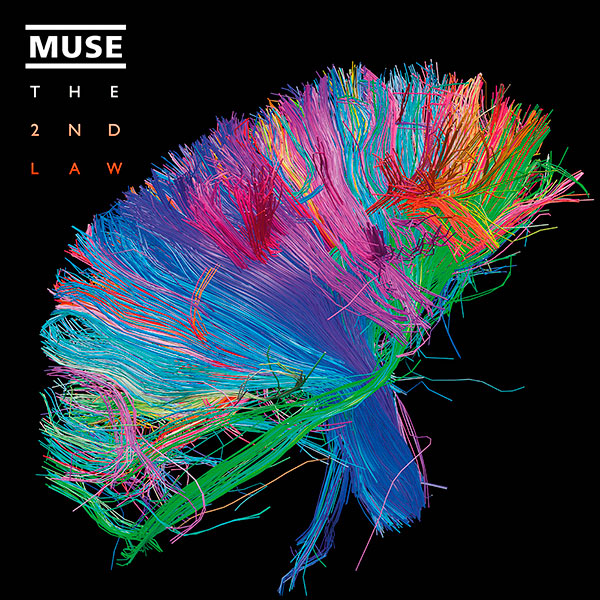
Muse - The 2nd Law

Muse - The 2nd Law
Helium 3/Warner, 2012
3.5 stars

I’ve personally never really cared for Muse, either in regards to their bombastic arrangements or to singer Matt Bellamy’s endlessly histrionic wailings. And it’s not that the band’s fusion of Queen, Radiohead, electronica, and classical music is particularly off-putting, but rather that their albums, especially 2003’s Absolution (considered by many to be their best) grow exhausting in their attempt to keep the emotional intensity at a fever pitch throughout.

It is in this relatively neutral state that I come to Muse’s latest record, an ambitious, pseudo-conceptual piece called The 2nd Law, which, in its 53-minute runtime, wanders from a 007-flavored introduction (echoes of the famous spy theme float through the background of “Supremacy”), to imitations of Achtung Baby-era U2 (the album’s first single, “Madness,” is a dead-ringer for many of that 1991 album’s big dance-rock hits), all the way to a bizarre dubstep suite (the two-part title track, which encompasses segments called “Unsustainable” and “Isolated System.”)

Make no mistake, this is an ambitious record, an album that flits between styles and sounds with no warning whatsoever. The versatility is welcome, of course, but for some (die-hard fans yearning for the band’s initial sound, most likely), the shifts will prove jarring and almost laughably self-serious. Case-in-point is “Panic Station,” an infectious piece of funk-pop that lands somewhere between Stevie Wonder and Michael Jackson, or “Survival,” which starts out sounding like a freaking Mika song, adds a baroque choir within the first minute, and bursts apart with a Queen-sized guitar solo halfway through—all without the slightest trace of irony.

The 2nd Law is at its best when the band tones down those indulgences. “Madness” is a perfect example of this, surrounding listeners with an atmospheric back-up vocal groove and allowing Bellamy a chance to drop his usual over-emotive tendencies in favor of his best Bono impersonation. When a funky and spontaneous guitar solo crushes through the texture towards the end of the song, the feeling is both quirky and euphoric.

The U2 influence rears its head again on “Big Freeze,” another nostalgic eighties/nineties radio rock hybrid which parallels Achtung Baby’s deep album tracks just as “Madness” reaches for its singles. Considering the still-fascinating qualities of U2’s most successful musical left turn (an album that celebrated its 20th birthday last fall), it’s no wonder that Muse turned to Achtung for inspiration as they cultivated their own grand departure. Bellamy and company joined U2 on tour last year for the 360 tour (the most successful concert tour in history), and clearly, they took a few things away from that experience.

“Follow Me” is another one of the album’s strongest cuts, beginning with a spacious gospel-flavored vocal solo, transforming into a dance-pop disco swirl (complete with a driving beat and a wall of synthesizers), and climaxing with a ringing guitar cascade that would make the Edge himself proud. “Animals,” on the other hand, puts everything in reverse, an atmospheric keyboard-based number which re-states the band’s prevalent Radiohead influence and which, cut across by a nicely spacey electric guitar line, feels positively otherworldly.

Results are decidedly more mixed when Bellamy hands writing (and singing) duties off to bassist Christopher Wolstenholme on the album’s penultimate duo, “Save Me” and “Liquid State.” The former is a hazy, dreamy piece of nineties balladry, readymade for a climactic moment in some cinematic romance. The song feels notably out of place on The 2nd Law, with decidedly earthbound ambitions and an overall sound that genuinely feels like a different band. Still, the change-up is welcome, and “Save Me,” with its lovelorn sweep and its gorgeously swelling arrangement, is one of the best surprises here. The grungy scratch of “Liquid State” falls completely on the other end of the spectrum, functioning, at its best, as a less effective version of “Supremacy” and, at its worst, like a piece of turn-of-the-century alternative rock (Three Days Grace and Staind certainly come to mind).

Muse’s overblown ambitions reach the point of hubristic downfall on the album’s grand finale, the aforementioned two-part title track. Part I, “Unsustainable,” never feels like anything more than an experiment gone wrong, mixing orchestral elements with robotic sounds, dubstep explosions, and Bellamy’s overdramatic cries. Part II, “Isolated System,” works out a little better, with a ringing, minimalistic piano intro hinting at a climatic build. Unfortunately, the song never makes good on that promise: Muse add in some electronic distractions towards the end, but on the whole, the composition never does anything the least bit exciting, and it serves as a disappointing fade-out to an uneven and often frustrating album.

But even despite the fact that The 2nd Law burns out two-thirds of the way through, it’s not a bad album. I applaud a band, especially one with as much mainstream publicity as Muse, willing to go as off-the-wall crazy as they do on this record. The 2nd Law is the sound of one of the world’s biggest rock bands throwing everything at the canvas and seeing what sticks, a band giving themselves over to their indulgences and influences without reservation or pulled punch throughout. That mentality doesn’t always beget the best albums, and it certainly doesn’t create the most cohesive ones (see The Killers’ Day & Age), but it also rarely fails to deliver at least a few fascinating moments, and The 2nd Law has one or two of those up its sleeve. That an album like this (a band given budget and larger-than-life production values to indulge their every quirk and fancy) even exists in this modern age is interesting; that one can sell almost 130,000 copies in its first week is even more baffling.

And while Bellamy may have pointed towards Achtung Baby as his band’s primary influence here, The 2nd Law is more reminiscent of that album’s follow-up. 1993’s Zooropa remains, to this day, the most misunderstood album U2 ever made, a disjointed collection of pop songs that injected even more electronic influence into the band’s sound and wandered further from the mainstream than their label had ever anticipated. From its atmospheric nineties leanings to Bellamy’s consistently on-the-mark channeling of Bono, it’s not too hard to imagine The 2nd Law having a similar legacy ten or twenty years down the road: not a great album, but an adventurous one.

Thursday, June 14, 2012

Neon Trees - Picture Show

Mercury Records, 2012
Two and a half stars

I must confess: I never got around to checking out Habits, the debut album from Utah-based new wave rockers Neon Trees, and after spending a fair amount of time with the follow-up, I'm not entirely sure I ever will. That's not to say that Picture Show is a complete waste of time, or even that it falls into sub-par territory, but it quite simply displays a band with a gift for writing hooks and no idea of what to do with them. Things get fumbled early on, despite a tremendously well-executed opening with the dance-rock of "Moving in the Dark," and a stylish Michael Jackson tribute on the equally catchy "Weekend." But those are tracks one and five, and constitute the only redeeming factors in what proves to be an exceptionally grating first half. The cacophonous rocker "Teenage Sounds" gives way to the hollow hooks and tired lyrical clichés of first-single "Everybody Talks." Neither song is bad as a standalone, and both bear a certain sleek production value that is nothing short of infectious, but both are also disposable and forgettable, and represent a lot of what I see wrong with pop music today. That said, "Teenage Sounds" and "Everybody Talks" each sound like the Beatles next to "Mad Love," which apes Springsteen's "Dancing in the Dark" for its synth-intro before diving into one of the single worst choruses I've ever heard. "We got a mad, mad love/We got a mad, mad love," frontman Tyler Glenn sings over what sounds like a computer generated backing track. "We got a really, really, really, really, really, really, really mad love." It's arguably the worst song of the year so far, but it will likely still be released as a single, and still be successful. Why? Because even when Neon Trees indulge in the worst lyrics imaginable, their hooks are still memorable.

A song like "Mad Love," as insultingly bad as it is, could be forgiven if the rest of the album went in the opposite direction, but unfortunately, for the majority of Picture Show, it seems like Neon Trees are content to travel down the middle of the pop music road. The disco slow-burn of "Close to You" or the thumping dance-floor beat of "Lessons in Love" are ideas with serious potential, but the songs that are built around them just never go anywhere. Elsewhere, lukewarm throwaways like "Hooray for Hollywood" make the album's 46 minute runtime feel much longer than it is. Numerous distracting interludes extend some of the album's better moments for no apparent reason, like the minute-long loop that plays at the end of the darkly atmospheric "Trust," or the similar augmentation on the closer "I am the D.J.," which leaves the record feeling much more anti-climactic than it needed to be. And always, there's the gimmicky '80s production, layered over nearly every corner of every arrangement, seeking to make the songs and ideas here sound more nostalgic and more meaningful than they actually are. Throughout Picture Show, it feels like Neon Trees are trying to fill the musical void that was left when The Killers ditched the new-wave synths and club-ready beats of "Hot Fuss" in favor of classic rock influences and Springsteen's everyman mentality, but Glenn doesn't have the voice than Brandon Flowers does, nor do his songs reach the stratospheric levels of radio pop-rock that his band's forerunners tapped into so easily. The result is a record of mostly-disposable pop music that will sound great on the radio or in the club, but won't have much lasting value past this summer season.

Luckily, even despite so many missteps and botched opportunities, Picture Show does at least have a handful of triumphs, and they are just enough to salvage the record. The aforementioned "Weekend" should be a single, with its lively themes of escapism, young love, and nighttime immortality making the song as sweeping and satisfying as any well-executed pop tune should be. Meanwhile, the closing one-two punch of "Still Young" and "I am the D.J." find the band as close to no-frills as they get, with simple pop-rock hooks and far less distracting production; the ringing guitar intro in the former sounds nearly anthemic, while the latter demands a sing along and closes the album perfectly, even despite the exitlude blunder. Songs like these are absolute gems, with addictive melodic motives and lyrics that, while not particularly striking or memorable, at least reach for something beyond dance-floor tropes. Overall though, Picture Show is a frustrating album, and that's because it strikes a bizarre balance between the very good and the remarkably bad. When the band drops the gimmicks and works a little harder to fit some decent lyrics into their strong hooks, the results are terrific, but more often, they fall short of that. More than half of this record displays a band that is content to write lazy songs that fit into a caricature of '80s nostalgia, rather than to reach for something real or artistically credible, and the resulting music, while catchy, is dumb, hollow, and forgettable. While that may fit into today's radio format, we should have the sense to demand more from our pop music...especially from the artists that so obviously have the talent to deliver it.

Sunday, March 11, 2012

Bruce Springsteen Retrospective Part VII: Born in the U.S.A.

Well we busted out of class
Had to get away from those fools
We learned more from a three minute record, baby
Than we'd ever learned in school
Tonight I hear the neighborhood drummer sound
I can feel my heart begin to pound
You say you're tired and you just want to close your eyes
And follow your dreams down

Have there ever been two records, side by side in an artist's catalog, more different than Bruce Springsteen's Nebraska and Born in the U.S.A.? One is a sparse set of acoustic tunes, recorded in his bedroom on a 4-track; the other is his pop masterpiece, a heavily produced set of songs, drenched in 80s synthesizers, that today proves to be his most divisive work. Before 1984, Springsteen had released six records containing a grand total of ONE top ten hit: The River's "Hungry Heart." To put that in perspective, Born in the U.S.A. spawned seven massive top ten singles (a record that he shares in a three way tie with Michael and Janet Jackson. Looking at the list of singles right now ("Dancing in the Dark," "Cover Me," "Born in the U.S.A.," "I'm on Fire," "Glory Days," "I'm Goin' Down," and "My Hometown," in that order), I'm struck by the thought that Springsteen and Columbia could have probably scored at least one more hit, if not two, as the best songs on this record never saw the light of day as singles (we'll get to that in a minute).


Considering how vastly different Nebraska and Born in the U.S.A. are from each other as far as sound is concerned (were Bruce a less iconic artist, you could be forgiven if you thought they were made by two different artists), it's worth noting that the latter was essentially born out of the same style that beget the former. Bruce opens the record with the title track, a song that had been misunderstood for decades and continues to be ignorantly judged to this day. The song is probably best known for the infamous moment when Ronald Reagan tried to adopt it as his re-election campaign theme, an occurrence that was laughably ironic for two reasons: the first was that Springsteen has always been a dead-set liberal and never would have endorsed Reagan under any circumstance. The second was that  the song, which is so often viewed as some fist pumping patriotic anthem, is an anti-war, anti-governmental tirade from the point of view of a disgruntled Vietnam vet. The character in this song returns from the futility of that war to find that his life been broken and beyond repair ("Ten years burning down the road/Nowhere to run, ain't got nowhere to go," Springsteen shouts at the song's key moment). For years, I thought the song was cheesy and repetitive, and just like so many others, I misinterpreted it. I can still remember the day, in the spring of my senior year in high school, when I finally gave this record and this song another chance. As I drove through my hometown and really listened to the lyrics, to Springsteen's voice as he sang them, my opinion of the song transformed instantaneously. Suddenly, amidst the shimmering synth riff and the muscular majesty of the E-Street sound, I heard all of the anger and anguish in Springsteen's voice and I finally understood what he was trying to say: it's still among my favorite Springsteen songs, something that would become even more evident when I saw him live for the first time 8 months later. The song grew out of an acoustic version of it originally meant for the Nebraska sessions, but it's doubtful anyone could have imagined it turning into the song it did (other than perhaps Springsteen himself). The other Nebraska leftover, the somber "Downbound Train," is probably one of the record's weaker tracks, but gives us an idea of what that record would have sounded like with the full force of The E-Street Band behind it.

Speaking of the album's weaker tracks, I don't think Born in the U.S.A. ascends to masterpiece status until about halfway through, leaving side one, despite the presence of the title track, to be one of the weaker parts of the first eight Springsteen records. The central trio of songs on side one - "Cover Me," "Darlington County," and "Working on the Highway" - have always been what keeps this record from perfection in my eyes, despite the fact that none of them are even remotely poor. "Cover Me" is a driving rocker marked by one of Springsteen's most scorching guitar solos, while "Darlington" and "Working on the Highway" each have a kind of honky-tonk drive that landed somewhere between Springsteen's trademark heartland rock and country: both are pleasant enough as singalong songs, though I understand why some have found the latter's rapid fire chorus a bit grating. As side one closes out, Born in the U.S.A. transforms into one of the best nighttime records I've ever heard, a seamless transition with the haunting "I'm on Fire" leading the charge. The song, told from the point of view of a man who is having an affair with another man's wife, is one of the most unique moments in the Springsteen catalog: drummer Max Weinberg supplies a train-like rhythm, mixing with a rain of synths and Bruce's exposed guitar line to create a song that is both strikingly atmospheric and definitively '80s. Lines like "At night I wake up with my sheets soaking wet/And a freight train running through the middle of my head/Only you can cool my desire," as well as Springsteen's like-a-man-possessed falsetto bridge, immediately transformed the song into a moment that was equal parts seductive and iconic: it's no mystery why the song has been covered time and time again by a myriad of modern artists.

"I'm on Fire" propels the record into side two, kicking off the strongest trio of songs on the record. "No Surrender" is arguably the greatest pop song Springsteen ever wrote, spinning off a trio of perfect verses (like the one above, which starts the song with one of my favorite lyric couplets ever recorded), and rockets through an infectious and anthemic chorus. "Bobby Jean," despite its infamy among fans (the song held a position of ubiquity in Springsteen shows following the release of this record, earning the scathing nickname of "Bobby fucking Jean"), is nearly as good. Springsteen wrote the song as a "good luck, goodbye" to guitarist and friend Steve van Zandt, who chose to leave the band around the time this record was recorded. Both songs radiate themes of deep friendship and nostalgia and, as a one-two punch, represent the emotional peak of a record that many have argued doesn't have the same emotional impact of Springsteen's best work. Two years ago, when my best friend moved away to NYC, it was "No Surrender" and "Bobby Jean" (and "Blood Brothers," a later song that also spoke of the palpable bonds between the members of the E-Street Band) that served as soundtrack. When I listen to this record, the warm nostalgic mood of those songs infects everything that surrounds them, transforming Born in the U.S.A. into one of the most personal records in the Springsteen catalog for me, and as a result, into one of my five or six favorites.

"I'm Goin' Down," despite a surging tempo and a poppy chorus, is among Springsteen's saddest break-up songs, told from the point of view of a man who is left shattered and confused when the woman he loves falls out of love with him. "Glory Days" offers another trip down memory lane, this time representing a conversation between Springsteen's narrator and his old friend, a guy who was a great baseball player back in high school, but who seems to have lost his way since. These characters pretty much peaked in high school, but the song still blazes along with a goodhearted nostalgia that's almost impossible not to relate to: we all have moments where we are humbled by the world around us, and in those moments, it's always a comfort to look back at the "good old days," even if it might be more logical to look towards to the future. These songs represent two of the more unlikely hits from this album for me, but released as the fifth and sixth singles, respectively, they also show what an unstoppable force the record had become by that time; Bruce would score yet another hit before the record finally faded away.

"Dancing in the Dark" is arguably Springsteen's biggest hit to date, and is probably the source of much of the bitterness this record receives from fans. While the song was the first single from the album and went to number two on the Billboard 100 (turning Springsteen into a pop icon almost overnight), it was also the last song written for the record. Legend has it that, by the time Born in the U.S.A. was finally taking shape, Springsteen had written over 100 songs for the project (numerous outtakes appear on the Tracks collection), but producer Jon Landau didn't think there was a surefire hit in the bunch and suggested that Bruce write another song. Bruce's bitterness at the request is palpable in the song's lyrics ("Man I'm just tired and bored with myself..."), and clearly there were more than enough hits in the collection already, but I can't imagine Born in the U.S.A. sounding complete without "Dancing in the Dark." There aren't a whole lot of hooks out there more indelible than this one ("You can't start a fire without a spark/This gun's for hire, even if we're just dancing in the dark"), but beneath the prominent synths and glorified '80s production, its still the same Springsteen who made those previous six records. "Dancing" may have brought Bruce to true mainstream prominence, but it did so without sacrificing any of his ideals or songwriting integrity, and that's why I love the song, even if there are a lot of fans who would probably prefer if he never played it again.

"My Hometown" carries Born in the U.S.A. out, both as the album closer and the seventh and final single. The song offers one last final nostalgic journey: a man puts his son on his lap as he drives through town, telling him to "take a good look around" and to take pride in the place. The boy grows up and his memories, both good and bad, are woven into the song's narrative until, in the final verse, he takes his own son for a similar drive. The song's elegiac texture paints the portrait of a town drowning in hard times, even as the memories of the better ones surround the narrator, and just as the song's tale comes full circle in the final verse, the album's story comes full circle here as well,  The characters in these songs have realized, in a line, what Springsteen put so eloquently nearly three decades later: that "hard times come, and hard times go, but just to come again;" they bask in the warmth of their memories for comfort, even as they realize that the "glory days" seem to evaporate far more quickly than the dark ones ever do. Still, these songs carry a resilience and hope that seemed absent on Nebraska: the darkness is still waiting out on the edge of town, but hope, happiness, glory, and most of all, friendship, can be found within it. Perhaps it's my own deep personal attachment to the record, or perhaps it's the layers of '80s pop sheen, but I've always found Born in the U.S.A. to be one of Springsteen's more comforting and uplifting records, even if its subject matter is significantly deeper and darker than that of many pop records from the same time. It's a record that will always go down as Springsteen's most popular (and indeed, as one of the most popular of all time), but in my eyes, removed from the era that spawned those seven massive singles, Born in the U.S.A. is just the next step in the evolution of Bruce Springsteen, as a songwriter, as a storyteller, and most of all, as "the Boss." I don't think anyone will ever be able to call it his best work, but with this record, Springsteen broke into the very center of the mainstream without sacrificing who he was or what he believed in, and that alone is worthy of renown.