Showing posts with label Queen. Show all posts

Tuesday, December 11, 2012

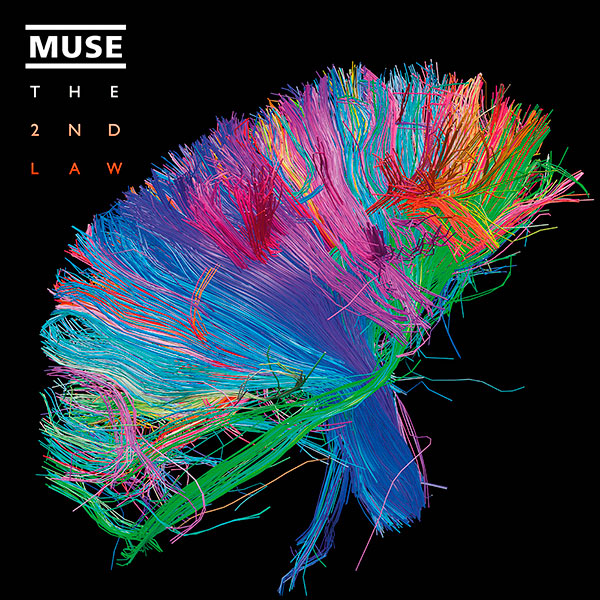
Muse - The 2nd Law

Muse - The 2nd Law
Helium 3/Warner, 2012
3.5 stars

I’ve personally never really cared for Muse, either in regards to their bombastic arrangements or to singer Matt Bellamy’s endlessly histrionic wailings. And it’s not that the band’s fusion of Queen, Radiohead, electronica, and classical music is particularly off-putting, but rather that their albums, especially 2003’s Absolution (considered by many to be their best) grow exhausting in their attempt to keep the emotional intensity at a fever pitch throughout.

It is in this relatively neutral state that I come to Muse’s latest record, an ambitious, pseudo-conceptual piece called The 2nd Law, which, in its 53-minute runtime, wanders from a 007-flavored introduction (echoes of the famous spy theme float through the background of “Supremacy”), to imitations of Achtung Baby-era U2 (the album’s first single, “Madness,” is a dead-ringer for many of that 1991 album’s big dance-rock hits), all the way to a bizarre dubstep suite (the two-part title track, which encompasses segments called “Unsustainable” and “Isolated System.”)

Make no mistake, this is an ambitious record, an album that flits between styles and sounds with no warning whatsoever. The versatility is welcome, of course, but for some (die-hard fans yearning for the band’s initial sound, most likely), the shifts will prove jarring and almost laughably self-serious. Case-in-point is “Panic Station,” an infectious piece of funk-pop that lands somewhere between Stevie Wonder and Michael Jackson, or “Survival,” which starts out sounding like a freaking Mika song, adds a baroque choir within the first minute, and bursts apart with a Queen-sized guitar solo halfway through—all without the slightest trace of irony.

The 2nd Law is at its best when the band tones down those indulgences. “Madness” is a perfect example of this, surrounding listeners with an atmospheric back-up vocal groove and allowing Bellamy a chance to drop his usual over-emotive tendencies in favor of his best Bono impersonation. When a funky and spontaneous guitar solo crushes through the texture towards the end of the song, the feeling is both quirky and euphoric.

The U2 influence rears its head again on “Big Freeze,” another nostalgic eighties/nineties radio rock hybrid which parallels Achtung Baby’s deep album tracks just as “Madness” reaches for its singles. Considering the still-fascinating qualities of U2’s most successful musical left turn (an album that celebrated its 20th birthday last fall), it’s no wonder that Muse turned to Achtung for inspiration as they cultivated their own grand departure. Bellamy and company joined U2 on tour last year for the 360 tour (the most successful concert tour in history), and clearly, they took a few things away from that experience.

“Follow Me” is another one of the album’s strongest cuts, beginning with a spacious gospel-flavored vocal solo, transforming into a dance-pop disco swirl (complete with a driving beat and a wall of synthesizers), and climaxing with a ringing guitar cascade that would make the Edge himself proud. “Animals,” on the other hand, puts everything in reverse, an atmospheric keyboard-based number which re-states the band’s prevalent Radiohead influence and which, cut across by a nicely spacey electric guitar line, feels positively otherworldly.

Results are decidedly more mixed when Bellamy hands writing (and singing) duties off to bassist Christopher Wolstenholme on the album’s penultimate duo, “Save Me” and “Liquid State.” The former is a hazy, dreamy piece of nineties balladry, readymade for a climactic moment in some cinematic romance. The song feels notably out of place on The 2nd Law, with decidedly earthbound ambitions and an overall sound that genuinely feels like a different band. Still, the change-up is welcome, and “Save Me,” with its lovelorn sweep and its gorgeously swelling arrangement, is one of the best surprises here. The grungy scratch of “Liquid State” falls completely on the other end of the spectrum, functioning, at its best, as a less effective version of “Supremacy” and, at its worst, like a piece of turn-of-the-century alternative rock (Three Days Grace and Staind certainly come to mind).

Muse’s overblown ambitions reach the point of hubristic downfall on the album’s grand finale, the aforementioned two-part title track. Part I, “Unsustainable,” never feels like anything more than an experiment gone wrong, mixing orchestral elements with robotic sounds, dubstep explosions, and Bellamy’s overdramatic cries. Part II, “Isolated System,” works out a little better, with a ringing, minimalistic piano intro hinting at a climatic build. Unfortunately, the song never makes good on that promise: Muse add in some electronic distractions towards the end, but on the whole, the composition never does anything the least bit exciting, and it serves as a disappointing fade-out to an uneven and often frustrating album.

But even despite the fact that The 2nd Law burns out two-thirds of the way through, it’s not a bad album. I applaud a band, especially one with as much mainstream publicity as Muse, willing to go as off-the-wall crazy as they do on this record. The 2nd Law is the sound of one of the world’s biggest rock bands throwing everything at the canvas and seeing what sticks, a band giving themselves over to their indulgences and influences without reservation or pulled punch throughout. That mentality doesn’t always beget the best albums, and it certainly doesn’t create the most cohesive ones (see The Killers’ Day & Age), but it also rarely fails to deliver at least a few fascinating moments, and The 2nd Law has one or two of those up its sleeve. That an album like this (a band given budget and larger-than-life production values to indulge their every quirk and fancy) even exists in this modern age is interesting; that one can sell almost 130,000 copies in its first week is even more baffling.

And while Bellamy may have pointed towards Achtung Baby as his band’s primary influence here, The 2nd Law is more reminiscent of that album’s follow-up. 1993’s Zooropa remains, to this day, the most misunderstood album U2 ever made, a disjointed collection of pop songs that injected even more electronic influence into the band’s sound and wandered further from the mainstream than their label had ever anticipated. From its atmospheric nineties leanings to Bellamy’s consistently on-the-mark channeling of Bono, it’s not too hard to imagine The 2nd Law having a similar legacy ten or twenty years down the road: not a great album, but an adventurous one.

Thursday, April 26, 2012

Lucero - Women & Work

Lucero - Women & Work
ATO Records, 2012
4 stars

Since they got together in 1998, Memphis-based rock band Lucero have made seven full-length records, ranging from dirty, southern-tinged punk to roots rock 'n' roll, gathering alt-country influences along the way, and even layering their sound with soulful horns on 2009's 1372 Overton Park. Many fans dubbed that record as Lucero's magnum opus, and while their latest, "Women & Work," is a step back, it remains an alluring collection of raucous, bar-band rock 'n' roll that arrives just in time for the spring and summer seasons that it was so clearly meant to soundtrack. And while being the world's greatest bar-band (a title they've been fighting over with The Hold Steady for ages) is a rather dubious honor, it's clear from the album cover (which depicts the sextet sitting on a street corner outside of a bar), that it's exactly what Lucero is shooting for here. Look no further than the all-out-party that is the record's title track, which juxtaposes the aforementioned horn section, some terrific guitar playing, and a crashing piano into one of the most well executed rock 'n' roll rave-ups I've heard all year. "On My Way Downtown" is no less impressive, for all the same reasons, while "It May Be Too Late" utilizes the piano to an even greater effect, creating a song that would have sounded as good ten or twenty years ago as it does now. Indeed, Lucero find most of their inspiration for Women & Work by looking back in time, drawing from their Memphis-soul heritage, as well as from the bar-band honky-tonk of classic records like Bruce Springsteen's The River. Take the bluesy "Juniper," whose chorus sounds reminiscent of Queen's "Crazy Little Thing Called Love" for a split second, before frontman Ben Nichols launches into a killer bridge section, or "Like Lightning," where the band burns through a pre-ordained showstopper.

Not enough can be said of the high benchmark the band sets here (and regularly breaks) in terms of pure musicianship or versatility. Nichols has the kind of rough, weather-worn voice that you can just hear ringing through some hazy, 98-degree bar on a summer night, while John Stubblefield (bass) and Brian Venable (guitar) add classic, atmospheric flourishes to the sound that would be all too easy to miss if you weren't paying close attention. Frequently, a perfectly nostalgic B3-organ slices through the arrangements (or takes the lead, as in "Who You Waiting On?"), instantaneously transporting me back to some of my favorite records from my youth (The Wallflowers' Bringing Down the Horse and Counting Crows' August and Everything After both come to mind), adding a certain timeless, folky quality to every song it graces. That same timeless quality is palpable in the contributions of the horn section, which suits the band's sound as perfectly here as it did on Overton Park. However, it's the keyboards that take Women & Work to the next level, injecting the songs with that extra ingredient that I've always missed in records from the likes of The Gaslight Anthem, or on the last Hold Steady album (following the departure of piano virtuoso Franz Nicolay). The horns and the lurching piano lead the way throughout the record, allowing the band to play with the spontaneity and freedom of the seasoned live outfit that they clearly are.

Women & Work has one minor stumble, in the form of "I Can't Stand To Leave You," a song where the melody works and the band delivers (as usual), but which just doesn't quite go anywhere. Nichols sings in clichés, with a tired and dull vocal performance that makes them even less convincing, a shame, since it derails a fairly stellar full-band arrangement. Luckily, on the remaining occasions where the band sees fit to slow down the tempo, the resulting songs are dynamite. First is the wistful sweep of "When I Was Young," whose elegiac texture and chillingly distant steel guitar sounds make it a candidate for "best song" on the record (and one of my favorites of the year so far), while closer "Go Easy" brings a gospel choir into the studio to back Nichols up. The pairing is a strikingly natural inclusion within the band's southern-rock sound, and the call-and-response nature of the song legitimately sounds like it's inspiring Nichols to amp up his delivery. These two songs are the cornerstones of a killer quintet that carries the album out on a celebratory high note, and the other two are nearly as good. The rootsy "Sometimes" sees the band channeling their country influences, while the almost ragtime-influenced piano intro to "Like Lightning" quickly gets swallowed up by a bass crunch and explodes into a windows-down, fist-pumping guitar solo. The song unfolds into one of the album's best, most rollicking moments, accented by big horn hits, and featuring a committed vocal performance from Nichols that is sure to land the song on plenty of summer mixtapes. It also epitomizes everything Lucero does well on Women & Work, showcasing both their stellar musicianship and their ability to create music that is at once both fresh and timeless. So while Lucero might not be aiming terribly high with this record's bar-band anthems, and while it is unlikely to ever be considered their best effort, Women & Work is an addicting and nostalgic album that I can't wait to blast in my car, at maximum volume, all summer long.

Tuesday, February 21, 2012

"This is it, boys, this is war - what are we waiting for?"

fun. - Some Nights
Fueled by Ramen/Nettwerk, 2012
4.5 stars

Over the past few months, fun.'s "We Are Young," the first single off of their fantastic sophomore album, has been infecting mainstream music in ways that music by bands I love very rarely does: a prominent feature spot as the coda song of a Glee episode, a fantastically well positioned Super Bowl ad, and plenty of facebook statuses quoting the lyrics. A few years back, after my first listens to the gloriously strange pop record that was Aim & Ignite, I can't say I would have envisioned fun. as a mainstream pop act. No doubt, the songs were terrific, from the explosively catchy "Be Calm," to the gospel-infused "Benson Hedges," to the "Boys of Summer" reference at the end of "Walking the Dog," all the way to the Lion King-esque chants at the start of the epic closer, "Take Your Time (Coming Home)." To this day, I don't quite know how to describe the overall sound of Aim & Ignite: Glammy rock? A rave-up block party of musical influences? Some bizarre combination of circus music and alternative rock? The most straightforward song on the record, the lyrically driven love ballad "The Gambler," probably provided soundtrack for a lot of blooming relationships (including my own), but I could never have imagined hearing even that on mainstream pop radio.

Despite all this, when fun. started blowing up with "We Are Young," it really did make sense, because the song, regardless of the band's debut record, is a bonafide anthem in a time of far too few: it's a chorus just begging to be shouted by a crowd in any environment, from a college party to a huge music venue, and it is a song that a lot of people are going to identify with. Frontman Nate Reuss is no stranger to big choruses: he wrote one of the most infectious of the past decade on  "The First Single (You Know Me)" with his previous band, The Format, and he loads this album with so many of them that "We Are Young," while a terrific song, is hardly even a standout. 

The opener, the "Some Nights Intro" (strangely titled, since it's almost two and a half minutes and could easily have been a standalone song), builds from the sound of a broken down piano into a Queen-aping power ballad. Reuss sounds so much like Freddie Mercury here that for a moment, I almost expected a classic-rock record, but the band has other things in mind. The title track, with another killer chorus and a terrific delivery from Reuss, is an early contender for album highlight, while an autotune breakdown late in the song indicates the direction that this album is heading in. Ahhhh, autotune, such a ubiquitous, and yet widely misunderstood, tool in today's music industry: most mainstream pop music is positively drenched in it, always made more obvious when those artists perform live and a trainwreck ensues (several examples could have been found in last week's Grammy ceremony). Still, even the most talented singers in the industry tend to use autotune, mostly due to the fact that we as listeners have come to expect perfection in our studio recorded albums. Recently, a wave of T Pains and the like have given autotune a more gimmicky application, and fun.'s record uses it as such here, but it's done in a way that suits the songs and one that results in a record that is a true sonic feast. Make no mistake, Reuss is a terrific vocalist (for proof of this, look no further than "Carry On," another infectious pop song that would function just as well in a stripped-down acoustic arrangement as it does on record, with bass and heavy drum machines buffing up the sound). Even for those who have trouble getting used to the autotune as a part of this band's sound, by the time "Some Nights" explodes into a climactic spoken word section, I have a feeling they'll be hard pressed to care.

On my first listens to this record, I couldn't help marveling at the classic pop melodies Reuss and co. seem to come up with so easily: melodic verse lines and irresistible choruses that are so instantly memorable that I found myself wondering how no one else had stumbled upon them yet. "Carry On" is certainly one; "Why Am I the One," with an intro guitar part straight out of a Modest Mouse song and sweeping chorus harmonies, is another. "All Alone" and "All Alright" defy their titles, with the former being a ridiculously catchy pop song that's destined for a more than a few dance-in-the-car moments and the latter being one of the album's more subdued numbers (subdued being a relative term). "I've got nothing left inside my chest, but it's all alright," Reuss sings, over a bed of pianos, synths, bass and a choir, and surrounded by a massive wall of pop production. Much like Mat Kearney did with Young Love last year, Some Nights takes what is more or less fun.'s traditional sound and filters it through a more beat heavy, hip-hop influenced production. The result is a record that will prove polarizing among fans, but one that I think is ultimately more rewarding than the band's debut. 

That said, Some Nights isn't free of miss-steps, and when they occur, it's more the fault of the production than it is the songwriting. "One Foot" is a perfect example: it's a good song that circulated in a live version prior to the release of the record, but it doesn't quite gel with the studio arrangement or production. The song is still more than worthwhile, but there's a definitely sense that it could have been something greater. Elsewhere, "It Gets Better" is a textbook example of filler, a throwaway track with a grating chorus that steals a spot that would have been much better occupied by "Out on the Town," the album's "bonus track" and one of the best songs here.

Ultimately, the proper closer, the seven-minute "Stars" will epitomize everything that fans of the album love about it and everything that detractors think is wrong with it. In my eyes, it's the high water mark for the album: a masterfully climactic blend of pop, the band's alt-rock roots, hip hop and electronic music that serves as the perfect showcase for Reuss's vocal talents, the band's new musical direction, and the album's undeniably impressive production work. While it begins as a fairly straightforward pop-rock song, "Stars" builds into a haze of auto-tune and heavy beats, climaxing with a euphoric chorus of vocodor-enhanced voices. "No one's gonna save me now," Reuss sings, and despite the fact that his voice is layered with production and altered ten times over from its original state, it's the most vocally cutting and emotional moment of the album: even after a dozen listens, chills still run down my spine at that moment, and that alone is enough to make me a champion of the electronic influences the band adopts here. 

Just as the album began in Queen territory, it finishes thoroughly enthralled in the influence of Kanye West, whose 2010 album My Beautiful Dark Twisted Fantasy served as the band's primary influence throughout the recording process. That album's co-producer, Jeff Bhasker, masterminds the sonic orchestra on display here, and Reuss and his vocodor carries the album out in a way that very much recalls West's "Runaway," another epic song that the band actually covered on their last tour. That song and album's influence run rampant throughout the entire record, supplemented here and there by hints of Bon Iver (also involved with Fantasy and another figure who's been redefining what autotune can do), or by the eternal presence of classic pop acts like the Beatles and the Beach Boys. The resulting album sounds as fresh as it does musically-referential, and despite the fact that many fans of fun. and the Format will probably find the pervasive hip hop and electronic motifs jarring, in time I think this record could easily be regarded as the album where one of the best bands working in the industry today rightfully rose to the top. Who knows, if these guys get a few more big hits under their belts, maybe a Grammy could be in their future. And while, in light of the new Bruce Springsteen album (which is a masterpiece--more on that later), I can no longer say what I initially wanted to about this album (that it's the best thing I've heard all year), it's certainly a more than worthy runner up, and I'd be willing to put money on it ending up somewhere in my top ten at the end of the year. There will inevitably be cries accusing the band of "selling out," but as long as their doing so sounds this good, all the more power to them.