Showing posts with label The Horrible Crowes. Show all posts

Wednesday, March 30, 2016

Interview: Brian Fallon (February 4th, 2016)

Last week, I had the chance to sit down and chat on the phone with the great Brian Fallon. The interview runs a range of topics, including the inspiration behind Fallon's folk-heavy new solo album Painkillers (due March 11th), working with Butch Walker, the uncertain future of The Gaslight Anthem, favorite Springsteen songs, and the intriguing possibility of an Elsie: Part II.
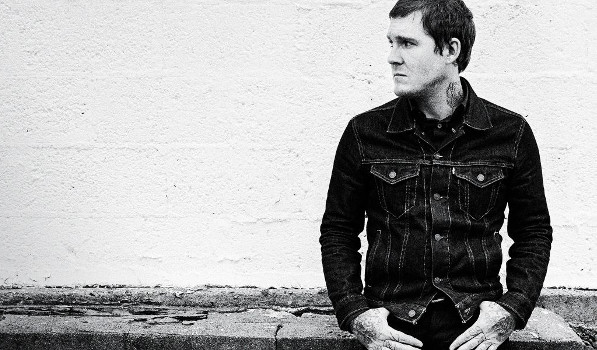
 
 
You've done a bunch of solo shows already, where you've been playing all of the songs on this record, plus some Horrible Crowes stuff and a cover or two, but no Gaslight material. How did you feel fans were responding to the songs?

So far, it's been good. You know, it's a lot to ask of people to go out and just play new songs that they don't know, and expect them to be quiet and have an attention span of any kind. But they've been doing really well, and they've been just kind of absorbing the music, which is cool because I've always kind of thought of myself and my friends as music listeners. We kind of absorb everything and pay attention to what's going on, and I'm finding out the audience is doing that as well. They're kind of shifting with me, which is really more than you could ever ask of anybody.

You've always had a folk-leaning song or two on the Gaslight albums, and there's plenty of Americana influence, but you guys have never gone full folk or alt-country. What drove you in that singer/songwriter direction for this album?

Well I think that's where I started playing music, in general, when I was really young and before I'd decided anything on my own about what musical taste I had. So, it kind of seemed natural, if you're going to try something new, to start from the beginning. And go back to "what did I get into music for in the beginning?" And it was also a little bit of a re-focusing as well. You know, why did I start doing this in the beginning? And what made me happy about it? And what did I get enjoyment from?

A few of these songs turned up, in different forms, as part of the Molly and the Zombies project a few years ago, but you made it clear at the time that you weren't planning on doing an album for Molly. What's the story behind that side project and how did you know that...I mean, were you saving those songs for the solo record, or did you just not think you were ever going to end up using them for an album project?

I knew that, at the time, I wasn't going to do anything with it. And I was just sitting there, thinking of the songs as I was going, because we got a show offer from the Bouncing Souls to do the Home for the Holidays thing, and they wanted me to do it by myself. But I didn't really have songs, and I didn't want to just go and do acoustic Gaslight songs, because I didn't think that would be that cool for that kind of crowd. So I decided, "I'm just going to kind of make up a band."

And then I called a couple of my friends to play in it, and it sort of...quickly, I had the idea that when I used to go to shows—and like house shows and VFW Hall shows—and I would see bands. You know, you would see a new band and you couldn't...maybe they had a demo tape and that was it. And you had to wait for a record and there wasn't any record, and it was just, if you liked the songs, you went and saw them again.

So I kind of had this idea that, what if we just made a band and played some songs and I don't know if there's ever going to be a record or any kind of recorded versions. And if people want to see it again, they just come check it out.

That was the initial idea behind Molly and the Zombies. And then it kind of fizzled because I was just so busy with Gaslight, and then I decided...like, I didn't really want to do another band. It's just...it's a lot of bands, you know?! I can't do them all at once, so I sort of said...once I knew that Gaslight was going to take a break and I was going to do some sort of record—because right away, well I gotta do something. I'm not just going to sit here and do nothing for a while.

So I decided that I would take all the bands that I had, the side projects, and kind of wrap them into one. And then I thought awhile about recording those Molly and the Zombies songs. I was like, "Maybe I shouldn't? Maybe I should just make new songs and have it only be new songs?" But then I was like, "Well these songs are good though, I don't want to throw them out." And the people who know Molly and the Zombies is...I mean, there might be 200 people who know who that is. (Laughs) You know, I don't think that the rest of the world is going to be too disappointed. You know what I mean? Like, it's gonna be a new song! The reach of Molly and the Zombies is not that far. (Laughs)

Right, yeah, the version of those songs I have on my computer I think is like the Red Bull Sessions or something, so...

Yeah, they're just live. We just went in there and played them. And the thing is that the songs sound a little bit different now. They're not so...country-ish.

Yeah, they're definitely not the same.

No. And they kind of feel different, and I felt good about that. You know, I explained that to [producer] Butch [Walker] when I was going to go record them. I was like, "You gotta make 'em sound different, or else there's no point in recording them."

Right. Yeah, one of them...is it "Long Drives" that has different verses completely?

Yes, it's a totally different song. That one, I just kind of...I was like "I don't know if I'm just going to...if I'm going to put this one on there"—I struggled with whether to put it on there or not—and I said "Alright, well this one I'm going to draw the line at." If I'm going to put this on there, I can't record it the way that it was, because I didn't feel that it went along with the rest of the songs. And there's people who would probably disagree with that, but...you know, I was kind of the only one there to ask! I figured it would be better if I was going to put three of them on there that I would change the whole thing and rewrite it right now, as a fresh song.

Yeah, because I was listening to it, and I think "Long Drives" was the one I liked the most from the Molly and the Zombies thing, but I hadn't listened to it in awhile...

Yeah, it's one of my favorites too.

So then I put it on, and when the verse came on I was like, "...is this even the same song?" And then it got to the chorus, which was familiar. But yeah, that was pretty cool to hear.

It's like a little adjustment period. But then I think, once it settles in...I would say to people that like the old version, I would say I like the old version too. I like them both. But just give it a second, because once it sinks in with you I think it's kind of cool.

So, speaking of Butch, full disclosure: I'm a huge fan of his music, been a huge fan for like a decade, and I interviewed him last year when he released Afraid of Ghosts, so I was excited when I heard you were recording with him. I was wondering how you ended up working with him and what that was like compared to some of the people who have produced the Gaslight albums, like Brendan O'Brien and Mike Crossey and Ted Hutt.

Well, Butch came about mostly through friend recommendations. That's how his name got thrown in the pot. Because I was sort of looking around for a producer, and I said "You know, I probably should work with somebody that I haven't worked with before, because I don't want to repeat anything that I've done." I didn't want it to be...I didn't want it to get the Gaslight treatment. I didn't want the record to have that, which people will automatically do. I find that, if you've done a band for a long time, people will...before you've even played a note...you could have a disco record and they would put the slapback vocal on it, because that's what Gaslight does. And you'd just be like, "No, come on!" Don't just rehash the same thing. Then we might as well call up the guys and get them in here.

Right, for sure.

And if you're going to do something different...you know, I figured we would try something different. And when I talked to Butch, it was real easy. He started coming up with ideas right away. He was like "Okay, you've always done a little bit of reverb or echo on the vocals, so we're going to do nothing on the vocals." You know, we're gonna leave them...just bare. And then, he was just like "We're just going to go in and record it, pretty much on the floor, and see how we do with it." And it was pretty immediate. So running into him and having him be such a fan of...of music in general, that was really easy to work with.

A lot of guys that we've worked with...like, Brendan is super good at the rock thing. He's really great at big rock sounds and stuff like that. And Ted is kind of...he's just another world. Ted's really...he does everything from the heart. Ted's really artistic and he's got a whole way about him. I love working with Ted, actually. And Mike is like a sound guy. Mike loves sounds. And this, it was totally like...get in there and don't worry about anything and just sort of sit down, and do it, and leave the mistakes in. That's foreign to me: usually the mistakes are gone.

Right, yeah! That's really cool. And Butch plays some guitar on this record too, right?

Yeah, it was like me and Butch just playing guitar! Pretty much the whole record is just me and Butch playing guitar. (Laughs)

That's really cool. So, I personally really enjoyed Gaslight's last record, Get Hurt. And I think I spoke to Benny for that one the morning it came out, and he was super excited about it. And then it got super mixed reviews and some pretty harsh pans from like Pitchfork and Slant and those guys. Did that in any way lead to the band's decision to go on a hiatus instead of keeping up with the every-two-year release strategy?

I wouldn't say that those reviews gave any...you know, they didn't come into the band. I don't think you can make your band decisions based on what one or two people think. And I would definitely say that...that kind of thing, you can't let that play into what your band's decisions are. But I'm not going to sit here and say, personally, that that didn't bother me. I mean, for sure it did. And I think the guys took it a lot better than I did. Like Benny for instance, he's got a great head on his shoulders where he...he kind of was like "Yeah, but that's just what a few people think." Like, we were doing something a little oddball-y. Of course people are going to do that. And he's like "Some people are gonna love it, some people are gonna hate it," but he's like "I was ready for that."

And, you know...I agreed with him on that aspect. But I also felt that it got a little personal. It got a little bit more...not necessarily about the band or the record, but about what [the critics] thought I was doing. You know, like what my intentions were on some of them. And I was like...these are people I've never met. That's a low blow to be throwing on somebody you've never met. I wouldn't say that kind of stuff about someone I hadn't spoken to, or done an interview with, or whatever. I think you can make an assessment based on a record, but you can't make an assessment on a person's intentions, you know? That seems a little far-fetched, and to be honest, a little self-righteous.

But you guys toured a lot in support of that record, right? Like, I don't know if it was the most touring you ever did, but it seemed like you were on the road for awhile and there were multiple tours. And at the shows I went to, at least, it seemed like the fan reception for those songs was pretty good still.

Yeah, it was a divided thing. I don't want to say it was like, all of the critics didn't like it, because some people said it was awesome. And that seemed to be the dividing line: it was either people thought it was awesome, or people just didn't like it at all. So there wasn't really a middle ground which...I guess that's good? But the kids at the shows seemed to like it, and that was, I thought, encouraging.
Because truthfully, I'm not writing songs for reviewers or magazines. I'm writing songs for myself and for the audience that we play for. That's who I feel matters in the big picture. That's always been the start of it: you're trying to communicate with your audience directly. And so those are the people that you're shooting for. And so they seemed to embrace it, which is cool. But yeah, there was definitely a divide. I think we got some of the harshest criticism but then some of the praise was pretty good too. It was mixed, and we hadn't done that in awhile. People kind of tend to like the records that we had put out prior to that. We were lucky in that sense, that people seemed to really gravitate toward the other records.

So what is the...is there a next thing for Gaslight right now, or are you sort of just playing it by ear? I know Sink or Swim turns 10 next year, so I was wondering if you guys were going to get into the 10-year tour thing?

Oh no. We're not usually the kind of band to sit around and dwell on those sort of things. I think it's cool if people do that. Mile-markers and stuff like that. But I don't know if that would be something that we would do, because it would just be doing it "Just because." Like, unless there was a reason to do it. You know, unless we all got super pumped on it and were like, "Alright, we're gonna go out and do this."

But as of right now, there's not really plans to do anything, because there hasn't been...there's just not the "What's next?" feeling, you know? What do you do now? To me, if you ask me, I can't imagine a record that we could write that would be better than 59 Sound or Senor and the Queen, actually. Those two records to me—I like all the records—but those two records to me are great. I love them. And I don't know what I can do that's better than that. And I think that, until I found something that I think is on par to that, I don't think I would try to touch it, because I don't want to do anything that's gonna damage the band as we go on. And I feel that everyone else kind of agrees with me on that. And they sort of said, "Well, if we don't have another idea that we all feel strongly about, then maybe we should just do nothing and that's the best bet." You know, rather than just ruin something. Especially half-hearted. That just seems like a big slap in the face to everybody, including the band and myself.

Yeah, especially because you sort of had the routine going where you did a record, and then you went and toured for awhile, and had maybe a few months off, and then you did another record. And it was two years, pretty much down the line. So...

Yeah. I don't think you can do that over and over.

At some point you earn yourself a break.

I do think that. Because, if you just do it just for the sake of...like, why are you doing it? Are you doing it to pay your bills? And then I don't think that's that cool, you know? I don't think it's something you should do. Bill Armstrong from Side One Dummy said the coolest thing to me one time, like, years ago. And this was when there was no money coming in at all, so it was a funny thing to say. But he said "Never put your commerce before your art." And I just always remembered that. I was like...art before commerce, that's the thing. And you have to make the music first from a love of doing the music, rather than "Oh, well, I've got my bills to pay so I better put out a record so people can buy it." That sounds disgusting to me right now, actually saying that out loud. (Laughs)

And, look, I'm not trying to say...we're not a punk band, as far as being...because I don't want to be disrespectful to bands that are punk bands, you know? And that's why I say that. But we do have an ethic that we came up with that's like: look, you don't do this on somebody else's back. You do it for the love, and that's why you do it. And like Tim Barry says, "You play for the lovers, that's what you do." And you know, unless you're 100% sure and backing it, then I don't think you should do anything.

So that's why it's more like, Gaslight decided "Okay, let's just shut up for now, because we don't have anything on the plate that we're pumped about." I'm not sitting on American Idiot in my back pocket or something. I'm not going to release record like that. I think that's an awesome record, American Idiot. Green Day had this big long career, and then they did that, which was pretty...that's surprising. Late in a band's career, to have such a great record come out of them? And so inspired? And I'm not sitting on that right now. (Laughs) I'm kind of sitting on nothing. I don't have any ideas. So that's why, I think...the only idea I would have is to sort of be like, "Alright, I guess that Gaslight sounds like 59 Sound, so let's kind of rehash that." But, to me, that sounds awful. I don't think anybody would want to hear that.

Wow, yeah, I think that's a good way of looking at it. Getting back to the solo record a bit, what inspired your songwriting this time around? I did notice there were a few songs coming from a female perspective, which I thought was interesting.

The whole thing came from the old songwriting tradition that I grew up on, like folk music and singer/songwriter music and that kind of stuff. Because I don't really...like Tom Petty and Bruce Springsteen, I guess they're rock bands, but they're more singer/songwriters. That's what they are. And those guys and all the folk music and even like Wilco and that kind of stuff...I was going back to where I started writing songs from for this one. So it sort of felt really fresh to me—fresh and familiar at the same time—that I could go and delve into these things I hadn't fully gotten to explore previously in my career.

Someone from the site wanted me to ask this: do you have a favorite Bruce Springsteen song?

Oh yeah, I've got a ton of them, actually. A lot of my favorites are really on the Tracks box set. Like that first CD of the Tracks box set. There's this one tune that I always go back to called "Zero and Blind Terry." And I just...I love that song. I feel like it encapsulates everything that Bruce was doing that was different and new, all in one song. It's six or seven minutes long, but it's...it's so rad. And when you listen to that song, you can totally hear how songs like "Jungleland" and "Born to Run" and Thunder Road" and these epics that would come in later. But this song is like the rawest version of a beginning of that, and to me, that's so exciting. It's like hearing the first Against Me! record: it's so rad and raw.

Yeah, it's nuts some of the stuff he didn't put on records.

I know right? (Laughs) There's some good songs!

Are you catching this River tour, by any chance?

I'm not, because I've been traveling around so much. I keep going on tour and I keep missing the shows. But I did just get the box set, that River box set?

Yeah, my brother got that for Christmas. It looked pretty great.

Yeah, I haven't watched [the DVDs] yet, but it's pretty cool. I just bought it.

Yeah, I'm heading down...my brother and I are going to see him in Kentucky I think in two weeks now? Which...I mean, I haven't seen him in like four years, so I'm pretty excited about that.

That's awesome. Last time I saw him was in Nashville. We were recording Get Hurt and he played down at the area there, the Bridgestone Arena. And we all took off early in the session. We were like "Let's go!" And we all went to see Bruce Springsteen. It was cool.

That's great!

(Laughs) We just like, bailed out of our own record to go see Bruce. Like "Forget this, let's go."

Did he know you guys were there? Did he like, call you up to the stage or anything?

Yeah! No, he didn't call me up to the stage, but he knew we were there. We let him know that we were coming and then he was being cool to us and it...he's really cool. I mean, he's real cool to us too, which is nice.

So Jason Tate, I think you've talked to him before, he runs AbsolutePunk. And his favorite record of yours is Elsie, the Horrible Crowes record. So I was wondering, on his behalf, do you ever see there being another Horrible Crowes record? Or is it sort of at this point like, if you're going to write something that's not Gaslight it's probably just going to be solo?

Well, I mean, if I was going to do another Horrible Crowes record, it would probably be under my own name, just for the reason that I gave before, so that it's all wrapped up into one. But I definitely have a desire to do a "part two" of that, and that was my first idea when Gaslight was like "Okay, we're gonna take a break." My first idea was like, "Maybe I can do another Horrible Crowes record. But I couldn't think of anything in that genre that would be better than Elsie, so I was like...I don't know if I want to start diving into that one. Because that's special to me. That record is...I love that record! And I still listen to it, even. So for me, I would have to get into it, and really see if I could find something that was as good as that. I would probably just do it under my name, but it's definitely on the plate to do something like that again.

And Ian Perkins is still touring with you for this anyway, right?

Yeah, he's always there. So yeah, it wouldn't change anything. Like, Ian would still have a part of it, and he would still...everything would stay the same. It would just be the name on the record that would be different, but everything else would still be the same record. I mean, I'd probably call Ted for that too, and say "Well, you gotta do this next one, because we did the first one." I would probably get exactly the same people and not change a thing.

Right, yeah, totally. But I'm pretty pleased that you went the country route more for this one, because I think it really suits...like, the instrumentation is really nice. On songs like "Honey Magnolia," like, I really like that guitar solo in there.

Yeah, me too! That's the thing: you sort of have to just obey what you feel is coming out of you at the time. You can't really control it. So, I felt like [the Americana-influenced sound] was the thing, and I had a lot of things that I'd always wanted to do—like what you were saying, writing in the perspective of a girl. And that's part of the folk tradition: taking on characters and trying to empathize and see from their point of view. And that was really calling and gnawing at me, and I really...I just knew that this was the time and I had to sit down and do this record.

Monday, September 17, 2012

"We wait for kingdom come with the radio on": The Gaslight Anthem Live in Detroit

The Gaslight Anthem
Live at St. Andrews Hall, Detroit, MI
September 14th, 2012

(Check this out over at AbsolutePunk.net as well)


Disclaimer: This is going to be long.

The last time I saw a show at Detroit’s St. Andrew’s Hall, it was 2006: I was 15 years old, lining up for my first real concert, and temperatures had been hovering around 100 degrees all day. Needless to say, the heatwave turned that small and cramped club into a sauna, and I left the building soaked in sweat, smelling worse than anyone has the right to, and dehydrated to a dire state. But the night was legendary: I saw Butch Walker, one of my first and foremost musical heroes, give a show full of raucous antics and emotional intensity that cut through the heat and straight to the core of me. I’ve been to a lot of shows since then, big and small, from stadiums and arenas to the smallest clubs in Michigan, but that first one still has a spark about it that takes me back: my brother’s best friend making a wrong turn and ending up in some shady back alley (in Detroit, this is not a good thing); some homeless guy named Papa Smurf (who later ended up in the pages of Sports Illustrated) trying to bum a few bucks; the opening acts, which included a pre-fame Boys Like Girls and an energetic southern-rock act called As Fast As; Butch’s back-up singers spraying the crowd with hoses; and yes, one of the best setlists and shows I’ve seen by the guy who plays club shows better than anyone.

Perhaps it’s appropriate that my first appointment with the Gaslight Anthem bore a lot of similarities to that show. Over the past few years, Brian Fallon has slowly wormed his way into the ranks of my favorite frontmen in rock ‘n’ roll, and Gaslight’s latest, Handwritten, is likely to take the top spot on my album of the year list. In the time I’ve been a fan, it’s also become a joke of sorts between my brother and I that Fallon was never going to come back to Michigan. We missed out on his visits in 2010, in support of the band’s third album American Slang, and he’s spent most of the intervening years touring Europe, both with Gaslight and side-project The Horrible Crowes. When dates finally started coming out for the Handwritten tour, we were further disappointed by the fact that the band would be supporting Rise Against (along with rockers Hot Water Music) rather than going it alone. The tour included a Grand Rapids date, a short drive for both of us, but the prospect of paying double or triple our usual ticket price to see Gaslight play 12 or 13 songs didn’t seem too appealing.

Then, finally, our prayers were answered. Rise Against was taking a night off on the Friday before that GR show, and Gaslight and Hot Water Music each decided to do one-off tour dates in Detroit. So it was that my brother and I ended up in St. Andrew’s Hall, a sold out crowd swelling around us, waiting for Fallon and company to take the stage. Doors opened at 8, and with the stage already bedecked in Gaslight regalia, it was fairly clear that there was no opening act tonight. No nonsense, straight-to-the-point: the way Springsteen does it and the way I like it.

It was 9 p.m. on the dot when the band took the stage. Opener “Boomboxes and Dictionaries,” the lead-off track from the 2007 debut Sink or Swim announced two things: first, that this was going to be a concert of deep cuts and old songs, meant for the die-hard fans, and second, that the St. Andrew’s Hall sound set-up was abysmal. Fallon’s vocals were far too low in the mix, to the point where anyone unfamiliar with the songs would have had a hell of a time figuring out what he was singing about. The blend was messy at best, sacrificing clarity for sheer volume, and as the show went on, Alex Rosamilia’s lead guitar lines seemed to get sharper and sharper. All of these problems were consistent ones, a shame because the band played one hell of a setlist. Still, the atmosphere was electric, with a crowd full of people who clearly loved this band and these songs as much as I did, and with sing/shout along sessions that rocked the very foundations of the place. While I went back and forth on whether or not the trade-off was an even one (more on that later), The Gaslight Anthem didn’t disappoint.

The best songs in the setlist, almost unanimously, were those culled from the band’s latest record. Call it whatever you like, but the band was clearly the most at home with their latter-day material, and songs like “Howl,” “45,” and “Handwritten” set a high-water mark very early on in the night. That’s not to say that their earlier work fell flat, though. Classics from their 2008 album, The ’59 Sound, formed the backbone of the set, and the inclusions of “Even Cowgirls Get The Blues,” “Meet Me By The River’s Edge,” “The Patient Ferris Wheel,” “Film Noir,” and “The ’59 Sound” all gave way to triumphant sing-alongs. Speaking of those, “Keepsake” was a set highlight, with a skyscraping chorus that rang through the venue like a battle cry, and “American Slang” scorched like the anthem it is, with its massive guitar riff and yet another fist pumping hook.

But the poor quality of the sound definitely took its toll on what was otherwise a nearly spotless performance. I’ve often thought that I would like the songs from Sink or Swim a lot more if they were recorded now. The fidelity of the original recordings makes them sound like demos, but the actual songs are masterful, with more punk edge than the ones from The ’59 Sound, but very obviously cut from the same nostalgic cloth. With five of the album’s 12 songs represented here (“Boomboxes,” “Wooderson,” “Angry Johnny and the Radio,” “1930,” and “We Came to Dance”), this should have been a perfect opportunity to see those songs reborn. Unfortunately, the fuzzy and muddy sound production lent them nothing new, and while they were still fun, welcome additions to the set (especially the last two, which the band pulled out as the show entered its final act), they did not end as highlights for me. Furthermore, I don’t know if Alex Rosamilia was having an off night in general or if he just couldn’t hear his own instrument (I wouldn’t blame him), but the guitar solos were off-the-mark and strangely ineffective for most of the concert. They ranged from too quiet (the riffs on songs like “Keepsake” and “Mulholland Drive,” moments that define those songs on record but were almost inconsequential here) to sloppy and out-of-tune (the sweeping transitions in “Mae,” which disappointed live after being one of my favorite songs they’ve ever written). It was a bizarre and unfortunate enigma for the band member who really makes Handwritten what it is, and I didn’t quite know how to take it.

But overall, the great moments far outweighed the disappointments. American Slang highlight “The Queen of Lower Chelsea” was a definite treat, slowing down the tempo for a subdued moment late in the main set. Handwritten b-side “Blue Dahlia,” with its rousing chorus and perfect bridge, got the live feature I never thought it would. And finally seeing “The Backseat” live, as the first curtain call, was as euphoric and emotionally visceral as I always knew it would be. There are moments from every live show I’ve been too that I will remember for the rest of my life: looking around me as the house lights went up during “Born to Run” at my first Springsteen show and seeing the ranks of the Palace of Auburn Hills rising around me, all of us screaming along at the top of our lungs; the opening guitar riff of “Where the Streets Have No Name” echoing through a flawless summer night at Spartan Stadium a week or two before the end of U2’s 360 tour; Butch Walker gesturing to my brother and I to help him down into the audience at one of the concerts where we had ended up front and center. Belting along with “The Backseat,” shouting about how “we rode the fever out of Austin” and “dreamed of California lights,” was absolutely up there, and I realized that, ultimately, my complaints about the sound and about how Rosamilia’s guitar didn’t sound quite as pitch-perfect as it does on record didn’t really matter at all. This show was all about the atmosphere: it was about the electricity of the crowd, about the gleeful performance from the band we all loved, and about the setlist that traveled to every corner of their discography. It was about rediscovering the power of rock ‘n’ roll, and I didn’t want that last song to end because I just wanted to keep on cherishing it.


Luckily, that wasn’t the last song. Not by a long shot.

After much racket from the crowd, The Gaslight Anthem re-took the stage and rocketed into a pair of ‘90s covers (Pearl Jam’s “State of Love and Trust” and Nirvana’s “Sliver”). While I don’t particularly care for either song, the band was visibly passionate about both and Brian especially looked like he was having a ball with them. “Biloxi Parish,” despite being considered by some as one of the weaker points of Handwritten was nothing short of potent and transcendent here, resulting in one of my favorite moments of the set. And “Blue Jeans and White T-Shirts” provided a note of emotional weight and solemnity to an encore that was otherwise about big, brash rock songs. It certainly doesn’t hurt that it’s one of the best and most enduring things that Fallon has written to date.

I’ve seen artists skimp on the encore a lot of times before. A year and a half ago, Iron & Wine’s Sam Beam brought my disappointment in his live show full-circle by doing a cop out, one-song encore that wasn’t “The Trapeze Swinger.” Ryan Adams took intimacy to a new height during his show at the Ann Arbor Folk Festival last winter, but left it feeling truncated and unfinished when he departed the stage after “Come Pick Me Up” and didn’t come back. The best shows are the ones with the artists who just keep going, the ones who come back for “one more song” three or four times and act like they never want to leave the stage. Bruce Springsteen is famous for this, and on Friday night, Brian Fallon and the guys in the Gaslight Anthem channeled that stamina in spades. The house lights didn’t go up after the band’s second departure, and even though many of my fellow audience members started moving towards the exits, I was holding onto hope that they still had a little more to give. Lo and behold, after copious amounts of shouting, screaming, clapping, and stomping, the boys were back onstage one more time, for that elusive second encore.

As I mentioned before, the band kicked off their final stand with a pair of Sink or Swim songs (“1930” and “We Came to Dance”), both of which crackled with the same energy and force that they had been channeling all night. “The Diamond Church Street Choir” took one of the evening’s few trips into American Slang territory (suffice to say that I could have done with a few more), and “Here’s Looking At You, Kid” functioned in much the same way as “Blue Jeans” had – as a gorgeous, sobering torch song. When the guitar riff for ’59 Sound opener “Great Expectations” echoed through the hall, there seemed to be an agreement of sorts between the band and the audience that this was the grand finale, and both parties acted accordingly. The crowd surged forward, transforming the venue’s floor into a riotous mosh pit. In situations like this, you have no choice but to give yourself over to the insanity of it all, to go with the ebb and flow of the crowd, hang on for dear life, and hope you don’t die. But one last explosive, sweaty, communal sing-along was just what the set needed to send it off, and even though I didn’t get my choice for a closer (the latest single “Here Comes My Man,” which was surprisingly absent from the set), you can’t complain too much with a song as good as “Expectations.”

At two hours and 29 songs, with a pair encores and more memorable moments than I can possibly expound upon here, Friday night’s gig was the longest show The Gaslight Anthem have played all year. It was longer than the Handwritten album release show or any of the concerts they played in Europe. It was certainly more sprawling than all of their supporting dates with Rise Against and Hot Water Music, past or future, or any of the slots they played on the festival circuit. It was also a textbook example of the age-old rock ‘n’ roll show agreement between a performer and their audience: the band gave fans an epic marathon show that covered deep cuts and greatest hits alike, and in turn, we gave them a chance to let loose, have fun, and own the room like the rock stars they deserve to be. Five years into their career, The Gaslight Anthem are already building a legacy of great songs, better albums, and evocative classic rock traditions, and their live shows follow suit with all of that. Had the sound in St. Andrew’s Hall be a bit better, I might have been ready to proclaim this concert as one of the greatest I had ever seen; even with that, though, it’s still pretty damn close, and that’s worth an awful lot.

Setlist

1. Boomboxes and Dictionaries
2. American Slang
3. Howl
4. Even Cowgirls Get The Blues
5. 45
6. Handwritten
7. Wherefore Art Thou, Elvis?
8. Wooderson
9. Meet Me By The River's Edge
10. Keep Sake
11. Angry Johnny and the Radio (with Brand New - Jesus Christ tag)
12. The Patient Ferris Wheel
13. The '59 Sound
14. Film Noir
15. Senor and the Queen
16. Blue Dahlia
17. The Queen of Lower Chelsea
18. Mulholland Drive
19. Mae
20. The Backseat

Encore

21. State of Love and Trust (Pearl Jam cover)
22. Silver (Nirvana Cover)
23. Biloxi Parish
24. Blue Jeans and White T-Shirts

Second Encore


25. 1930
26. We Came to Dance
27. The Diamond Church Street Choir
28. Here's Looking At You, Kid
29. Great Expectations

Tuesday, July 24, 2012

The Gaslight Anthem - Handwritten

The Gaslight Anthem - Handwritten
Mercury Records, 2012
Five stars

Last December, when I ranked Brian Fallon's side project (The Horrible Crowes, with an album titled Elsie) as my sixth favorite record of the year, I speculated that, probably, the young frontman still had his masterpieces ahead of him. That was a still few months before the title and tracklist for Handwritten, the fourth full-length album from Fallon and his main bandmates in The Gaslight Anthem, surfaced online, but I already had high hopes for what 2012 would bring for them. And how could I not? Fallon worships Springsteen and is a disciple of Petty; he's shared the stage with the E-Street Band; he can bellow like Tom Waits or croon like the old Motown legends: his band can scorch the stage like The Clash or convincingly deliver covers of untouchable hits like "Baba O' Riley" by The Who; and on Handwritten, that band, with Fallon at the forefront, finally has the talent, the resources, the songs, and the timing to make a case for themselves, not only as one of the last great rock 'n' roll acts, but as one of the all time greats, period.

I adored The '59 Sound, the 2008-released near-masterpiece that, until now, has stood as Fallon and co's definitive statement. That record was a deep collection of vintage rock 'n' roll, from the nostalgic Springsteen references to the wistful summertime imagery that drenched many of its songs, and in the years since its release, it has become a personal favorite of mine. 2010's American Slang was almost as good, trading Springsteen for shades of Motown pop ("Bring it On") and Van Morrison spontaneity ("The Diamond Church Street Choir"), but on the whole, it was distinctly less immediate. Detractors claimed that the band had shed every ounce of the punk influence that had defined their debut (Sink or Swim, a solid debut, but their weakest work so far) in exchange for a cleaner, more commercially viable sound. And while that was true, the main problem was that, as great as American Slang was, it just wasn't quite up to the level of its predecessor.


A killer side project, an adventurous covers EP, and a major record contract later, The Gaslight Anthem is finally ready to play in the big leagues. They bring in Brendan O'Brien, Springsteen's most recent go-to producer, to help them punch up the sound for their first play in the major label world, and boy, is it a powerful one. O'Brien, as is his custom, makes the band sound huge, bringing Fallon's distinctive vocals and Alex Rosamilia's massive lead guitar sound to the forefront, while leaving the talented rhythm section (Alex Levine on bass and Benny Horowitz on drums) to hold everything together. And surprisingly, despite the presence of Springsteen's producer in the studio, Handwritten ends up being the first time that The Gaslight Anthem haven't sounded at all like a band living in the shadow of their idols. It's one thing to wear your influences on your sleeve and another to actually quote them directly, and while Fallon's tendency towards lyrical references has always been one of the most enjoyable quirks of his songwriting (he prominently borrowed from both Springsteen and Counting Crows, among others, on The '59 Sound), his best songs have been the ones that have stood on their own. Luckily, Handwritten is the sound of a band who have only gotten better and come further into their own with each passing release. This time around, the boys aren't just paying tribute to Springsteen, or sharing the stage with him: this time, they're challenging him.

When Springsteen dropped Wrecking Ball earlier this year, I proclaimed it a late-career masterpiece, called it his best work since the '80s, and wondered seriously whether any artist would be able to make an album as good all year. But right from my introductory listen of Handwritten, right from the first time I pressed play and experienced this record, it was clear that The Gaslight Anthem had crafted something special. That was evident from first single and album opener "45," a propulsive hymn to the power of rock 'n' roll that burns with the energy of a hundred lesser acts. When the single dropped at the end of April, I almost immediately called it one of the band's best performances on record. O'Brien had captured everything that makes this band great, from the desperation in Fallon's voice to the classic rock swell that the band sits in so perfectly, and I figured that, if this song were the rule and not the exception, The Gaslight Anthem could just have an album of the year on their hands. Luckily for me, "45" is actually one of the weaker tracks, igniting a perfect five song progression that kicks off the record and climaxes with the almost Oasis-esque "Keepsake." The song, which features a particularly scorching guitar line, courtesy of Rosamilia, sees Fallon opening up about his relationship with his father. Marked by one of the biggest and angriest choruses the band has ever penned, "Keepsake" shatters into a tremulous cascade of plucked strings at the break, giving listeners a brief respite before the chorus barrels back in.

In between, Fallon and his trio of band members deliver three of the best songs they've ever written. The title track revisits the nighttime themes that accentuated the best tracks on The '59 Sound ("Here in the dark I cherish the moonlight/I'm in love with the way you're in love with the night," Fallon sings on one of the album's best lyrical couplets), while also lending it with some of the same darkness that surrounded Fallon's work with The Horrible Crowes. In addition, the song sheds a bit of light on the writing process behind the record. As the title suggests, Fallon scrawled the lyrics for these songs into a beat up old notebook, and the result is his most immediate and most personal collection to date. Want proof? Look no further than the transcendent highlight that is "Here Comes My Man," a rhythmically driving throwback to the girls groups of the 1960s and to Phil Spector's legendary "Wall of Sound" production technique. Springsteen has never been shy about his adoration for 1960s pop, especially girl groups like The Crystals and The Ronettes, and The Gaslight Anthem adopt that love as their own here. The song, told from the point of view of a female, offers an interesting lyrical direction reminiscent of the multiple gender-switching perspectives Jimmy Eat World employed on 2010's Invented. It also features an irresistible "sha la la" hook and one of Fallon's strongest vocal performances ever, two aspects that combine to make one of the summer's best should-be-hits: the Boss would be proud.

"Mulholland Drive" is almost as good, landing somewhere between '90s Counting Crows and Sam's Town-era Killers, and building to a spiraling guitar hook that is nothing short of indelible. The grungy "Too Much Blood" is another time capsule from the '90s, and will likely be considered the album's centerpiece cut thanks to a 5 minute run-time. The ghost of Kurt Cobain and the shadow of Eddie Vedder drift through the song's anthemic chorus, its dirty guitar lines, and Fallon's anguished, near-shouted vocals. And while neither of the '90s alt-rock gods have ever been idols of mine, Fallon's attempt to channel them pays off, giving the album's middle section an epic grandiosity that has been lacking thus far. "Howl" changes directions yet again, coming in at just over two minutes, and delivering the kind of spontaneous, shout-along anthem that the fans of their punk days have been begging for. It's far from a highlight, but the song serves its purpose and would likely be brilliant in a live setting.

"Biloxi Parish" and "Desire" land the closest to the territory the band mined on American Slang, with the former offering up a massive hook, and the latter, while probably the album's least distinctive number, still holding true to the impossibly high standard that Fallon and his band set early on with this record. But that bar is quite simply blown away with the final two tracks, as The Gaslight Anthem save the best songs on the disc (and arguably the best songs in their career, short of The '59 Sound's epic closer "The Backseat") for last. First is "Mae," a flawless penultimate number with a gorgeous sonic sweep and a tearful lyrical drive that will undoubtedly land it near the top of my "songs of the year" list. "And still this city pumps its aching heart for one more drop of blood/We work our fingers down to dust/While we wait for kingdom come with the radio on," Fallon croons, giving himself over to song's emotional and sentimental nature. It's a ballad, through and through, a heart-on-your-sleeve, thoroughly moving piece of music that hits all the right marks and lands as one of the best things Fallon has ever done. And while the Sink or Swim fans will likely cry "sell out" and beg for the punk edge that this band has long since shed, when "Mae" and its nostalgic guitar riff pour out of my speakers, I know that The Gaslight Anthem have reached a new level. When I hear this song, in the car on late summer nights, or through my headphones as I sit watching the sun go down and the season begin to dwindle, I know that I'm hearing something that truly matters.

"National Anthem" brings the record full-circle, ending it with a song that is both open-ended and resoundingly final. The spirit of Darkness on the Edge of Town-era Springsteen is at work here, in the atmospheric acoustic guitar picking, in the lush and haunting strings, and certainly in Fallon's words. "I remember she used to look so good in that dress/Now she just screams how I promised her more than this," he sings at the song's key moment, channeling the weathered and regretful, yet still somehow resilient voice that Bruce so memorably adopted for the most harrowing cuts on his 1978 classic. And while Fallon steers clear of reference and imitation on Handwritten (aside from the stellar bonus track "Blue Dahlia," which borrows a lyric from R.E.M.'s "Nightswimming"), his idols and influences are never far from the proceedings here. If The '59 Sound was Fallon's The Wild, The Innocent, The E-Street Shuffle, a rich tapestry of summer nights, pastime memories, carnival imagery, infinite youth, and lost heroes, and if Elsie was his Nebraska, then Handwritten is unequivocally his Darkness on the Edge of Town. It's his darkest, most personal, and most importantly, best album yet; it's a maze of fantastic hooks, soaring guitar lines, and personal confessions, both elated and anguished, and literally every time it ends, all I want to do is hit replay. I still think his Born to Run is ahead of him, but for now, I am content in calling Handwritten a bona fide masterpiece. It's the record I will remember as this year's summer soundtrack, the record that will encapsulate memories and moments from this season for as long as I continue to play it. It's also the best album of the year, edging out Springsteen himself, and for four New Jersey punks who have spent their lives and their careers chasing that impossible legacy, there can be no higher praise.

Tuesday, December 13, 2011

A Year in Review: The Best Music of 2011


It has been one hell of a year, in all ways, but especially musically. The unbelievable slate of releases contained work from many of my top artists, follow-ups to a few stellar debut records that could help earn the artists in question a place on that list, and plenty of brand new discoveries. That slate of releases combined into a perfect storm of albums and songs that made this my favorite music year in recent memory. It seemed like every morning when I signed onto my computer, there was a new album waiting to be heard, or an old one that I was dying to revisit. This list represents the twenty-five records that I lived, loved and listened to the most throughout the past year, but those qualifications didn't make the ordering or the inevitable cuts I had to made any easier. The top ten especially was a battle for me, as there were 11 records I desperately wanted to include but only ten slots to do so. The casualty is no less fantastic than any of the records that come before it, though, and in my eyes, they're all winners. The order is, of course, rather arbitrary: it has changed dozens of times since I started compiling this list a solid month ago, and I'm sure it will continue to do so as these records go on providing the soundtrack to my life in the coming months and years. The top five is pretty set, but beyond that, the order is a mere formality to catalog the musical moments that meant the most to me this year.

1. The Dangerous Summer – War Paint
 

Not since 2004’s one-two punch of personal soundtrack moments (Butch Walker’s Letters and Jimmy Eat World’s Futures) has a new album so thoroughly defined my life or intertwined itself so thoroughly in my day to day experiences. That’s high praise, as those two albums both sit now (and probably forevermore) in my all time top 3, but after spending this past summer with this album almost literally in constant rotation, I don’t think it’s any stretch to say that this thing has cracked my top ten, if not my top five. Every single moment of this album, every line of every song, every vocal melody, every massive wall of guitar chords, engraved themselves into countless moments from this summer that I will never forget and, in doing so, have become a part of who I am. There can be no higher praise for a set of songs than that, and this album, from the first chord to the very last note, is something I will treasure for the rest of my life. It’s been an incredible year for music, but really, this one is a no-brainer. (Full review here).
Key tracks: “No One’s Gonna Need You More,” “Siren,” “Waves,” everything else....

2. Butch Walker – The Spade


For those who haven’t read his book (Drinking With Strangers, which is a terrific read), Butch Walker has had quite the career in the music business, full of ups and downs, record deals gone bad, stolen songs, big hits, botched tours and everything in between. But nowadays, Walker has settled into one of the most consistently great solo careers anyone has had in ages, releasing great album after great album, always morphing his sound, and his latest continues that trend. Ever since the wildfire that took his home and everything he owned in 2007, Walker has seemed like a man reborn, a different artist than he was in the Letters or Lets-Go-Out-Tonites! days. The rise-from-the-ashes folk-rock glory of Sycamore Meadows gave way to the experimental alt-country and Beatles pop of I Liked it Better When You Had No Heart. The Spade is, again, a different beast entirely: a spontaneous, raucous rock n’ roll record that Walker and his Black Widows recorded in less than a week. The result is the most fun record of the year, one that shaped one of the best concerts I’ve ever seen, one that has provided me with plenty of sing or shout-along moments in the car, and one which, surprisingly, hit me just at the right time. At first, I thought The Spade was a perfect summer record that dropped at the wrong time, but looking back, I’m not sure I would have it any other way. The Spade released on the day I returned to school for the fall, and hearing the album’s dusky alt-country ballad (“Closest Thing to You I’m Gonna Find”), the gorgeous chorus of goodbyes on “Day Drunk,” or a grand send-up to a perfect summer (“Summer of ’89”), as I drove away from my hometown and yet another glorious season felt strangely fitting. Then again, Butch’s music has always come to my aid, even when I least expect it to, and this record is no different. It’s something that has caused me to reevaluate this record since its release as something I didn’t think I would ever call it: one of his best. (Full review here).
Key tracks: “Summer of ’89,” “Day Drunk,” The last four tracks...

3.  Damnwells – No One Listen to the Band Anymore


Two and a half years ago, the Damnwells offered their fourth record, the stellar acoustic-based folk of One Last Century, for free download on their site. This record came into my life at the beginning of the summer, and right from the first listen, I was hooked. No One Listens to the Band Anymore takes the folk of One Last Century and adds a little bit of rock and roll and a little bit of pop, leading to the band's best record to date and one of the best sets of songs I heard this year. The album somehow manages to contain what might be the most gorgeously perfect pop song of the year (“Last Day of the New Age”), a pair of instantly nostalgic acoustic ballads (“The Monster” and “The Same Way”), and the glorious summer night classic rock of “Werewolves,” a beautiful, mystifying piece of balladry that came alive for me on late night drives at the end of the hottest days of the year. Those are the standouts, but in between is plenty of roots-rock goodness that amounts to one of the best albums of the year; there’s not a less than great song in the set.
Key tracks: “Werewolves,” “Last Day of the New Age,” “The Same Way,” “The Monster”

4. Bon Iver – Bon Iver, Bon Iver


The story of Bon Iver’s first album has been recited so many times, in so many different reviews, that it’s become the stuff of myth, a story so open to hyperbolic retellings that it’s hard to know what actually happened. The story goes that Justin Vernon disappeared into the Wisconsin woods to mend his broken heart, lived in a log cabin by himself, and came back with For Emma, Forever Ago. Four years later, a bunch of Kanye West guest features and a few eclectic (read: weird) side projects later, and Bon Iver is back. His latest is a significantly more fleshed out effort, more suited for late summer nights than the winter afternoons and evenings that Emma soundtracked perfectly (as evidenced from the muggy opening of the record on the near-perfect “Perth”). This album is all about atmosphere: Vernon seems to fill every corner of each arrangement, and the flow is hypnotic, sometimes feeling like its all one song, but never coming across as redundant or dull. The gorgeous acoustics of “Holocene” fly the closest to the sound that defined Emma, and the ethereal piano loops on "Wash." make that song a highlight, but the finest hour is the keyboard and synth heavy closer Beth/Rest, an 80’s inspired piece of power balladry that owes a lot to the likes of Peter Gabriel and Bonnie Raitt. For some, it will sound unspeakably cheesy, but for me, on late summer night drives, it sounded immaculate. When the guitar solo comes in during the final minutes of the record, it almost feels like Vernon has transported you to another world.
Key tracks: “Perth,” “Holocene,” “Beth/Rest”

5. Jack’s Mannequin – People & Things


Much like Butch Walker, Andrew McMahon, the mastermind behind piano-rock groups Jack’s Mannequin and Something Corporate, has never been the type to make the same record twice. Though his work with both of his bands has followed an eerily similar arc, where the first and second Jack’s records seem to be perfect companion pieces to the same respective SoCo albums, in mood, theme and flow, each album has arrived with its own unique approach to McMahon's sound. He never made it to record number 3 with Something Corporate though, and from the sound of this album, won’t make it to record number 4 with Jack’s either. People & Things, for all of it’s pop and folk music tribute-paying, is most notable for how strikingly final it feels. Andrew’s perfect pop songs are as good as ever (and there are plenty on display here: “Racing Thoughts,” “Television,” “Amelia Jean,” “Hostage”…the list goes on and on), but it’s in the album’s final two cuts (and on repeat listens) that the album becomes a revelation. The slow acoustic based lullaby of “Restless Dream” is different from anything Andrew has ever done before, and “Casting Lines” is a rousing finale, one about endings and homecomings that hits incredibly close to home, no matter where life has taken you. For Andrew, it feels like the conclusion and realization of a story that began with him taking off to California for a whirlwind summer on Everything in Transit, and if he is to be believed, that’s how he intended it to be. If this is the last Jack’s album though, then it’s a damn fine way to go out. It’s not Andrew’s best or his most immediate, but it’s an album full of meaning and life, and even if it will never displace Transit as a favorite album of mine, it’s one I can see myself returning to in search of answers for years to come. (Full review here).
Key tracks: "Television," "Amelia Jean," "Hostage," "Casting Lines"

 6. The Horrible Crowes - Elsie


I’ve never quite bought into the endless stream of Springsteen comparisons thrown towards Brian Fallon, the frontman for punk-rock outfit the Gaslight Anthem (whose last album, American Slang, rounded out my top five last year). On this album though, a side project made with Gaslight guitar tech Ian Perkins, I’ve finally begun to understand what that comparison is all about. My brother asked me if I thought this record was Brian Fallon’s Nebraska, and that’s certainly a fitting comparison, as this album’s darker, more stripped down material echoes the contrast between Springsteen’s early records and the huge departure Nebraska was. And really, Fallon might be this era’s Boss (though The Killers, Will Hoge and The Hold Steady have all made records that sound more definitively Springsteen-ian than any of Fallon’s), but it’s more about the charisma he exudes and about the lyrical content of his songs than it is about that patent E-Street sound. He certainly sounds like a rock star here, whether the songs could have been on Gaslight records (“Behold the Hurricane,” “Go Tell Everybody”) or not (the glorious closing trio or the evocative "Cherry Blossoms"). I still think Fallon has got his masterpiece(s) ahead of him, and the Gaslight album on it’s way for next year might be prime time for him to make good on that promise, but for now, I’m tempted to call this his crowning achievement.
Key tracks: “Crush,” “Black Betty & the Moon,” “Blood Loss”

7. Charlie Simpson – Young Pilgrim
Since it made it’s way onto my computer in mid August, Young Pilgrim has wandered around my list quite a bit, but a recent revisiting has reminded me how utterly splendid it is. This album didn’t get an official release in America, which is a shame, because it’s one of the most gorgeous singer/songwriter records I’ve heard in a long time. I found so much I could relate to in these songs on nights in the late summer, and I continue to find more every time I listen. From the glorious pop/rock hooks that pervade most of it’s first half, to the quieter, folkier and less immediate (but no less terrific) second half, Simpson has created a truly beautiful set of songs. “I get dressed up in my autumn clothes and step outside to look at the leaves/I cannot believe a whole year has gone/I open my arms to embrace you/It’s time to go right back to the start,” he sings on “Thorns.” As the days got shorter and the summer began to fade away, that song, that verse especially, was one I revisited time and time again, like I was trying to hold onto the feeling of the season, even as it slipped away from me. That the record has continued to grow on me through the seasons that have followed is a testament to it’s greatness.
Key tracks: "Down, Down, Down," "Thorns," "Riverbanks"

8. Mat KearneyYoung Love


Kearney’s previous two records are both favorites of mine for different reasons: City of Black and White became the soundtrack to my summer in 2009, with it’s soaring hooks and gorgeous singer/songwriter mentality, while Nothing Left to Lose was a record I revisited over and over again for the emotional, genre-blending rap verses Kearney employed on many of the record’s best songs. Young Love tries to blend the two and, while it comes out as the weakest of the three, it’s still a great record and one that came to be extremely important to me during the summer. Kearney has said he sought to write from a more naĂŻve, innocent point of view on this record, and the resulting set of songs is as thrilling and euphoric as its title suggests. The songs here are among the poppiest stuff Kearney has written, with a few faux-rap sections thrown in for the old fans and a lot of beat-heavy production to convert a new audience (the production is among the best of the year). The album thrives on it’s unique pop sound, and songs like “Ships in the Night” and “Sooner or Later” perfectly transition Kearney’s old sound to this new template. That said, though most of the album is loud, fun and catchy, the few sparse acoustic moments are among the most effective on the album, like the flowing “Learning to Love Again,” a callback to the ballads from the last two records, or “Rochester,” a homage to Nebraska-era Springsteen that sounds a bit too similar to one of that album's songs for comfort. The album’s biggest flaw is relegating it’s natural closer, the gorgeous “Seventeen,” to bonus track status. Without it, the album feels incomplete, but with it, it’s one of my favorite records of the year. (Full review here).
Key tracks: "Ships in the Night," "Sooner or Later," "Learning to Love Again," "Seventeen"

9. Matt Nathanson – Modern Love


At no point this year have I been able to mention Kearney’s record without also mentioning Nathanson’s (or vice versa), and I’m not about to start now. Despite the ironic similarity in the album’s titles (and the artist’s names), Nathanson’s record develops its own theme. Where Kearney explored the innocence of first love, Nathanson’s examines love in a world that has lost its innocence, and the two sit together as perfect companions for one another: two terrific summer pop albums that had similar effects on me, and two records that I simply could not bring myself to separate on this list. Nathanson plays pretty close to the sound that made his last album (2007s Some Mad Hope) one of my favorites of that year. The ballads don’t hit quite as hard this time around, but Nathanson has clearly gained some prowess elsewhere, as he delivers some of the finest hooks I’ve heard anywhere this year. The first four tracks are all big pop songs, culminating with “Room at the End of the World,” the album’s best song, and one that should have been a hit on every radio station in the country this summer. 
Key tracks: "Room At the End of the World," "Drop to Hold You," "Run"

10. Mansions – Dig Up the Dead


The brainchild of singer/songwriter Christopher Browder, Dig Up The Dead is the most heartbreaking album I heard all year: a staggeringly desolate set of songs full of loneliness and pain. From the striking opening of the title track, to the grungy guitar distortion that cuts across the hopeless resignation of “Call Me When It’s Over,” all the way to the shattering conclusion of “Yer Voice,” which takes the album out in truly climactic fashion, there hasn’t been a more atmospheric break up album in ages. “I don’t want your life, where everything’s easy,” Browder sings on “Yer Voice.” “That Midas touch will unwind, that gold has no meaning.” It’s the perfect ending to the heartbreak, a resignation that things have to change, even though it’s so hard to let go. You can hear every ounce of pain and regret in Browder’s voice, and that’s what makes this album special.
Key  tracks: “Call Me When It’s Over,” “Seven Years,” “Yer Voice”

11. Will Hoge - Number Seven


Will Hoge’s records sound like they come out of a different era, and this one is no different. His mix of classic rock and alt-country recalls rock and roll and country music legends, from Springsteen to to Petty to Muddy Waters to Hank Williams, and his latest record finds him in familiar but welcome territory. From storytelling acoustics ("American Dream," "Trying to Be a Man," "The Illegal Line") to gospel infused sermons (the fiery album closer, “When I Get My Wings”) to Hoge’s trademark rock n’ roll (the killer opening trio), there’s nothing Hoge doesn’t do well here, and he’s pretty much at the top of the list for must-see live artists at this point for that reason. Number Seven, though it dips a bit in quality when it reaches its mid-section (how could it not, with five straight classics as an opening?), but regains all of it’s power on its final numbers, and ends up being one of the most satisfying and altogether best albums of the year. Not as strong as Hoge’s career best (Draw the Curtains), but from the first moment his voice entered on the first track, I felt like I was listening to an old friend, and that’s always a good sign.
Key tracks: “Fool’s Gonna Fly,” “Goddam California,” “When I Get My Wings”


12. Yellowcard - When You're Through Thinking, Say Yes


For how much I played this record last spring and for how much I loved it, it actually makes me a little bit sad to place it this far back on the list, but I honestly can’t listen to it in the same way anymore. It definitely found me at the right time in my life: I was stuck in a seemingly perpetual winter, nearing the end of the worst semester of my life and wanting nothing more than to escape all of this bullshit and get back to the carefree glory of warm summer nights, of being home and in love with my girlfriend and doing shows three times a week for my job. This record came along and seemed to bring a piece of summer with it. Even though it seemed so out of reach in the April snows, that feeling I was looking for came pouring out of songs like “With You Around” and “Soundtrack” in spades, and when I was finally done with school, I ran to my car and got the hell out of that town as quickly as I could, with this record providing soundtrack for my freedom and for a great summer to come. When I hear songs like “The Sound of You and Me,” I hear the end of a year that I’m not at all eager to go back to, and as a result, this record hasn’t gotten much play since that drive, but it’s still Yellowcard’s best set of songs yet, and one of the most well executed pop-rock albums of the year. Perhaps after I’ve put a little more distance between myself and that semester, I’ll be able to look back a little more fondly on this record.
Key tracks: “The Sound of You and Me,” “With You Around,” “Be the Young” 

13. Florence + the Machine - Ceremonials


U2's most recent openers made a name for themselves last year with the song "Dog Days Are Over," a rousing pop single that caught my ear immediately. Their first album, Lungs, never quite had the same magnetism for me as that particular single, but the follow-up is a realization of everything Florence Welch's voice was ever meant to do. The darkness closes in quickly and heavily on this record, bringing pounding tribal drums, far-off chants and baroque instrumentation with it, and the resulting set of songs is both atmospheric and deeply emotional. Most of that is owed to Welch's rocker charisma and her willingness to give herself entirely to every song she sings in a way that even the album's weak moments resonate. Whether she's embracing the darkness ("Never Let Me Go," "No Light, No Light") or reaching for the clouds and coming up with one of the year's finest pop songs ("All This and Heaven Too"), the resulting record is one that I've come back to over and over again, even if it's one I never imagined loving half as much. (Full review here).
 Key tracks: "Shake it Out," "Never Let Me Go," "All This and Heaven Too"

14. Switchfoot - Vice Verses


Switchfoot has been one of my favorite bands since The Beautiful Letdown played a big part in making me fall in love with music, and this record is just another solid release from them. The grunge inspired rock n' roll that dominates many of the album's cuts ("Afterlife," "The Original," "Dark Horses") eventually gives way to the kind of earnest balladry the band has made their name on, like on the gorgeous "Souvenirs" or the acoustic based title track, which recalls the music lead singer Jonathan Foreman was writing for his Seasonal EP project. They save the best for last in the form of "Where I Belong," a huge, climactic anthem that recalls U2 and Springsteen, and sits as one of my favorite songs of the year. With this record, Switchfoot continue their streak of solid releases that are just shy of great, but there are a handful of perfect songs in this collection, and just like with the two records that preceeded it, those will keep me coming back, again and again. (Full review here).
Key tracks: "Where I Belong," "Souvenirs," "The Original

15. Adele - 21


The last time the year’s top selling record made my personal best of list…well, that’s never actually happened, but I’d have to go all the way back to 1987 and Born in the U.S.A. to find one of my favorite records on that list. That just goes to show that sometimes, out of the wreckage that pop music has become, a true artist can emerge. Adele is certainly a shining example of this, a true talent, both as a singer and a songwriter, and this album could very well go down as her magnum opus. It’s a break-up record, in the tradition of Dylan’s Blood on the Tracks, Springsteen’s Tunnel of Love or Will Hoge’s Draw the Curtains, and its songs run the range from soulful rave-ups (massive single “Rolling in the Deep”) jazzed-out pop (“Rumor Has It”), or gospel catharsis (“Take It All” or “One And Only”, whose building bridge section is one of the year’s best musical moments). The dark pop of “Set Fire to the Rain,” is especially striking, but the best moment here is the final one, the stripped down piano ballad that is “Someone Like You.” It’s as simple as pop songs get, just Adele’s voice over a piano line of arpeggiated triads, but the lyrics and how Adele delivers them make it one of the best songs of the year: a stunning rumination on heartbreak that reminded me of the very best that pop music can achieve. And Adele’s vocal? It’s a revelation.
Key tracks: “Rolling In The Deep,” “Set Fire To The Rain,” “Someone Like You”

16. The Civil Wars - Barton Hollow

 
The Civil Wars at once recall the best moments of both Damien Rice and the Swell Season (and the film Once, whose soundtrack has to be among my favorite albums). Their mix of folk and alt-country sits perfectly on each of this album’s 12 tracks, and creates an evocative, entrancing listen that sounds like it came out of a different era. The best moments come when dual singers John Paul White and Joy Williams let their vocal performances carry the arrangements, like on the gorgeous swell of “Poison & Wine,” a remarkably simple song that is elevated to an emotional tour de force by their voices, or on the heartbreaking “Falling,” a rumination on a break-up where Williams has her definitive moment. I’d listen to either of these artists’ solo efforts, but together, they become the kind of musical force that was clearly meant to be; it’s not hard to see why these songs have become TV and movie soundtrack gold.
Key tracks: “Poison & Wine,” “Falling,” “To Whom It May Concern”

17. Ryan Adams - Ashes & Fire
One of the industry's most prolific musical chameleons, Adams' music has ranged from alt-country to rock and roll to folk to metal (true story), but has recently fallen a bit silent. His last full length of new material, 2008's Cardinology, was a decent if somewhat underwhelming collection that epitomized every problem I'd ever had with his work with the Cardinals. On his first solo album since 2007's Easy Tiger, Adams rediscovers the magic he's been missing. The set is sparse, simple and relatively quick, but recalls great moments from every stage of Adams' career, from the alt-country of Whiskeytown to the folkiest moments of the his work with the Cardinals, and the result is probably my favorite front-to-back record he's made since Gold. Ashes & Fire is made up of the kind of gorgeous folk tunes Adams has always excelled at, from the 90s inspired folk rock of "Dirty Rain" (think Counting Crows or the Wallflowers at their best) to the piano led gospel-tinged finale of "I Love You But I Don't Know What to Say." In between, Adams doesn't use much but his own acoustic guitar, but every time there's a piano lick, an organ flourish or a steel guitar moan, it feels like I've been transported back to the music of my childhood.
 Key tracks: "Dirty Rain," "Come Home," "I Love You But I Don't Know What to Say"

18. Foo Fighters - Wasting Light


When Nirvana's Nevermind celebrated its 20th birthday this year, Dave Grohl was immediately dragged back under the shadow of a record he's been trying to escape ever since that band imploded. He's done well finding a second career as part of the Foo Fighters, who have evolved from the one-man-band project of their first record into one of the most successful and most respected outfits in modern rock music. The band has switched the sound around with each record, going as far as to close their last record with a piano ballad and populate other parts of it with a folk or heavily classic rock influenced sound. Here though, they're back to their roots: Grohl and co. called up Butch Vig, who produced that legendary Nirvana album so many years ago and made a record in their garage. The result is their most consistent work in over a decade. The hooks on Wasting Light pile high and rock hard right from the get go, recalling that 90s sound without ever taking a step back from the evolution they've gone through since. That's evident on some of the album's darker moments, like the Zeppelin-flavored "I Should Have Known," or the rousing "Miss the Misery," from which the album takes its title. But right from my first listen, the album went from good to great when that epic guitar riff heralded the arrival of "Walk," the album's closer and its shining moment. "Walk" builds into the kind of anthemic rock and roll this band has made their name on, like "Everlong" or "Learn to Fly" or "Best of You," and as a result it feels both nostalgic and remarkably fresh. That the guitar riff pretty much rang in my summer just earns it bonus points; even more bonus points for Grohl's cameo in The Muppets.
Key tracks: "Walk," "Dear Rosemary," "I Should Have Known"

19. Iron & Wine - Kiss Each Other Clean


Sam Beam has made a career out of writing the kind of gorgeous acoustic lullabies that so many artists try and fail to pull off, and his profound lyrics and soothing voice have made songs like “The Trapeze Swinger,” “Fever Dream,” and “Flightless Bird, American Mouth” some of my favorite songs ever. He went a different direction on his last record (2007’s The Shepherd’s Dog), enlisting a full band and inspiring mixed reactions, from fans saying he sold out to many publications calling it his best and most fully realized effort yet. On his latest, Beam continues in that direction, and the results are mixed. Of course, the ballads are typically good: lead single and opening track, “Walking Far From Home, while the gorgeous “Godless Brother in Love” established itself early as my favorite song of the year and will probably still claim the title, all these months later. The full band material runs more of a range, but when it’s good, it’s great, like on the funky “Big Burned Hand,” or the gloriously strange closer “Your Fake Name is Good Enough for Me.”
Key tracks: “Godless Brother in Love,” “Walking Far From Home,” “Big Burned Hand”

20. Dawes - Nothing is Wrong


Yet another great album of roots rock and folk music, Dawes' second album was one of my favorite new discoveries of the summer. Gorgeous guitar solos, vocal melodies and fantastic lyrics are the cornerstones of these songs, and much like Will Hoge's records, they feel like they come to us from a different time. Comparisons to Tom Petty, Jackson Browne and The Eagles are all justified, and that Southern California rock and roll sound permeates every single song on the disc, from the wake-up call on "Time Spent in Los Angeles" to a pair of sweetly mournful ballads ("Moon on the Water" and "Million Dollar Bill"), and a titanic guitar showcase on "My Way Back Home." The lyrics remain strong throughout, but they hit their peak on the album's finale, the piano based "A Little Bit of Everything," which paints numerous portraits of men down on their luck, but finds meaning in them and manages to do so without coming across as heavy handed or cheesy. "It's not some message written in the dark, or some truth that no one's seen," frontman Taylor Goldsmith sings in the album's final moments. "It's a little bit of everything."
Key tracks: "Time Spent in Los Angeles," "Million Dollar Bill," "A Little Bit of Everything"

21. The Decemberists - The King is Dead


It feels a bit strange for me to consider this record alongside others from 2011, as it came into my life almost exactly a year ago, serving as soundtrack for the first leg of my drive home for Christmas break. That was a leak though, and since the release date fell in January, this record is still fully eligible to be here. What a great record it is, too. I've never listened to the Decemberists much, but after this record (and an equally good EP, also from this year), I hope to change that. The King is Dead is a straightforward 70s/80s inspired folk record, drawing influence from the likes of R.E.M. (whose guitarist, Peter Buck, even makes a few appearances), Springsteen, Richard and Linda Thompson and a little bit of Dylan thrown in for good measure. The resulting set of songs ranges from rousing (opener "Don't Carry It All") to gorgeous ("June Hymn," "Dear Avery") and demands to be heard, especially with the season that's just around the corner.
Key tracks: "Don't Carry it All," "Dear Avery," "This is Why We Fight"

22. Augustana - Self-Titled


Augustana made one of my favorite records back in 2008 with Can't Love, Can't Hurt, and even though their latest doesn't come close to that one, it's still one of the best pop-rock records I heard all year. Some members of the band went their separate ways shortly after the album dropped (though lead singer Dan Layus and the other remaining members have decided to keep the Augustana moniker), so this record is the final portrait of the band as they once were, and it's a good one. This record got a bit overshadowed by a torrent of great releases last spring and summer, but it's still as solid a record as I've come to expect from this band. They had a lot of competition in the roots-rock genre this year, from the likes of the Damnwells, Ryan Adams and Dawes, but the album's finest songs stand easily with the best of those, and the band's albums continue to remind me of the golden age of radio rock that was happening when I was a kid. It's a shame that these guys never got beyond "Boston" as far as radio airplay went, but this album is full of great songs that would have made worthy hits.
Key tracks: "Just Stay Here Tonight," "The Wrong Side of Love," "You Were Made For Me"

23. Death Cab For Cutie - Codes and Keys


Despite the fact that it lacks the emotional force of their best work (which, to me, remains the one-two punch of Transatlanticism and Plans), Codes and Keys is an intriguing piece of work from a band that I've always liked but rarely loved. Sonically, it sounds as great as anything they've ever done, with the production and the instrumentation immediately creating a musical landscape that proves to be simply rapturous. The songwriting rarely reaches the height of their best material, but when it does, like on the thrillingly beautiful ride of "Unobstructed Views" (which recalls "Passenger Seat") or the bright acoustic finale of "Stay Young, Go Dancing," the record truly soars. Both of those are among the purest love songs frontman Ben Gibbard has ever written, and even though they take on a heartwrenching edge now that the relationship that inspired them has come to an end, they're still among my favorite songs of the year. One of the year's many great nighttime records.
Key tracks: "Home is a Fire," "Unobstructed Views," "Stay Young, Go Dancing"

24. Fleet Foxes - Helplessness Blues


Three years ago, Fleet Foxes' debut self-titled album was the last piece of the puzzle for a top ten that I still regard pretty highly. The order may have switched around, but every record that I placed on my list that year has stood the test of time, and the exquisite, atmospheric vocal harmonies of Fleet Foxes' appalachian folk music were no different. The highly anticipated follow up doesn't quite reach the level of its predecessor as a whole, but the finest moments find the band nearing perfection: I couldn't stop listening to the vocal splendor of the title track when this album came out, and I still think it's one of the year's best songs. "Someone You'd Admire" is a sparse acoustic number that feels both fresh and classic, while "The Shrine/An Argument" has a tumultuous build that allows the anger in frontman Robin Pecknold's voice to really stand out. And "Grown Ocean" is one of the year's most driving and epic closers. Those four songs overshadow the rest of the record a bit, but the first half is exceptional as well, with "Montezuma" picking off where the last record left off; it's not much a departure, but the second the vocal harmonies kick in, you'll be hard pressed to care.
Key tracks: "Helplessness Blues," "The Shrine/An Argument," "Grown Ocean"

25. Transit - Listen & Forgive


Transit spends much of their excellent third full length record recounting nostalgic experiences and basking in the power of music to move the soul. It's perhaps appropriate that I begin and end my list with two records that have a lot in common, as Listen & Forgive is an emotional pop-punk album that reminds me in a lot of ways of both Dangerous Summer records.  It's probably the third or fourth obvious "break-up record" on this list, and while that type of album in this genre can easily come across as whiny and one-dimensional, the songwriting skills on display here escape that fate with ease: see the emotive, wistful chorus of the album's first single, "Long Lost Friends," the instantly infectious hook of "All Your Heart" or the acoustic swell of "Skipping Stone," whose tour-de-force vocal harmonies actually result in some legit overtones (who ever heard of that in pop-punk music?) And even though slot 25 is a precarious position for any record to be in, since plenty of records contended and plenty more could still grow on me enough to take its place, every time the shout along chorus comes in on "The Answer Comes in Time," the album's climactic moment, I can't help but feel like putting it at the end of this list just feels right.
Key tracks: "Skipping Stone," "Long Lost Friends," "The Answer Comes in Time"

The Honorable Mentions

Those 25 records represent a lot of what defined 2011 for me, but of course, there were countless more songs and albums that earned special places in my heart this year, and it hurt to cut a few of them from this ultimate list. Out of the 150 some new albums I listened to this year, here are some of the exclusions I had the hardest time making:

Snow Patrol and The Script made terrific pop-rock albums that I would have been absolutely crazy about 5 or 6 years ago, but that I still enjoyed immensely today for their big, earnest, soundtrack-ready sound. I could not find a way to include either of them.
Peter Bradley Adams and Mree both released gorgeous, moving and incredibly calming records that I found myself returning to over and over again. I still think both deserve more time than I gave them though, and as a result, I could not find room for them either.

The Swellers and The Wonder Years both wrote records that, much like Transit and The Dangerous Summer, took the often formulaic pop-punk genre to another level. Each hit me hard, mostly for nostalgic reasons, but both had individual songs that were greater than the whole, and as a result, I felt inclined to leave them off when all was said and done.

Blink-182 delivered a comeback record that featured some of the most addicting pop rock songs of the year, a set of songs that amounted to one of their finest records, but one that left my regular rotation too quickly to make my top 25.

Sleeping At Last and Jim Ivins both released incredible EPs (in the former's case, a whole set of them), with songs that were easily among my favorites of the year, but I've never felt comfortable putting EPs on a list of full length albums, and the task of getting through 12 EPs of material was simply too daunting for me to get a full grasp on the Sleeping At Last Material.

Chad Perrone, the guy who took my album of the year title last year, released a home-recorded, stripped down project that was half new material, half acoustic reinventions of old stuff. The presence of pre-released stuff made me more inclined to consider it a live album, and as a result, it was ineligible for my list, but it's something I can fully recommend.

The Horrors made a record of retro, 80s-esque rock and roll that reminded me on first listen of how I felt when I first heard the Killers' debut record. It also never got enough listens, though the album's centerpiece cut, "Still Life," hasn't left my rotation.

M83 put together a double album of U2-sized atmospherics that I'm only just getting into. It's far too early for me to judge it as a whole, but suffice to say that Pitchfork might not be too far off in naming "Midnight City" the best song of the year.

Go Radio and I Can Make a Mess Like Nobody's Business both made inconsistent albums whose finest moments resonated with me in astounding ways on summer nights. Those moments will appear on my song list, even though both albums fall a bit short of this one.

Lydia, the Red Hot Chili Peppers and City & Colour all released records that I would classify as disappointments due to the high level of quality achieved on previous records in their careers, but all three records had shining moments that made me really want to love them as a whole. Sadly, I never did.

Matthew Ryan and Jon McLaughlin both released new records, but I believe both deserve more time before I judge them fully, and as a result, I had to leave them behind.

This Love released a moving, inspirational collection of pop-rock songs by interpolating famous presidential speeches into their music. It was a close one, but I ultimately couldn't quite justify its presence on the list. The same can be said for The Cinema, a pop side project (the lead singer of Lydia) that I liked right away, but never delved far enough into to truly love.

Manchester Orchestra created a disjointed, heavily flawed record that I still found myself coming back to repeatedly, for reasons that I still can't explain completely. 

The Summer Set put out an album of catchy power pop that was mostly disposable, but which spawned a few staples for my summer soundtrack.

Frank Ocean made an innovative R&B mixtape that featured originals and clever re-imaginings of other artists' songs. This style has never been my thing, but Ocean's voice is fantastic, and his unique approach to this type of music caught my ear. It deserves a mention.

Meg & Dia made a ridiculously fun summer pop album that I never gave the time it deserved. It's a record I expect will grow on me in the year to come, but for now, it misses the list.

And R.E.M. said their goodbyes to the music industry with Collapse Into Now, where they referenced every one of their eras before closing the book on their illustrious career with the album's coda, "Blue." It's a record I always admired more than I loved, especially since their break-up, but even though it didn't make my list of favorites, it deserves the most honorable of mentions.