Showing posts with label the E-Street Band. Show all posts

Wednesday, April 18, 2012

The Land of Hope and Dreams: Bruce Springsteen & The E Street Band Live in Detroit, 4/12/12

Bruce Springsteen & The E Street Band
Live at The Palace of Auburn Hills, Detroit, MI
April 12th, 2012


Five songs into his marathon, 3 hour, 26 song Auburn Hills
set (27, if you count both pieces of the "Apollo Medley"), Bruce Springsteen broke musical ranks during a brassy, orchestral re-imagining of "My City of Ruins" to have a word with his audience. "Good evening Detroit!" he shouted gleefully. "I love you old Michigan! That's right, I know where the fuck I am!" He was referring to his last visit to the Palace (on November 13th, 2009, also my first Springsteen show), where he famously forgot he what state he was in. On that particular occurrence, he shouted "Hello, Ohio!" three or four times before Little Stevie finally set him straight, but tonight, he had a fan's "Bruce: You Are Here" (with a drawing of Michigan) poster to help him out. It was a good-hearted callback to a night I count among the best I've ever had, and a perfect way for him to re-acquaint himself with the crowd. He continued, telling us all, "You're gonna go home tonight with your hands hurtin' and your voice sore and your back hurtin', and tomorrow you're gonna say '...what the fuck happened to me?!?'"

"And of course, we're here to tell you a story, as always," he said a few moments later. "And tonight's story is a story about hellos and goodbyes, and things that leave us, and things that remain with us forever. So let's get started." And they did, playing through three quarters of the song before pausing again for Bruce to do a roll call of his legendary E Street Band. After he had introduced everyone onstage, the longtime virtuosos and the new additions alike, he asked the big question of the night. "Are we missing anybody?" he roared at the audience. As nice as the gesture would have been, everyone in the Palace on Thursday night knew that Bruce wasn't talking about his wife, back-up vocalist Patti Scialfa, who was absent from the proceedings tonight. No, Bruce was clearly referring to the mammoth presence of Clarence "Big Man" Clemons, whose iconic saxophone sound was stolen from the band when he passed away last summer, due to complications from a stroke. And Thursday night's crowd, aware of this fact from the moment they entered the arena, screamed his name back at Bruce as loud as they could muster, over and over again. It was the night's first direct reference to Clemons, but there wasn't a minute of the show's 180 minute run-time where he was far from everyone's minds - Bruce's included. But just as he's been saying all tour long, "the only thing I can guarantee is that, if you're here, and we're here, then they're here with us tonight." And from the moment Jake Clemons (the Big Man's nephew and his perfect spiritual stand-in) nailed the first sax solo of the night during "Badlands" (the first of many brilliant deliveries), the show felt like a tribute, a farewell, and a catharsis.

But it was also so much more than that. It was a powerful display of a band and a frontman who, 40 years down the road from their first record, are still absolutely performing in top form. It was a slate of some of the best music ever written, coming alive for new generations and past ones alike. And for me, it was a reminder of the power music can have, but I'll get to more on that later. All of those things were evident from the show's introduction (where Springsteen memorably introduces himself) and the one-two punch opening of "We Take Care of Our Own" and "Wrecking Ball," a pair of songs from his latest record that crackled and thrived in this setting, even alongside a smattering of classics. The former, especially, came alive tonight, and "Wrecking Ball," while I personally found it more striking when I saw him two and a half years ago (at this same venue) on the final leg of the Working on a Dream tour, was certainly welcome here, as it remains one of the highlights from the new record and possesses a certain amount of bombast that is very appealing in a live setting. Speaking of new highlights, the Irish rave-up that is "Death to My Hometown" was as ferocious and riotous as I hoped it would be.

Photo by John T. Greilick / The Detroit News
The epic sweep of "Badlands" is welcome in any setlist, whether it occurs near the beginning or towards the end (it served as the main set closer on Springsteen's last visit to Detroit). The Darkness on the Edge of Town opener represented one of only three forays into that record tonight (another being "Candy's Room," which also appeared early), but both songs clearly illustrated why the Darkness tour holds such legendary status, as both still ring with the kind of electricity and life that begets the best live shows. Hearing "My City of Ruins" was a particularly emotional experience for me, not only because of the Clarence, or because of the 9/11 association I will always have with it, but because, aside from maybe "Born to Run," it was the first Springsteen song I ever fell in love with. Hearing it seven or eight years after it first caught my ear, especially in such a centerpiece role, with such a lovingly rendered arrangement (the horn section Springsteen has on this tour was especially effective here), was nothing short of breathtaking. The way Springsteen commands the audience on the classics and the rockers is one thing, but his ability to bring things down to pin-drop ambiance on late-career ballads like this one is testament to both his charisma and the devotion of his fanbase: I can think of a lot of bands that are pretty much relegated to playing their greatest hits these days, but I for one am as pleased to watch Bruce play through his post-millennial output as I am to hear his classics.

Then again, not all fans are so accommodating, and I saw more than a few people heading for the doors in pursuit of bathroom breaks and beer runs during "Jack of All Trades," the most pensive moment from Wrecking Ball. While the song is hardly my favorite on the record, the live performance was undeniably effective, plunging the Palace into an elegiac darkness and allowing Springsteen's voice and words (and later, Nils Lofgren's stunning guitar solo) to ring through the arena unhindered by special effect. On the other hand "Trapped," a cover of a Jimmy Cliff song, thrived on lighting effects, starting in a hazy purple light (which perfectly accentuated the song's nostalgic guitar intro), and exploding into the chorus just as the house lights went up. A muscular electric version "Youngstown," a blue-collar anthem originally from the all-acoustic Ghost of Tom Joad album, played spectacularly well in Detroit, which has fallen on harder times than a lot of other places in the country, while "The E-Street Shuffle," a block-party style jam session from way back in 1973, played up the other side of things and gave the city's residents reason to dance and sing along. Each of these songs epitomized the spirit of the first half of the set, where Springsteen spent most of his time diving in the back catalog and snatching out deep cuts, a practice which might not be rewarding for casual fans, but which I found fascinating.

                     Photo by John T. Greilick / The Detroit News
But the "golden greats" did start to appear eventually, first with "She's the One," the first of four Born to Run cuts to make it onto the stage tonight, and then with live stand-bys like "Waitin' on a Sunny Day," where Springsteen brought a little boy up onstage to sing the chorus and taught him how to do his patented "knee slide" ("His life peaked at seven," my brother exclaimed later. "What could he possibly do that would be more exciting than that?"), or "The Promised Land," the third Darkness cut and another chance for Jake Clemons to show off his chops. I personally don't understand the ubiquity of "Sunny Day" as a live staple, as I've always found the song to be one of the more innocuous moments on The Rising: it's a simple, somewhat tongue-in-cheek pop song on a record of deeply spiritual songs dealing with tragedy. That said, the song is a lot of fun, and I was more jealous of that kid than I would care to admit (though going back to reality after this concert was hard enough for me, even without having shared the stage with a legend). "The Promised Land" was as solid as ever, though I would have traded it out for either "Racing in the Streets" or "Darkness on the Edge of Town," and no complaints on "She's the One," as any Born to Run song is a good one.

Perhaps the best moment of the night came when Springsteen plucked a fan's poster from the pit and held it up, saying "special request for Detroit." The sign read "Incident on 57th Street," a title that prompted every hardcore Springsteen fan in the place to let loose a few ecstatic expletives. That song is one of the three classics that constitute the flawless second side of Springsteen's second record, The Wild, The Innocent, The E-Street Shuffle (and is generally considered "his best song not on Born to Run). However, despite the adoration it receives in fan circles, "Incident" is rarely played live (this was the proper-tour premiere of the song), but hearing the E Street Band play the song tonight made me wonder why. The song was neither the longest, nor the shortest performance of the set (clocking in at 8:30, it was sandwiched between two longer segments in the forms of the soulful "Apollo Medley," where Springsteen paid tribute to Detroit's Motown history, and "American Skin," which I'll get to in a moment), but it was certainly among the best. Most of the audience quieted down to hear this (nearly) historical moment, allowing the song's melodic splendor and lyrical depth to shine. By the time Bruce got to my favorite line of the song ("Hey little heroes, summer's long but I guess it ain't very sweet around here anymore"), I was in heaven.

Photo by John T. Greilick / The Detroit News
"American Skin (41 Shots)" emerged over a decade ago for the E Street Band reunion tour in 1999 and 2000. That tour eventually lead to the inception of The Rising, but the song never made it onto a proper record, and remains available only in live recording. As a result, it's not a song I've spent a lot of time with over the years, but that changed when Springsteen brought it out and polished it off on Thursday night, using it to deliver one of the most emotionally intense moments of the night. Written for the controversial 1999 shooting of Amadou Diallo, Springsteen revived the song last month in Tampa, FL, a mere two hours' drive from Sanford, where Trayvon Martin was shot and killed similar circumstances. Tonight, it sounded like a funeral dirge, transforming the Palace into a cathedral of sound and tragedy, and providing the most sobering moment of the night. As the song stretched on for almost nine minutes, through repeated chants of the "41 shots" motive, and a scorching, over-the-top guitar solo from Lofgren, it resonated in a way that few songs ever do, and was transformed into a highlight. Bruce didn't need to say Trayvon's name for everyone to know what he was singing about, but that's always been one of his gifts: he's always been able to take a song that was written for something else, and apply it to new situations in performance. It happened ten years ago, when "My City Of Ruins" morphed into a hymn to the events of September 11th in the wake of the attacks, or at the end of the reunion tour, where he re-wrote bits of "Blood Brothers" and had his band clasp hands and close their eyes as he sang them. I was humbled to see it happen to yet another song tonight.

"The Rising" never truly resonated with me until I saw Bruce play it live here in 2009, so I was eager to hear it again, and it didn't disappoint. A Johnny Cash-esque, mostly acoustic performance of Wrecking Ball closer "We Are Alive" was every bit as moving, but both were nothing compared to "Land of Hope and Dreams," which served as main set closer tonight, and burst with more energy and emotion than any band has a right to have after playing for over two hours. "Hope and Dreams," which was also originally penned on the reunion tour, finally made its way onto a studio record with Wrecking Ball, and how pleased I am that it did, as its undoubtedly my favorite song of the year so far. In studio form, it contains the only Clarence sax solo on the record, one last flawless piece of a man who spent his life conjuring up some of the greatest moments in the history of recorded music. In its live setting, the song is a sweeping, epic behemoth, a flawless set closer, and an affirmation of the beauty of life, music, and everything in between. It was already my favorite song of the year, but that it managed not only to stand up to Springsteen's best material, but to land as a highlight amidst a set of highlights, was nothing short of staggering, and made me appreciate just how good Wrecking Ball is as a record.

But then, it was singalong time: a trademark harmonica yelp heralded the arrival of "Thunder Road," arguably the greatest song of all time and one of the best I've ever seen performed live. Chills shot down my spine as Springsteen wound through the lyrical beauty of the song's intro, and returned when he let the crowd yell "Show a little faith, there's magic in the night, you ain't a beauty, but hey, you're alright" back at him. "Rocky Ground" had no business being anywhere near an encore set, as much as I like the song on record and as well performed as it was. Back-up singer Michelle Moore got a prominent feature, both on the song's vocal refrain and during the climactic rap section, but the audience reaction was lukewarm, and the song threatened to kill the feverish momentum that had been carefully building since "Incident." Luckily, a performance of "Out in the Street," a raucous bar-band rock song from The River (the only track off that album played tonight), helped bring it back, and by the time the opening swell of "Born to Run" had filled the arena, everything was forgiven. The house lights came up, and I put my arm around my brother and we both screamed along with every word. As the song neared its euphoric bridge section, I took a look around at the arena, gazing behind me at the hundreds of faces scattered on the floor, and the thousands more I saw rising around me in the seats, and I felt like a part of something huge, momentous, and important. With a massive grin on my face, I turned back to the stage and belted out the song's climactic lines: "someday girl, I don't know when, we're gonna get to that place where we really want to go and we'll walk in the sun," and I knew these were moments that I was going to remember and cherish for the rest of my life. "But until then, tramps like us, baby we were born to run." Amen.

The show could have stopped there and I would have been more than satisfied, but it didn't. Bruce asked us all to "put on our dancing shoes" as the synth-intro of "Dancing in the Dark" washed over us. He pulled a pair of young girls out of the audience to dance onstage, mirroring the song's music video, which gave Courteney Cox her big break 25 years ago. Those who had waited for singles all night (if those audience members existed) had to be satisfied by the one-two punch of "Born to Run" and "Dancing," the two biggest singles from their respective albums, and two songs that transformed the Palace floor into a dance-hall-party. But even as the song dissolved (following one last perfect sax solo from Jake Clemons), Bruce screamed "we're not done yet!" and I knew full well what was coming next: "Tenth Avenue Freeze-Out," the song that has served as the closer all tour long, and for good reason. Halfway through, Springsteen made his way out to the central walkway (ending up some twenty feet from where I stood), and shouting "THIS IS THE IMPORTANT PART!" before delivering the most iconic lines of the song: "well they made that change up town, and the Big Man joined the band." The song is, essentially, the story of how the E Street Band formed and of how Bruce and Clarence came together, and on record, that line is followed by a blast from Clemons' sax. Not tonight though. Tonight, the band dropped out, allowing Springsteen to sing that line a cappella, and when he was done, they didn't come back in. Springsteen raised his microphone into the air and photographs of Clarence rolled on the venues' media screens as the audience screamed and clapped for the better part of two minutes. Eventually, Springsteen gave the brass section a cue, and they launched back into the song (with Clarence's sax motive), but it was the two minutes of pure tribute that every audience took with them, and it was a tremendous way to close the set (while carrying it past the three hour mark). "Thank you, Detroit!" Bruce yelled, as the song crashed away and subsided. "Thanks for a great night! We love you!"


The moment Bruce Springsteen and the E Street Band left the stage on Thursday night, my head was filled with satisfaction and euphoria, vows to revisit songs that came alive tonight, questions of when I would get to see them again, and a distinctly singular statement: that this was the greatest musical performance I had ever witnessed. I think that last bit is something that every great live performer inspires, and I have certainly felt shades of it on numerous occasions: several Butch Walker shows, the U2 show I saw last summer, and the last time I saw Bruce, to name a few. Comparing concerts is always a ridiculously difficult task because once it's over, it's gone forever. You can download a bootleg, and there may even be a DVD release of it, but there is no substitute for actually being there, nothing that can ever reconstruct that experience. But when Springsteen left the stage at the Palace last Thursday, when those three brilliant hours were just a mere memory, I couldn't recall a concert that had so completely engulfed me, moved me, or reminded me of just how huge an impact my favorite artists can have on my life. Over the past six months, I've gone through some tough situations with my University in regards to my music major, and that's caused me to lose a little bit of faith in the art form that has defined my life for the better part of a decade. But this show was an affirmation, a reminder of why music is so important to me, and Springsteen helped heal those scars on Thursday night. Maybe there were people in the audience like me that night, people who were searching for healing or faith or something equally intangible, and maybe these songs and the atmosphere and energy in the audience helped heal them too. Certainly, each and every one of us was gifted with a catharsis regarding Clarence Clemons, an opportunity to participate in these incredible tributes to him, and a chance to say goodbye in a way that felt completely right. All of those things seemed like miracles to me as I drove back home that night.

The next morning, I got a text from my brother: "What the fuck happened to me?!?" Bruce's prophecy had come true. I myself was exhausted, running on 5 hours of sleep, sore all over, and with a voice that sounded like a hoarse rhinoceros (three days from having to sing in a choral concert, no less), but what I'd gotten in return was greater than anyone who wasn't in that audience could possibly imagine. As I re-adjusted to my everyday life, memories of that concert infected every moment of conscious thought: they were there as I performed that Sunday concert (my voice did come back, amazingly), with a re-energized adoration for music in my heart; they were there as I wrote thirty pages worth of term papers, looking past them to an expansive summer full of possibilities; and they are still here with me right now, as I type these words, listening to the bootleg from the show and trying to sink back into these songs, right back to where I was standing on the floor of the Palace of Auburn Hills that night. In this modern world, this very week in fact, we are worried about a lot of things: about tax day and gas prices and just how the hell we're going to make it through exam week without burning out, but really, beyond things like love, family, and friends, the things that make our day to day life worth living, is there anything more important than a rock 'n' roll concert? Because after seeing Bruce Springsteen play a three hour show, it sure doesn't seem like it.

To borrow a quote from a poster that appeared during the E Street Band Working on a Dream Tour Finale in Buffalo, NY: "It's only rock and roll, but it feels like love."

Setlist

We Take Care Of Our Own
Wrecking Ball
Badlands
Death to My Hometown
My City of Ruins
The E Street Shuffle
Candy's Room
Jack of All Trades
Trapped (Jimmy Cliff cover)
Youngstown (Tour Premiere)
She's the One
Waitin' on a Sunny Day
The Promised Land
Apollo Medley
Incident on 57th Street (Tour Premiere)
American Skin (41 Shots)
Because the Night
The Rising
We Are Alive
Land of Hope and Dreams

Encore:

Thunder Road
Rocky Ground
Out In the Street
Born to Run
Dancing in the Dark
Tenth Avenue Freeze-Out

Thursday, October 27, 2011

The Bruce Springsteen Retrospective Part IV: Darkness on the Edge of Town (1978)

"Well some folks are born into a good life
Other folks get it anyway, anyhow
Well now I lost my money and I lost my wife
Those things don't seem to matter much to me now
Tonight I'll be on that hill, 'cause I can't stop
I'll be on that hill with everything I got
Lives on the line where dreams are found and lost
I'll be there on time and I'll pay the cost
For wanting things that can only be found
In the darkness on the edge of town..."


Born to Run is the kind of album that could have destroyed a million lesser artists. Springsteen had just released something insanely vast and career defining, an album that became the soundtrack for the lives of countless fans and made Bruce a star; an "instant classic," so to speak. Who, having released something like that, something that could legitimately be heralded, not just as the album of the year, not just as the album of the decade, but one of the definitive albums of rock and roll, would not shrink away from recording the follow-up? It couldn't have been easy for Springsteen, who, coming off the grueling, make-or-break sessions for Born to Run, was finally rewarded with the success he'd been seeking for years. His record contract was safe, but he was now tasked with writing a follow-up to an album that was, quite possibly, impossible to top. Perhaps, then, it was a blessing in disguise what happened next.


Soon after the release of Born to Run, Springsteen was embroiled in a lawsuit with his former manager, Mike Appel, and was barred from recording in the studio for 18 straight months. This resulted in two things: the first was that Springsteen wrote an awful lot in that period of time. Though the album that came out of these sessions is a rather brief at ten songs, the songs that didn't make it to the final album could make up two albums of their own. All of these b-sides were released last year on a collection called The Promise (named after the set's defining cut). A few of them were given to other artists, like "Because the Night," which went on to be a big hit for Patti Smith, or "Fire," which was recorded by several artists before Springsteen released it as a part of the Live 1975-85 collection. The second consequence of the 18 month exile from the studio was that the material Springsteen wrote was a lot darker than most of the cuts that made up Born to Run. That album flowed with themes of youth, escapism and the American dream. By the time Darkness finally took form, it was essentially Born to Run from the other side of the tracks, about what happens when those dreams don't quite work out.

It's not all doom and gloom however, as Springsteen utilizes the "four corners" technique, the same idea that framed Born to Run, where each side opens with a hopeful anthem, but ends amid failure, regret and broken dreams. The opener here, "Badlands," is one of Springsteen's biggest rock songs, and was often used as the opener at shows on the legendary tour that followed this album's release (where shows often stretched on towards the four hour mark). Steve van Zandt's backing vocals make the song soar even higher, and establish him as a welcome presence on the record. "Poor men wanna be rich, rich me wanna be king," Springsteen declares emphatically, and for a moment it feels like Born to Run all over again, with a Big Man solo and all. And then, the darkness begins to appear. 

That first trace of the shadows appear on "Adam Raised a Cain," a harsh, hard hitting rocker that was (and probably still is) the loudest thing Springsteen had ever committed to tape. Anger permeates the song, and Springsteen's vocals sound almost unhinged, building to a big guitar solo and a chorus of gang vocals. The song sits in sharp contrast to the one that follows it, the hopeless ballad, "Something in the Night." Springsteen sounds broken, singing once more about escape, but this time around, it feels so different than it did on "Thunder Road" or "Born to Run." On those two tracks he sang with a sort of unbridled joy, naive and young and full of life; he sang about getting out of a town that was holding him down, getting to some place where life would be glorious again. Here, there's no hope of glory, and there's no joy. He's running away because he can't take the monotony of what his life has become any longer, because he's just looking for something to give his life meaning again. The last verse might be the most definitive of the album, except perhaps the above quote from the title track:

"When we found the things we loves,
They were crushed and dying in the dirt
We tried to pick up the pieces
And get away without getting hurt
But they caught us at the state line
And burned our cars in one last fight
Left us running, burned and blind
Chasing something in the night"

When Bruce sings those words, the band drops out, and he's left with nothing but a single drum to accompany him. It's one of the most haunting moments of any Springsteen album, a moment of clarity where everything just seems to hit twice as hard. This song, I think, is quite underrated. It's rarely played live, and never mentioned as one of this album's strongest tracks, but it's a personal favorite of mine. There have been nights where I've listened to this song, with the highway rushing by me, where everything else seemed to fade away. The way you can hear the narrator's hope evaporate as the song goes on is one of the most breathtaking facets of any song I've ever heard.

"Candy's Room" opens with a rush of symbols, a flourish of piano keys and spoken word vocals from Springsteen. It builds into one of the album's biggest songs, a catchy straight-up rock and roll tune that is a bit of anomaly on this record. The guitar solo breakdown halfway through is truly exhilerating, an Bruce's commanding vocals take the song out, leading flawlessly into the lone piano that starts "Racing in the Streets," a gorgeous piece of piano balladry that functions as an ode for all the broken dreams and missed opportunities that it's characters are nursing. Springsteen sings it with a resigned, monotonous tone that is unbelievably effective, letting the song's gorgeous melody do much of the work. The song, which is near-perfect in this version, was released in an alternate full band arrangement on The Promise that, while not necessarily better, is just as great, and takes the song in an interesting new direction. It's hard to fault the original though, with it's haunting piano melody and the mournful B3 organ line that takes it out. And as a side 1 closer, while not quite as powerful as the kick in the chest that was "Backstreets," it ends the first half of the album on a  resoundingly beautiful and thematic note.


Side 2 rockets off with "The Promised Land," another anthemic, uptempo number, with rousing guitar, harmonica and saxophone solos (Clemons doesn't appear half as much on this record as he did on Born to Run, but when he does, he's as golden as ever). Bruce sounds like a different person here than he did on "Racing," singing with renewed hope and vigor, advising his listeners to "blow away the lies that leave you nothing but lost and brokenhearted," and singing, in a declarative voice, "I believe in a promised land." The renewal doesn't last for long however, as we soon are brought back to reality where, for every dream of escape to that "promised land," there's someone who never got out of their hometown, like the working class character on "Factory." Springsteen has gone on record to say that the song is about his father, with whom he always had a strained relationship. That relationship would prove to be a defining inspiration to Springsteen throughout this part of his career, and this gorgeous, mid-tempo piano centered number is the first example of that. Just like "Night" did on the last record, "Factory" brought Bruce one step closer to being "the Boss." 

"Streets of Fire" opens with a duet between organ and voice on it's first verse before the full band explodes into context on the refrain. Roy Bittan's piano continues to define the record, as do Bruce's rousing guitar solos (the one that plays halfway through this song is especially thrilling), and Bruce offers one of his best vocal performances on the album, with rich, passionate delivery in the higher sections. The song, while not one of my favorite Springsteen cuts, works remarkably well in context. The same can be said for "Prove it All Night," a rousing rocker where the narrator shoots off sparks of rebellion, trying to live his life to it's fullest, even if it's not quite what he wanted it to be. When Clemons chimes in with a commanding solo, it's not hard to see why this one became a live staple. It was one of the few Darkness cuts I got to hear when I saw him live (the other being "Badlands"), and while it would not have been one of my first choices, it's undeniable that the song reaches a higher place in it's live format.

Springsteen often saves the best for last, and this album is no exception. This time, it's in the form of the title track, a flawless piece of mid-tempo rock and roll, with an unforgettable piano intro and bass line, that takes the album out in splendor. This song, in four and a half minutes, encompasses every theme and nuance of this album, brings the characters out for one last encore, and then fades away. It may not be as epic or as career-defining as "Jungleland" was, but rest assured, it functions in many of the same ways, and ends up being one of my all time favorite album closers because of that. The narrator seems, at last, to have resigned himself to the life he is living, and in the last verse, instead of running from the darkness, he embraces it. He's seen all the heartbreak and bad luck a man can take and he's got nothing left to lose, but somehow, the title track feels oddly uplifting, like perhaps our characters have finally realized that, even though they didn't escape this town or find the American dream, life still goes on, and there are still moments of beauty, even if the beauty is hidden somewhere in that darkness on the edge of town. It's what makes the closer arguably my favorite non-Born to Run Springsteen song.


Overall, despite the fact that Springsteen could never top Born to Run, he delivered what is very nearly the best possible follow-up. The only flaw I've ever seen in this album is that Bruce decided to leave "The Promise" off of it. That song epitomizes everything this album is about in one perfect ballad (it even references "Thunder Road" by name, to symbolize the regret and broken dreams this album is so good at describing). Since it was first released, in it's piano acoustic arrangement on the Tracks collection back in 1998 (an even greater full band version appears on last year's collection), it's became the definitive Bruce B-side (which is saying something, since this man has more B-sides than he has album tracks), known for it's beautiful, flowing melody and it's heartbreaking lyrics, lamenting a life that could have been. It would have functioned perfectly as a penultimate lead-in to the title track, but it's ultimately hard to fault an album as good as this one. As it stands, it's probably the second or third greatest collection of songs Springsteen ever put together, and for me, it's second only to Born to Run in personal importance. That album was undoubtedly the one that made me fall in love with Springsteen, the one that finally caught my ear and made me listen, but Darkness was the album that made me a true fan. The day after my revelatory first listen to Born to Run, Darkness was the album I chose to listen to next, thanks in part to it's appearance on a "recommended if you like..." section for the most recent Butch Walker album. I had to run some errands that day, and I put Darkness on. Right from the very first seconds of "Badlands," I was sold, and as I drove through my snow covered town that morning, listening to this record, I realized that I'd probably just embarked on one of the greatest musical journeys of my life. The fact that this album now sits in my all-time top ten is pretty rock-solid proof that I was right.

Tuesday, October 25, 2011

The Bruce Springsteen Retrospective Part III: Born to Run (1975)

"The screen door slams, Mary's dress waves
Like a vision she dances across the porch as the radio plays
Roy Orbison's singing for the lonely
Hey that's me, and I want you only
Don't turn me home again, I just can't face myself alone again
Don't run back inside darling, you know just what I'm here for
So you're scared and you're thinking
That maybe we ain't that young anymore
Show a little faith, there's magic in the night
You ain't a beauty, but hey, you're alright
And that's alright with me"


If there's a more perfect opening stanza to any song ever, I'm sure I haven't heard it. "Thunder Road", the opening track from Bruce's 1975 magnum opus Born to Run might just be the greatest song ever written. It certainly was a new beginning for Springsteen, and as fate would have it, it was pretty much the beginning for me too. I spent two posts talking about records that I love, but that I only began to fully appreciate months after I had become a Springsteen fan. This record, that song, is what set all of that in motion, and it would be impossible for me to describe my monumental love for this album without telling the whole story, so this might be a long one.

My love of Bruce Springsteen has an interesting story, to say the least. Three years ago, I couldn’t have sung you a verse of a single song off Born to Run other than the title track. Today, it’s my favorite album of all time. That’s a testament to how quickly music tastes can change, but it also shows how the right music, the right artist at the right time can change your life in the blink of an eye: Springsteen hit me like that. I can only say that about one or two other artists in my entire vast library, so its nothing to laugh about. That kind of musical connection only comes along a few times in a lifetime. My love of the music of Bruce Springsteen was like lightning striking, completely by chance and by accident.

The story started a bit before Christmas 2008, when my family and I were in Chicago for my Uncle’s 50th birthday party. Due to some stroke of luck, we managed to miss the worst of some horrible winter weather that was hitting that part of the country at the time, and as we sat down at our assigned tables at the restaurant we'd rented for the occasion, I knew it would be a great night. I was sitting near my brother and my sister, as well as next to Ryan, one of my favorite cousins. Halfway song through dinner, the conversation turned towards music. Andrew was curious which I was thinking of performing at Rendezvous, the annual end-of-the-year pop showcase concert at my high school. I hadn't selected a song yet, so Andrew began throwing out recommendations of songs from some of our favorite acts: Butch Walker, Jimmy Eat World, Jack's Mannequin, even Billy Joel. For whatever reason, the one song that really stuck out to me was the only one I hadn't really considered myself: "Thunder Road", by Mr. Bruce Springsteen. "One of the best songs EVER," Andrew said.


I must admit, I wasn’t too familiar with Born to Run's opening track at the time. Of course I knew that next to "Born to Run", it was argued to be Springsteen’s best song, but beyond that, I could hardly recall the melody or anything about it other than a noteworthy piano and harmonica intro. However, my cousin Ryan, a huge Springsteen fan himself, backed it right up. Later that night, at my uncle’s house, a few of us sat around a table and Ryan told us about his experiences going to Springsteen shows. Suddenly my “musically knowledgeable” self felt completely unaware. I made a note to self that I would check out a bunch of Springsteen's records as soon as possible, and since it was Christmas break, that left a lot of time open to do so. In many ways that I would never have predicted, that night really did change my life.

The next day, the weather caught up with us: the temperatures were the coldest I'd ever experienced, and it was pretty much a white-out outside. The drive home was hell: it took us several hours longer than it should have and consisted of road closings (due to car pile-ups, of all things) and practically blind driving. But I was just about as oblivious as I could be to all that, because I was busy educating myself about Springsteen for pretty much the entire journey home. A number of Springsteen's albums had made their way from my parent's CD collection onto my iPod, among them Born to Run, so I put my headphones on, and finally gave it the full and undistracted listen it deserved. And as I listened to "Thunder Road", really listened, something just clicked: the piano, the harmonica, the soaring vocals and the gorgeous lyrics all hit me at the same time, and when it ended, I had the distinct feeling that I'd just made my biggest musical discovery since 2005 had brought me Butch Walker. I'd found my Rendezvous song: I'd also found my favorite song of all time, though I didn't know it yet.

When it comes to Born to Run, the story is almost as well known as the songs. Springsteen was coming off two records that hadn't reached the level of mainstream success the record label had hoped for, and he was in danger of being dropped. Record #3 was his last chance, and the recording sessions were a classic all-in, make-or-break, nothing left to lose affair. The songs were ambitious, the recording ridiculously meticulous, and the studio bills quickly became astronomical. It could have been one of the biggest disasters in the history of recorded music. In actuality, it was the greatest record since the inception of rock and roll.

On Born to Run, Springsteen threw away everything that defined the first two records: gone was the muddy production, gone, for the most part, were the huge cinematic songs, and gone was the Dylan worship. Born to Run is big and anthemic, concise and flawlessly sequenced. The jazz and folk influences that filled the first two records are replaced here by classic rock and pop music references. Dylan is replaced by Roy Orbison, the jazz elements by classic pop production in the vein of Phil Spector's Wall of Sound. And while these songs are still life changing when heard live (and I'm happy to say that I've heard them all live, in context, but that's another story entirely), there is no doubt that Born to Run is a massive studio triumph, full of moments that could never sound as good as they do right here, on this record.

In his book Runaway Dream, Louis P. Masur sets out to "tell the thematic story of Springsteen's American vision that begins on Born to Run with a piercing harmonica and a screen door slamming." That opening is "Thunder Road", which to date stands as Springsteen's greatest lyrical triumph. It's a tour-de-force of a song, and Springsteen sounds reborn, singing with such power and range that less experienced fans might not even recognize him as the guy who made those first two records. I won't waste space quoting more lines, but rest assured that almost every line in the song is quotable, filled with the kind of poetic beauty that only really Dylan was writing with at the time (and which virtually no one seems to be writing with today). And when the song finally crashes into its outro, a massive Sax solo by Clarence Clemons, it's hard not to just hit repeat. Anyone who'd ever written Bruce off before this record, anyone who'd ever doubted his potential, was silenced over the course of five flawless minutes of rock and roll. It was an instant classic back then; it's still one of the five greatest songs in history. That song alone would probably have saved Springsteen from all his record label woes, but it's only the beginning.

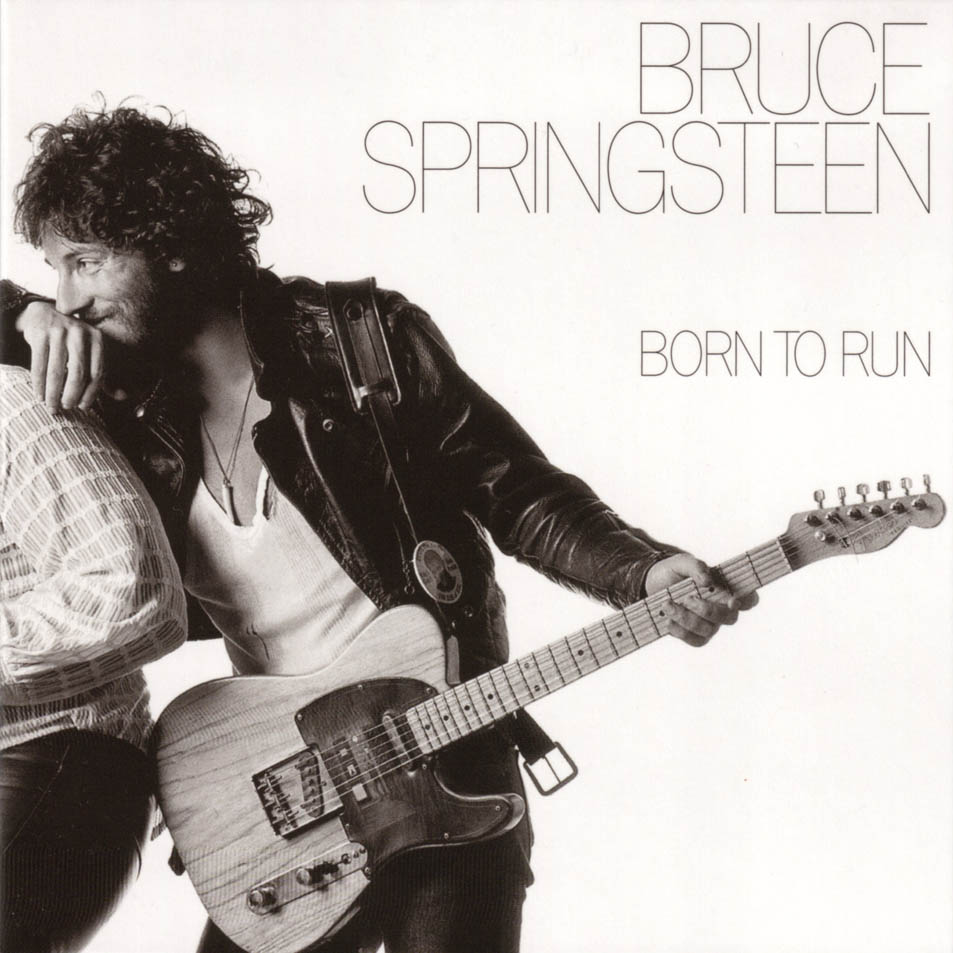
"Tenth Avenue Freeze-Out," the next track, is the point of many Springsteen concerts where the band is introduced, and it's easy to see why: the song is a feature, a perfect opportunity to show off the massive talent in the E-Street band. The song essentially tells the story of how the band came to form, and suggests that "when a change was made up town and the Big Man joined the band," it was the dividing line, the moment where the band gained the secret weapon that would be able to rocket it into superstardom. Clemons, who dominates this record as much as Bruce does (as evidenced by his appearance on the cover, where the Boss leans on him with a brotherly affection and dependence) has another shining moment here, and it's unlikely, in light of his recent death, that the song will ever appear in another setlist, even if the E-Street band does tour again, and even if they bring on a new saxophonist to carry some of Clarence's weight; this song belongs to him, and always will. Steve Van Zandt, who'd become a full time member of the E-Street band after this record (on guitar), delivers his biggest contribution to the record with a celebratory horn arrangement. 

"Night" opens with an atomic surge (again, courtesy of Clemons) and builds into an anthemic song where Bruce essentially becomes "the Boss." "Night" is a song about escaping the oppressive monotony of the 9-5 workday, and making the most of the night that follows, going out and living life to its fullest before it all starts over again in the morning. The lyrical style, written from the point of view of a working everyman, would become a Springsteen cornerstone, and would earn him his famous nickname.


"Backstreets," which closes the first side, is the record's second masterpiece. Opening with a sweeping virtuoso piano solo from Roy Bittan, the song goes on for over two minutes before Springsteen delivers the first line: "one soft-infested summer, me and Terry became friends/Tryin' in vain to breathe the fire we was born in." The song tells the tale of their friendship, recalling the good times ("Remember all the movies, Terry, we'd go see?/Trying to learn how to walk like the heroes we thought we had to"), before revealing that the whole thing came crashing down in one of Springsteen's most emotional vocal moments ever.

"Blame it on the lies that killed us
Blame it on the truth that ran us down
You can blame it all on me, Terry, It don't matter to me now 
When the breakdown hit at midnight, there was nothing left to say 
But I hated him and I hated you when you went away..."

The entire song builds to this massive, emotionally cathartic moment, and when it finally hits, it's one of the most breathtaking moments of a perfect album. "Backstreets" wasn't one of my favorites at first, but it grew on me every time I heard it, until it finally hit home. It's the album's most heartbreaking track, from the mournful piano opening, to Springsteen's yearning and nostalgic lyrics, and finally, to this climactic moment. "We swore forever friends," Springsteen sings at the end, sounding tired and regretful. "On the backstreets, until the end."

The legendary title track kicks off the second side, and what a triumphant opening it is. If there's a bigger anthem in anyone's discography, I surely haven't heard it. The iconic guitar riff heralds the arrival of the track, while Ernest "boom" Carter, on his last appearance with the E-Street band, delivers a massive flurry of drums that current E-Street drummer Max Weinberg has said he's never been quite able to duplicate. The guitar line was reportedly overdubbed dozens of times, and the oft told story of this song's recording sessions, of how many tracks they used to record the whole thing, and of the mammoth amount of studio time it ate up (recording engineer Jimmy Iovine apparently had to hide the studio bills from the record company), has become almost mythical since this album's release. 

Bruce and his band poured everything they had into this track, and the result, though not the best (or second best) track on this masterpiece of a record, is the grandest rock and roll anthem of all time. The themes, of love, escape and of the American dream, mirror those that already appeared on "Thunder Road," and the iconic lyrics here nearly match those on that poetic masterpiece. "I wanna die with you, Wendy, on the streets tonight in an everlasting kiss," he sings halfway through, with such conviction that it's hard to think of a more romantic lyric in the history of rock and roll. Clarence's sax solo weaves and dodges through the song's melodic motif, establishing him again as a virtuoso player, and when the song finally explodes into it's bridge, it hits with such sublime, honest emotional force that any first time listener will be made a believer, instantly. Even before I was a big Springsteen fan, this song spoke to me, and it continues to do so, seven or eight years later. I'm not sure a frontman has ever sounded so immortal. And the song's definitive lyric, "I wanna know if love is real," is a question that has gone on to permeate through much of Springsteen's work.


"Shes the One" opens with an instantly memorable and somehow familiar piano line, before ushering in Bruce's mysterious vocal.  The song builds into a bombastic arrangement, with a thunderous rhythm section and Roy Bittan's piano line continuing to dominate the sound while Springsteen sings lyrics about an almost mythical woman who seems just out of his reach. The song feels almost like a surreal dream of sorts in it's crescendo, eventually building to another Clarence solo and a full band breakdown. 

"Meeting Across the River" follows seamlessly, opening with a distant trumpet line that eventually gives way to a gorgeous piano and Springsteen's subdued, yet forceful vocals. The song's lyrics represent one side of a conversation between Bruce's character and a guy named Eddie, who he's trying to convince to help him pull off a robbery. He's down on his luck, and he hangs all his hopes on this one chance: that the job will go off without a hitch, and that the cash he's going to steal will save his relationship and set his life on the right track. As the song fades into the album's closer, it's pretty clear that things aren't going to go as planned. "Meeting Across the River" is often dubbed the album's weakest track, and is most certainly the least discussed (and the least performed live), but as a piece of storyline, a subdued penultimate moment, and a lead-in to one of the most epic tracks in all of rock and roll, it functions wonderfully, and is merely one of eight perfect tracks on display here.

The aforementioned closing epic, "Jungleland," is so indescribably grand that the only way to truly understand it is so sit down, close your eyes, and listen to it at full volume. There's so much to experience here: the scenic violin opening; Roy Bittan's shimmering piano lead; Bruce's fantastically evocative lyrics; the organ that barges in after the first singing of the line "down in Jungleland"; the rousing guitar solo halfway through;  Clemons most iconic sax solo in the catalog--maybe the greatest and most moving two minutes in the history of recorded media; the comedown after the solo, and the way Bruce's vocal delivery shifts from the grand opening sections to fit the emotionally broken closing ones; and then the build-up over the final minutes, as Bruce wails wordlessly over Bittan's furious piano playing. "Jungleland" has so many defining and visceral moments that I could easily wax poetic about it for a dozen pages. 

In his sax solo, Clemons is able to communicate more than any words ever could, everything from love to triumph to overwhelming tragedy, and that's why it still gives me chills, even to this day. I've heard people say it saved their lives; it certainly changed mine. This song, and that moment in particular, has given me an anchor to cling to so many times, from the day I graduated from high school, to the day my first dog died, to inspiring me in moments where I felt like I'd lost sight of why music was so important to me. And on the night that Clarence Clemons passed away, I listened to the song on repeat for an hour and a half, and that sax solo, Clarence's most shining moment in a career full of shining moments, brought tears to my eyes. This year, we lost one of the greatest forces in the history of rock and roll. At the U2 concert I went to this past summer, Bono described Clarence's playing as a "force of nature," and never is that force more papable than it is on this indescribably flawless song; never have ten minutes felt shorter.


Over the course of my senior year, Born to Run came to define me more than any other album ever had, and probably more than any ever will. Its themes of growing up and escape, of the optimism and triumph of the American dream (with a bit of fear thrown in for good measure), fit so well with everything I was feeling as I approached my high school graduation. "Thunder Road" was my Rendezvous song and I wanted "Born to Run" as my class song. I wanted to share the way I felt about this record with everyone: it was in constant rotation in my car, where I belted the songs at the top of my lungs and played the crashing finale of "Jungleland" at full volume, for every other car on the road to hear and be jealous of. Throughout that spring, every song, every lyric, every guitar or piano line and every sax solo came to mean something huge to me. 

As the years have gone by, Born to Run has continued to grow and change with me, and every single time I put it on, I still feel the same way about it. It still feels like that first morning, on that snowblind car ride where I listened to "Thunder Road" on Andrew's recommendation and it finally clicked: like every single door in my mind is being blown off its hinges. This is an album I'll listen to forever, but I think it will always bring me back to my senior year, the time period that it came to define, and one I'm so glad it did. The fact that I was performing "Thunder Road" at my final concert of high school was only part of it. On my drive to graduation, it was this album that provided soundtrack, while moments of the past four years, good and bad, flashed before my eyes, brought on by a lyric or a melody. I was about to close the book on a huge chapter of my life, and Springsteen's vision of the American dream got the honor of being the coda. It's hard to explain, but listening to this record that morning made me feel more alive than I ever had before. It still does.