Showing posts with label Ryan Adams. Show all posts

Saturday, March 26, 2016

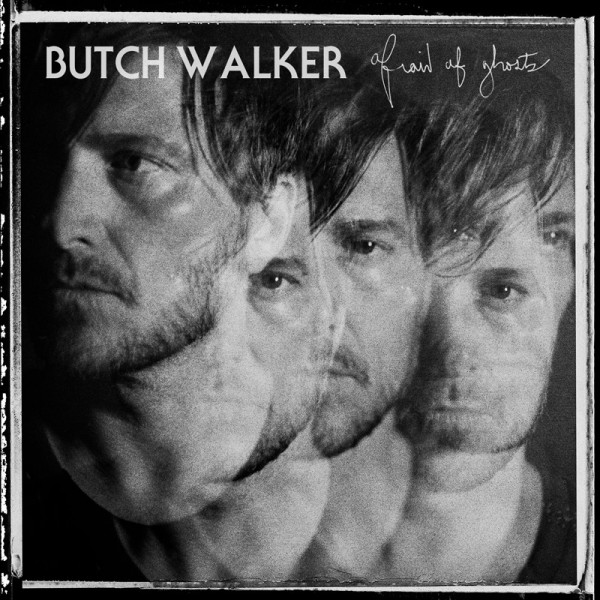
Butch Walker - Afraid of Ghosts

Sometimes, albums need to be made. Whether motivated by the break-up of a long relationship, the death of a loved one, or some other life-changing incident, there are certain records that aren't just artistic choices for the musician making them, but artistic necessities. Butch Walker is no stranger to these kinds of records. He made one of them six years ago, after losing his home in a wildfire and getting a new perspective on the things that really mattered; he did it again two years ago, hurrying to finish a set of songs so that his father would hear them before he died. Both of those albums, the 2008 LP Sycamore Meadows and the 2013 EP Peachtree Battle dealt with heartbreaking situations, but turned them into life-affirming statements. The former is a reminder that material possession is never the most important thing in life, while the latter is a love letter to Butch's father and the relationship the two shared; both are the kind of personal and intimate records artists don't make anymore.

If Peachtree Battle was a loving farewell to a father, though, then Butch's seventh solo LP, titled Afraid of Ghosts, is the grieving process. And once again, it's a record that Butch needed to make. Written in the tumultuous year that followed his dad's passing, and recorded in just four days at Ryan Adams' Pax Am studios, Afraid of Ghosts feels both measured and spontaneous. After making a pair of raucous studio albums with his backing band, The Black Widows, Butch returns on Afraid of Ghosts to the well that provided his two most stirring accomplishments as a singer/songwriter: Letters and Sycamore Meadows. Among Butch fans, those two records are remembered as his most personal and introspective, and for good reason. On songs like "Joan," "Going Back/Going Home," and "ATL," he blended the autobiographical with the fictional, dreaming up down-on-their-luck characters as a means of examining his own life. He follows those lines to Ghosts, and comes up with a record that dares to be even more personal than his previous high points.

Not that he's forgotten what he learned on those Black Widows records, though. Ever since his 2006 LP, The Rise and Fall of Butch Walker and the Lets Go Out Tonites, Walker has been showing more and more interest in country music. Those influences came to a head on 2010's I Liked it Better When You Had No Heart, when he teamed up with Michael Trent—one half of Americana duo Shovels & Rope—to write an album that completely departed from his earlier style. And while he backed off the country a bit on 2011's The Spade, in favor of loud summertime rock 'n' roll, the influence was still there in songs like "Closest Thing to You I'm Gonna Find" and "Dublin Crow."

With Afraid of Ghosts, Butch Walker has made his most country/folk-influenced album yet. But those who view "country" as a four-letter word needn't worry: this isn't a bro country LP in the vein of Florida Georgia Line and Luke Bryan. Heck, it's not even comparable to the arena-rock/country hybrid that was Keith Urban's recent Fuse—a very solid album that Butch himself helped to write and produce. Instead, Afraid of Ghosts feels like classic alt-country, comparable to the work Nashville's most legendary figures or in the vein of recent albums by the likes of Jason Isbell or Ryan Adams. Perhaps even more apt would be a comparison to Springsteen's Nebraska, since that album's stark hopelessness is mirrored in more than a few of this album's key tracks. Ghosts is a record that explores similar settings to what modern radio country has been all about—bars, the highway, the south as a whole—but twists those themes in dark and often nightmarish ways.

On "21+", for instance, the narrator isn't the young gun sharing shots with his bros on a Friday night, playing pool and celebrating the limitlessness of life. Instead, he's the guy behind the bar, pouring drinks for all those naïve kids. He's the guy who's trapped inside a small town and a dead-end life, selling a little bit more of his soul every day in an effort to keep going. In the song, he sits down after work, raiding the bar for free beer and pondering an escape. "Daddy, what will I be if I ever grow up?/Can I get out of a town that drowns everything I love?/Come hell or high water, I'm gonna leave here when I'm sober/Don't wanna be 21 and over." When movie star Johnny Depp barrels in with a fractious and flammable electric guitar solo, it's a moment that could easily be played as a publicity stunt, but instead, it functions to underline the suffering and frustration of a crashed American Dream. It's a knockout punch.

There's a lot of darkness on Afraid of Ghosts, and it doesn’t disappear outside of the bar that's become a prison in "21+." In the lead single, "Chrissie Hynde," the narrator is driving around town listening to Pretenders records and basking in his final hours of freedom before being hauled off to serve time in an actual prison. When he bids farewell to his family in the second verse, envisioning a better life somewhere on down the road, but knowing it's too late for him to become the husband or father he wants to be, it's a heartbreaking moment. Similarly shattering is "How Are Things, Love?", which may or may not re-introduce us to the character from "Chrissie Hynde" after he's been released. "Did you get rid of the ring, love?" he asks on the final chorus, accompanied by a weeping steel guitar. It's a question left hanging in the air as the song ends, with a simple and wrenching "I hope you're well" as the sign off.

Longtime Butch fans—especially the ones who still hold his work with the Marvelous 3, or his first solo full-length, 2002's Left of Self-Centered, to be his highest accomplishments—might have a few gripes with Afraid of Ghosts. Gone are the power pop choruses; gone are the big rock songs; gone are the lyrics littered with sarcastic, tongue-in-cheek one-liners; long gone is any indication that Butch was ever the lead guitarist in a hair metal band. This is Walker's slowest, quietest, bleakest, and most serious record ever. But that doesn't mean the sunlight never breaks through the trees, or that anyone with ears could reasonably describe Afraid of Ghosts as "depressing."

On the contrary, there are a slew of incredibly life-affirming moments on this record, thanks to the fact that, at the end of the day, everything comes back around to Butch's dad. He's there in the mission statement of a title track ("I'm gonna take what scares me the most, and turn it into something real," Butch sings on the chorus). He's there in the self-described "I Love You," the closest this album ever gets to being jaunty or upbeat. He's definitely there in the funereal "Autumn Leaves," a sobering song written about cancer. And then there's "Father's Day," the best song on the record and probably one of the four or five best songs Butch has written in his entire career. Suffice to say that it's tough to get through the last verse—or to even read the lyrics—without choking up.

"Sunday morning, Father's Day
The first without my dad
As I look into my little boy's eyes
It takes all I have
Not to break right down in front of him
When he smiles at me
See you don't become a man
Until you lose your dad, you see"

Butch has been unflinchingly honest in his music in the past. Whether he was baring his soul on a breakup song ("Cigarette Lighter Love Song," "Best Thing You Never Had") or spilling his entire life story in a two-minute rap breakdown ("Going Back/Going Home"), Butch Walker is one of the only songwriters I can think of who has never wanted anything to stand between himself and his fans. It's that kind of honesty that allows for the intimate and electric connection he forges with the crowd at live shows, and the same honesty that fuels Afraid of Ghosts. It all culminates on "Father's Day," first with the chilling verse above, and second with a bruising guitar solo, courtesy of Ryan Adams. Husker Du guitarist Bob Mould is in there too, contributing rhythm guitar and backing vocals, but it's the Adams solo that provides the catharsis for the song, and for the album as a whole. Every emotion you feel when you lose someone you love, from anger to grief, is conveyed in that 60-second burst of noise. The subject matter of the song might be intensely personal, but this moment at least is completely universal.

Which brings me to Ryan Adams. In the former Whiskeytown frontman, Butch has found his Steve Van Zandt, his consigliere . Those who saw the two tour together last fall know that they have a kind of rock 'n' roll synergy that most full-time band members don't even share. That kinetic chemistry is arguably what makes Afraid of Ghosts as perfect as it is. After all, one of the best things about this record is how incredibly great it sounds, from first note to last. Walker, of course, is a heavyweight producer in his own right, but on this record, he handed over the reigns to Adams. The result is a disc that is instantly unique in his catalog, distinct from the already-diverse range of albums he's made in the past. Adams brings a different sonic atmosphere to a set of songs that needed it, trading what might have been a cleaner production job from Walker for something more akin to the grimy, reverb-heavy sheen that characterized his self-titled solo album from last year. And like that record, this one feels instantly timeless.

Similarly to how Ryan Adams hearkened back to the golden days of Tom Petty and Fleetwood Mac, Afraid of Ghosts would be right at home in a stack of 1970s folk-leaning records: Carole King's Tapestry; anything by James Taylor; even a few albums that fall more into the "rock" genre, like George Harrison's All Things Must Pass or Springsteen's Darkness on the Edge of Town. Part of it, of course, is that these are just great songs; another part is the arrangements, which add splashes of glorious instrumental color—the scorched-earth guitar solo in "Bed on Fire," the wall of radiant vocal hums in "Still Drunk," the twinkling pianos of the title track, and the haunting synths of album closer "The Dark"—to songs that could have easily been grayscale acoustic affairs. And just as Ryan Adams accomplished a rebirth of sorts on his recent self-titled record, Afraid of Ghosts manages to stay true to Walker's legacy while also standing out as something distinctly new and different in his catalog.

There will probably never come a day when I can rank any Butch Walker album above Letters. Not only was that the first Butch record I ever heard, and not only did it play a huge part in my own musical evolution, but it also balanced everything that makes Butch Walker special into one album: big rock songs, soaring power pop choruses, and sarcastic quips on one side; sparse arrangements, tender storytelling, and raw intimate balladry on the other side. Afraid of Ghosts is the first album from Butch that doesn't include any of the former, which will probably alienate a few longtime fans. But for those who are willing to go in without preconceived notions, this album is a masterpiece: a stunning feat of songwriting depth, emotional maturity, and melodic effortlessness that stands as one of the best albums to come out in years.

It's also the album that Butch needed to make right now, an elegy for a lost parent that, by its final lyric, has poetically reached the acceptance stage: "Into the dark," Butch sings, "With my father at my side." It's a fitting statement, because the people we love most—parents, grandparents, family members, best friends—they're never gone. They can't ever be gone because they live in us. They live on in the things we do, and in the songs we write. And the fact that Big Butch lives on in this remarkable LP, this staggering work of heartbreak and celebration, that's the greatest compliment that could ever be paid to the loving son who wrote it. Condolences to everyone else, but 2015 already has its Album of the Year.

Ryan Adams - 1989

At first blush, the thought of Ryan Adams covering any Taylor Swift album—let alone her poppiest album—doesn't make much sense at all. Swift's 1989 is one of the biggest albums of the decade so far, a seemingly universal pop record that has sold more than 8.6 million copies worldwide. Ryan Adams, meanwhile, is an idiosyncratic folkie and classic rock geek who seems precisely like the kind of person who would scoff snobbishly at Swift's considerable accomplishments as an artist. Unsurprisingly, when Adams tweeted late last year about reinterpreting 1989 as a dark folk record (or something along those lines), not a lot of people took him seriously.

Fast forward to September 21st, and Adams' version of 1989 is one of the top-selling albums on iTunes and a trending topic on social media. Swift's version of 1989, meanwhile, is just shy of 11 months old, but its fifth single is nevertheless skirting the top 10 of the Billboard Hot 100. The album, it seems, has accomplished something that is borderline impossible in today's music market: longevity. 1989 was a monocultural triumph in an age where monoculture doesn't really exist anymore. And by revisiting and reinventing the album, Adams has helped us to understand why 1989 resonated with so many people.

Needless to say, Adams' version of 1989 doesn't sound all that much like Swift's. Where the original album was loaded with synths, punchy beats, and huge pop production, Adams scales everything back and lets the songs breathe. According to a recent interview Ryan did with Zane Lowe of Beats 1, he originally envisioned the record as a four-track recording, "Nebraska style." Unsurprisingly, quite a few of the songs are sparse, with little more than voice and acoustic guitar (or, in one case, voice and piano). Even the more full-bodied numbers tend to sound a bit desolate, with their bassy demo-ish feel and reverb-heavy production. Hell, "Shake it Off," once an infectious bopper about not giving into the haters, gets transformed into a not-so-distant cousin of Springsteen's forebodingly dark "I'm on Fire."

That's not to say that Adams just "sad bastardizes" all of Swift's poppy creations, though. Anyone can take an upbeat pop song and turn it into a down-tempo dirge. Not just anyone can draw new themes and nuances out of the songs they covers, and that's what Adams does here. He's not trying to be the dude who ironically covers pop music originally performed by a female. Instead, he's an artist who saw 1989 for what it was—a truly great and surprisingly deep set of songs—and wanted to pour himself into those songs, heart and soul.

For the most part, Adams transforms 1989 into a record about divorce. In January of this year, Adams and his now ex-wife Mandy Moore publicly announced that they had decided to end their marriage. Ryan is not and has never been the kind of guy to speak about his personal life publicly. The subject is a well-known no-fly zone in interviews, and even in Adams' songs, it's always been tough to separate the fiction from the non-fiction. Upon further examination, Ryan's latest record, last year's underrated self-titled triumph, was at least partially about a relationship in crisis. But Adams has always been someone who wants his listeners to interpret his songs in their own ways, and as a result, he's often dodged specificity in pursuit of universality.

Ironically, 1989 might be the purest exorcism of personal demons in Adams' entire discography—give or take a Heartbreaker. When Adams sings some of these songs, you can hear the rawness and personal struggle in his voice. "When you're young, you run," he wails over and over again on his remarkable cover of "This Love," reinterpreted here as a broken piano ballad sung from a darkened stage. "Remind her how it used to be, with pictures in frames, with kisses on cheeks" he romanticizes in "How You Get the Girl," now playing as a lonesome reflection on a relationship doomed to smash upon the rocks. "I wish that you knew that I'll never forget you as long as I live," he sings on "I Wish You Would," which—unlike Swift's version—offers no hope that the other person is ever coming back. Ryan may not have written these words himself, but he sure as hell means them. And considering the recent events in his life, it's pretty damn clear who he means them for.

Some Swift fans might be confused about how dark and anguished Adams' interpretation of 1989 is. After all, the original 1989 is a world-conquering pop album: it's meant to be a celebration, right? Well, not really. 1989 might play well at parties because the songs are catchy, beat-driven, synth-heavy, and culturally ubiquitous, but the lyrics to those songs were always deeper than their Max Martin-approved arrangements hinted at. Indeed, if you spend much time with the lyrics of 1989—or if you read my review from last October—you'll realize that Taylor wasn't feeling too celebratory when she wrote that album. On the contrary, 1989 is a record loaded with insecurity, heartbreak, frustration, anger, betrayal, and regret. It comes from the pen of a person who has lost her naivety and optimism; a person afraid she can't make a relationship last longer than a few months; a person who, despite all her own urgings to "shake it off," is scared as hell that she might always be alone. Adams pulls out that fragility and brings it to the forefront, and the result is not only a borderline masterpiece for him, but also clear proof that Swift wrote something truly complex, mature, and transcendent with 1989.

Of course, Ryan Adams is a quirky dude, and there's plenty of room for him to have fun between all the emotional sucker punches he throws here. His take on "Welcome to New York," for instance, turns one of Swift's least effective songs into a Springsteen-esque barnburner, circa The River. Elsewhere, he morphs "Wildest Dreams" into a jangly R.E.M. cut (I'm thinking an outtake from Document), references Sonic Youth in a male-appropriate rewrite of "Style" ("You've got that Daydream Nation look in your eye…"), and turns "Bad Blood" into what it was surely meant to be in the first place: a song about how much Liam and Noel Gallagher hate each other's guts (the song's acoustic intro feels like a deliberate nod to "Wonderwall"). My one complaint about 1989 might be that Ryan doesn't have enough fun with it. In particular, his slow, plodding cover of "Blank Space" foregoes the opportunity for Ryan to sing and savor a line like "Darling I'm a nightmare dressed like a daydream." But that's a minor complaint for a record where every other cover is a breath of fresh air.

There will, inevitably, be conversations about which version of 1989 is better. I've already seen comments from Taylor haters saying that that Ryan "brought depth to shallow pop songs," which is, inherently, 1) an impossible thing to do, and 2) a stupid thing to say. The depth was already there, and the only reason Ryan Adams' version of 1989 is so good is because the original songs were already damn sturdy in the first place. Ultimately, though, conversations about which version is better are superfluous and miss the point. Taylor's original 1989 is made even more interesting and fun to discuss by Ryan's overtly classic rock-ified version, while Ryan's version is intriguing as both a personal expression and a reaction to one of the biggest albums we're likely to see come along in our lifetimes. Taylor's version might work better for the party, and Ryan's might be ideal for the morning after or the late night drive home, but both albums are most effective when you look at them as an intrinsically linked endeavor.

Ryan Adams - Ryan Adams

Just my luck that I became a big Ryan Adams fan pretty much exactly when he stopped being super prolific. The year his catalog really clicked for me was 2009, and by then, his early 00s run of masterpieces, his surge of releases with the Cardinals, and his boatload of b-sides and unreleased (but thoroughly bootlegged) albums had mostly come to an end. Sure, since I’ve been paying attention, we’ve gotten III/IV, an extensive collection of songs recorded around the time of 2007’s Easy Tiger, and Ashes & Fire, a super comfortable, sort of sleepy, and thoroughly safe bunch of folk songs. But what makes Adams special—his unapologetic need to write, record, and release as much material as his fans can stomach (and in many cases, much more)—has been somewhat dampened over the past few years.

There’s an upside to all of this, though, and it’s that, for the first time in a long time, the release of a new Ryan Adams album genuinely feels like an event. Adams knows it too. He knows that he’s been sitting on material that the younger version of himself would have surely fired off to his fans—a Glyn Johns acoustic record, for one—and he knows that this new record is the first one in ages that won’t get immediately disparaged because the guy who wrote it is too prolific. For those reasons, he’s decided to name his latest record (I don’t know which number this one officially counts as) Ryan Adams. A self-titled effort; a new beginning. And a fucking great place for this world-class songwriter to start on the next leg of his epic journey.

Ryan Adams is at once the most cohesive and consistent album that Adams has released in at least nine years. It doesn’t lag in the midsection like Ashes & Fire did, and it doesn’t feel like it was cobbled together from a long, fractious recording session like I always felt Easy Tiger did. Instead, it offers a sharp and steely portrait of where Adams is as he approaches 40. And from the sound of this album, he’s not in the best place. Ryan Adams is a stark, gloomy, and frustrated set of songs, starting with the earworm lead single, “Gimme Something Good,” and spitballing wildly and viciously from there.

Part of the reason Adams hasn’t released anything in years is that he hasn’t been satisfied with the music he’s been writing. Rumor has it that he sunk something like 100 grand into that Glyn Johns record, and I know he was writing and recording with Butch Walker back in the summer of 2012. Undoubtedly, both of those sessions birthed plenty of material, so you can’t really say that Ryan Adams is suffering from writer's block. It is evident, however, from “Something Good,” that he’s reached a crossroads where he’s no longer sure that the music he’s writing is anything that anyone wants to hear. “I can’t talk, got nothing to say/It’s like there’s no tomorrow, barely yesterday,” he sings, before repeatedly begging some unknown entity to just give him “something good,” already. It’s a compelling start that shows Adams writing from a more personal place than I think we’ve heard in at least five years.

Adams' own struggles with writing and relevancy are not the only demons plaguing him on this new record. When he debuted the gorgeous acoustic number “My Wrecking Ball” at the 2014 Newport Folk Festival, Adams called it a “protest song” objecting to the death of his grandmother. “Driving through the streets tonight, it’s hot I got the windows down/I wish I could call you, I wish you were still around,” Adams intones in a ghostly murmur at both the start and end of the track. It’s not the first time on the record that sounds like something he might have sung on the downbeat and sepulchral Love is Hell, an album full of haunted piano keys and switchblade guitar solos that was originally split into a pair of masterful 2003 EPs. It’s not the last, either. Ryan Adams consistently conjures up callbacks to the music that Adams was making 10 or more years ago, and for most fans, those abundant callbacks will be more than welcome.

One example is “Kim,” another dead-ringer for the Love is Hell style, which boasts reverb-laced guitars that sound like headlamps reflected on a rain-washed street. Another is the road-trip-ready folk-pop of “Let Go,” which sounds like it could be a fully-fleshed out version of a few of the songs from Adams’ brilliant 2001 lost record, The Suicide Handbook. And a third example is “Shadows,” which is the electric guitar answer to “Shadowlands.” A piano-led standout from Love is Hell, “Shadowlands” relied on a repetitious keyboard loop to convey complete and utter desolation. Similarly, the verse portions of “Shadows” use a limited guitar loop to create an air of paranoia and confusion. You can bet that the similarities between the two songs, including their titles and moods, aren't accidental.

Ryan Adams isn’t the only artist whose past work is getting referenced on this album, though. Adams has always been a die-hard music fan and a consummate record collector. My favorite album of his, 2001’s Gold, cycled through at least a dozen different influences, from Van Morrison to The Rolling Stones. Here, Adams is mining different wells of classic rock gold. At least half the songs have some flavor of Damn the Torpedoes-era Tom Petty: Benmont Tench, a founding member of the Heartbreakers, even turns up on “Gimme Something Good,” providing a swirling organ intro that takes us straight back to 1979 and that first swell of “Refugee.” The siren-like guitar riff on the chorus of “Stay With Me” evokes Petty, too, but that song also has flavors of Tusk-era Fleetwood Mac; and American Songwriter beat me to the punch in saying that the foreboding guitar intro to “I Just Might” makes it sound like Adams has been spinning his copy of Nebraska pretty frequently as of late.

The best songs on Ryan Adams need no comparisons, though, because they refine Adams’ sound to a new level of polish and vibrancy without sacrificing what made his old work so special. Take “Trouble,” where Adams captures every ounce of skittering intensity that defines this record in a single sub-four-minute song. “Put my hand through the mirror, let the water run/Seven years bad luck is better than none,” he sings as the song careens into it’s indelible hook: it's one of the record's definitive moments. “Feels Like Fire” sports another bulletproof chorus—arguably Adams’ catchiest, at least since the Gold days—set to a stately and metronomical drumbeat. And the achingly beautiful “Tired of Giving Up” is the kind of breezy slow dance ballad that just feels timeless from the first time you push play, from Adams’ relaxed and self-assured vocal delivery to the chiming bell refrain that lifts the song toward the heavens in the wake of yet another impeccable chorus.

Fans of Adams’ ultra-lyrical Heartbreaker stage may not find much to appreciate about Ryan Adams. The same could be said for those who hold Adams’ messy, indulgent, and spontaneous work with the Cardinals as the songwriter’s gold standard. That’s because Ryan Adams isn’t an alt-country album, and it’s not a rock album in the same way that Adams has made rock albums in the past. Instead, as those three songs highlighted in the paragraph above prove, it’s the closest Adams has ever come to making a pop record. The songs are simplistic, structured around taut verses and hummable choruses, and the production, done here by Adams himself, is as lush and polished as it was on Gold. There's not a more streamlined album anywhere in the Ryan Adams catalog, and for a songwriter who is anything but streamlined, that may seem a bit off.

But while Ryan Adams doesn’t take as many chances as some of the other records that Adams has made in the past decade, it’s also as cohesive and consistent an album as any he has ever made. Fans will debate whether there are any all-time Adams greats in the tracklist, any songs that stand up to the likes of “Come Pick Me Up” or “Oh My Sweet Carolina” or “New York, New York” as the best material he’s ever committed to tape. Other fans will wonder whether Adams sat on a “better” record while opting to release this one. But regardless of those factors, Ryan Adams simply plays like the record that Adams needed to release right now. He sounds more vital and impassioned than he has in years, and the songs feel like the new beginning that a self-titled record should be—even if the lyrical content paints Adams distinctly like a guy cruising down a dead-end street. My favorite Ryan Adams record since Love is Hell, and his most complete since Gold, Ryan Adams is a thrilling reminder of why this guy is one of the greatest songwriters of his time.

Monday, April 1, 2013

Night Beds - Country Sleep

Dead Oceans, 2013
8.0/10

That’s certainly the case with Night Beds, the musical project of Nashville singer/songwriter Winston Yellen and the name behind Country Sleep, my personal favorite album of the year so far. Yellen and I must come from similar schools on the notion of musical familiarity, as nearly every moment of Country Sleep echoes with some glimmer of sonic nostalgia, some shred of homage to the vast collective of influences he gathers throughout. But unlike another early 2013, homage-fueled record (the Rolling Stones/Beatles/Elvis/Velvet Underground collision that is Foxygen’s We Are the 21st Century Ambassadors of Peace & Magic) , Country Sleep never crosses the line into obvious reference. Ultimately, listeners will hear what they want to in these songs, whether it’s hushed atmospherics in the vein of Cold Roses-era Ryan Adams (see “22”), or earnest, sentimental bombast, a la Sleeping At Last (the sweeping romance of “Even If We Try”).

Still though, Night Beds does a terrific job of weaving borrowed sounds and textures into a vision that is thoroughly his own. Few will miss the way Yellen’s reverb-drenched vocals recall older My Morning Jacket records, or how the echoing a cappella of “Faithful Heights” and the dizzying vocal harmony of “Even If We Try” feel appropriated directly from the Fleet Foxes playbook, but those familiar pieces are merely threads in a much larger tapestry. Country Sleep, as a whole, is a condensation of Nashville sounds, from the stark singer/songwriter confessional that is “Was I For You?” to the propulsive indie-folk-pop of “Ramona” (and if The Lumineers can latch onto the mainstream, the latter can certainly follow suit). “Borrowed Time,” meanwhile, balances the longing of Appalachian folk with the rollicking, boozy drive of something you might hear at Nashville’s famed Bluebird Cafe. And album closer, “TENN,” is a timelessly nostalgic lullaby, a softly-strummed ‘song for the road’ whose wandering troubadour aesthetic gives the record its perfect coda.

All of Yellen’s best qualities coalesce on “Cherry Blossoms,” a trancelike piece of midnight balladry that at once feels both heartbreaking and euphoric. The song, like much of Country Sleep, is a sonic feast, Yellen’s gorgeous vocals padded and buffeted by a cloud of harmonies, a subtle electric guitar arrangement and the moan of a memory-laden pedal steel rounding out the symphony. The song crescendos as it goes, filling out in sound with each passing second until the whole thing boils over. Yellen’s voice leaps an octave, his repeated cries of the words “take me home” rising emotionally over the feast of sounds. And then, far too soon, it’s over.

“Cherry Blossoms,” and indeed, the entirety of Country Sleep, plays out like a musical vortex, a song and album so beautifully written, so meticulously recorded and produced, and so passionately performed by its creator, that it’s impossible not to be swept away by it. Undoubtedly, there will be listeners who write Yellen off as no more than the sum of his influences. But while Ryan Adams, Jim James, Robin Pecknold, Justin Vernon, Gram Parsons, Conor Oberst and so many more are probably at least partially responsible for making Yellen the songwriter he is today, the guy has a gift that can’t be learned through simple imitation. It’s something that can’t be faked by ProTools or brought in with session musicians, something that can’t be paid for in promotion or acquired through positive critical reception. And I’m not even entirely sure what that is. Maybe it’s the intimacy on display here, the emotional honesty of it all; perhaps it’s the confident variations in sound inherent throughout, or the sonic splendor of the finished product. Or maybe, it all comes down to Yellen’s warm and welcoming embrace of familiar territory. Regardless of the reason, Country Sleep is more immediately accessible and rewarding than most of the records from the artists listed above, a stunning surprise debut that will be sitting somewhere in my annual top ten come December. Until then, though, I’ll just flip the record over and play it again.

On a lot of occasions, music lovers get to a point in their listening evolution where they start to rebel against the familiar. I’ve always found that interesting, since when we first start falling in love with music, it’s the songs and albums that we can relate to things we already love that click with us most easily. And I’ve always remained like that to a certain extent, something that will never make me the “hippest” music writer in town, but also something I’m really not at all ashamed of. I still have an emotional allegiance to the genres that made me fall in love with music in the first place, and frankly, I probably always will. Alt-country, folk, roots rock: these sounds were my entry point, the hallmarks of bands like Counting Crows or The Wallflowers that transfixed me as a child, and they remain the sounds that can hook me faster than just about anything else in music today. Because sometimes, familiarity doesn’t have to be derivative or uninspired or forgettable; sometimes, it just feels like home.

Wednesday, September 19, 2012

Ryan Bingham - Tomorrowland

Axster Bingham Records, 2012
Four stars

Ryan Bingham’s career received quite the jolt of electricity back in 2010, when his song “The Weary Kind” was suddenly echoing from the sound systems of every movie theater in the country. It was a lucky strike, the kind of breakthrough any wandering troubadour would kill for, but for those of us sitting in those darkened theaters, it wasn’t hard to see why Bingham had won the lottery. The movie was Crazy Heart, a tale of a washed up, hard-driving, big-drinking country star, played so memorably by Jeff Bridges in a performance that won him an Oscar. But movies like that don’t work without the perfect song to build them around, and that’s where Bingham came in. The movie revolved around a relationship that Bridge’s character, “Bad Blake,” had with a much younger woman, how that relationship reinvigorated Blake’s songwriting, and how he lost the girl in the end. I can still remember the first time I saw it, how “The Weary Kind” soundtracked the final frames of the film (as performed by Bridges and co-star Colin Farrell), and how it perfectly switched over to Bingham’s original as the credits started to roll. I couldn’t help but sit and listen to the whole thing play.

Bingham may have won his own well-deserved Oscar for that song, but he also won my allegiance. I rapidly immersed myself in his discography, in his masterful alt-country debut (2007’s Mescalito, whose track “Southside of Heaven” now sits as one of my all-time favorite openers) or in the faster and looser rockers of 2009’s Roadhouse Sun. It wasn’t hard to see why Bingham had been chosen for the film, since his drifter/cowboy persona recalled some of the greatest artists to ever grace the country music genre. Legendary producer T. Bone Burnett, known for his work with Americana and bluegrass artists, must have picked up on that too, since he followed Bingham to his solo project after producing the Crazy Heart soundtrack. The resulting album, Junky Star, released that fall to mixed reviews, but the best moments, stuff like “Hallelujah” or “The Poet,” sounded like the work of a seasoned veteran rather than a scrappy newcomer, and it was clear that Bingham was a songwriter to watch.

Tomorrowland, Bingham’s fourth full-length and the first on his own label, is the best front-to-back album he’s made to date and a payoff on all the bets ever made on him. Junky Star suffered from a lack of variation: too many sad, slow, acoustic songs and hardly any of the rockers of Roadhouse Sun or the twangy, heartland highway anthems of Mescalito. Here, the change of direction is evident right away, with the chromatically descending guitar riff of “Beg for Broken Legs” which kicks off the record in rousing fashion. Played first on acoustic and then electric, that riff forms the backbone of a song that builds swiftly into a potent rocker. Crashing violins drum up intensity as the song barrels on, and Bingham himself sounds revitalized, singing with the force, rage, and conviction that Junky Star’s more tepid moments lacked completely. By the time the song ends, with a chaotic instrumental ascent that evokes a similar moment in The Beatles’ “A Day in the Life,” listeners won’t want to let go.

Bingham has gone on record to say that he wanted to make an album that was fun to play live, and it’s clear from the very beginning that the songs on Tomorrowland are meant to scorch the stage in bars and clubs all over the country. The lush and gorgeous “Western Shore” is triumphant piece of heartland rock that would have fit perfectly on Mescalito. Powerful acoustics and lovely electric guitar flourishes turn the song into an anthem, and one can just envision fans belting along with it in some sweaty, middle-America honky tonk. First single “Heart of Rhythm” is another full-bodied rocker, more in the tradition of Lucero than go-it-alone Ryan Adams (one of Bingham’s former labelmates), while the sweeping guitar line in “Keep it Together” evokes imagery of expansive desert vistas and sun-burnt freeways. Bingham’s rock ‘n’ roll attitude doesn’t always work though: the loud and angry “Guess Who’s Knocking” is more grating than gratifying, and the perpetual call-to-arms that is “Rising of the Ghetto” stops the album in its tracks. Much of Tomorrowland finds Bingham examining the life of the everyman, railing against unemployment, homelessness, and economic hard times, and “Ghetto” aims to be the big epic centerpiece protest song. But the thing is eight minutes long, adding to an already lengthy 62 minute runtime, and its lack of interesting musical motives make it a big, ugly misstep.

But rest assured that Bingham doesn’t rest on his laurels most of the time. Tomorrowland is his most varied and eclectic work to date, with highlights that range from the hopeless desolation of “No Help From God” to the almost arena-ready “Never Far Behind.” The latter is up there with the aforementioned “Southside” as the best song Bingham has ever written. Born amidst a web of echoing guitar sounds (U2, anyone?) and building into to a cathartic wall of sound, “Never Far Behind” crackles with a climactic energy that is hard to top. “How many times can I forget you if you are always on my mind?/I’ve tried so hard to outrun you, you are never far behind,” Bingham repeats throughout, as the music swells around him and brings the album to its emotional and musical peak. The only questionable thing about the whole production is why it doesn’t serve as the album’s send-off.

It’s hard to come down after a song as grandiose as “Never Far Behind,” and Bingham regresses accordingly on Tomorrowland’s closing trio. “The Road I’m On,” “Never Ending Show,” and “Too Deep to Fill” are all perfectly adequate additions, boasting the same driving tempo and derivative country-rock textures that have marked many of Bingham’s songs. But sequencing must be called into question when it dampens the impact of an album’s conclusion, and that is precisely what happens here. None of these songs are highlights, and “Too Deep to Fill,” while it certainly has some air of finality to it, feels lightweight in comparison to the emotional peak Bingham reached less than ten minutes before. This record could have been a bona-fide classic with some trimming and restructuring: ten songs, a killer opener and closer, no bloated eight minute centerpiece, and a little less filler. As is though, it’s still solid, and even some of the more “middle-of-the-road” tracks are damn good. Bingham has never sounded this lively or centered in his songwriting: he’s rarely carried so much anger and emotion with his voice, let alone on every song, and his melodies have only reached these heights on a few occasions. Chances are, his best work is still ahead of him, but for now, Tomorrowland is another fascinating statement from one of music’s most promising young players. I can’t wait to see where he goes next.

Monday, September 17, 2012

"We wait for kingdom come with the radio on": The Gaslight Anthem Live in Detroit

The Gaslight Anthem
Live at St. Andrews Hall, Detroit, MI
September 14th, 2012

(Check this out over at AbsolutePunk.net as well)


Disclaimer: This is going to be long.

The last time I saw a show at Detroit’s St. Andrew’s Hall, it was 2006: I was 15 years old, lining up for my first real concert, and temperatures had been hovering around 100 degrees all day. Needless to say, the heatwave turned that small and cramped club into a sauna, and I left the building soaked in sweat, smelling worse than anyone has the right to, and dehydrated to a dire state. But the night was legendary: I saw Butch Walker, one of my first and foremost musical heroes, give a show full of raucous antics and emotional intensity that cut through the heat and straight to the core of me. I’ve been to a lot of shows since then, big and small, from stadiums and arenas to the smallest clubs in Michigan, but that first one still has a spark about it that takes me back: my brother’s best friend making a wrong turn and ending up in some shady back alley (in Detroit, this is not a good thing); some homeless guy named Papa Smurf (who later ended up in the pages of Sports Illustrated) trying to bum a few bucks; the opening acts, which included a pre-fame Boys Like Girls and an energetic southern-rock act called As Fast As; Butch’s back-up singers spraying the crowd with hoses; and yes, one of the best setlists and shows I’ve seen by the guy who plays club shows better than anyone.

Perhaps it’s appropriate that my first appointment with the Gaslight Anthem bore a lot of similarities to that show. Over the past few years, Brian Fallon has slowly wormed his way into the ranks of my favorite frontmen in rock ‘n’ roll, and Gaslight’s latest, Handwritten, is likely to take the top spot on my album of the year list. In the time I’ve been a fan, it’s also become a joke of sorts between my brother and I that Fallon was never going to come back to Michigan. We missed out on his visits in 2010, in support of the band’s third album American Slang, and he’s spent most of the intervening years touring Europe, both with Gaslight and side-project The Horrible Crowes. When dates finally started coming out for the Handwritten tour, we were further disappointed by the fact that the band would be supporting Rise Against (along with rockers Hot Water Music) rather than going it alone. The tour included a Grand Rapids date, a short drive for both of us, but the prospect of paying double or triple our usual ticket price to see Gaslight play 12 or 13 songs didn’t seem too appealing.

Then, finally, our prayers were answered. Rise Against was taking a night off on the Friday before that GR show, and Gaslight and Hot Water Music each decided to do one-off tour dates in Detroit. So it was that my brother and I ended up in St. Andrew’s Hall, a sold out crowd swelling around us, waiting for Fallon and company to take the stage. Doors opened at 8, and with the stage already bedecked in Gaslight regalia, it was fairly clear that there was no opening act tonight. No nonsense, straight-to-the-point: the way Springsteen does it and the way I like it.

It was 9 p.m. on the dot when the band took the stage. Opener “Boomboxes and Dictionaries,” the lead-off track from the 2007 debut Sink or Swim announced two things: first, that this was going to be a concert of deep cuts and old songs, meant for the die-hard fans, and second, that the St. Andrew’s Hall sound set-up was abysmal. Fallon’s vocals were far too low in the mix, to the point where anyone unfamiliar with the songs would have had a hell of a time figuring out what he was singing about. The blend was messy at best, sacrificing clarity for sheer volume, and as the show went on, Alex Rosamilia’s lead guitar lines seemed to get sharper and sharper. All of these problems were consistent ones, a shame because the band played one hell of a setlist. Still, the atmosphere was electric, with a crowd full of people who clearly loved this band and these songs as much as I did, and with sing/shout along sessions that rocked the very foundations of the place. While I went back and forth on whether or not the trade-off was an even one (more on that later), The Gaslight Anthem didn’t disappoint.

The best songs in the setlist, almost unanimously, were those culled from the band’s latest record. Call it whatever you like, but the band was clearly the most at home with their latter-day material, and songs like “Howl,” “45,” and “Handwritten” set a high-water mark very early on in the night. That’s not to say that their earlier work fell flat, though. Classics from their 2008 album, The ’59 Sound, formed the backbone of the set, and the inclusions of “Even Cowgirls Get The Blues,” “Meet Me By The River’s Edge,” “The Patient Ferris Wheel,” “Film Noir,” and “The ’59 Sound” all gave way to triumphant sing-alongs. Speaking of those, “Keepsake” was a set highlight, with a skyscraping chorus that rang through the venue like a battle cry, and “American Slang” scorched like the anthem it is, with its massive guitar riff and yet another fist pumping hook.

But the poor quality of the sound definitely took its toll on what was otherwise a nearly spotless performance. I’ve often thought that I would like the songs from Sink or Swim a lot more if they were recorded now. The fidelity of the original recordings makes them sound like demos, but the actual songs are masterful, with more punk edge than the ones from The ’59 Sound, but very obviously cut from the same nostalgic cloth. With five of the album’s 12 songs represented here (“Boomboxes,” “Wooderson,” “Angry Johnny and the Radio,” “1930,” and “We Came to Dance”), this should have been a perfect opportunity to see those songs reborn. Unfortunately, the fuzzy and muddy sound production lent them nothing new, and while they were still fun, welcome additions to the set (especially the last two, which the band pulled out as the show entered its final act), they did not end as highlights for me. Furthermore, I don’t know if Alex Rosamilia was having an off night in general or if he just couldn’t hear his own instrument (I wouldn’t blame him), but the guitar solos were off-the-mark and strangely ineffective for most of the concert. They ranged from too quiet (the riffs on songs like “Keepsake” and “Mulholland Drive,” moments that define those songs on record but were almost inconsequential here) to sloppy and out-of-tune (the sweeping transitions in “Mae,” which disappointed live after being one of my favorite songs they’ve ever written). It was a bizarre and unfortunate enigma for the band member who really makes Handwritten what it is, and I didn’t quite know how to take it.

But overall, the great moments far outweighed the disappointments. American Slang highlight “The Queen of Lower Chelsea” was a definite treat, slowing down the tempo for a subdued moment late in the main set. Handwritten b-side “Blue Dahlia,” with its rousing chorus and perfect bridge, got the live feature I never thought it would. And finally seeing “The Backseat” live, as the first curtain call, was as euphoric and emotionally visceral as I always knew it would be. There are moments from every live show I’ve been too that I will remember for the rest of my life: looking around me as the house lights went up during “Born to Run” at my first Springsteen show and seeing the ranks of the Palace of Auburn Hills rising around me, all of us screaming along at the top of our lungs; the opening guitar riff of “Where the Streets Have No Name” echoing through a flawless summer night at Spartan Stadium a week or two before the end of U2’s 360 tour; Butch Walker gesturing to my brother and I to help him down into the audience at one of the concerts where we had ended up front and center. Belting along with “The Backseat,” shouting about how “we rode the fever out of Austin” and “dreamed of California lights,” was absolutely up there, and I realized that, ultimately, my complaints about the sound and about how Rosamilia’s guitar didn’t sound quite as pitch-perfect as it does on record didn’t really matter at all. This show was all about the atmosphere: it was about the electricity of the crowd, about the gleeful performance from the band we all loved, and about the setlist that traveled to every corner of their discography. It was about rediscovering the power of rock ‘n’ roll, and I didn’t want that last song to end because I just wanted to keep on cherishing it.


Luckily, that wasn’t the last song. Not by a long shot.

After much racket from the crowd, The Gaslight Anthem re-took the stage and rocketed into a pair of ‘90s covers (Pearl Jam’s “State of Love and Trust” and Nirvana’s “Sliver”). While I don’t particularly care for either song, the band was visibly passionate about both and Brian especially looked like he was having a ball with them. “Biloxi Parish,” despite being considered by some as one of the weaker points of Handwritten was nothing short of potent and transcendent here, resulting in one of my favorite moments of the set. And “Blue Jeans and White T-Shirts” provided a note of emotional weight and solemnity to an encore that was otherwise about big, brash rock songs. It certainly doesn’t hurt that it’s one of the best and most enduring things that Fallon has written to date.

I’ve seen artists skimp on the encore a lot of times before. A year and a half ago, Iron & Wine’s Sam Beam brought my disappointment in his live show full-circle by doing a cop out, one-song encore that wasn’t “The Trapeze Swinger.” Ryan Adams took intimacy to a new height during his show at the Ann Arbor Folk Festival last winter, but left it feeling truncated and unfinished when he departed the stage after “Come Pick Me Up” and didn’t come back. The best shows are the ones with the artists who just keep going, the ones who come back for “one more song” three or four times and act like they never want to leave the stage. Bruce Springsteen is famous for this, and on Friday night, Brian Fallon and the guys in the Gaslight Anthem channeled that stamina in spades. The house lights didn’t go up after the band’s second departure, and even though many of my fellow audience members started moving towards the exits, I was holding onto hope that they still had a little more to give. Lo and behold, after copious amounts of shouting, screaming, clapping, and stomping, the boys were back onstage one more time, for that elusive second encore.

As I mentioned before, the band kicked off their final stand with a pair of Sink or Swim songs (“1930” and “We Came to Dance”), both of which crackled with the same energy and force that they had been channeling all night. “The Diamond Church Street Choir” took one of the evening’s few trips into American Slang territory (suffice to say that I could have done with a few more), and “Here’s Looking At You, Kid” functioned in much the same way as “Blue Jeans” had – as a gorgeous, sobering torch song. When the guitar riff for ’59 Sound opener “Great Expectations” echoed through the hall, there seemed to be an agreement of sorts between the band and the audience that this was the grand finale, and both parties acted accordingly. The crowd surged forward, transforming the venue’s floor into a riotous mosh pit. In situations like this, you have no choice but to give yourself over to the insanity of it all, to go with the ebb and flow of the crowd, hang on for dear life, and hope you don’t die. But one last explosive, sweaty, communal sing-along was just what the set needed to send it off, and even though I didn’t get my choice for a closer (the latest single “Here Comes My Man,” which was surprisingly absent from the set), you can’t complain too much with a song as good as “Expectations.”

At two hours and 29 songs, with a pair encores and more memorable moments than I can possibly expound upon here, Friday night’s gig was the longest show The Gaslight Anthem have played all year. It was longer than the Handwritten album release show or any of the concerts they played in Europe. It was certainly more sprawling than all of their supporting dates with Rise Against and Hot Water Music, past or future, or any of the slots they played on the festival circuit. It was also a textbook example of the age-old rock ‘n’ roll show agreement between a performer and their audience: the band gave fans an epic marathon show that covered deep cuts and greatest hits alike, and in turn, we gave them a chance to let loose, have fun, and own the room like the rock stars they deserve to be. Five years into their career, The Gaslight Anthem are already building a legacy of great songs, better albums, and evocative classic rock traditions, and their live shows follow suit with all of that. Had the sound in St. Andrew’s Hall be a bit better, I might have been ready to proclaim this concert as one of the greatest I had ever seen; even with that, though, it’s still pretty damn close, and that’s worth an awful lot.

Setlist

1. Boomboxes and Dictionaries
2. American Slang
3. Howl
4. Even Cowgirls Get The Blues
5. 45
6. Handwritten
7. Wherefore Art Thou, Elvis?
8. Wooderson
9. Meet Me By The River's Edge
10. Keep Sake
11. Angry Johnny and the Radio (with Brand New - Jesus Christ tag)
12. The Patient Ferris Wheel
13. The '59 Sound
14. Film Noir
15. Senor and the Queen
16. Blue Dahlia
17. The Queen of Lower Chelsea
18. Mulholland Drive
19. Mae
20. The Backseat

Encore

21. State of Love and Trust (Pearl Jam cover)
22. Silver (Nirvana Cover)
23. Biloxi Parish
24. Blue Jeans and White T-Shirts

Second Encore


25. 1930
26. We Came to Dance
27. The Diamond Church Street Choir
28. Here's Looking At You, Kid
29. Great Expectations

Saturday, August 11, 2012

Jim Ivins - Late Night Drive EP

Unsigned, 2012
Four stars

Virginia singer/songwriter Jim Ivins has been making the rounds in the music industry for a few years now, both as a solo artist and as the frontman for the Jim Ivins Band. He's opened for the likes of the Ataris, Parachute and the Rocket Summer, draws influence from Jon Foreman and Ryan Adams, and is buddies with scene hero Ace Enders: not a bad list of names to be associated with. His latest work is an EP entitled Late Night Drive, a terrific set of acoustic based songs with topics ranging from growing up, love (both lost and found), heartbreak and death, that will surely become the soundtrack for the night drives it's title suggests. Right from the first moment of the first track, when forcefully strummed guitar chords came cascading out of my speakers, I was reminded of City and Colour's album Sometimes. That record is still probably the saddest album I've ever heard, and from the very outset, Late Night Drive occupies the same territory of strangely comforting melancholia, though Jim Ivins bears less vocal similarity to Dallas Greene than he does to the likes of Chris Carrabba or Ace Enders himself. The opening track, entitled "Love's Like Snow," introduces everything, starting with a single guitar before the entrance of Ivins' soothing, falsetto laden vocals, and it's wintery, moody tone, sets the atmosphere for the album quite well. The exquisite "Riptides," is even better, showcasing some nice guitar work and one of the strongest choruses on the album, while bells accent parts of the song and add to the ambiance nicely.

The title track follows, this time with a synth line to accompany Ivins' strums. "What is it about the night that makes us think about the things we've lost?" Ivins sings on the chorus, with wistful and nostalgic delivery. Music often hits me the hardest on lonely late night drives home, after an evening out with friends or spent at my girlfriend's house: there's something about playing records at full volume, alone in a car on a dark road that makes them ring with clarity and come alive. The songs on Late Night Drive seem to come directly from that place, and that's something that hit me hard right away. There's a strangely meditative, healing power in drives like that, and that theme cuts through every song on this EP. "Twilight," the following track, comes from a very similar place. It's a mostly piano based number with a killer vocal melody and some of Ivins' most heartbreaking lyrics, born from a relationship at it's end. "Fighting with your present because it won't become your past/Memories are for suckers who couldn't make it last," he croons on the song's bridge, bolstered by some well-placed back-up vocals. The sparse acoustic atmosphere works very well for most of these songs, and "Twilight" is terrific as is, but I feel like there's a better song in there that doesn't quite make it's way out in this arrangement. There's potential for a truly epic, bruising build to that song, a crescendo that's not quite possible with this limited instrumentation and production. It's hard to complain about a song this good, but I would be thrilled to see it done in a bigger fashion.


Ivins saves the best for last with "House of Three," a viscerally moving number that serves as an ode to his mother, who passed away last year. The EP feels like a progression, like every musical and personal moment Ivins has had across the previous four songs have built to this one piece of perfection. Ivins gives his most emotional performance on the album, understandably, and it comes across in both his vocal performance and in his guitar playing, especially in the cathartic chorus. "I don't want to have my memories/'Cause I don't need reminding that they're all that's left until eternity," he states on the verse, looking back at a lifetime of glorious moments with a person who departed from his life far too soon. He considers driving away and trying to escape it all, but by the end of the song, he seems resigned to the fact that he's lost something that no number of late night drives could ever heal, and that the pain he is feeling will probably never fully wash away. Ivins is a strong singer and a songwriter, and it shows on every track on this album, but this one is simply in another class. It's probably one of the four or five best songs I've heard all year, and it would be a shame for Ivins not to get the recognition he deserves for it.

Late Night Drive
is a solid EP from a promising young singer/songwriter that I will most certainly be following from here on out. He writes relatable songs with heart and talent, and performs them with passionate emotional force. Ivins reminds me, in many ways, of some of my favorite artists ever, artists whose music came alive on the late night drives he sings about here, and although he's not going to make his way into their ranks just yet, his ability to evoke those thoughts in me is nothing to laugh about, nor is the fact that this EP closes with one of the most gorgeously perfect songs I've heard in awhile. I can only hope I hear a lot (or at least a few) more of those from him down the road.

Saturday, May 26, 2012

John Mayer - Born & Raised

Columbia Records, 2012
Four and a half stars

Connecticut-born-and-raised singer/songwriter John Mayer may have started out as a teen-pop heartthrob, slinging sugary sweet acoustic jams like "Why Georgia" and "Your Body is a Wonderland" (from his 2001 major label debut album, Room for Squares) toward the radio airwaves, but right from the beginning, it was clear that Mayer was an artist fighting to emerge. It only took five years for him to morph from his initial teen idol image into a guitar god and a blues-rock superstar, delivering one of the best albums of the past decade with 2006's Continuum, and making himself the leader of a tight-knit jazz trio (alongside seasoned vets Pino Palladino and Steve Jordan). In between, he hinted at his move to maturity on the hooky, heartfelt, and criminally underrated Heavier Things (the first album I ever bought with my own money), and afterwards, he made a trip to break-up album territory with 2009's Battle Studies, which blended his blues direction with his pop roots for a maze of deep grooves, infectious hooks, night-time atmospherics, and dizzying guitar solos. Now, Mayer is undergoing another metamorphosis, holding onto the blues, shedding the pop, and moving towards classic folk-rock and alt-country on his long-awaited fifth studio album, Born & Raised, and the result, while not his best record to date, is another great work from one of mainstream music's most ambitious players.

Mayer and guitar-legend B.B. King exchange guitar picks.
Mayer is arguably the greatest guitarist of his generation: he dropped out of the renowned Berklee College of Music after two semesters, but that hasn't stopped him from collaborating with (or convincingly borrowing from) such legends as Eric Clapton and B.B. King. When he lets loose on the electric, the results are chilling and mind-bending (see the stratospheric and emotional solo he laid down on "Edge of Desire," the key track from Battle Studies, or his emulation of Jimi Hendrix's "Bold as Love" on Continuum), but he doesn't do a whole lot of that here. There are a few solos throughout, but on the whole, Born & Raised is a more chilled out, laid back, lyrically driven record. It's also the furthest Mayer has strayed from his roots yet, and I would go as far as to say that there isn't a single outright pop song on the whole disc. First single "Shadow Days" is the most blatantly countrified moment of the entire album, with Mayer's weather-worn vocals and regret-laced lyrics surrounded by a web of instrumentation, from sweeping flourishes of pedal steel to the centerpiece guitar solo, all coming back to a dusky chorus. Elsewhere, "Speak to Me" is an acoustic-based number that recalls his Room For Squares sound, but with a distinctly more folk-driven lilt. Both songs find Mayer rebelling against his fame and image, battling the douchebag reputation that has formed around him in the wake of controversial interviews for the likes of Playboy and Rolling Stone. Interestingly enough, those songs are probably the ones with the most mainstream appeal, as the rest of the disc finds Mayer experimenting with every aspect of his music. Opener "Queen of California" sounds like it came straight out of the '70s folk/rock scene (think Crosby, Stills, and Nash, Neil Young, or America), with twangy harmonies and another vintage guitar solo; the shapeshifting sensibility of "If I Ever Get Around to Living" references every era of Mayer's career, recalling, at different moments, the brassy build-up of "Clarity," the funky grooves of "83," and the blues/jazz feel of Continuum, while still coalescing into something that sounds distinctly new for him; album-highlight "Walt Grace's Submarine Test, January 1967" kicks off with a trumpet intro before launching into a storytelling opus, laden with distant harmonies, church-bound organs, and a consistant snare-drum march, that instantly sits among Mayer's finest displays of songwriting to date. Mayer has never been content to make the same album twice, but he's also never been one to write a record full of sound-alike songs, and his experimental drive here makes for one of the most involving, eclectic, and interesting listens that any album this year has offered thus far.


But even with all the evolution and experimentation represented on Born & Raised, most of the record still has that definitive John Mayer sound. Folk music, with its lyrical structure and evocative orchestration, fits Mayer's songwriting sensibilities like a glove, lending songs like "Age of Worry" (another one of the more mainstream offerings) or "Whiskey, Whiskey, Whiskey" (a perfect night-time driving song, right down to the pervasive, Ryan Adams-esque harmonica solos) with a distinctly timeless quality. The folkiest groove is left to the campfire confessional that is the title track, a deeply moving and mournfully nostalgic song that seems to encompass 30 or 40 years of the genre into five minutes: Crosby and Nash actually make an appearance here, lending their vocals to the rich harmonies that play throughout, while an explosive B3 organ interlude recalls more modern folk masterworks. And the ghost of Dylan never wanders far as Mayer delves further into his past than ever before, marveling at the swift decay of time, revisiting the places and pieces of his life that he has forgotten, and referencing the powerful personal impact his parent's divorce had on him. It's a lyrical masterclass from a guy who has been responsible for some cringe-worthy moments in his time ("Your body is a wonder, I'll use my hands"), and it comes in the middle of a record full of songs that crackle with maturity and heart. It balances the record's dualities: the past with the present and the experimentation, the alt-country, and the folk with Mayer's more traditional tendencies (see songs like "Something Like Olivia," a bluesy, jazz-trio based song that was recorded almost entirely live, or "Love is a Verb" a slow-burn of a ballad that could have fit easily on any of his last three records). In other words, it's the crux, and the album doesn't quite work without it.

Born & Raised is a record full of contradictions: Mayer ditches his pop music background, but still has some hooks up his sleeve; he goes acoustic for most of the songs, but still has some shining displays of guitar brilliance here and there (just in case anyone ever doubted his talent); he moves in a new direction, making a record that is, overall, nothing like any of the four that have come before it, but there are still countless moments that recall his past; and it's probably not his best work, but after about ten listens, I started feeling the temptation to call it just that. Everything collides on the climactic swell of "A Face to Call Home," the album's proper closer. Acoustic strums mesh with a rousing electric guitar line as Mayer layers numerous vocal parts on top of one another: it's a splendid moment, with such melodic and sonic splendor that it begs to be played at maximum volume. It's also the perfect conclusion to one of the two or three best records I've heard all year, an album that is a stellar step forward for one of today's most intriguing and artistically-driven superstars, and a flawless summer-evening soundtrack. I'd love to hear a record where Mayer really leans on his abilities as a guitarist, but if allowing him to expand his songwriting horizons and explore a wider range of influences sounds as good as Born & Raised does throughout, then I'm on board, all the way. He may have had (relatively) humble beginnings (Squares is still a very solid record), but Mayer is making albums today that will be considered classics 30 or 40 years down the road, and I know I'll be listening to this one, not only for the rest of the summer, not only until it lands somewhere in the upper-echelon of my year-end list, but for as long as I continue to adore music the way I do now: I can hardly give higher praise.

Tuesday, February 7, 2012

Albums Revisited: Ryan Adams - Heartbreaker

Ryan Adams -Heartbreaker
Lost Highway Records, 2000


I've been on the biggest Ryan Adams kick this past week: playing old favorites, rediscovering albums I always left underrated, digging deeper into his catalog towards the stuff I never gave a fair chance to, and scouring the internet for all the odd b-sides, sessions and unreleased albums that he's recorded over the years. This kind of thing often happens after I see a band live for the first time, but with Adams, it's like I'm tackling the work of 3 or 4 artists at once. This guy has so many different sides and sounds, and like I said in my live review, has got to be the most prolific singer/songwriter of the past decade or two. He's like Dylan back in his glory days, or Springsteen around the Darkness/River period, leaving a plethora of songs unreleased for decades at a time.

I've never spent as much time with the Whiskeytown material as I should. Ryan's solo career is such a vast undertaking in and of itself that I've never delved very far beyond that. Many music critics (Pitchfork being the most obvious), would argue that Ryan never made a worthwhile album after his solo debut, the sparse, Nebraska-esque Heartbreaker. Interestingly, this record is far from my favorite thing that Adams has done, but I can certainly understand (and agree with) the praise. Like all Ryan Adams records, I think there are a handful of throwaways, and they're positioned about Heartbreaker's in such a way that I've never really been able to get into it as a whole. That said, when the record gets things right, it gets them very right. The proper opener, "To Be Young (Is To Be Sad, Is To Be High)," is pretty much the closest anyone has gotten to replicating the Highway 61 era Dylan sound, and it's really no surprise the song became such a soundtrack staple in the years following the release (high class art films from Old School to Accepted used the song at key moments).

Beyond that one song, I've never felt that Adams' veered too much into Dylan territory on this record. The loud, electric opening gives way to an album full of thoughtful, broken-hearted, stark acoustic songs, and they showcase Adams at his best, if not musically, then at very least lyrically. No example is better than the gorgeously fragile "Oh My Sweet Carolina," where he duets with Emmylou Harris, herself an alt-country legend, over the greatest verses he's ever written. Seriously, who else was writing lines like these in the year 2000? Lines like: "I was spending money like the way it likes to rain," or "I ain't never been to Vegas, but I gambled up my life," or "The sunset's just my lightbulb burning out." Harris's vocals float through the background, combining with the lyrics to make a song that is both thoroughly haunting and indescribably beautiful. I have a theory that Conor Oberst was trying to recreate this song when he wrote "Landlocked Blues" (from the 2005 Bright Eyes album I'm Wide Awake, It's Morning), which also featured an artist at the top of his game, lyrically, and also featured Harris on back-up vocals. In a big way, Wide Awake works as a companion to this album, so maybe that's why I've always been so drawn to both of them at similar times in my life. And both records are ones that I was unsure about on my first listen.

Despite the fact that Heartbreaker has always felt a tad uneven and incorrectly sequenced to me, the number of truly great songs here cannot be ignored. Most of the record is understated, low-key acoustic guitar songs. It's always amazed me how broken and bare Ryan's voice sounds on songs like "Call Me On Your Way Back Home" or "In My Time of Need," but then he can turn around and deliver something like "Be My Winding Wheel," which is really just a perfect pop song in acoustic/alt-country dress, or "Come Pick Me Up," which is pretty much the ultimate break-up anthem. And that a record that starts with such a lively rock song ends with something like "Sweet Lil Gal" is mindblowing to me. "In the field where the plane went down..." Ryan repeats over and over again throughout that song, his hushed vocals and a distant piano laid bare over the powerful imagery. Every time I listen, that song just makes me want to press play all over again

Monday, January 30, 2012

A Little Bit of Everything

Ryan Adams and Dawes (among others)
Live at the Ann Arbor Folk Festival
Hill Auditorium
Ann Arbor MI, 1/27/12


Back at the end of 2009, one of my favorite blogs (here) named Ryan Adams as the artist of the decade. My vote for that title, quite obviously, would have gone to Butch Walker, who put out half a dozen of my favorite albums and became a world class producer in that time, but looking back, it's hard not to think of Adams as the definitive musical force of the '00s. His eclectic and prolific solo career began after his old band Whiskeytown, the poster-boys of the 90s Americana movement, broke apart in 2000. His first record, a sparse acoustic set of break up songs called Heartbreaker, released later that year, beginning what would be a ridiculously busy ten years, consisting of ten officially released studio records spanning numerous genres, sonic palettes and topics; meanwhile, at least as many unreleased projects made their way onto the internet and into the hands of fans everywhere. So many things about the decade in music were reflected in Adams as a figure: his struggles with his record label, his prolific, overarching musical ideas, his tendency towards excess, and his choice to embrace the growing internet music phenomenon, among others; a lot of Adams' music sees him looking back, channeling influences or directly referencing them, but at the same time, he's remarkably current: a troubadour for a new age.

I can't recall exactly when I became a Ryan Adams fan (though I would trace my earliest interest back to his haunting cover of Noel Gallagher's Oasis tune, "Wonderwall," which released as part of the Love is Hell album back in 2003. It wasn't until 2009 that I tackled the rest of his vast, challenging catalog (including unreleased works like The Suicide Handbook and 48 Hours, which sit amongst his best material). Adams very quickly rose to prominence on my Last.fm top played artists chart, not only due to the quantity of the material, but also to the quality: there is a Ryan Adams record for every mood, and when I wasn't in the mood for the upbeat acoustics and the collision of influences on Gold (still my favorite record of his), chances were that the icy piano ballads on Love is Hell or the masterful alt-country, roots rock of Jacksonville City Nights were likely to hit the mark. Then last year's Ashes & Fire, Ryan's first true solo album in years and the first since the dissolution of the Cardinals, who served as his backing band for years, made it onto my list of favorite albums at the end of the year. And last Friday, I added Adams to another list: that of the artists I've seen live.


Ryan Adams served as the headliner for the first night of the Ann Arbor folk festival, which also included acts such as Carbon Leaf, Elephant Revival, Devotchka and Dawes, another band who appeared on my end of the year list for 2011. The show, which kicked off at 6:30 p.m. at the University of Michigan Hill Auditorium, was emceed to great effect by comedian Heywood Banks, who brought a welcome sense of levity and glee to the proceedings with his jokes and his comedic singalong routine. Unfortunately, the evening's seven acts was at times dull and exhausting, and had me counting the minutes until Banks would return and speed things up a bit. Blues-folk singer/songwriter Sunny War, who took the stage first, was the epitome of this, and boring songs and a lack of stage presence made War's five song set feel much longer than it was. David Wax Museum also fit into this category, with a lead singer who shouted his way through the band's entire set of Mexican-influenced folk music.

Elephant Revival and Carbon Leaf were two of the brighter spots in the show's first act: the former filled the Auditorium with their rich, unique sound, their orchestral instrumentation and haunting lead vocals (courtesy of Bonnie Paine, who also played the band's percussion on a washboard) making use of the venue's stellar acoustics. The latter gathered around a single microphone and performed a set of Celtic infused folk, with their gorgeous vocal harmonies becoming a high water mark for the night up to that point. Both are bands that I'm interested in exploring further.

Dawes shook the place awake with the most exciting, involved set of the night. Though their five song set was far too short, the band made perfect use of every one of their 30+ minutes onstage, making me understand perfectly what I've been reading about them since the first time I heard their albums: that they're great on record, but even better live. Opener "Fire Away" was a perfect example of this, and the song thrived in new ways in its live format. Frontman Taylor Goldsmith delivered a rousing guitar solo that, in one fell swoop, made me wish the band were co-headlining the show. "That Western Skyline," the opener from the band's 2009 debut North Hills made me resolve to give that record more listening time, and the set's brevity didn't stop the band from playing my two favorite songs in the form of the bookends from last year's Nothing is Wrong. The first, "Time Spent in Los Angeles," was hampered somewhat by feedback issues and disproportionately heavy bass, but still proved to be every bit as electric as it is on record, and the second, the lyrically stunning "A Little Bit of Everything" saw the band turn the venue into a ringing cathedral for five minutes. The fifth and final part of the set, "When the Time Comes," was the perfect finale to the show's first act, with its anthemic, singalong chorus and Goldsmith's pristine vocals sending the band off on a high note.


For reasons unknown to me, Devotchka (another Mexican folk band), were given near co-headliner status, and played for almost double the time of Dawes. While the band's level of musicianship was obviously high, it seemed to me that their melody challenged songs and meandering arrangements would have been better suited for serving as the score to some indie-comedy (which they have, in 2006's Little Miss Sunshine) than they did as the backbone to a compelling live set (which they didn't). The fact that they were allowed to play for the better part of an hour while their more talented (and more musically varied) predecessors were relegated to extremely brief sets was something I found quite upsetting, and was a big strike against the Folk Festival's structure for me. Luckily, Heywood Banks returned to the stage just as my irritation was reaching a fever pitch, and his stand-up comic routine made the minutes fly by as Ryan Adams set up for his set.

Adams arrived onstage shortly before 10:30 p.m., picked up his acoustic guitar, sat down and began to play. As Adams played his first song ("My Sweet Carolina," a highlight from his first record), the capacity crowd of the 3,500+ people fell to complete silence and it was magical. Over the next hour, Adams morphed the regal Hill Auditorium into an intimate, coffee-house setting, playing 13 songs with nothing but acoustic guitar, harmonica and piano, and without the assistance of a single other musician. The Ashes & Fire material (the title track, "Dirty Rain" and "Lucky Now" all made welcome appearances in the set-list) thrived in the sparse acoustic setting, and it struck me how, perhaps more than any other artist I've seen, Adams' voice sounds as good live as it does on record. Adams dug deeply into the Heartbreaker album, which became the most well represented of his records in the 13 song set, and the album's songs were obviously very at home in such an intimate setting. "Carolina" seemed like an especially appropriate opening to his set, as Emmylou Harris (Saturday Night's folk fest headliner), lends backing vocals to the studio version. "Be My Winding Wheel" was every bit as good, and Heartbreaker's closer, the gorgeously restrained "Sweet Lil Gal" gave Adams his first trip to the piano in a moment as breathtaking as any that played out on the stage all night.

As far as songs go, none were more welcome for me than the inclusions from Gold: a slowed down performance of "Firecracker" reminded me why I love the song so much, and a piano take on that record's opener, "New York, New York," which became somewhat of an anthem following the September 11th attacks, struck a more mournful, emotional chord than its album counterpart. Adams was clearly aware of the set's slow tempo, and made several sarcastic, self-deprecating remarks concerning it, from "and here's another ballad" to "man, we gotta slow things down here." At the end of such a long night of music, Adams' low key set could have come across as a bit anti-climactic for some, but I've always loved seeing artists strip their songs down to their bare essentials, and the intimacy of the show had an electricity about it that was palpable even from the back row of the second balcony. 

"Come Pick Me Up," Adams' signature song and the most memorable cut from Heartbreaker, served as a fitting, if somewhat sudden, conclusion to a stellar set, with the profane lyrics, piercing harmonica, and heartache drenched subject matter bringing full circle what was, in effect, a condensed retrospective of Adams' solo acoustic material. Though the set-list was obviously trimmed considerably from what he's been playing on other tour dates, it was still a joy to hear some of his best songs come alive in such a venue. It would have been easy for Adams to come out with the full band, rock the house for an hour, and leave the audience with the loudest, most raucous, most climactic set of the night, but the fact that he was able to command the audience in the way he did with such sparse, acoustic material was the mark of a true veteran. From the moment he walked onstage on Friday night, Adams had the audience in the palm of his hand, to the point where you could have heard a pin drop, and that proved very quickly that, even after six other acts, he was simply in another class.


Setlists

Dawes
1) Fire Away
2) That Western Skyline
3) Time Spent in Los Angeles
4) A Little Bit of Everything
5) When My Time Comes

Ryan Adams
1) My Sweet Carolina
2) Ashes & Fire
3) Dirty Rain
4) Be My Winding Wheel
5) Sweet 'lil Gal
6) Everybody Knows
7) Firecracker
8) Please Do Not Let Me Go
9) Lucky Now
10) Let it Ride
11) Two
12) New York, New York (Piano)
13) Come Pick Me Up