Welcome to My Back Pages, a new collaborative staff feature that will
survey a landscape of renowned classics and unheralded gems
alike...most of which no one around here ever writes a word about. The
rules are simple and loose: we won’t cover anything from this
millennium and we will avoid all or most AP.net favorites—though we
might make an exception if something is nearing a milestone
anniversary. Beyond that though, anything is fair game. So if you have
an album, artist, or genre you would like to see discussed in this
feature, feel free to throw us a few recs.
This week, we are analyzing the lasting legacy of U2's War, which
celebrates the 30th anniversary of its 1983 release on Thursday. So
check the replies for our thoughts and a full Rdio stream of the record,
and feel free to jump in with any comments, anecdotes, or discussion
questions you may have.
Craig Manning:
Nowadays when we think of U2, a year and a half after wrapping the
biggest tour in history, and following a decade that saw them plastered
over everything from iPod commercials to TV soap operas, it’s easy to
forget where the Irish quartet got their start. Arena-scraping anthems
have been U2’s bread and butter for so long that I could probably put
on their debut album—1980’s Boy—for a room full of my college
friends, and most of them wouldn’t even recognize it as the same band.
But before Bono fucked up Spanish counting for an entire generation,
before the Edge’s bell-like guitar sound became an icon of the arena
rock movement, before the band built a legacy of towering guitar
anthems, either drenched in newfound American ideals (1987’s The Joshua Tree) or pushing the envelope of early 1990s pop music (1991’s Achtung Baby), U2 was little more than a garage band on a date with destiny.
Dubbed at their earliest meetings as the ‘Larry Mullen Band,’ Paul
‘Bono’ Hewson, David ‘the Edge’ Evans, Adam Clayon, and Larry Mullen
Jr., were a group of disenfranchised, punk-obsessed teenagers with
little to no formal musical training under their belts. That lack of
experience didn’t really matter though. These kids were hungry for
something greater than what their modest upbringings had shown them, and
as they blasted through cover songs and meandering, largely-improvised
originals, something great began to take form. Bono was an innate
showman, a performer unafraid of giving himself over to spontaneous
flights of fancy or passionate musical connection. And when the band was
signed to Island Records in 1980, their promise continued to grow,
taking the form of howling, adolescent frustration on Boy, or moody, spirituality-glazed imagery on October.
But U2’s early post-punk sound wasn’t grandiose enough to carry the world-changing ambition they harbored within themselves. War,
released on the last day of February in 1983, was the sound of a band
outgrowing their roots and establishing new frontiers for their future
security. The shift was evident from the first moments of the record,
where Mullen’s militaristic drum beat and a scream from a single violin
burst from the speakers. The song is “Sunday Bloody Sunday,” still one
of the band’s most played and most roundly recognized to date, and for
good reason. If Boy and October were built largely from punk influence and on-the-fly improv, War
was decidedly more meticulous. Bono’s lyrics, which had up to that
point been little more than cryptic ramblings, were suddenly
fully-formed, rising and falling in a protest song that had the
fist-pumping scope and guttural rage necessary to become an anthem. “I
can’t believe the news today/I can’t just close my eyes and make it go
away,” he sings at the outset. “How long, how long must we sing this
song?” It’s a question that radiates throughout the entirety of the
album.
Even alongside the two aforementioned masterpieces, War is arguably the most unique and eclectic record in the U2 catalog. Achtung Baby sent the band down a path of sonic experimentation that occupied the entirety of their 1990s output, while The Joshua Tree built the template they have spent the past 15 years trying to recreate. But War
is the most scorching, politically charged rock record U2 ever made.
In a lot of ways, it was a collision of where they came from and where
they were going. Big pieces of the band’s punk influences are still at
play here, but the singles—“Sunday Bloody Sunday,” “New Year’s Day,”
and “Two Hearts Beat As One”—hinted at U2’s ability to fill stadiums
with sound.
A big part of that was owed to the Edge, who was developing a ringing,
effects-laden guitar sound all his own. Bassist Adam Clayton described
the Edge’s contributions to War as “all those helicopter
guitars,” a heavy layer of chaotic noise that gives the record its
fierce and spontaneous energy, but the guitarist’s sound was becoming
more majestic too, and it wouldn’t be long before he could give U2 the
kick it needed to go global. At the same time, Bono was evolving, both
as a vocalist and as a lyricist. His greatest accomplishments in the
former category were still to come—I personally consider The Joshua Tree to be the most well-sung record in rock ‘n’ roll history—but in a lot of ways, War
features Bono at his most lyrically striking. The frontman ripped
international conflict from the headlines and injected it into his
songs, and the result remains the most topical, angry, and haunting
collection he has ever written. If you want to know where the activist
Bono we know today came from, look no further than War.
Chris Collum: It’s a pretty well-established fact that creating overtly
political rock music that also maintains superior quality is not an
easy task. Plenty of artists have wandered down that road and either
never returned or given us a mediocre, self-righteously preachy album
or two before quickly jumping back to wherever they left off
previously. Furthermore, records that tackle specific political issues
head-on often make for difficult—and sometimes even painful—listening.
Sometimes a little bit of vagueness is better in this area than
speech-making bluntness. However, as Craig alluded to in his piece,
this record did see the beginning of Bono the activist, and yes he
pulls it off quite well. Bono’s greatest gift, both in terms of his
lyrical and vocal abilities, has always been his ability to inject an
intensely personal human element into whatever note he is singing and
whatever subject he is singing about.
U2 are not a punk band and have never been one in any sense of the term,
but come on: they’re a European band that formed in 1976, writing
songs with very simplistic guitar parts and passionate but not
technically accomplished vocals. The punk influence is undeniable.
Arguably, this album is where the band sounds the most like a “punk”
band in their existence, and that’s true for a variety of reasons. If
we ignore the album’s political messages for a moment—which are pretty
obviously inspired by punk rock doctrine—and simply look at the music,
it’s more rough around the edges than anything U2 would do until Achtung Baby.
Listen to what The Edge is doing during the trumpet solo towards the
end of “Red Light.” That kind of almost drone-like guitar work,
especially paired with Clayton’s bass lines, which often remind me of
some of the stuff Paul Simonon played on early Clash records, is
definitely reminiscent of some of the more experimental punk records
that were made in the late 70s.
Craig Manning: Not technically accomplished vocals?! Perhaps not yet, but
Bono is absolutely one of my favorite singers ever. But anyway, back
to War.
Recorded in just six weeks at Dublin’s Windmill Lane Studios—and with
longtime producer Steve Lillywhite manning the boards—the songs on War
didn’t have a lot of time to breathe. Legend has it that, on the last
night of recording, the band worked until the sun came up, finishing
the final bars of the final song just as the next band arrived to take
over the studio. "We were trying to get lyrics down and mix it with
people pounding on the door," Clayton once said. The song he was
talking about, album closer “40,” is a slow-burn hymn built from the
frame of the 40th Psalm. It’s also the most pensive song on the record,
a brief and gorgeous fade-out that provides respite from the rest of War’s frantic outrage.
When U2 paid a visit to the United States on the 1983 tour, they ended
up at Colorado’s Red Rocks in the pouring rain. In any other
circumstances, the concert would probably have been canceled and
rescheduled for another day, but U2 and their manager, Paul McGuinness,
were in a tight spot: they had already booked a full-scale camera and
recording crew to come document the show for release, and to cancel
would be to lose money they didn’t have. So the band took the stage, not
knowing if any ticket-holders were even going to show up, let alone
clap, cheer, or sing along. But the most striking moment of that
recording—preserved now on the release Under a Blood Red Sky—was
the final song, “40,” where the crowd can be heard joining in one by
one as the seconds tick by. By the time the song reaches its fade-out
refrain—repeated cries of “How long to sing this song”—Bono has dropped
out entirely, letting the choir of the audience carry the melody to its
conclusion. And that one moment was a revelation. It showed how this
band could create concert moments that transcend entertainment and
become religious experience. The unique ability is still alive and well
today, in a world where U2 remains the biggest band on the planet, but
back then, it was just beginning to flourish, and War was absolutely the impetus.
Chris Collum: Definitely. The Joshua Tree often gets a lot of credit for being a hugely influential record, but War
has had an undeniable influence on the last 30 years of popular music
as well. One obvious example of the record’s legacy would be the first
Bloc Party album, Silent Alarm, which features thunderous
percussion, ringing, often aggressive guitar work—which nonetheless
maintains a clean tone, busily rhythmic bass lines, and finally,
impassioned vocal delivery with often overtly political lyrics. Sound
familiar? Kele Okerke even sounds a little like Bono at times on that
record, and hell there’s a song called “Helicopter” with guitar sounds
that are very similar to what Clayton was talking about here.
That’s merely one example of the influence War has had on popular music. Another would be Arcade Fire’s Neon Bible,
which borrows U2’s sense of grandiosity as well as Bono’s up-front and
heart-wrenching take on reality, often with political overtones. Also,
while it might seem like a stretch to some, the
much-beloved-in-these-parts, post-hardcore band Thursday definitely owe a
debt to this record as well. Musically their only output that vaguely
resembles U2 would be 2006’s A City by the Light Divided, but
Geoff Rickly certainly utilizes Bono’s lyrical method of injecting
personality and humanity into lyrics that wander around the fringes of
making a broad-stroke political statement. It’s also safe to say that
Thom Yorke and company had heard this record before they made their
late-90s alt-rock masterpieces The Bends and OK Computer. Funnily enough, however, the Radiohead record that reminds me the most of U2 came out a decade later. Thom Yorke’s vocals on In Rainbows have always seemed to have that “human element” that everyone (including myself) always says Bono captures so well.
The record’s true legacy, however, is as U2’s “great leap forward.” War is the album that truly provided the roots for the band’s enormously successful career. With War
these guys went from being the little-band-that-could from Dublin to
being the outfit would soon develop into the biggest rock band in the
world.
Showing posts with label U2. Show all posts
Sunday, March 27, 2016
Saturday, March 26, 2016
U2 - Songs of Innocence
What do people think of when they hear the phrase “U2 album”? For most
modern listeners, it’s a big, grandiose disc full of beating-heart
anthems, bell-like guitar echoes, and near-operatic performances from
the ever-polarizing Bono. However, for those who were paying attention
before the band dropped All That You Can’t Leave Behind (in 2000)
or played the Superbowl Halftime Show with the 9/11 tribute to end all
9/11 tributes (in 2002), it could mean something different. It could
call to mind the band’s early records: loud, punk-influenced bursts of
frustration and aggression. Or it could inspire thoughts of their 1990s
era of experimentation and rebirth, where they played around with
textures of electronic, pop, and dance music than many rock band of
their relative mainstream success level would never have touched.
Interestingly enough, Songs of Innocence, the band’s 13th studio album and their first in five and a half years, manages to meet all of those imagined criteria. And none of them. Let me clarify: Songs of Innocence packs little bits of what we’d all expect from a U2 album into its 11 eclectic songs, but it also subverts expectations of what we would think a post-2000 U2 album should sound like.
The band’s last record, 2009’s No Line on the Horizon, did something similar, delivering rousing anthems in the vein of The Unforgettable Fire’s best, but also tossing in both meandering soundscapes and pop singles that shamelessly attempted to recapture the success of “Vertigo.” On that record, U2 were trying to be everything to everyone. They wanted to keep the job of "larger-than-life stadium rockers," but they also wanted to have hit pop singles AND return to some of the genre-bending daringness of their 1990s work. They didn’t fail, exactly: No Line has some of the band’s best songs, and is on the whole an ambitious and worthwhile work from a veteran band. But it was also blazingly inconsistent, wildly self-indulgent, and all-around frustrating on every level. U2 found elements of greatness, but because of their urge to please everyone, they faltered.
Songs of Innocence also wants to be a lot of different things, but in a different way than No Line did, and in a fashion that ultimately makes for a more satisfying a cohesive listen. Released last Tuesday, for free and with no warning from the stage of a big Apple event, Songs of Innocence is technically the biggest album release of all time. It’s an odd record to bear that title, since it’s neither U2’s most populist work, nor their most ambitious. Instead, it’s a record that finds its appeal by treading backwards into U2’s past. Bono has called Songs of Innocence U2’s most personal album to date, and the way these songs dig up the scars and stories of the band’s days of youth is stark, messy, and revealing in way that many listeners won’t take to right away. It goes without saying that a solid percentage of the 500 million iTunes customers who received this record last week will be turned off by it. Perhaps more surprising is that there are also plenty of people who like this band who will be equally baffled or inclined to write it off.
But there’s meat to dig into here that die-hard fans will fall in love with. The album’s darkest songs, for instance—the fractious one-two punch of “Raised by Wolves” and “Cedarwood Road”—call back to the unbridled roar of Boy, U2’s debut album, or to the political electricity of War, their breakthrough. Both songs were written about Dublin, the first about a car bombing, the second about the violent, neo-Nazi-infested neighborhood that Bono once called home.
The latter especially creates a chilling atmosphere, with ragged acoustic guitars, booming bass lines, and a skyscraping vocal delivery from Bono. “It’s never dead, it’s still in my head” Bono sings, before uttering “It was a warzone in my teens/I’m still standing on that street/Still need an enemy.” The rousing achievement of “Cedarwood Road” is found in capturing the tension, fear, and fury of growing up in a place that that forces you to become something other than yourself in order to survive. By the time Bono hits the high note at the song’s climax—delivering the line “Sometimes fear is the only place we can call our home” with a mix of weathered nostalgia and the same yelping urgency that defined his early records—“Cedarwood Road” has become arguably the best song on the record.
The Boy, October, and War era is not the only one that U2 revisit on Songs of Innocence. “Sleep Like a Baby Tonight,” with its flickering synth pulsations, chiming keyboard melodies, and filthy guitar bursts, sounds like something that U2 would have put on a record circa 1995, during their most experimental phase. Bono even busts out a restrained falsetto moan that many writers have already compared to his vocals from “Lemon,” a deep cut from Zooropa, arguably the most daring and fascinating album of the band’s career. The sound of his voice flutters and cracks, sounding like it was recorded in one take and no more. It's imperfect, but somehow flawless.
The first half of the record, meanwhile, is where the most traditional U2 numbers are clustered. “Every Breaking Wave” begins as a “With or Without You”-esque slowburn before bursting into a shout-to-the-rafters chorus and the most anthemic guitar riff the Edge has played in years. Two songs later, the Ryan Tedder-assisted “Song for Someone” provides the record with its best shot for mainstream success. A plaintive ballad about the naivety of young long, “Song for Someone” was written about the earliest days of Bono’s relationship with his wife, Ali. Considering the fact that the two were childhood sweethearts, it’s not surprising that “Song for Someone” packs a few clichĂ©s into its lyrics. But “Song for Someone” is also charming for its complete lack of cynicism. It’s awkward, cheesy, maudlin, and overblown, but should a song about young love be anything else? This is the ultimate song of innocence, and along with “Every Breaking Wave” it’s the number from this album that will most likely make it into the band’s stadium-sized live set.
Much has been made about Songs of Innocence and its lack of specificity. Numerous reviewers have attacked U2 for writing a song about Joey Ramone—the self-described opening track, “The Miracle (of Joey Ramone)”—without dropping any direct references to the Ramones in the lyrics. Similarly, Bono has been mocked a bit for writing an intensely personal song about his wife and then giving it the noncommittal title of “Song for Someone.” Those criticisms show a fundamental misunderstanding about what this band is and what they have done so well for so long. The band didn’t have to drop a million Godly platitudes to tell listeners that “Where the Streets Have No Name” was probably about heaven, and the fact that All That You Can’t Leave Behind released in 2000 didn’t stop those songs of recovery and resilience from becoming the soundtrack of many lives post-9/11.
U2’s music has always been a bit of a Rorschach test of sorts: the band writes songs that are personal and meaningful to them, but there is almost always enough room in the lyrics for listeners to take the songs and fill them with their own experiences. That’s precisely the reason why U2 has always connected with such a huge range of people, and why they could sell out stadiums just about anywhere on the planet. A song that means one thing to one person in the crowd might mean something completely different to another person in the crowd, but they’re still both united in the same audience, screaming along to the same songs.
With Songs of Innocence, an album that is very much about U2 and the lives that its members have led, Bono, the Edge, Adam Clayton, and Larry Mullen Jr. don’t lose sight of the fact that being a bit abstract is an important part of their music. That’s why “The Miracle (of Joey Ramone)” could be applied to any moment of musical epiphany, and why “Song for Someone” was deliberately written as a universal love song rather than a specific one. Even when the band does go for specificity, like on the aforementioned “Cedarwood Road,” or on “Iris (Hold Me Close)”—a song about Bono’s mother, who passed away when the singer was just 14—they still leave enough ambiguity to allow for the sort of communal experiences that make their live shows so indescribably powerful. Hell, the record’s final song, a stunning and dark slow-burn called “The Troubles,” could easily be heard as either a political protest, a break-up song, or a vow to learn from one’s mistakes. “You’re not my troubles anymore,” Bono sings, while Swedish songstress Lykke-Li delivers the song’s hip-hop-sample ready refrain, over and over again: “Somebody stepped inside your soul.” For U2, the line might be more appropriate if it read: “Somebody stepped inside your song.”
Songs of Innocence is a record that will forever be overshadowed by its method of release: by the free, surprise rollout; by the corporate nature of the team-up with Apple; by irrelevant comparisons to Beyonce’s 2013 self-titled album; and by the many social media complaints that hit the web in the days following its release, from people who were angry and alarmed about a U2 record showing up in their iTunes libraries or on their iPhones without consent. And while the release strategy for this record was, like it or not, a landmark for the access-over-ownership music consumption model, it’s a shame that these songs will never get a chance to stand on their own.
Because Songs of Innocence is a great record. Not a perfect one, mind you: for one thing, Danger Mouse, the record’s primary producer, uses a few too many of his tired stock tricks along the way, making the record sound more generic than it would with Brian Eno behind the boards. The complaint that the Edge and his towering guitar abilities are underused is also valid. But from the classic U2 throwback of “Raised by Wolves” to the stirring contemporary pop of “The Troubles,” Songs of Innocence is a well-crafted, perfectly-paced, and deeply human affair, and coming from one of the biggest (and best) rock bands of all time, it’s a refreshing and surprisingly small-scale triumph. Some fans will want more anthems, and some will long for more experimentation, but as a record that is about U2’s past in more ways than one, Songs of Innocence is precisely what it’s supposed to be.
Interestingly enough, Songs of Innocence, the band’s 13th studio album and their first in five and a half years, manages to meet all of those imagined criteria. And none of them. Let me clarify: Songs of Innocence packs little bits of what we’d all expect from a U2 album into its 11 eclectic songs, but it also subverts expectations of what we would think a post-2000 U2 album should sound like.
The band’s last record, 2009’s No Line on the Horizon, did something similar, delivering rousing anthems in the vein of The Unforgettable Fire’s best, but also tossing in both meandering soundscapes and pop singles that shamelessly attempted to recapture the success of “Vertigo.” On that record, U2 were trying to be everything to everyone. They wanted to keep the job of "larger-than-life stadium rockers," but they also wanted to have hit pop singles AND return to some of the genre-bending daringness of their 1990s work. They didn’t fail, exactly: No Line has some of the band’s best songs, and is on the whole an ambitious and worthwhile work from a veteran band. But it was also blazingly inconsistent, wildly self-indulgent, and all-around frustrating on every level. U2 found elements of greatness, but because of their urge to please everyone, they faltered.
Songs of Innocence also wants to be a lot of different things, but in a different way than No Line did, and in a fashion that ultimately makes for a more satisfying a cohesive listen. Released last Tuesday, for free and with no warning from the stage of a big Apple event, Songs of Innocence is technically the biggest album release of all time. It’s an odd record to bear that title, since it’s neither U2’s most populist work, nor their most ambitious. Instead, it’s a record that finds its appeal by treading backwards into U2’s past. Bono has called Songs of Innocence U2’s most personal album to date, and the way these songs dig up the scars and stories of the band’s days of youth is stark, messy, and revealing in way that many listeners won’t take to right away. It goes without saying that a solid percentage of the 500 million iTunes customers who received this record last week will be turned off by it. Perhaps more surprising is that there are also plenty of people who like this band who will be equally baffled or inclined to write it off.
But there’s meat to dig into here that die-hard fans will fall in love with. The album’s darkest songs, for instance—the fractious one-two punch of “Raised by Wolves” and “Cedarwood Road”—call back to the unbridled roar of Boy, U2’s debut album, or to the political electricity of War, their breakthrough. Both songs were written about Dublin, the first about a car bombing, the second about the violent, neo-Nazi-infested neighborhood that Bono once called home.
The latter especially creates a chilling atmosphere, with ragged acoustic guitars, booming bass lines, and a skyscraping vocal delivery from Bono. “It’s never dead, it’s still in my head” Bono sings, before uttering “It was a warzone in my teens/I’m still standing on that street/Still need an enemy.” The rousing achievement of “Cedarwood Road” is found in capturing the tension, fear, and fury of growing up in a place that that forces you to become something other than yourself in order to survive. By the time Bono hits the high note at the song’s climax—delivering the line “Sometimes fear is the only place we can call our home” with a mix of weathered nostalgia and the same yelping urgency that defined his early records—“Cedarwood Road” has become arguably the best song on the record.
The Boy, October, and War era is not the only one that U2 revisit on Songs of Innocence. “Sleep Like a Baby Tonight,” with its flickering synth pulsations, chiming keyboard melodies, and filthy guitar bursts, sounds like something that U2 would have put on a record circa 1995, during their most experimental phase. Bono even busts out a restrained falsetto moan that many writers have already compared to his vocals from “Lemon,” a deep cut from Zooropa, arguably the most daring and fascinating album of the band’s career. The sound of his voice flutters and cracks, sounding like it was recorded in one take and no more. It's imperfect, but somehow flawless.
The first half of the record, meanwhile, is where the most traditional U2 numbers are clustered. “Every Breaking Wave” begins as a “With or Without You”-esque slowburn before bursting into a shout-to-the-rafters chorus and the most anthemic guitar riff the Edge has played in years. Two songs later, the Ryan Tedder-assisted “Song for Someone” provides the record with its best shot for mainstream success. A plaintive ballad about the naivety of young long, “Song for Someone” was written about the earliest days of Bono’s relationship with his wife, Ali. Considering the fact that the two were childhood sweethearts, it’s not surprising that “Song for Someone” packs a few clichĂ©s into its lyrics. But “Song for Someone” is also charming for its complete lack of cynicism. It’s awkward, cheesy, maudlin, and overblown, but should a song about young love be anything else? This is the ultimate song of innocence, and along with “Every Breaking Wave” it’s the number from this album that will most likely make it into the band’s stadium-sized live set.
Much has been made about Songs of Innocence and its lack of specificity. Numerous reviewers have attacked U2 for writing a song about Joey Ramone—the self-described opening track, “The Miracle (of Joey Ramone)”—without dropping any direct references to the Ramones in the lyrics. Similarly, Bono has been mocked a bit for writing an intensely personal song about his wife and then giving it the noncommittal title of “Song for Someone.” Those criticisms show a fundamental misunderstanding about what this band is and what they have done so well for so long. The band didn’t have to drop a million Godly platitudes to tell listeners that “Where the Streets Have No Name” was probably about heaven, and the fact that All That You Can’t Leave Behind released in 2000 didn’t stop those songs of recovery and resilience from becoming the soundtrack of many lives post-9/11.
U2’s music has always been a bit of a Rorschach test of sorts: the band writes songs that are personal and meaningful to them, but there is almost always enough room in the lyrics for listeners to take the songs and fill them with their own experiences. That’s precisely the reason why U2 has always connected with such a huge range of people, and why they could sell out stadiums just about anywhere on the planet. A song that means one thing to one person in the crowd might mean something completely different to another person in the crowd, but they’re still both united in the same audience, screaming along to the same songs.
With Songs of Innocence, an album that is very much about U2 and the lives that its members have led, Bono, the Edge, Adam Clayton, and Larry Mullen Jr. don’t lose sight of the fact that being a bit abstract is an important part of their music. That’s why “The Miracle (of Joey Ramone)” could be applied to any moment of musical epiphany, and why “Song for Someone” was deliberately written as a universal love song rather than a specific one. Even when the band does go for specificity, like on the aforementioned “Cedarwood Road,” or on “Iris (Hold Me Close)”—a song about Bono’s mother, who passed away when the singer was just 14—they still leave enough ambiguity to allow for the sort of communal experiences that make their live shows so indescribably powerful. Hell, the record’s final song, a stunning and dark slow-burn called “The Troubles,” could easily be heard as either a political protest, a break-up song, or a vow to learn from one’s mistakes. “You’re not my troubles anymore,” Bono sings, while Swedish songstress Lykke-Li delivers the song’s hip-hop-sample ready refrain, over and over again: “Somebody stepped inside your soul.” For U2, the line might be more appropriate if it read: “Somebody stepped inside your song.”
Songs of Innocence is a record that will forever be overshadowed by its method of release: by the free, surprise rollout; by the corporate nature of the team-up with Apple; by irrelevant comparisons to Beyonce’s 2013 self-titled album; and by the many social media complaints that hit the web in the days following its release, from people who were angry and alarmed about a U2 record showing up in their iTunes libraries or on their iPhones without consent. And while the release strategy for this record was, like it or not, a landmark for the access-over-ownership music consumption model, it’s a shame that these songs will never get a chance to stand on their own.
Because Songs of Innocence is a great record. Not a perfect one, mind you: for one thing, Danger Mouse, the record’s primary producer, uses a few too many of his tired stock tricks along the way, making the record sound more generic than it would with Brian Eno behind the boards. The complaint that the Edge and his towering guitar abilities are underused is also valid. But from the classic U2 throwback of “Raised by Wolves” to the stirring contemporary pop of “The Troubles,” Songs of Innocence is a well-crafted, perfectly-paced, and deeply human affair, and coming from one of the biggest (and best) rock bands of all time, it’s a refreshing and surprisingly small-scale triumph. Some fans will want more anthems, and some will long for more experimentation, but as a record that is about U2’s past in more ways than one, Songs of Innocence is precisely what it’s supposed to be.
Wednesday, June 5, 2013
Jimmy Eat World - Damage
RCA/Dine Alone Records, 2013
9.5/10
9.5/10
It’s always been astounding to me the way that songs, albums, lyrics,
melodies, instrumental lines—even album titles or cover art—can become
more than the sum of their parts when they collide with the right
listener at the right time. In a world full of critical acclaim, “best
of the year” lists, and verbose Pitchfork reviews, it seems that we have stumbled into an age of relative consensus. How many publications ranked Frank Ocean’s Channel ORANGE or Kendrick Lamar’s Good Kid, M.A.A.D.City
at number one last December? Or went with Bon Iver the year before? Or
Kanye West in 2010? Few collective outlets, at least within the inner
circle of the big critical players, venture too far beyond the same five
or six favorite records at the end of any given year. Sure, those same
publications review hundreds and hundreds of albums and hand out great
scores to a lot of up-and-coming obscurities, but from looking at the
top ten lists scattered across the web each year, it seems like the idea
of an objective “best album of the year” is becoming more and more
corporeal.But what is objectivity in art? What benchmarks decide which collections of songs deserve the title of “best” in any given year? And why have some genres become punching bags for critics while others have earned adjectives such as “credible,” “relevant,” “important,” or “great”? Perhaps all of this is strange to me because my own personal album of the year has never once matched up with the consensus choice, but I don’t actually believe that objectivity and art, music especially, can exist side-by-side. We all look for different things from music. We all have bands and songwriters who we gravitate toward more than others, and we all bring our own unique biases and experiences into every single record we hear. And finding the right album at the right time, whether it’s an undisputed 10.0 classic or a scene favorite that somehow gets handed a 3.0 from one of the biggest taste-making publications in the world, that trumps everything else. If you came to this website looking for someone to tell you what to feel, if you’re reading these words because you’re searching for the “best” album of the year, you’re looking in the wrong place. In this art, “best” doesn’t exist. What truly matters is the bond that forms between music and listener when they meet at the exact right moment. Those bonds are the vehicles that allow us really feel music and fall in love with it for the first time, the devices that let certain albums to stay with us forever, and that’s something that can’t be shared or given or bought. You absolutely have to find it yourself, on your own terms.
The first album that I ever formed that kind of bond with was Jimmy Eat World’s Futures,
and every record Jimmy Eat World have released since has had some huge
influence on my life. The best albums, they serve as time capsule
snapshots of the times in our life when they mattered most, and this
band has done that for me more than most. Suffice to say that, while
I’ve loved a lot of albums since that fall of 2004, when songs like
“Kill” or “23” broke through my facade and convinced me that Jim Adkins
knew exactly what I was going through, Futures remains the most important milestone in my musical development. I love Born to Run more,
and Butch Walker is my go-to favorite artist, but without Jimmy Eat
World and the 11 tracks that make up their greatest album, I wouldn’t be
writing these words. For some, music is trivial entertainment, but for
me, it determined a larger part of my life path than I will probably
ever be able to realize. And all of that took off when, on some chilly
autumn afternoon in 2004, I got a chance to “believe in futures” in a
whole new way.Fast forward eight and a half years, and that band is still at it, but a lot of other things have changed. As listeners, we all grew up. We went from shutting our eyes and humming along to the crashing climax of “23” in our adolescent bedrooms, ruminating about our juvenile crushes, to shouting along with its lyrics in our post-college apartments as we actually turned 23. But for most of us, this band’s music has remained important, even after many of the records we were listening to back then have faded into the background. In that case, it’s somewhat comforting to know that, on Damage, their seventh full-length, Jimmy Eat World are still pretty much the same band we’ve always known and loved.
The first thing most fans are going to notice with this record is the production, and that’s a shame. Due to the towering pop-rock structures and palatable studio sheen of the band’s last few records, the rawer, more live sound of Damage will probably feel a bit jarring. To be fair, many of the more epic moments of the band’s catalog, songs like “Goodbye Sky Harbor,” “Dizzy,” or “23”—in essence, the closers—were as much studio audio art as they were straight emotional pop rock, and it’s hard not to imagine what the songs on Damage could be with the same meticulous attention to detail. In particular, lead single “I Will Steal You Back” sounds a bit muddy, like a leftover demo from Futures or Stay on My Side Tonight that probably would work better if Jim’s vocals were higher in the mix. Similarly, “Book of Love” is a jaunty mid-tempo rocker that would have fit perfectly alongside the shimmering hooks of Chase This Light...if only it weren’t missing that record’s muscular sonic punch.
But more often than not, the production (courtesy of Queens of the Stone Age veteran Alain Johannes) suits the tenor of these songs in a way that Mark Trombino, Butch Vig, or Gil Norton’s more bombastic styles probably wouldn’t have. Taking a cue from Foo Fighters’ back-to-basics analog record, Wasting Light, Jimmy Eat World go for a dirtier, more spontaneous sound here that, at its finest moments, is impossible to argue with. Case-in-point is “How’d You Have Me,” which explodes with defiance and ringing guitars reminiscent of U2’s “Pride (In the Name of Love)” before morphing into the kind of vitriolic, shout-along garage rock song we haven’t heard from this band since “Blister.” Similarly, “Byebyelove” calls back to the Clarity days, with scuzzy production, minimalist structure, and goosebump-inducing crescendos that serve as fitting homage to the band’s ‘90s emo roots. And closer “You Were Good,” though it lacks the floor-to-ceiling sprawl of the band’s previous finales, sends the album out with acoustic guitars and reverb-drenched resignation.
Where Invented was largely an opportunity for Adkins to experiment with his songwriting style (much of the record played around with character perspectives and female point-of-view), Damage is the most straightforward and cohesive set of songs the band has written to date. Dubbed by Adkins as an “adult break-up album,” Damage clings to a love story arc throughout, matching its jagged production with the ragged snapshots of a relationship about to burst apart. There are snatches of that in the first two singles: “I Will Steal You Back” is a yearning plea for better times lost in the fire, while the narrator of the gorgeous title track watches as his lover vanishes into a mess of broken promises and inflated expectations. “I hate the way I feel, but I don’t think I can change,” Adkins sings in the first verse of the latter. It’s a song about falling out of love with someone you still care deeply for, and just as Adkins conveyed the pulsing want of unrequited love on “Kill” (“I can’t help it baby, this is who I am/Sorry but I can’t just go turn off how I feel”), here, he relates the destructive agony of losing connection with the person who once meant the world to you.
Even more powerful is “Please Say No,” an achingly beautiful vignette that stands alongside the very best in the Jimmy Eat World catalog. Adkins has long been one of my favorite songwriters, but his lyricism has often lingered in abstraction. One of the reasons that so many kids have been able to connect to JEW’s songs is that they’ve rarely embraced absolute specificity. On Clarity, Adkins’ poetry was sparse and indefinite. Listeners took those songs, saw what they wanted in them, and filled in the fringes with their own experiences. On Damage though, because the band has really embraced the idea of a thematic arc for the first time, Adkins is finally allowed to write in a more direct storytelling style. These songs aren’t just lovelorn poetry or odes of heartbreak; they’re full stories, five-minute films, expansive novels written in staves, rests, and music notes for the rest of us to bleed to. And “Please Say No,” which burns like a lost Springsteen cut, is the finest example of that. It’s a song about an affair and the toll it takes, not just on the relationships it squanders or on the people it cheats, but also on the lovers locked inside its deadly embrace. “I’ve lately come to wonder what it might feel like/If one last time, we went and did this right/Somewhere no one possibly could know our names/Somewhere no one bothers to remember a face,” Adkins muses during the second verse. But moments later, he begs his lover to refuse him, knowing that a simple “No” is the only thing that can save him from blowing apart his life on this impossible romance. And the way Jim sings those lines, with lush harmonies swelling around him, his voice bursting with passion and pain, it cuts right to the bone.
Jimmy Eat World aren’t going to get a ton of critical accolades for this record, and for as long as they’ve been together, they never have. But Damage is unequivocally my favorite album of the year so far, and I have a feeling that a lot of people who hear these songs at the right moment in their lives are going to share that sentiment. Maybe the connection will come on some late and sweltering summer night, and a teenage kid will be climbing into his car with heartbreak on his mind and nothing left to say. And this record will be playing on the stereo. And he’ll turn up the volume and shout along, and the words and music will crash into him and change his life forever. Or maybe that connection will sneak up on someone the way it came to me, at the end of one major life chapter and on the cusp of something infinitely bigger and more frightening. When people look back at 2013 and think about the albums that proved to be the “best” or “most influential,” I don’t know what’s going to stand up tallest. But I do know that I’ll never forget driving away from college for good while the don’t-take-too-much-for-granted strains of “Appreciation” rang through my car. I won’t forget how terrified I felt in that moment, staring off into the great unknown, or how invigorating it was to be entirely free for perhaps the first time in my life. And this album, this beautifully melancholic disc about sprained hearts, strained voices, and broken mixtape songs, will forever stand immortal because it had the grace and timing to walk into my life when I needed it most. I only hope the rest of you should be so lucky.
Foals - Holy Fire
Transgressive, 2013
8.0/10
You don't give an album a title like Holy Fire without
having something epic and spacious waiting underneath the shrink wrap.
They always tell us not to judge a record by its cover, or for that
matter, by the words on that cover, but I’d wager that no one went into Born to Run expecting an acoustic singer/songwriter record, or cracked the seal on Achtung Baby
without realizing that its technicolor sleeve was the introduction to a
new decade, a new style, a new U2. Album covers and titles are the
first ways for an artist to make an impression, the first chance they
have to announce a shift in direction or sound, or to tell fans to check
their expectations at the door. And with Holy Fire,
everything—from the evocative words, to the horses-washed-by-the-waves
cover art, to the thrilling build-up of the “Prelude” track—screams “big.”
By the time proper opener “Inhaler” breaks into its booming,
earth-shaking riff a couple minutes in, frontman Yannis Philippakis
bellowing his soon-to-be-trademark battle cry of “I can’t get enough
space” over a chaotic hurricane of noise, we know we’re in for a ride.From the start, Holy Fire is a record that demands to be played at maximum volume. Those who have invested in pricey car stereos or high quality headphones will find a lot to love here, a sonic feast to sink into and get lost in with each listen. The high-rise atmosphere of “Everytime” blends U2-esque “helicopter” guitars with modern dance-floor textures, while the more balladic “Late Night” remains rich with deep bass tones as it crescendos to a near-orchestral peak, a dirty guitar solo flitting through the right speaker. “Out of the Woods” continues the U2 comparisons, its foregrounded musical flourishes landing somewhere between the iconic keyboard riff of “New Year’s Day” and the church-filling symphonies of The Unforgettable Fire. And the glorious “Bad Habit” rotates between moments of full-blown club-rock and pure, yelping desolation, Philippakis’ reverb-soaked vocals and drummer Jack Bevan’s rapidfire fills marking the changes.
Undoubtedly, a good deal of Holy Fire’s success is owed to the
production team of Flood and Alan Moulder, longtime vets who have
previously worked together on records from the likes of The Smashing
Pumpkins, The Killers, and U2. But where each of those acts have swung
towards the big leagues with massive choruses, revealing earnestness,
and near-mythical pop star swagger, Foals take a different route. And
that’s not to say that Holy Fire is bereft of hooks, since plenty
of its best songs have the potential to lodge themselves in your brain.
“My Number” is particularly catchy, bouncing along with an earworm
backing vocal hook destined to soundtrack the next wave of cellphone
commercials. And the Mutemath-esque “Milk & Black Spiders” gets more
exhilarating with each passing second, the band slowly cranking up the
volume to swallow the song’s melodic refrain in their swell.But more often, Foals forego traditional verse-chorus dynamics for the arty complexity of their math rock lineage or the sweaty spontaneity of their EDM influences. The meandering song structures do wonders for the band—see the icy, chaotic rush of “Providence,” or the jagged, thumping heartbeat-guitar bleeps that mark the sepulchral closer, “Moon”—to the point where Philippakis’ repetitious, often cliche-ridden lyrics are rendered almost inconsequential. There may come a day when Foals shoot for the emotional bombast of the stadium-baiting bands they are so clearly trying to emulate here. But for now, they’re merely peddlers of sonic splendor, and there’s absolutely nothing wrong with that. Still, Holy Fire is the kind of album that could easily run together if used for nothing more than background music. These songs demand attention like they demand volume; they require the space of repeat listens and the privilege of high fidelity audio presentation. But man, as soon as that riff kicks in on “Inhaler” and the song blows wide open, I don’t see why anyone wouldn’t want to give these guys the time they deserve.
Tuesday, December 11, 2012
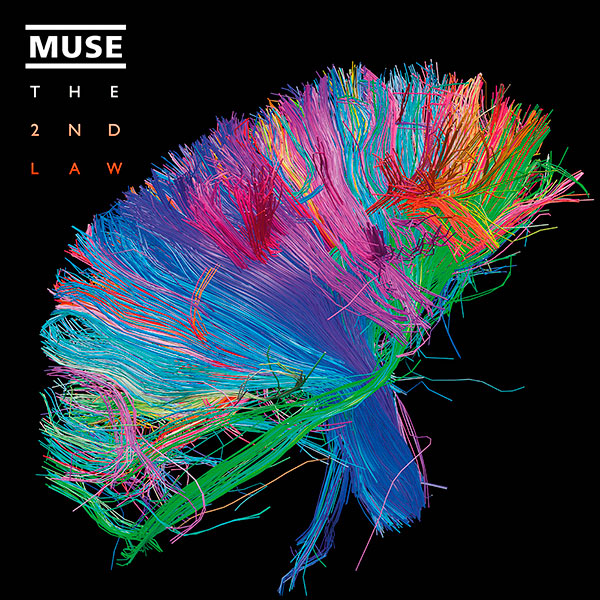
Muse - The 2nd Law
It is in this relatively neutral state that I come to Muse’s latest record, an ambitious, pseudo-conceptual piece called The 2nd Law, which, in its 53-minute runtime, wanders from a 007-flavored introduction (echoes of the famous spy theme float through the background of “Supremacy”), to imitations of Achtung Baby-era U2 (the album’s first single, “Madness,” is a dead-ringer for many of that 1991 album’s big dance-rock hits), all the way to a bizarre dubstep suite (the two-part title track, which encompasses segments called “Unsustainable” and “Isolated System.”)
Make no mistake, this is an ambitious record, an album that flits between styles and sounds with no warning whatsoever. The versatility is welcome, of course, but for some (die-hard fans yearning for the band’s initial sound, most likely), the shifts will prove jarring and almost laughably self-serious. Case-in-point is “Panic Station,” an infectious piece of funk-pop that lands somewhere between Stevie Wonder and Michael Jackson, or “Survival,” which starts out sounding like a freaking Mika song, adds a baroque choir within the first minute, and bursts apart with a Queen-sized guitar solo halfway through—all without the slightest trace of irony.
The 2nd Law is at its best when the band tones down those indulgences. “Madness” is a perfect example of this, surrounding listeners with an atmospheric back-up vocal groove and allowing Bellamy a chance to drop his usual over-emotive tendencies in favor of his best Bono impersonation. When a funky and spontaneous guitar solo crushes through the texture towards the end of the song, the feeling is both quirky and euphoric.
The U2 influence rears its head again on “Big Freeze,” another nostalgic eighties/nineties radio rock hybrid which parallels Achtung Baby’s
deep album tracks just as “Madness” reaches for its singles.
Considering the still-fascinating qualities of U2’s most successful
musical left turn (an album that celebrated its 20th birthday last
fall), it’s no wonder that Muse turned to Achtung for inspiration
as they cultivated their own grand departure. Bellamy and company
joined U2 on tour last year for the 360 tour (the most successful
concert tour in history), and clearly, they took a few things away from
that experience.“Follow Me” is another one of the album’s strongest cuts, beginning with a spacious gospel-flavored vocal solo, transforming into a dance-pop disco swirl (complete with a driving beat and a wall of synthesizers), and climaxing with a ringing guitar cascade that would make the Edge himself proud. “Animals,” on the other hand, puts everything in reverse, an atmospheric keyboard-based number which re-states the band’s prevalent Radiohead influence and which, cut across by a nicely spacey electric guitar line, feels positively otherworldly.
Results are decidedly more mixed when Bellamy hands writing (and singing) duties off to bassist Christopher Wolstenholme on the album’s penultimate duo, “Save Me” and “Liquid State.” The former is a hazy, dreamy piece of nineties balladry, readymade for a climactic moment in some cinematic romance. The song feels notably out of place on The 2nd Law, with decidedly earthbound ambitions and an overall sound that genuinely feels like a different band. Still, the change-up is welcome, and “Save Me,” with its lovelorn sweep and its gorgeously swelling arrangement, is one of the best surprises here. The grungy scratch of “Liquid State” falls completely on the other end of the spectrum, functioning, at its best, as a less effective version of “Supremacy” and, at its worst, like a piece of turn-of-the-century alternative rock (Three Days Grace and Staind certainly come to mind).
Muse’s overblown ambitions reach the point of hubristic downfall on
the album’s grand finale, the aforementioned two-part title track. Part
I, “Unsustainable,” never feels like anything more than an experiment
gone wrong, mixing orchestral elements with robotic sounds, dubstep
explosions, and Bellamy’s overdramatic cries. Part II, “Isolated
System,” works out a little better, with a ringing, minimalistic piano
intro hinting at a climatic build. Unfortunately, the song never makes
good on that promise: Muse add in some electronic distractions towards
the end, but on the whole, the composition never does anything the least
bit exciting, and it serves as a disappointing fade-out to an uneven
and often frustrating album.But even despite the fact that The 2nd Law burns out two-thirds of the way through, it’s not a bad album. I applaud a band, especially one with as much mainstream publicity as Muse, willing to go as off-the-wall crazy as they do on this record. The 2nd Law is the sound of one of the world’s biggest rock bands throwing everything at the canvas and seeing what sticks, a band giving themselves over to their indulgences and influences without reservation or pulled punch throughout. That mentality doesn’t always beget the best albums, and it certainly doesn’t create the most cohesive ones (see The Killers’ Day & Age), but it also rarely fails to deliver at least a few fascinating moments, and The 2nd Law has one or two of those up its sleeve. That an album like this (a band given budget and larger-than-life production values to indulge their every quirk and fancy) even exists in this modern age is interesting; that one can sell almost 130,000 copies in its first week is even more baffling.
And while Bellamy may have pointed towards Achtung Baby as his band’s primary influence here, The 2nd Law is more reminiscent of that album’s follow-up. 1993’s Zooropa remains, to this day, the most misunderstood album U2 ever made, a disjointed collection of pop songs that injected even more electronic influence into the band’s sound and wandered further from the mainstream than their label had ever anticipated. From its atmospheric nineties leanings to Bellamy’s consistently on-the-mark channeling of Bono, it’s not too hard to imagine The 2nd Law having a similar legacy ten or twenty years down the road: not a great album, but an adventurous one.
Tuesday, October 9, 2012
Mumford & Sons - Babel
Island/Glassnote, 2012
3.5 stars
After this year’s American Idol coronation song (“Home,” by the unfortunately named Phillip Phillips) pretty much rewrote Mumford & Sons’ previous hits in a more uplifting fashion, it was clear they were becoming a substantial force in the music world. And why not? Their debut, 2009’s Sigh No More spawned a bunch of hits and sold five million copies. It was also pretty easy to like, a superfluous but well-executed collection of folk-pop tunes that made listeners feel rugged and indie without asking them to venture too far beyond the boundaries of conventional radio rock or singer/songwriter fare. The songs had a pleasant, winterish feel to them that fell somewhere between The Fray and Fleet Foxes, and the bombastic tendencies of the production (provided by Markus Dravs, a guy with a proven reputation of making “big” records like Arcade Fire’s The Suburbs or Coldplay’s Mylo Xyloto) gave the songs an arena-bound energy.
So why, then, did so many people absolutely abhor this band? To be fair, they got a lot of hyperbolic love too, transforming somewhere along the line into the next “frat boy” sensation (for the same people who worship Dave Matthews, Jason Mraz, and O.A.R.). I personally could never figure out how the music at hand managed to inspire such passionate feelings in either direction. As far as I was concerned, you could do a lot worse than Mumford & Sons, but you could also do a lot better. They were innocuous, a lesser version of the folk bands they imitated, but they weren’t the villainous, “folk-rock-answer-to-Nickelback” figures that some of their fiercest detractors accused them of being.
All of this holds true for Babel, their highly anticipated sophomore album, which is, for better or worse, pretty much the exact same record as Sigh No More. The words and literary references have been changed around, but on the whole, Babel follows
the same form as its predecessor, and numerous songs are almost
blatantly written in the same tradition as past ones. The most obvious
example is “Broken Crown,” essentially a sped up version of Sigh’s
“I Gave You All,” but listeners will hear familiar echoes regularly
throughout these 12 tracks. Most of the time though, it follows the
mantra of any blockbuster Hollywood sequel: do everything you did the
first time, just do it bigger. That motto is immediately prevalent in
the album’s introduction, which positions three rousing numbers in a
row. “Babel” opens the album in a similar vein to the title track from Sigh No More,
only rather than building the song from Appalachian vocal harmonies,
the band just races out of the gate. We get the furiously strummed
acoustic guitar, the banjo licks, and the strong percussion backdrop to
fill things out before Marcus Mumford lends his signature vocals to the
mix. He strains on the high notes and whispers at the quieter sections,
in the same way we’ve heard him do before. We’ll hear it again, too.Make no mistake, Babel is the not an evolution. We don’t get any of the experimentation or bloated self-importance that so often characterizes post-breakthrough albums, and while that frees the guys from the danger of a sophomore slump (how can it be a “slump” when it’s the same formula?), it also means that Babelprobably isn’t going to win many new fans. That’s okay though: it was evident from the day they released “I Will Wait” as a single that they were of the “if it ain’t broke, don’t fix it” camp. The fact that the song is predictable and derivative of their old style doesn’t really matter. It rolls along with a rollicking country lilt and boasts a truly gorgeous bridge section, building in a manner that makes these guys sound like what U2 would have been if they had started out as a folk act rather than a punk band with arena rock ambitions. The group, consisting of Mumford, Ben Lovett, Winston Marshall, and Ted Dwane (all of them multi-instrumentalists) dominates these arrangements and sounds as crisp and clean as any set of musicians in the mainstream today. Even if the songs they’re playing aren’t terribly complex, it’s hard not to at least passingly enjoy what they do here.
Album highlight “Ghosts That We Knew” is a gorgeous torch song that recalls Sigh No More’s closing track, “After the Storm,” and it’s hard to see why it doesn’t carry the album out here. “But the ghosts that we knew will flicker from view/And we'll live a long life,” sings Mumford in the refrain, a wistful tone accenting his cryptically nostalgic lyrical craft. It’s the kind of song you would expect to hear around campfires on late autumn nights, the sort of gorgeous elegy your uncle pulls out, in a moment of clarity, at the end of a rambunctious night with the family. Perhaps that’s what a lot of people hate about this band: they feel conventional, like your friend’s brother’s folk band that jammed a few nights a week during college and played bars every once in awhile. But that’s also their greatest strength: they sound like they could be your friends, your family. Their songs ring with truth and honesty and simplicity, with lyrics that sometimes don’t make a lick of sense, but which are fun to sing along to anyway. In that sense, the grand production feels a bit out of place, like Dravs’ spotless work doesn’t really fit the character of the band. But they still find the intimacy in songs like “Lovers’ Eyes,” even with a horn section that barrels in four minutes through, or the bare-bones acoustic work of “Reminder,” which plays like an interlude at first, but distinguishes itself on repeat listens. At moments like these, Babel feels like home.
Babel is not a great album, but it doesn’t really need to be. The songs are too similar, and the album loses its way a bit as it goes (though the fantastic “Below My Feet” adds some much needed climactic heft in the penultimate position). But within these songs, there is a band with a palpable love for what they are doing, and even if they missed the boat on widespread musical respect three years ago, I can still appreciate them for that. Frankly, I’m happy there’s someone making this kind of music in the mainstream, and even happier that there seems to be a market for it. Maybe someday, folk music will worm its way back into the public consciousness, but until then, Mumford & Sons are sort of functioning as the champions of an age gone by. That’s not a bad role to play though, and based on my recent experiences with top 40 radio and the deplorable noise that my roommates put on at parties, you really can do a hell of a lot worse.
Tuesday, September 18, 2012
The Killers - Battle Born
Island Records, 2012
4.5 stars
For those of us who wondered what Flamingo would have sounded like with the full force of The Killers behind it, the question is ostensibly answered with Battle Born. Largely, the songs here have the same wandering, soul-searching tendencies that developed on Flowers’ last two albums, but the style is refined. Take the meandering “Heart of a Girl,” which channels The Velvet Underground with a bass-heavy opening, ringing keys at the break, and Flowers’ best Lou Reed impression. “A Matter of Time” kicks off as a retread of Flamingo’s “Jilted Lovers and Broken Hearts” before exploding into a cinematic rocker that could easily have been on Sam’s Town. “When we first met, headstrong and filled with doubt/Made just enough hustling tables that summer to take you out/I was fallin’ back on forever when you told me about your heart/You laid it on the line,” Flowers belts out halfway through. It’s a song rife with the euphoria of first love, but it’s also a shape-shifter, and as the tension builds throughout, we feel the relationship evaporate before our eyes. By the time Flowers reaches the “wreckage of broken dreams and burned out halos” waiting for him in the final lines, everything has changed.
Thematic connections begin to form between the songs on Battle Born
as one delves further into them. The rousing “Miss Atomic Bomb”
reflects on the naivety of the characters in “A Matter of Time” (“You
were standing with your girlfriends in the street/Fallin’ back on
forever, I wonder what you came to be,” Flowers sings at the outset),
but also plays as a sequel (or rather, prequel) of sorts to “Mr.
Brightside.” “I was new in town, the boy with the eager eyes,” he states
in the first verse, calling back to the hit that made him a rock star.
We already know that the girl in the story ends up cheating, but “Miss
Atomic Bomb” examines the narrative on a more personal and nostalgic
level. The song builds to a multi-tracked vocal climax, Flowers baring
his soul in a maze of anguish accentuated perfectly by the song’s
tumultuous and bombastic musical structure. It’s the closest the band
has come to the sound and feel of Hot Fuss in years, and for many, that will be the biggest selling point of Battle Born.
The same can be said for the synthy 80s pop of “Deadlines and
Commitments,” a dark spiral of song which serves as the perfect bridge
between the album’s two thematic pillars, or “The Rising Tide,” which
gives Dave Keuning a roaring and disorienting solo: this is the band people fell in love with eight years ago.
But while musical and thematic elements from both Hot Fuss and Flamingo are
revisited here, Bruce Springsteen is clearly still Flowers’ go-to
musical influence. He’s all over these songs, whether we’re talking
about the two aforementioned narratives of young love or the skyscraping
lead single “Runaways.” Perhaps it’s not so surprising for a band that
has made their name on larger-than-life chart toppers, but “Runaways” is
arguably the best song you will hear on the radio airwaves this year.
This is the “When We Were Young,” the “Read My Mind”; in Boss terms, the
lyricism falls someone between “Born to Run” (“Let’s take a chance baby
we can’t lose”) and “The River” (“There's a picture of us on our
wedding day/I recognize the girl but I can't settle in these walls”),
but the ultimate impact is universal either way. Once the explosive
third verse crackles through the speakers, all influences and
preconceptions are rendered moot by the overwhelming power of the
Herculean arrangement; a lot of bands attempt the arena-sized anthem,
but almost nobody does them better than this.Speaking of arena-filling choruses, album-highlight “Here With Me” has a mammoth one. It’s a shameless 80s-style power ballad, more reminiscent of Journey or Foreigner than Springsteen or U2, but Flowers pulls it off. Piano chords and reverb-drenched vocals serve as the commencement, a fitting kick-off for a tune that builds into a modern-day cigarette lighter love song. “I don’t want your picture on my cell phone/I want you here with me,” Flowers proclaims on the chorus, wearing the potentially hokey line proudly and somehow transforming it into a transcendent battle cry. That’s the thing about Flowers: for all of his egotistical remarks and conflict-inciting interactions with other bands, you never doubt his conviction. He has the voice, the charisma, and the searing emotional audacity to give an epic classic rock record (which is essentially what Battle Born builds into) its gravitational pull, and while the contributions from his band are very obviously instrumental here, it’s his heart-and-soul dedication to these songs that ultimately makes them work.
It’s fitting that Battle Born closes with its title track. From
the resounding guitar hits (culled directly from The Who's “Baba
O'Riley”) to the “Bohemian Rhapsody”-flavored back-up vocals, all the
way to a verse that apes Woodie Guthrie’s “The Land is Your Land,”
“Battle Born” is one hell of a climax. When the song finally shatters
into a gospel-flavored coda, a minute and a half from its conclusion,
it’s hard for me not to think of Battle Born as the greatest
record these guys have ever made. Its certainly the most cohesive – an
album about the euphoric innocence and the crushing heartbreak of young
love, an album about the inequities of the American dream, but also one
that, like Springsteen’s best, finds hope within the darkness in the
end. Battle Born is the kind of rock ‘n’ roll record that almost
nobody makes anymore: it’s bombastic and excessive and oversized, but
it’s also a grand and universal statement, a master class of album
structure and sequencing, and a culmination of everything Brandon
Flowers and The Killers have done up to this point. There will always be
detractors, but to me, The Killers are the best band in the mainstream
right now, and this record deserves to be celebrated. Just make sure you
play it loud.
Monday, September 17, 2012
"We wait for kingdom come with the radio on": The Gaslight Anthem Live in Detroit
The Gaslight Anthem
Live at St. Andrews Hall, Detroit, MI
September 14th, 2012
Live at St. Andrews Hall, Detroit, MI
September 14th, 2012
(Check this out over at AbsolutePunk.net as well)
Disclaimer: This is going to be long.
The last time I saw a show at Detroit’s
St. Andrew’s Hall, it was 2006: I was 15 years old, lining up for my first real
concert, and temperatures had been hovering around 100 degrees all day.
Needless to say, the heatwave turned that small and cramped club into a sauna,
and I left the building soaked in sweat, smelling worse than anyone has the
right to, and dehydrated to a dire state. But the night was legendary: I saw
Butch Walker, one of my first and foremost musical heroes, give a show full of
raucous antics and emotional intensity that cut through the heat and straight
to the core of me. I’ve been to a lot of shows since then, big and small, from
stadiums and arenas to the smallest clubs in Michigan, but that first one still
has a spark about it that takes me back: my brother’s best friend making a
wrong turn and ending up in some shady back alley (in Detroit, this is not a
good thing); some homeless guy named Papa Smurf (who later ended up in the
pages of Sports Illustrated) trying to bum a few bucks; the opening
acts, which included a pre-fame Boys Like Girls and an energetic southern-rock
act called As Fast As; Butch’s back-up singers spraying the crowd with hoses;
and yes, one of the best setlists and shows I’ve seen by the guy who plays club
shows better than anyone.
Perhaps it’s appropriate that my first appointment with the Gaslight
Anthem bore a lot of similarities to that show. Over the past few years, Brian
Fallon has slowly wormed his way into the ranks of my favorite frontmen in rock
‘n’ roll, and Gaslight’s latest, Handwritten, is likely to take the top
spot on my album of the year list. In the time I’ve been a fan, it’s also
become a joke of sorts between my brother and I that Fallon was never going to
come back to Michigan. We missed
out on his visits in 2010, in
support of the band’s third album American Slang, and he’s spent most of
the intervening years touring Europe, both with Gaslight
and side-project The Horrible Crowes. When dates finally started coming out for
the Handwritten tour, we were further disappointed by the fact that the band
would be supporting Rise Against (along with rockers Hot Water Music) rather
than going it alone. The tour included a Grand Rapids
date, a short drive for both of us, but the prospect of paying double or triple
our usual ticket price to see Gaslight play 12 or 13 songs didn’t seem too
appealing.
Then, finally, our prayers were answered. Rise Against was
taking a night off on the Friday before that GR show, and Gaslight and Hot
Water Music each decided to do one-off tour dates in Detroit. So it was that my
brother and I ended up in St. Andrew’s Hall, a sold out crowd swelling around
us, waiting for Fallon and company to take the stage. Doors opened at 8, and
with the stage already bedecked in Gaslight regalia, it was fairly clear that
there was no opening act tonight. No nonsense, straight-to-the-point: the way
Springsteen does it and the way I like it.
It was 9 p.m. on
the dot when the band took the stage. Opener “Boomboxes and Dictionaries,” the
lead-off track from the 2007 debut Sink or Swim announced two things:
first, that this was going to be a concert of deep cuts and old songs, meant
for the die-hard fans, and second, that the St. Andrew’s Hall sound set-up was
abysmal. Fallon’s vocals were far too low in the mix, to the point where anyone
unfamiliar with the songs would have had a hell of a time figuring out what he
was singing about. The blend was messy at best, sacrificing clarity for sheer
volume, and as the show went on, Alex Rosamilia’s lead guitar lines seemed to
get sharper and sharper. All of these problems were consistent ones, a shame
because the band played one hell of a setlist. Still, the atmosphere was
electric, with a crowd full of people who clearly loved this band and these
songs as much as I did, and with sing/shout along sessions that rocked the very
foundations of the place. While I went back and forth on whether or not the
trade-off was an even one (more on that later), The Gaslight Anthem didn’t
disappoint.
The best songs in the setlist, almost unanimously, were
those culled from the band’s latest record. Call it whatever you like, but the
band was clearly the most at home with their latter-day material, and songs
like “Howl,” “45,”
and “Handwritten” set a high-water mark very early on in the night. That’s not
to say that their earlier work fell flat, though. Classics from their 2008
album, The ’59 Sound, formed the backbone of the set, and the inclusions
of “Even Cowgirls Get The Blues,” “Meet Me By The River’s Edge,” “The Patient
Ferris Wheel,” “Film Noir,” and “The ’59 Sound” all gave way to triumphant
sing-alongs. Speaking of those, “Keepsake” was a set highlight, with a
skyscraping chorus that rang through the venue like a battle cry, and “American
Slang” scorched like the anthem it is, with its massive guitar riff and yet
another fist pumping hook.
But the poor quality of the sound definitely took its toll
on what was otherwise a nearly spotless performance. I’ve often thought that I
would like the songs from Sink or Swim a lot more if they were recorded
now. The fidelity of the original recordings makes them sound like demos, but
the actual songs are masterful, with more punk edge than the ones from The ’59
Sound, but very obviously cut from the same nostalgic cloth. With five of
the album’s 12 songs represented here (“Boomboxes,” “Wooderson,” “Angry Johnny
and the Radio,” “1930,”
and “We Came to Dance”), this should have been a perfect opportunity to see
those songs reborn. Unfortunately, the fuzzy and muddy sound production lent
them nothing new, and while they were still fun, welcome additions to the set
(especially the last two, which the band pulled out as the show entered its
final act), they did not end as highlights for me. Furthermore, I don’t know if Alex Rosamilia was having an
off night in general or if he just couldn’t hear his own instrument (I wouldn’t
blame him), but the guitar solos were off-the-mark and strangely ineffective
for most of the concert. They ranged from too quiet (the riffs on songs like
“Keepsake” and “Mulholland Drive,” moments that define those songs on record
but were almost inconsequential here) to sloppy and out-of-tune (the sweeping
transitions in “Mae,” which disappointed live after being one of my favorite
songs they’ve ever written). It was a bizarre and unfortunate enigma for the
band member who really makes Handwritten what it is, and I didn’t quite
know how to take it.
But overall, the great moments far outweighed the
disappointments. American Slang highlight “The Queen of Lower Chelsea”
was a definite treat, slowing down the tempo for a subdued moment late in the
main set. Handwritten b-side “Blue Dahlia,” with its rousing chorus and
perfect bridge, got the live feature I never thought it would. And finally
seeing “The Backseat” live, as the first curtain call, was as euphoric and
emotionally visceral as I always knew it would be. There are moments from every
live show I’ve been too that I will remember for the rest of my life: looking
around me as the house lights went up during “Born to Run” at my first
Springsteen show and seeing the ranks of the Palace of Auburn Hills rising
around me, all of us screaming along at the top of our lungs; the opening
guitar riff of “Where the Streets Have No Name” echoing through a flawless
summer night at Spartan Stadium a week or two before the end of U2’s 360 tour;
Butch Walker gesturing to my brother and I to help him down into the audience
at one of the concerts where we had ended up front and center. Belting along
with “The Backseat,” shouting about how “we rode the fever out of Austin” and
“dreamed of California lights,” was absolutely up there, and I realized that,
ultimately, my complaints about the sound and about how Rosamilia’s guitar
didn’t sound quite as pitch-perfect as it does on record didn’t really matter
at all. This show was all about the atmosphere: it was about the electricity of
the crowd, about the gleeful performance from the band we all loved, and about
the setlist that traveled to every corner of their discography. It was about
rediscovering the power of rock ‘n’ roll, and I didn’t want that last song to
end because I just wanted to keep on cherishing it.
Luckily, that wasn’t the last song. Not by a long shot.
After much racket from the crowd, The Gaslight Anthem
re-took the stage and rocketed into a pair of ‘90s covers (Pearl Jam’s “State
of Love and Trust” and Nirvana’s “Sliver”). While I don’t particularly care for
either song, the band was visibly passionate about both and Brian especially looked
like he was having a ball with them. “Biloxi Parish,” despite being considered
by some as one of the weaker points of Handwritten was nothing short of
potent and transcendent here, resulting in one of my favorite moments of the
set. And “Blue Jeans and White T-Shirts” provided a note of emotional weight
and solemnity to an encore that was otherwise about big, brash rock songs. It certainly
doesn’t hurt that it’s one of the best and most enduring things that Fallon has
written to date.
I’ve seen artists skimp on the encore a lot of times before.
A year and a half ago, Iron & Wine’s Sam Beam brought my disappointment in
his live show full-circle by doing a cop out, one-song encore that wasn’t “The
Trapeze Swinger.” Ryan Adams took intimacy to a new height during his show at
the Ann Arbor Folk Festival last winter, but left it feeling truncated and
unfinished when he departed the stage after “Come Pick Me Up” and didn’t come
back. The best shows are the ones with the artists who just keep going, the
ones who come back for “one more song” three or four times and act like they
never want to leave the stage. Bruce Springsteen is famous for this, and on
Friday night, Brian Fallon and the guys in the Gaslight Anthem channeled that
stamina in spades. The house lights didn’t go up after the band’s second
departure, and even though many of my fellow audience members started moving
towards the exits, I was holding onto hope that they still had a little more to
give. Lo and behold, after copious amounts of shouting, screaming, clapping,
and stomping, the boys were back onstage one more time, for that elusive second
encore.
As I mentioned before, the band kicked off their final stand
with a pair of Sink or Swim songs (“1930” and “We Came to Dance”), both of
which crackled with the same energy and force that they had been channeling all
night. “The Diamond Church Street Choir” took one of the evening’s few trips into
American Slang territory (suffice to say that I could have done with a
few more), and “Here’s Looking At You, Kid” functioned in much the same way as
“Blue Jeans” had – as a gorgeous, sobering torch song. When the guitar riff for
’59 Sound opener “Great Expectations” echoed through the hall, there
seemed to be an agreement of sorts between the band and the audience that this
was the grand finale, and both parties acted accordingly. The crowd surged
forward, transforming the venue’s floor into a riotous mosh pit. In situations
like this, you have no choice but to give yourself over to the insanity of it
all, to go with the ebb and flow of the crowd, hang on for dear life, and hope
you don’t die. But one last explosive, sweaty, communal sing-along was just
what the set needed to send it off, and even though I didn’t get my choice for
a closer (the latest single “Here Comes My Man,” which was surprisingly absent
from the set), you can’t complain too much with a song as good as
“Expectations.”
At two hours and 29 songs, with a pair encores and more
memorable moments than I can possibly expound upon here, Friday night’s gig was
the longest show The Gaslight Anthem have played all year. It was longer than
the Handwritten album release show or any of the concerts they played in
Europe. It was certainly more sprawling than all of
their supporting dates with Rise Against and Hot Water Music, past or future,
or any of the slots they played on the festival circuit. It was also a textbook
example of the age-old rock ‘n’ roll show agreement between a performer and
their audience: the band gave fans an epic marathon show that covered deep cuts
and greatest hits alike, and in turn, we gave them a chance to let loose, have
fun, and own the room like the rock stars they deserve to be. Five years into
their career, The Gaslight Anthem are already building a legacy of great songs,
better albums, and evocative classic rock traditions, and their live shows
follow suit with all of that. Had the sound in St.
Andrew’s Hall be a bit better, I might have been ready to proclaim this concert
as one of the greatest I had ever seen; even with that, though, it’s still
pretty damn close, and that’s worth an awful lot.
Setlist
1. Boomboxes and Dictionaries
2. American Slang
3. Howl
4. Even Cowgirls Get The Blues
5. 45
6. Handwritten
7. Wherefore Art Thou, Elvis?
8. Wooderson
9. Meet Me By The River's Edge
10. Keep Sake
11. Angry Johnny and the Radio (with Brand New - Jesus Christ tag)
12. The Patient Ferris Wheel
13. The '59 Sound
14. Film Noir
15. Senor and the Queen
16. Blue Dahlia
17. The Queen of Lower Chelsea
18. Mulholland Drive
19. Mae
20. The Backseat
Encore
21. State of Love and Trust (Pearl Jam cover)
22. Silver (Nirvana Cover)
23. Biloxi Parish
24. Blue Jeans and White T-Shirts
Second Encore
25. 1930
26. We Came to Dance
27. The Diamond Church Street Choir
28. Here's Looking At You, Kid
29. Great Expectations
2. American Slang
3. Howl
4. Even Cowgirls Get The Blues
5. 45
6. Handwritten
7. Wherefore Art Thou, Elvis?
8. Wooderson
9. Meet Me By The River's Edge
10. Keep Sake
11. Angry Johnny and the Radio (with Brand New - Jesus Christ tag)
12. The Patient Ferris Wheel
13. The '59 Sound
14. Film Noir
15. Senor and the Queen
16. Blue Dahlia
17. The Queen of Lower Chelsea
18. Mulholland Drive
19. Mae
20. The Backseat
Encore
21. State of Love and Trust (Pearl Jam cover)
22. Silver (Nirvana Cover)
23. Biloxi Parish
24. Blue Jeans and White T-Shirts
Second Encore
25. 1930
26. We Came to Dance
27. The Diamond Church Street Choir
28. Here's Looking At You, Kid
29. Great Expectations
Tuesday, August 7, 2012
Molotov Jive - STORM
Cosmos Music Group, 2012
Three stars
Sometimes epic, overwrought production can serve bands incredibly well: U2 almost defined the idea of arena rock in the late '80s and early '90s, not only by delivering towering choruses and heartfelt lyrics, but also by hiring guys like Brian Eno and Daniel Lanois to man the boards, guys whose knack for taking songs to the rafters (and beyond) are unparalleled. Coldplay has built a massively successful career out of channeling that tendency, packing their arrangements with such a vast array of sounds and musical ideas that they have to play live shows to a backing track. And meanwhile, there's The Killers, who burst onto this scene last decade by taking the influence of '80s new-wave and synth pop and merging it with the skyscraping hooks and production values of Morning Glory-era Oasis (or, on Sam's Town, Born to Run-era Springsteen). Needless to say, bigger has proved better for more than a few acts in modern music, and one need look no further than the tour receipts or album sales for the aforementioned acts to see that a massive sound is more likely to lure in large audiences than, say, a lone troubadour with raw production and an acoustic guitar.
But arena-sized ambition can derail bands as well: Tom DeLonge gave up blink-182 for a solid decade, making three oversized records with his side project Angels and Airwaves, a band whose depth of musical ideas never even approached the scope of their production. A similar thing happens to Swedish rock act Molotov Jive on their third full-length, titled STORM, an almost absurdly overblow spectacle of a record that constantly tries to sound huge...whether or not it has the melodies to make that sound work. But that's not to say that Molotov Jive isn't a talented band, that STORM isn't a solid album, or even that the production is a complete blunder: indeed, when the sound works, the songs are undeniable, like with the towering should-have-been-opener "Run," which possesses a shout along chorus, a wall of guitars (a la The Dangerous Summer), and a flourish of synth melodies that recall both '80s bands (the record is evocative of Depeche Mode throughout) and the post-millenial new wave revival (yes, The Killers) to pleasing effect. But just as often, that spacious, echoing production is shackled to songs that don't go anywhere, compositions that meander and search for melodies or hooks ("Take Me In Your Arms") or stumble upon grating ones ("Manhattan").
More frustrating is the vocal production, which surrounds singer and songwriter' Anton Annersand's voice in an almost comical amount of reverb, causing his every word not only to ring, but to actually echo for a few moments after he sings them. The effect is doubtlessly aimed at giving the band a bigger sound, but the actual result is almost aggravatingly distracting, and, for me at least, was almost impossible to get past. It doesn't help that Annersand's default setting as a singer is desperate earnestness, causing him to shriek, inhale, and almost cry out every note in order to heighten the emotional texture of the song at hand. I'm all for emotional connection, but Annersand's overwrought delivery is almost always aimed at breaking-point intensity, and as good as he can sound in that vein (the radio-ready "Friendship" is a good example of what happens when it works), it becomes exhausting over the course of the record. That said, when the band drops the tempo and Annersand sings the songs straight (and in a lower register) like on the climactic finale that is "Sleep Safe," or on the gorgeously resigned and electronic-influenced "Just Leave," the results are stunning. He has a unique instrument, giving the band an instantly distinctive sound (despite their obvious collection of influences), but he just needs to learn to save his emotional intensity for the appropriate moments.
It's almost not fair that Molotov Jive will instantly be compared to some of the biggest acts in modern pop and rock music, but that association also has its perks. At its best, STORM sounds like a welcoming bell, an announcement to herald an act with the talent and the scope to play in the big leagues; at its worst, it comes across as pale imitation of that scene. The songs the band has written here do generally merit the size and scope of production they attempt, so it's a shame that the finished product is a bit shoddy and mismanaged. With a giant like Brian Eno or Daniel Lanois behind the boards, these guys could have been filling stadiums; by all rights, the same thing should have happened with Sylvia Massy (whose resume includes work with Aerosmith, Prince, and Red Hot Chili Peppers), but the result is almost stifling instead. Still, these guys have a gift for the grandiose and the subdued alike, and while STORM only rarely reaches its high level of potential, with the right person behind the boards, they could go global.
Subscribe to:
Posts (Atom)