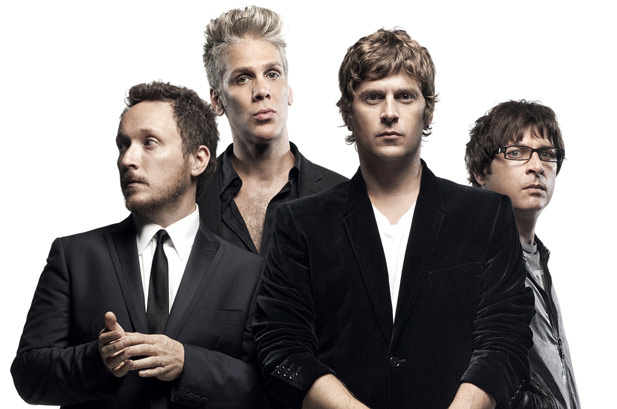
Welcome to My Back Pages,
a collaborative staff feature that will survey a landscape of renowned
classics and unheralded gems alike, most of which no one around here
ever writes a word about. The rules are simple and loose: we won’t cover
anything from this millennium and we will avoid all or most AP.net
favorites—though we might make an exception if something is nearing a
milestone anniversary. Beyond that though, anything is fair game. So if
you have an album, artist, or genre you would like to see discussed in
this feature, feel free to throw us a few recs.
After our last feature, where we discussed the legendary Mr. Bob Dylan,
we couldn't help but move onto Dylan's significantly less famous son.
That led us to Jakob Dylan and the Wallflowers, a roots rock band that
broke out in the mid-1990s, scored some hits, won some Grammys, jammed
with Bruce Springsteen, and then rapidly receded back into the
underground. The band is still making great records to this day -
albeit, with a slightly different line-up - but their best work remains
the album that endeared them to millions of radio listeners back in 1996
and 1997: Bringing Down the Horse. For both of us, this album
and its flagship single, the unforgettable "One Headlight," represented
big musical awakenings, and I think you will find that we both explored a
bit more personal territory in our write-ups this week. We hope you
will enjoy reading and listening along to one of the last true "classic
rock" records with us.
Craig Manning: Next to the surge of harmonica and the slamming screen door that kick starts Born to Run, the atmospheric guitar echo at the top of “One Headlight” – the 1990s smash hit from the Wallflowers and the opening track of Bringing Down the Horse,
their 1996 sophomore album – is my favorite opening of any record. That
may seem strange to some people, since “One Headlight” doesn’t have
anywhere near the legendary status in rock history that “Thunder Road”
does. Indeed, in the eyes and ears of mainstream pop radio listeners, Bringing Down the Horse
was a record that made the Wallflowers little more than one-album
wonders. For a brief moment in 1996 and 1997, the Wallflowers were
legitimate hit makers. “6th Avenue Heartache,” “One Headlight,” and “The
Difference” were all top 40 singles (“Headlight” almost got to the top
of the charts, stalling out at number 2), while “Three Marlenas” was a
minor single that generated a small amount of radio play. It speaks to
the brevity of the 1990s alt-folk resurgence that most people have no
idea the Wallflowers even exist beyond this album.
But if you are going to build your legacy on a single disc, Bringing Down the Horse
is a very good one to do it with. Released on May 21, 1996 – when I was
only five and a half years old, for those who are counting – Bringing Down the Horse
became my first favorite album, “One Headlight” my first favorite song,
and the Wallflowers my first favorite band. The better part of two
decades later, I’d still consider Horse to be among my top 10 albums of
all time, one of the ultimate essential summer nighttime albums. But the
real game-changer was “One Headlight,” which, if I had to boil down the
most important songs in my personal music evolution, would be at the
top of the list. That’s where my big, sprawling obsession with music
really started, and if it hadn’t been for that song, I can more or less
guarantee that I wouldn’t be writing for this website right now. At very
least, I’m sure my tastes would be markedly different, not so attached
to folk, roots rock, alt-country, and all of the similar styles that so
dominated my top albums of 2013 list.
Sure, you could argue that “One Headlight” was merely a “right place,
right time” song for me and that it played a role that could have just
as easily been substituted with a different song. But I don’t
necessarily think that’s the case. I’d connected with other music on a
more casual level before that radiant guitar echo pounded on my door and
forced me to pay attention. I didn’t have a CD player and I had no way
to really access music in any capacity, but my brother had a boom box
and a burgeoning CD collection. I’d have him make copies of my favorite
albums for me to listen to on my shitty old cassette player – Morning Glory by Oasis, Third Eye Blind’s self-titled record, Green Day’s Dookie – but Bringing Down the Horse
was by far the one I’d listen to most. I’d drum along to it on a
makeshift set-up made of beat up old metal popcorn buckets and pieces of
plastic, or turn it into a soundtrack for the battles between my action
figures. One time, I even cranked up the volume, put my tape player on
my window ledge, and blared the music out into the street on a summer
evening so I could listen while bike riding and shooting hoops in the
driveway. It was my first life soundtrack record back before I had much
of a life to soundtrack.
“One Headlight” was the one I listened to most. I found that cassette
tape a few years ago when I was cleaning up my room, and that song was
utterly wrecked and grainy from all the times I had rewound the tape to
re-capture every moment of the tune. Though I first started listening
probably in 1997, after “One Headlight” became a hit, it remained my
go-to favorite song for years after the fact. When the rest of my
classmates in third and fourth grade were all about the Backstreet Boys,
Britney Spears, and god knows what else, I was still hung up on “One
Headlight.” In a pop music landscape that was becoming increasingly
defined by plasticity and deposability, here was this dark, beguiling,
and mystifying song about death. Jakob Dylan said that the song was
about “the death of ideas,” written as a pissed-off, tapped-out diss to a
record label that wouldn’t give the band the respect, the appreciation,
or the support that they felt met the terms of their contract or even
the codes and mantras of human decency. In that sense, it’s their
“Dancing in the Dark,” a song that achieved massive mainstream pop
success despite the fact that it was penned with anger and contempt for
everything the mainstream pop world stood for. Jakob may have been Bob
Dylan’s son, but he took infinitely more from Springsteen on this
record, and particularly with this song. I’ve frequently seen
“Headlight” described as either “the best Bruce Springsteen song of the
1990s” or “the best song Bruce Springsteen never wrote,” and those are
both rather apt descriptions. (Sidenote, if you’re either a Springsteen
fan or a Wallflowers fan and you haven’t read this, you haven’t lived. Scroll down to the second to last question to learn why.)
Personally, I always took the meaning of “Headlight” to be a lot more
literal than Dylan actually intended. The song fades in on a funeral
(with the untouchable opening lines of “So long ago I don’t remember
when, that’s when they say I lost my only friend/They said she died easy
of a broken-heart disease, as I listened through the cemetery trees”),
and explores the world through the eyes of a guy who is striving not to
give up, even though a good friend of his did just that and chose to end
her life. It’s a sobering tune about what makes life worth living and
what impetuses conspire to make people throw up their hands and
surrender. When the screws come loose and the narrator starts to despair
toward the end of the song (“Somewhere here in between the city walls
and dyin’ dreams/I think her death it must be killing me”) it’s a
powerful moment, and one that has kept the tune and its questions of
life, death, friendship, love, loneliness, resilience, and surrender
alive for me, 18 years after the fact. I can’t think of another pop song
since that has so elegantly captured the human condition. Or maybe it’s
a song about a woman with one giant breast, as Jon Lovitz theorized.
Who knows?
Chris Collum: There are a lot of different things I could say about Bringing Down the Horse.
I could go on about Jakob Dylan’s pitch-perfect pop sensibilities and
moody vocal delivery. I could talk about how Dylan and keyboardist Rami
Jaffee masterfully update the sound that Dylan’s father dabbled in with
The Band decades prior to this album’s recording. Or I could discuss the
all-star cast of collaborators who were involved in the making of this
record, essentially a “who’s who” of roots rock. Those names include T.
Bone Burnett, the album’s producer; the legendary Mr. Sam Phillips; Adam
Duritz of Counting Crows; Gary Louris of The Jayhawks; Gillian Welch
collaborator David Rawlings; pedal steel master Leo LeBlanc and others.
But I’m not going to focus on any of that. In fact I’m only going to
talk about one song on the album.
“One Headlight” is one of the very first songs by someone other than
Springsteen that I remember becoming truly enamored with as a child. I
don’t know if it was the first time I heard the song on the radio or
simply the first time I remember hearing it, but I have a pretty vivid
memory from when I was around six or seven of being struck by the song
one foggy winter morning. That day was going to be the first time I’d
ever attended a funeral. The deceased was an elderly woman from our
church that I barely knew, but being the only Catholic church in a tiny
Mississippi county it was a pretty tightly knit community so we were
going anyway.
Riding around our small town in the car with my dad that morning, the
haunting tone of “One Headlight” - as well as obviously the references
to a funeral and death in the lyrics - made a pretty big impression on
me. The song kind of scared me in a way, not least of all because Jakob
Dylan delivered each line with a laidback nonchalant drawl that made him
seem so detached from what he was singing about. That is until the
chorus came along and with a glorious swell, both of Dylan’s voice and
of Rami Jaffee’s organ, all attention was directed heavenwards.
I remember hearing the song many more times in the next few years; not
surprising given the level of radio saturation it achieved. I eventually
acquired Bringing Down the Horse in full many years later, but
that was at a time when I was starting to think that any music that
wasn’t all power chords, distortion and palm-muting in double-time was
kind of lame, so I didn’t really connect with it until toward the end of
high school. When I listen to the record now, without fail “One
Headlight” sends a little chill down my spine. I’m usually so floored I
listen to that song twice before going on to the rest of the record.
It’s basically just a song about beat-up people riding a beat-up vehicle
through a beat-up town, but something about the way Dylan strings
together images like “the sun up ahead at the county line bridge” and
“smells like cheap wine, cigarettes / This place was always such a mess”
is incredibly evocative.
So yes, I do like all of Bringing Down the Horse. And when I
really got into the record several years ago there was a good period of
time when “One Headlight” wasn’t even my favorite song on the record. It
is now though, and more importantly that song is very special to me
because it was one of the first songs that made me realize just how
powerful of an atmosphere a rock song can conjure out of thin air. But I
didn’t quite realize all of that when I heard it that morning as a kid,
I just knew that the song made me feel a little strange and uneasy on a
morning when I was already nervous about spending most of the morning
in the same room as a dead person.
I don’t remember anything about the actual funeral except
that—appropriately enough—as soon as the service began the sky ripped
open and a hard rain began to fall.
Craig Manning: As Chris so eloquently put, “One Headlight” is the obvious highlight and anchor track to Bringing Down the Horse,
but there’s so much more to this album than its biggest and most
memorable hit. The other singles, for instance, are all fantastic, from
the delicate slide-guitar grandeur of “6th Avenue Heartache” (complete
with glowing harmonies from Counting Crows frontman Adam Duritz) to the
pounding, youthful summertime atmosphere of “The Difference.” Other cuts
didn’t catch me until later, like “Invisible City,” where the narrator
fights through metaphorical crash sites and illusions of choices to
retain the same resilience he found on “One Headlight,” or “Josephine,”
Jakob Dylan’s twist on his father’s “Just Like a Woman” and a most
elegant slow dance about a girl who tastes “just like sugar and
tangerines.”
These are great, great songs, forming the backbone to an album that I
think deserves classic status as much as any record Chris and I have
written about in this feature. The fact that Bringing Down the Horse
doesn’t get that kind of recognition probably has more to do with when
it was released than anything else though. As I said before, the
Wallflowers dropped this disc at a precarious time for rock and roll
music. Grunge was fading. What we’ve come to know today as “classic
rock” was little more than a memory. Bruce Springsteen and U2, two of
the most dependable rock acts from the previous decade, were in the
midst of career slumps. Bob Dylan was a year away from the album that
would kick him into his late-career master streak. By all accounts, the
Wallflowers were the last of a dying breed, and it therefore makes
perfect sense that their time in the mainstream limelight was fleeting.
The banishment from the radio hasn’t hurt the Wallflowers, though. On the contrary, since Bringing Down the Horse, this band has – despite line-up changes and numerous lengthy hiatuses – released a string of terrific albums. 2000’s Breach
came too late to take advantage of the momentum that “One Headlight”
afforded, but the band hit a near-high water mark when they teamed up
with Brendan O’Brien for 2006’s Rebel, Sweetheart, a lush, anthemic, and poetic work that nearly matched Bringing Down the Horse in terms of sheer song-for-song consistency. 2012’s Glad All Over,
on the other hand saw the band in turns embracing their alt-country
roots, pursuing harder rock textures (thanks to Clash guitarist Mick
Jones, who guested on a few tracks), hitting modern E Street levels of
self-assuredness, and easily fitting back into the modern folk revival
that has been going on for the past few years. Finally, the band’s other
post-millennial record, 2002’s Red Letter Days, overcame a
bloated runtime with a few of the most aching ballads anyone has written
since Clinton left office. Put simply, this band’s discography deserves
a second look.
Still, despite all of that great music – and despite two wonderful solo records from Jakob Dylan – Bringing Down the Horse remains the Wallflowers’ greatest accomplishment. Wonderfully and organically produced by T. Bone Burnett (who also helmed August and Everything After,
the other alt-folk masterpiece of the 1990s), aided and abetted by a
laundry list of terrific session musicians, and sensitively written
throughout by Jakob Dylan, this record is a masterpiece of mood and
feeling. From the rollicking rock tracks (infectiously fun songs like
“Laughing Out Loud” and “God Don’t Make Lonely Girls”) to the mid-tempo
jams (“Angel on My Bike,” a road-trip essential), I adore everything
about this record. Many of the hallmarks here (the ringing surge of Rami
Jaffee’s B3 organ, the wistful whine of Leo LeBlanc’s pedal steel
guitar on songs like “I Wish I Felt Nothing”) are sounds that, when
replicated elsewhere, on other records or by other bands, instantly win
me over. It may not be remembered as a classic in many circles, but for
me, for how important this album was to my personal listening evolution
and for how much it continues to blow me away to this day, it’s an
all-time, top-five, desert island essential. There’s a reason I still
pull it out for late night drives every summer.
Showing posts with label the Wallflowers. Show all posts
Sunday, March 27, 2016
Wednesday, June 5, 2013
Counting Crows - Echoes of the Outlaw Roadshow
Let me preface this review by saying that it’s incredibly hard for me to
say anything negative about Counting Crows. Without the lyrical grace
and emotional inflection of frontman Adam Duritz, I probably wouldn’t be
writing these words. One of my earliest musical memories was hearing
this band for the first time. My family and I were climbing into the car
after some bike trip, and my brother decided it was an opportune moment
to slip my step-dad's copy of August and Everything After into
the CD player. He skipped forward a few numbers, “Mr. Jones” issued from
the speakers, and I fell in love immediately. That memory was one I
considered a lot a decade later when I picked up the band’s greatest
hits collection (called Films About Ghosts) and began to discover
Counting Crows beyond just the singles. At that point in time, I think I
owned about six CDs, half of which were Creed (I am not proud of this),
but that record, which contained 16 of the Crows' “best” songs, was a
turning point. Throughout that winter, I played the album almost every
afternoon, and those songs breathed vitality and life into the bleak
winter landscape that had taken up residence in my hometown: the
rip-roaring electricity of “Angels of the Silences,” the emotional swell
of “Round Here,” the poetic perfection of “A Long December” and “Mrs.
Potter Lullaby,” and the nostalgic beauty of “Recovering the
Satellites,” they all became a part of me.In the nine-plus years since, Counting Crows have only released a single album of original content. Needless to say, I became a die-hard fan of the band at precisely the wrong moment. Following four terrific albums, spaced out on an every-three-year timeframe from 1993 to 2002, Films About Ghosts was the band’s way of telling the world they were taking a breather. Half a decade would pass before their fifth full-length—2008’s lukewarm Saturday Nights & Sunday Mornings—hit the streets, and then Duritz and company would take another four years to come up with last year’s Underwater Sunshine, a well-executed cover album, but a cover album nonetheless. In the meantime, the band has done their best to mollify their fans’ growing restlessness with a series of live albums—a document of the Hard Candy tour in 2006 and a special full-album performance of August & Everything After in 2011—and their latest release, called Echoes of the Outlaw Roadshow, is the next in that series.
To be fair, Counting Crows are a transcendent live act, and each of
their live records bears its own significance and personality. Where
their first concert album—1998’s Across a Wire—was a double-disc affair showcasing the band in both stripped-down acoustic and full-blown electric environments, Echoes of the Outlaw Roadshow finds
them as a seasoned collective of professionals, comfortable with
traversing their entire catalog, transfiguring old favorites,
resurrecting deep cuts, and delivering covers like they’re originals. In
fact, the finest moment of the disc is the Bob Dylan song that kicks it
off. “Girl From North Country,” culled from Dylan’s 1963 breakthrough, The Freewheelin’ Bob Dylan,
is one of the legendary singer/songwriter’s most yearning compositions,
and this cover is as good as they come. Performed at the start of the
show, with just vocals and acoustic guitar, “Girl from North Country”
is a stark and intimate reminder of Duritz’s ability to generate
pin-drop intensity in a room. Where many bands from the 1990s radio-rock
scene now rely heavily on old hits and crowd sing-alongs to carry their
shows, the Crows’ greatest asset as a live band has always been their
gift for maintaining rapt audience attention in less-familiar territory.“Round Here” is a perfect example of the above phenomenon. Originally the song that broke the silence at the top of their debut, “Round Here” rarely maintains the same arrangement and format from tour to tour. (Legend has it that the song has also never been exactly recreated in the manner it appears on record.) While the general road-map of the song remains the same—the chiming guitar intro, the poetic verses, the dynamic emotional build-up—Duritz and company frequently pepper it with alterations, improvisations, and interpolations of other artists’ songs. The “Round Here” that appears with this collection is one of the best, bursting breathtakingly into loose improv sections and sly snippets of Van Morrison’s “Sweet Thing.” “Darling summer’s almost over, before the world gets too much colder/Come outside and run away with me,” Duritz wails spontaneously over the song’s elongated mid-section: for a moment, this feels like the Crows of old.
But beyond the first two tracks, the most notable thing about this particular live album is the setlist. For a band that has supported a bootleg-trading network within their fanbase for almost as long as they’ve had a fanbase, it doesn’t make much sense for Counting Crows to keep going back to the well for more “official” live releases, but if they’re going to do so, it’s at least nice that they try not to retread songs that have already appeared on previous concert discs (with a few exceptions). This particular release is loaded with deep cuts, from the harmonica-laced blues of “Mercury” (a forgotten gem from the experimental second side of 1996’s Recovering the Satellites) to a pair of songs from both This Desert Life (the road-trip folk of “Four Days” and the downright-bizarre “I Wish I Was a Girl) and Saturday Nights & Sunday Mornings (the hazy emotional breakdown of “Sundays” and the haunting siren song that is “Le Ballet d’Or”). But it’s Hard Candy—which celebrated its tenth anniversary last year—that supplies the rest of the highlights.
Often dismissed as a misguided and overproduced expedition into the realms of mainstream pop music, Hard Candy is
one of the most misunderstood and unfairly maligned albums in recent
memory. On record, the studio gloss and soaring hooks masked a complex
lyrical web, a collection of songs that revealed Adam Duritz’s
increasingly serious battles with insomnia, depression, and mental
instability. On the gorgeous “Carriage”—one of the forgotten late-album
tracks which gets resurrected here in wonderful fashion—amidst a gentle
acoustic lilt, the burn of a lone trumpet player, and lyrics about
“chocolate bars and baseball cards,” a once-meaningful relationship all
but vanishes into the tragedy of a losing an unborn child. “Up All
Night,” meanwhile, is one of the five best songs Duritz has ever
written, the kind of glorious, dusky anthem you play in the car at night
when the weather is finally starting to warm up.“This is a summertime
song,” Duritz announces at the song’s outset. “Hard Candy was a
late night album.” If you need any extra encouragement to catch the
Crows on their tour with the Wallflowers this summer, look no further
than this penultimate scorcher.Ultimately, Echoes of the Outlaw Roadshow is a solid document of a great live band. The covers are good, the setlist is unique, and there are a few transcendent moments. But Counting Crows—Duritz especially—are too talented to become one of those bands that only plays live shows and releases cover albums. Maybe I’m biased, since I’d call August & Everything After the single greatest album of the nineties and since I love Hard Candy more than anyone else I’ve ever encountered, but I truly believe that Duritz has the skill, both as a songwriter and a frontman, to land in the pantheon of greats. Even if he never writes another song or never releases another album, he’s got a pretty killer legacy to leave behind. But I’d like to think that this band still has at least one classic left in them, and while frequent concert tours and live albums are nice to have, but I’m infinitely more excited for that next step forward.
Dawes - Stories Don't End
HUB Records, 2013
9.0/10
9.0/10
A few years ago, when the sounds of Dawes’ sophomore record Nothing is Wrong
first reached my ears, it was like a blast from the past. Equal
ingredients ’70s Laurel Canyon folk-rock (Jackson Browne, Joni Mitchell,
Neil Young, etc.) and ‘90s roots/alt-country (Whiskeytown, Counting
Crows, The Wallflowers), the music this L.A.-based quartet was
cultivating hit almost every one of my sonic sweet spots. Somewhere
between the soaring, sun-kissed guitar solos, the B3-organ swells, the
rich vocal harmonies, and the thoughtful lyricism, there was a band that
absolutely could have been a legendary, multi-platinum act three
decades earlier, but one that was probably never going to take the radio
waves by storm in the here and now. Apparently the band sensed that
feeling too: no longer content with simply being really good folk-rock revivalists, Dawes have evolved on their new album—titled Stories Don’t End—to a point where it feels like anything is possible for their future endeavors.From the moment Stories Don’t End bursts open, with a lush vocal crescendo at the top of “Just Beneath the Surface,” it’s clear that these guys are a different band than they were a few years ago. Once regarded as a terrific live outfit that could never quite capture the electric charge of their performances on record, Dawes have clearly learned to use the studio to their advantage this time around. Credit producer Jacquire King, who covers these 12 tunes in a warmer and more consistent layer of studio sheen than we’ve seen on past albums. With his strong and assured presence behind the boards, the band seems to open up a bit more here, lending album highlights like “Just Beneath the Surface” and “From the Right Angle” a grandiose, arena-ready sensibility, or turning the piano-led first single “From a Window Seat” into a disorienting pop-rock trip. When a frantic guitar solo kicks through the wall on the latter, we know we’re in good hands.
If the opening of the record is strong though, it’s the mid-section
where these guys really hit their stride. The chiming guitar chords that
open “Most People” herald one of the best and most majestic songs
frontman Taylor Goldsmith has ever written. The song builds
effortlessly, carried along by an infectious refrain and one of
Goldsmith’s finest vocal performances to date. And when the band dials
it back down for the outro—a call and response fugue between Taylor and
his brother Griffin (the band’s drummer)—you’ll have trouble doing
anything but hit “Replay.” The powerful, cathartic build of “Something
Common” is even better, beginning on a subtle, restrained note (“All my
mornings start with the alarm clock/Every dream gets stopped before the
end,” Goldsmith sings at the outset), and building to a
shout-it-to-the-rafters conclusion that ranks among the best musical
moments I’ve heard all year. “‘Cause all the love and friends and
happiness that ever came my way/Revealed themselves the moment I stopped
watching,” rolls the final chorus, exploding from the speakers like a
pure and fierce confession of the heart. “‘Cause it’s not faith that
comes from miracles, but miracles that come from faith/And I’m sure that
they’ve got something in common.” Perfect.The above is just one lyrical gem in a song rife with them, from a band with a better way with words than most working today. Sure, that song is also graced by a gorgeous bed of instrumentation, from cinematic piano chords to emotive electric guitar lines, but it only reaches the next level when you sit back and let the poetic beauty of the words course through you. And that’s the case with the rest of this record as well, from the Springsteenian characters of “Bear Witness” (the granddaughter who's still working at the movies, letting all her boyfriends in for free), to the haunting cliffhanger of “Stories Don’t End” (“They go on and on, just someone stops listening...”), and certainly to the glorious, travel-worn troubadour tribute that is “From the Right Angle” (“I need a cold beer from a dressing room, I need a string of dates back out/I think there are a few of us that still belong out on the road”). If you’ve been looking for a collection of songs to soundtrack the upcoming summer months, songs that could ring from the stage of an evening music festival as fireworks explode in the sky, or songs that could ring through your car as you cruise down a sunburned highway, look no further.
Throughout its 12 tracks, Stories Don’t End strikes a perfect
balance between lyrical ingenuity and musical accessibility, between
classic rock throwback and modern musical relevance, between
instrumental virtuosity and full-bodied, beating-heart passion.
Goldsmith’s songs are catchy and comfortable, but they’re never easy.
You can imagine something like “From a Window Seat” or “Just Beneath
the Surface” making minor waves on college radio—probably more than
anything off previous albums—but it’s only with time and intimate
attention to the lyrical and musical details that the layers of these
songs begin to peel away. I could easily (and happily) waste an evening
digging through these songs, obsessing over cryptic lines from Goldsmith
and trying to decipher precisely what they mean, or marveling at
vintage-sounding musical passages and playing classic albums alongside
them in a quest to figure out the band's every influence. Hell, even the
numbers that feel more “minor,” like the raucous cover of Blake Mills’
“Hey Lover,” or the rollicking, bass-driven country of “Someone Will,”
suggest that spending an afternoon with these guys and their record
collections would be any music fan’s dream come true.But ultimately what matters most is that there are no weak moments here: the songs are great, the album sequencing and pacing is faultless, and the band has never sounded better. And while elements of the ‘70s Laurel Canyon scene are still evident here, they’re surrounded by so many other nuances of folk and rock music’s back pages that they no longer feel like the obvious focus. Stories Don’t End, as a result,is neither a throwback album nor an entirely modern one. It is, quite simply, a Dawes album. It’s the sound of a young band coming into their own unique musical niche and making the record they’ve been reaching for since they first hit the scene in 2009. And if there’s any justice, the record it will be a sounding board for a long and storied career: from all indications, it seems like this band has what it takes to be one of the greats.
Tuesday, October 9, 2012
The Wallflowers - Glad All Over
Next to the wailing harmonica and slamming screen door that kick start Bruce Springsteen’s Born to Run, few album introductions are as effective as the ringing guitar that heralds the arrival of The Wallflowers’ 1996 album Bringing Down the Horse.
The song it belongs to, “One Headlight,” was where my whole big and
messy obsession with music started, my first favorite song from my first
favorite band, and 16 years later, it’s still in the upper echelons.
The album remains in my all time top ten as well, a gorgeous array of
steel guitars, ringing organ lines, and roots rock grandeur (and a true
summer night staple) with lyrics that I could sing along to in my sleep.
And somehow, as baffling as it seems now, those songs were making waves
on the radio, too. But something happened after that album and the band
fell out of the public consciousness as quickly as they had entered it.
One particularly enlightened sports fan
blamed the fall from grace on Springsteen himself, saying that, when
Bruce joined Jakob Dylan and company onstage for “Headlight” at the 1997
VMAs, he “rediscovered his ability to rock” and turned the whole event
into his own personal comeback, hijacking the ‘Flowers’ song “right out
of their feeble hands” and crushing their spirits in the process.
Perhaps that was the case, but I would prefer to blame the band’s exit from the spotlight on the changing musical landscape. When The Wallflowers finally released the follow up to Horse in 2000 (called Breach), they could hardly have been further from what pop music had become. They were a folk-indebted classic rock band trying to survive in an age of boy band and pop princesses, and those recipes were never going to mix. Their next two albums, 2002’s Red Letter Days and 2006’s Rebel, Sweetheart, didn’t change that, remaining within the same roots rock wheelhouse where the band had always resided. But even though The Wallflowers never did evolve that much, I still loved them. Their songs were always deeply comforting and nostalgic for me: theirs was the kind of music I would put on at the end of a hard day or during some personal crisis. and it would whisk me off to the carefree days of my childhood without a second glance. More than any other band, save for perhaps the Counting Crows, The Wallflowers’ records were the ones I grew up on, and all of them remain incredibly important to me. Sweetheart, in particularly, is fantastic: a songwriting master-class that saw Jakob Dylan’s lyrical abilities reaching levels that reflected his heritage (his father is Bob Dylan, after all) and melodic strains that were unforgettable after a single listen.
For a long time, it seemed like Sweetheart would be their swan song. Dylan went solo, moving towards more overtly folk and country textures on a pair of records called Seeing Things and Women and Country, respectively. I enjoyed both, but for me, Dylan’s breathy rasp always sounded best with the full force of his band behind him, with electric instrumentation and the ringing surge of Rami Jaffee’s B3 organ serving as his accompaniment. So naturally, when I heard the band was pulling back together to record their sixth full-length (and their first album in six years), I was ecstatic. And while the result, called Glad All Over, rarely approaches the heights of its predecessor, it’s still hard for me to describe how happy I am to have these guys back.
When it dropped a few months back, first single “Reboot the Mission” made waves as a jarring shift for a band that listeners had always pretty much counted on to do some variation of a similar sound. Instead of a folk-y lilt, the song had a loud, harsh, Clash-esque drive to it, from the blatantly Brit-rock chorus to funky bassline to the retro guitar echo. Undoubtedly, Clash guitarist Mick Jones, (who guest stars on the song) had a lot to do with that direction (as does drummer Jack Irons, who, as Dylan notes in the song, "jammed with the mighty Joe Strummer" on his album Earthquake Weather), but his influence doesn't stop there. Glad All Over is louder, brasher, and more rock-based than any album in the band’s discography, from the groovy blues-stomp of opener “Hospitals for Sinners” to the throwback guitar solo on “It’s a Dream.” Sometimes the influence works perfectly, like on “Misfits and Lovers,” which surrounds a classic Jakob Dylan chorus with Jones’ sexy, freewheeling guitar riffs. Elsewhere it doesn’t work at all, like on the snoozer that is “The Devil’s Waltz,” a textbook case of filler material redeemed only slightly by another blistering guitar solo. Most of the time though, it’s a pleasure to hear the band sound so loose and spontaneous: these guys clearly know their way around a recording studio, and on Glad All Over they sound like a gang of seasoned vets.
But still, it’s the nostalgic nuggets, the songs that sound like they could have fit on Bringing Down the Horse or Breach that hit the closest to home. “First One in the Car” plays like the missing link between “6th Avenue Heartache” and “Bleeders,” the kind of gorgeous, organ-drenched mid-tempo rocker that Dylan has always been able to pull off at the most opportune moments. A steel guitar rings through “Constellation Blues” in chilling fashion, giving the song a spacious, road-trippin’ atmosphere that befits its penultimate placement perfectly. Dylan’s lyrics are in top form here, recalling his best and most poetic moments from Sweetheart and making me wish there were a few more traditional folk songs to delve into on this record. “My birthday’s in two months, I’ll be twenty-one/I am the second oldest to an only son/The third generation to carry a gun/I’ve got brown eyes like my mother does,” Dylan spits out early on, just one image in a series of vivid lyrical depictions that are all too easy to get lost in. And the wistful “Love is a Country” is the album’s highlight, a piece of full-bodied grandiosity that swells with acoustic guitars, echoes of pedal steel, and distant piano chords before it reaches a euphoric conclusion.
None of these songs reinvent the wheel: not the Clash-infused lead-single, not the Magic-era Springsteen-posturing (“It Won’t be Long (Till We’re Not Wrong Anymore)” or “Have Mercy on him Now”), and certainly not the traditional roots-rock approach of the album’s best songs. But The Wallflowers have always been a band that excelled at bringing new life to things we’d heard before, and that remains true on Glad All Over. It’s far from their best record and I might have expected a little bit more after a six year hiatus, but for my first favorite band, I’m willing to let a few things slide. Maybe Springsteen did break their spirits back in ‘97, but I prefer to believe that they gave him the exuberant rock ‘n’ roll experience he needed to realize how much he wanted to have the E-Street Band beside him once more. Either way, it’s great to see an outfit as tight as The Wallflowers still trucking, twenty years down the road from their debut and fifteen years past their last scrape with “relevance.” Here’s to another twenty more...even if that popularity never comes again.
Perhaps that was the case, but I would prefer to blame the band’s exit from the spotlight on the changing musical landscape. When The Wallflowers finally released the follow up to Horse in 2000 (called Breach), they could hardly have been further from what pop music had become. They were a folk-indebted classic rock band trying to survive in an age of boy band and pop princesses, and those recipes were never going to mix. Their next two albums, 2002’s Red Letter Days and 2006’s Rebel, Sweetheart, didn’t change that, remaining within the same roots rock wheelhouse where the band had always resided. But even though The Wallflowers never did evolve that much, I still loved them. Their songs were always deeply comforting and nostalgic for me: theirs was the kind of music I would put on at the end of a hard day or during some personal crisis. and it would whisk me off to the carefree days of my childhood without a second glance. More than any other band, save for perhaps the Counting Crows, The Wallflowers’ records were the ones I grew up on, and all of them remain incredibly important to me. Sweetheart, in particularly, is fantastic: a songwriting master-class that saw Jakob Dylan’s lyrical abilities reaching levels that reflected his heritage (his father is Bob Dylan, after all) and melodic strains that were unforgettable after a single listen.
For a long time, it seemed like Sweetheart would be their swan song. Dylan went solo, moving towards more overtly folk and country textures on a pair of records called Seeing Things and Women and Country, respectively. I enjoyed both, but for me, Dylan’s breathy rasp always sounded best with the full force of his band behind him, with electric instrumentation and the ringing surge of Rami Jaffee’s B3 organ serving as his accompaniment. So naturally, when I heard the band was pulling back together to record their sixth full-length (and their first album in six years), I was ecstatic. And while the result, called Glad All Over, rarely approaches the heights of its predecessor, it’s still hard for me to describe how happy I am to have these guys back.
When it dropped a few months back, first single “Reboot the Mission” made waves as a jarring shift for a band that listeners had always pretty much counted on to do some variation of a similar sound. Instead of a folk-y lilt, the song had a loud, harsh, Clash-esque drive to it, from the blatantly Brit-rock chorus to funky bassline to the retro guitar echo. Undoubtedly, Clash guitarist Mick Jones, (who guest stars on the song) had a lot to do with that direction (as does drummer Jack Irons, who, as Dylan notes in the song, "jammed with the mighty Joe Strummer" on his album Earthquake Weather), but his influence doesn't stop there. Glad All Over is louder, brasher, and more rock-based than any album in the band’s discography, from the groovy blues-stomp of opener “Hospitals for Sinners” to the throwback guitar solo on “It’s a Dream.” Sometimes the influence works perfectly, like on “Misfits and Lovers,” which surrounds a classic Jakob Dylan chorus with Jones’ sexy, freewheeling guitar riffs. Elsewhere it doesn’t work at all, like on the snoozer that is “The Devil’s Waltz,” a textbook case of filler material redeemed only slightly by another blistering guitar solo. Most of the time though, it’s a pleasure to hear the band sound so loose and spontaneous: these guys clearly know their way around a recording studio, and on Glad All Over they sound like a gang of seasoned vets.
But still, it’s the nostalgic nuggets, the songs that sound like they could have fit on Bringing Down the Horse or Breach that hit the closest to home. “First One in the Car” plays like the missing link between “6th Avenue Heartache” and “Bleeders,” the kind of gorgeous, organ-drenched mid-tempo rocker that Dylan has always been able to pull off at the most opportune moments. A steel guitar rings through “Constellation Blues” in chilling fashion, giving the song a spacious, road-trippin’ atmosphere that befits its penultimate placement perfectly. Dylan’s lyrics are in top form here, recalling his best and most poetic moments from Sweetheart and making me wish there were a few more traditional folk songs to delve into on this record. “My birthday’s in two months, I’ll be twenty-one/I am the second oldest to an only son/The third generation to carry a gun/I’ve got brown eyes like my mother does,” Dylan spits out early on, just one image in a series of vivid lyrical depictions that are all too easy to get lost in. And the wistful “Love is a Country” is the album’s highlight, a piece of full-bodied grandiosity that swells with acoustic guitars, echoes of pedal steel, and distant piano chords before it reaches a euphoric conclusion.
None of these songs reinvent the wheel: not the Clash-infused lead-single, not the Magic-era Springsteen-posturing (“It Won’t be Long (Till We’re Not Wrong Anymore)” or “Have Mercy on him Now”), and certainly not the traditional roots-rock approach of the album’s best songs. But The Wallflowers have always been a band that excelled at bringing new life to things we’d heard before, and that remains true on Glad All Over. It’s far from their best record and I might have expected a little bit more after a six year hiatus, but for my first favorite band, I’m willing to let a few things slide. Maybe Springsteen did break their spirits back in ‘97, but I prefer to believe that they gave him the exuberant rock ‘n’ roll experience he needed to realize how much he wanted to have the E-Street Band beside him once more. Either way, it’s great to see an outfit as tight as The Wallflowers still trucking, twenty years down the road from their debut and fifteen years past their last scrape with “relevance.” Here’s to another twenty more...even if that popularity never comes again.
Saturday, September 8, 2012
Matchbox Twenty - North
Atlantic Records, 2012
Four stars
Well it's certainly been a year awash in '90s nostalgia. Before 2012 is out, we will have heard new work from Counting Crows, The Smashing Pumpkins, The Wallflowers, Green Day, Dave Matthew's Band, Eve 6, Our Lady Peace, No Doubt, Ben Folds Five, and probably a dozen more acts that I can't name off the top of my head. Most of those artists have been gone for at least three years, several have been flitting in and out of operation for the better part of the last ten years, and a few of them are releasing their first full-length albums in a decade.
The last time Rob Thomas made a genuine album with his band, it was 2002. The album was called More Than You Think You Are and it released the day after I turned twelve. Back then, I hadn’t become the music enthusiast I am now, but I still loved Matchbox Twenty: I always had, ever since the days when my brother used to play Yourself or Someone Like You on car rides to school in the morning. Their brand of easily digestible, melodic alternative-rock appealed to me greatly, and the fact that they had three albums where I liked ALL of the songs (a common occurrence for me now, but not so much back then) made them, fairly easily, my first "favorite band." If the charts were anything to go by, a lot of people agreed with me. Over the next year or two, More Than You Think You Are would spawn a handful of singles that became nearly ubiquitous. You couldn't turn on the radio without hearing the elegiac banjo acoustics of "Unwell," the Mick Jagger-assisted blues-rock of "Disease," or the piano-laced bombast of "Bright Lights," and I was glad for it. In a sea of pop, rap, and R&B that I didn't care for at all, Rob Thomas and the boys were an old standby that I was happy to see achieve continued success.
As I got more and more into music throughout 2003 and 2004, Matchbox's records remained in fairly constant rotation, and I remember anxiously hoping for the day that the band would announce their plans to put out another LP.
I didn't know that I was about to wait for a long, long time.
Rob Thomas went solo in 2005, delivering the lukewarm ...Something to Be, but promising that Matchbox Twenty would be reconvening once they all got their "go-it-alone" urges out of their systems. That reunion finally happened in 2007 - almost exactly five years after More Than You Think You Are dropped - but even then, it wasn't the day that I had anticipated back in my musically formative days. Rather than releasing a full-length follow-up to their 2002 smash, they announced that they were readying a greatest hits collection (to be called Exile on Mainstream, in another hint to Jagger) that would feature an EP's worth of new material. The greatest hits tracklist was safe, marking off all the requisite radio staples and ignoring the deeper cuts; the new songs, meanwhile, ranged from solid to great, but only made me want more. I wondered if these guys would ever make another album together, and if they did, whether or not it would just sound like a Rob Thomas solo effort.
Luckily, North is the best record Rob Thomas has made since 2002, and offers rock-solid evidence that the frontman is always better with his trusty band of brothers at his back. Opener "Parade" is an achingly gorgeous ode to the times of our life that fly by far too quickly, and it instantly recalls the best moments of the MB20 discography. "When the slow parade went past/And it felt so good you knew it couldn't last/And all too soon the end was gonna come without a warning/And you'd have to just go home," Thomas croons, seemingly bottling up a decade's worth of bygone memories and missed opportunities into one knock-out beauty of a song. The same can be said for "Overjoyed," a signature Rob Thomas love ballad that could have fit easily on the band's last album. Both tunes are safe, playing to the same formula that the band has utilized throughout their entire career: emotional, heart-on-your-sleeve pop-rock that's easy to like and hard to hate. Surrounding the lead-off single (the insanely catchy "She's so Mean") at the album's kick-off, "Parade" and "Overjoyed" struck me as exactly what I wanted "North" to be, and exactly what I thought it would fall short of being: nostalgic while also sounding fresh, reminiscent of past glories while also forging new ones. And most of all, NOT like a Thomas solo album. I thought that, if the album stuck in that same safe but oh-so-appealing vein throughout, it would be on the fast-track towards my end-of-the-year top ten.
Sadly, "North" has a couple missteps. The jarring "Put Your Hands Up" is about as bad as you would expect a song with that title to be, and breaks the reverie of the opening trio with an incredibly misguided attempt at a dance anthem. The lyrics are Rob Thomas's most cringe-worthy to date, a mĂ©lange of outdated pop music clichĂ©s that would fail even with the most tongue-in-cheek delivery, and with an earworm hook so gratingly catchy that listeners might do better just to delete the song and replace it with a bonus track. Luckily, the other two tracks in the “dance” vein, the groovy synth-based "How Long" and the dark-flavored pop of "Like Sugar," work out much better, successfully blending that old '90s radio rock sound with today's more electronic influence. The former, especially, is infectious.
Still, the best songs here are the ones that land closest to the way the band used to do things. "Our Song" and the brassy "Radio" both have the kind of driving beat and rock sensibility that Thomas's solo records mostly lacked, while the ringing guitar lines and expansive atmospherics of "The Way" (which sees guitarist Kyle Cook taking lead vocals) make the song an undeniable highlight. “English Town” is the set’s most adventurous moment, an orchestral, multi-layered mid-tempo rocker that builds from a haunting piano intro (straight out of Sia's "Breathe Me") into a haunting but all-too-brief explosion of horns. And "Sleeping at the Wheel" closes the album in the same vein that "Parade" opened it - with a gorgeous ballad that is very much in the band's wheelhouse, but which hits hard nonetheless.
It's never easy for a band to come back after an extended
absence, be it four years, eight years, or a decade. With North,
there's some obvious rust that Thomas and co had to shake off, and the
result, while very enjoyable, doesn't quite live up to the stuff they
were putting out in their heyday. That said, there are a lot of great
songs here, and in a year that has been lacking in great pop and pop
rock albums, this record is a very welcome addition. At their best, the
songs from North can still stand up against anything Rob Thomas has
ever written: "Parade" is as solid as "3AM" ever was, "Radio" could go
shot for shot with "Long Day" any day of the week, and if "Overjoyed" doesn't
replicate the smash hit success of "Unwell," then you can only blame the
shifting music scene. There are a few duds here, but what Matchbox
Twenty come up with the rest of the time is a lovable bunch of songs
that will almost certainly land somewhere on my end-of-the-year list, a
collection that is better and more consistent than either of the ones
Thomas put together on his own, and one that announces the return of one
of the best bands in radio rock: I only hope that, this time, they
don't spend a decade on the bench.
The Smashing Pumpkins - Oceania
EMI, 2012
3.5 stars
It’s weird: I’ve been listening to The Smashing Pumpkins for almost seventeen years, ever since my brother added the sprawling double album that is Mellon Collie and the Infinite Sadness to his CD collection. In that time, I’ve pretty much gone along with the crowd, adoring the band’s revered songs and albums, spurning their indulgences and failures, and basically writing off Billy Corgan (and his ego) after it was clear that his glory days were behind him. In that sense, I guess I’ve never really become a true fan of the Pumpkins, even in all the time that I’ve been familiar with their music. That makes a certain amount of sense, since I spent my childhood far more enthralled by mainstream roots/country influenced music (The Wallflowers, Counting Crows) than by Corgan’s brand of dark alternative rock. I loved the hits, stuff like “1979,” “Disarm,” and “Tonight, Tonight,” songs with big sweep, great melodies, and fairly safe, accessible structures. I struggled more with the harder rock songs, and moments like “XYU” or “Tales of a Scorched Earth” were ones that I almost always skipped on my listens through Mellon Collie.
It’s not surprising that Corgan’s suffocating, totalitarian band-leading style led to the destruction of the original Smashing Pumpkins. It’s well known in Pumpkins lore that Corgan went back and re-recorded the guitar and bass parts on Siamese Dream, thinking – probably correctly – that he could play them better himself. The band went their separate ways shortly after the turn of the century, and only drummer Jimmy Chamberlain returned in 2006 when Corgan decided to make a “comeback” album. The result, Zeitgeist was arguably the worst album Corgan ever made, with or without the Pumpkins moniker: a dull, self-indulgent mess of a record, with metallic production and songs that, even at their best, just weren’t very good.
Chamberlain called it quits in 2009 and Corgan replaced him too: he kickstarted a series of conceptual EPs (called Teargarden by Kaleidyscope),
and for the first time, he was the only original member left standing.
But The Smashing Pumpkins, at there core, were always Corgan’s
brainchild anyway, and for the eighth full-length album under the
moniker, Oceania, he sounds largely re-energized and reborn. It
doesn’t hurt that the band, made up of a trio of young guns, acquit
themselves remarkably well, or that Corgan actually has the musical
means to go after his more ambitious ideas (look no further than the
sprawling, nine-minute title track, a gorgeous suite of a song that
actually justifies its length, unlike the painful “United States” from
the last record). All told, Oceania is the best Corgan has sounded since Mellon Collie,
the first time in a decade where the use of The Smashing Pumpkins name
doesn’t feel like an embarrassment to his legacy, and, perhaps most
importantly, a set of songs worth hearing and replaying.Make no mistake, Oceania is still far from perfect. It’s too bloated and overlong for its own good (at almost exactly one hour, the album will lose listeners at its less compelling moments), and Corgan often seems like he’s trying to recreate songs from previous albums – albeit, less successfully. But the fact that the frontman keeps his ego in check and dodges his hubristic indulgences throughout, even if the result comes across as relatively “safe,” could also be viewed as the key to the album’s ultimate victory. Judging from the journalistic response to the post-glory days Pumpkins output, from Adore to the Machina albums, and certainly to Zeitgeist, it almost seemed like listeners were yearning to hear Corgan to do things like he used to. He does his best to satisfy that desire here, conjuring up Siamese Dream’s fuzzy-guitar fury on opener “Quasar,” delivering a less theatrical re-write of “Disarm” on “The Celestials,” the acoustic-based first single, and bursting through the gates on “The Chimera” with a “the-90s-called-and-they-want-their-guitar-sound-back” style riff thrown in for good measure.
Musically, Oceania is fairly captivating throughout. Haunting
synth-lines drive highlights like “Violet Rays,” “One Diamond, One
Heart,” and album-closer “Wildflower,” while “Pale Horse” has a chiming
romantic sweep that is nothing short of cinematic. The centerpiece, a
liltingly gorgeous power ballad called “Pinwheels,” builds from
yet-another synthesizer intro into an anthem, showcasing ringing guitar
lines (including a stunning slide-guitar that serenades the arrangement)
and a bed of strings that give the song an orchestral sensibility. In
fact, the music is so stunning that Billy Corgan ends up being, rather
ironically, the weakest player in the entire production. Corgan has
never been a great singer, but his tortured delivery was perfect for
connecting with listeners in the old days, and his unique nasally tone
only ever added to the mood that the band’s music was going for. This
time around though, something feels off: maybe it’s the production,
which is too slick to lend the record a true throwback appeal; perhaps
it’s the mix, which places the vocals at an awkward level throughout; or
it could be the lyrics, which generally come across as insipid and
uninspired. Regardless of the cause, Oceania lacks the emotional
force that it needed to transcend what it is: a former rock star trying
to sound vital again. Corgan makes big steps towards that goal, and it’s
clear that he has the musical integrity, the arrangements, and
especially the supporting talent that he needs get there, but for now,
he’s still stuck in the waiting room.
Sunday, May 13, 2012
On the majestic, bombastic sounds of the summer album...
*I wrote most of this in a one-night creative/nostalgic burst that I had earlier this spring, back when the weather first started to warm up and summertime seemed imminent. I left it behind, thinking it was unfinished, but I read it over and liked it to much not to put it up.
It happens every spring: as inevitably as the blooming of the trees, as sure as that first 60 degree day, where myself and thousands of others jump the gun, throw on shorts and a t-shirt, and roll down the windows in the car, pretending like it's May or June instead of March or April. I am speaking, of course, of my tendency to anticipate summer through music. And it always happens on nights like this: nights where a warm breeze blows through the trees, nights where the ghost of winter finally lifts, disappears, and is replaced by evocative smells and rivers of nostalgia; it happens on nights where my neighbors shoot off fireworks and scream in celebration at two in the morning, on nights where the people on the porch across the street drink beer and shout through their intoxication, and on nights where those things, for whatever reason, don't bother me, where I realize (to quote The Dangerous Summer's "I Will Stay"), "oh my God, it's almost summer."
Summer music is my favorite kind of music: I don't know why that is, but it's most certainly true. Every year, most of my favorite albums seem to drop in the summer (last year, I believe eight of my top ten came into my life between leaving school in the spring and returning in the fall); so many of my favorite songs or records recall glorious moments of summers gone by. And every year in recent memory, it hasn't felt like spring or summer until I've given some solid play time to a few key records. The most obvious is Jack's Mannequin and Everything in Transit, with its whirlwind depiction of a California summer and its power-pop aesthetic. It's a record that has served as soundtrack for a lot of important moments in my life over the past few years, and which has even served as a welcoming committee of sorts for Earth's most flawless season. This record has an interesting connection to the summers that followed my two freshman years: first, when I was fifteen years old, I was a year late to the party (Transit released the summer before), but that turned out to be okay, because the season that it did end up soundtracking instead was remarkable. I still remember long evening runs on the golf course near my house, with the sun setting over the hills and the sounds of that album blasting through my headphones. Andrew McMahon has a lot to say about being young and completely alive on Everything in Transit, and that was a theme that I related to that summer and during every single one after it. The other freshman year, the college one, included probably the most definitive experience I ever had with the album (which, for a record that had been one of my all-time favorites for four years at that point, was saying something). It was two years ago this month, and I'd just wrapped up the last exam of my first year in college. The weather was glorious, with sun streaming down from the sky and the temperature rising. And when everything was packed and I'd checked out of the dorm, I got in my car, scrolled through my iPod, and picked this album out. What followed remains one of my most fondly recalled road trips: the weather, the music, the anticipation to be going home for the entire summer, it all made me feel immortal: it was a great start to what turned out to be the best summer of my life.
`
But even though it might always be the definitive summer record for me, Everything in Transit is merely one of many that fit that qualification. Perhaps the first was either Counting Crows' Hard Candy or Sister Hazel's Chasing Daylight: I don't quite recall which I snagged first, but I know for certain that both came into my life in the summer of 2004, and both were instrumental in shaping my love for music: they're still among my all-time favorites. Hard Candy has probably the best summer bookend lyrics out there: "Up All Night" and the line "we could drive out to the dunes tonight, 'cause summer's almost here" still drives my anticipation for the season to a fever pitch when the temperature starts to warm up, and the part in "Miami" that goes "the bus is running, it's time to leave/this summer's gone, so are we" transformed the song into my definitive, bittersweet end-of-summer ceremonial for years on end. But after those two came along, there were plenty more to come, and I can still hear pieces of my past in each of them: childhood memories echoing through The Wallflowers' Bringing Down the Horse and Third Eye Blind's self-titled album; a perfect family vacation in the strains of Better Than Ezra's Before the Robots; the angsty remains of my first summer with a job and a car in Safetysuit's Life Left to Go; the duality of the summer that followed my graduation, the balance between victory and uncertainty, unbridled freedom and fear of what my life would bring, and of course, day and night, represented by Mat Kearney's City of Black and White and The Dangerous Summer's Reach for the Sun; the first love that I discovered to the final two tracks of Dashboard Confessional's Dusk and Summer; and, though it seems like it was only a couple of months ago, last summer, completely encompassed in the flow of The Dangerous Summer's War Paint.
All of those records have played a massive role in my life, and each is at least partially responsible for my infatuation with this so-called "summer music," but even after getting the "soundtracks" out of the way, there has still been so much more: the boozy bombast of The Hold Steady's Boys & Girls in America, the soaring voice of Chad Perrone, on his solo records and on Drawn to Revolving Doors with his old band Averi, which still take me back to the beginning of summer 2010; a slew of classics from last year, from the lovelorn pop symphonies of Matt Nathanson and Mat Kearney, to the dusky jams of The Damnwells' No One Listens to the Band Anymore; from the immaculate midnight atmospherics of Bon Iver's last record, all the way to Butch Walker's The Spade, which played as soundtrack for my farewell from town at the end of last summer, and will do the opposite upon my return for this one. And of course, there's Springsteen: Born to Run, which hardly left my stereo for the entire spring of my senior year of high school, soundtracked my graduation, and remained in constant rotation all summer long, and The Wild, The Innocent, The E-Street Shuffle, which is about as perfect an inaugural summer record as any I know.
When I look back at the summers of my life, I do so through the eyes of the songs that latched themselves onto moments from each and immortalized them. When I hear these records, they take me back to hundreds of reflective late night drives, to every brilliant moment spent outside in the glorious weather, enjoying the company of the people I love, and cherishing every splendid moment. I don't know what this summer will bring: I know that it could very well be one of the last I spend in my hometown, this place where I grew up and where so many amazing moments of my life have played out. If it is the last one, if a big chapter of my life ends in four months time, I can only hope that it's one of the greatest as well. And whatever record that comes along to encapsulate that? It's going to be one that I treasure for the rest of my life.
It happens every spring: as inevitably as the blooming of the trees, as sure as that first 60 degree day, where myself and thousands of others jump the gun, throw on shorts and a t-shirt, and roll down the windows in the car, pretending like it's May or June instead of March or April. I am speaking, of course, of my tendency to anticipate summer through music. And it always happens on nights like this: nights where a warm breeze blows through the trees, nights where the ghost of winter finally lifts, disappears, and is replaced by evocative smells and rivers of nostalgia; it happens on nights where my neighbors shoot off fireworks and scream in celebration at two in the morning, on nights where the people on the porch across the street drink beer and shout through their intoxication, and on nights where those things, for whatever reason, don't bother me, where I realize (to quote The Dangerous Summer's "I Will Stay"), "oh my God, it's almost summer."
Summer music is my favorite kind of music: I don't know why that is, but it's most certainly true. Every year, most of my favorite albums seem to drop in the summer (last year, I believe eight of my top ten came into my life between leaving school in the spring and returning in the fall); so many of my favorite songs or records recall glorious moments of summers gone by. And every year in recent memory, it hasn't felt like spring or summer until I've given some solid play time to a few key records. The most obvious is Jack's Mannequin and Everything in Transit, with its whirlwind depiction of a California summer and its power-pop aesthetic. It's a record that has served as soundtrack for a lot of important moments in my life over the past few years, and which has even served as a welcoming committee of sorts for Earth's most flawless season. This record has an interesting connection to the summers that followed my two freshman years: first, when I was fifteen years old, I was a year late to the party (Transit released the summer before), but that turned out to be okay, because the season that it did end up soundtracking instead was remarkable. I still remember long evening runs on the golf course near my house, with the sun setting over the hills and the sounds of that album blasting through my headphones. Andrew McMahon has a lot to say about being young and completely alive on Everything in Transit, and that was a theme that I related to that summer and during every single one after it. The other freshman year, the college one, included probably the most definitive experience I ever had with the album (which, for a record that had been one of my all-time favorites for four years at that point, was saying something). It was two years ago this month, and I'd just wrapped up the last exam of my first year in college. The weather was glorious, with sun streaming down from the sky and the temperature rising. And when everything was packed and I'd checked out of the dorm, I got in my car, scrolled through my iPod, and picked this album out. What followed remains one of my most fondly recalled road trips: the weather, the music, the anticipation to be going home for the entire summer, it all made me feel immortal: it was a great start to what turned out to be the best summer of my life.
`
But even though it might always be the definitive summer record for me, Everything in Transit is merely one of many that fit that qualification. Perhaps the first was either Counting Crows' Hard Candy or Sister Hazel's Chasing Daylight: I don't quite recall which I snagged first, but I know for certain that both came into my life in the summer of 2004, and both were instrumental in shaping my love for music: they're still among my all-time favorites. Hard Candy has probably the best summer bookend lyrics out there: "Up All Night" and the line "we could drive out to the dunes tonight, 'cause summer's almost here" still drives my anticipation for the season to a fever pitch when the temperature starts to warm up, and the part in "Miami" that goes "the bus is running, it's time to leave/this summer's gone, so are we" transformed the song into my definitive, bittersweet end-of-summer ceremonial for years on end. But after those two came along, there were plenty more to come, and I can still hear pieces of my past in each of them: childhood memories echoing through The Wallflowers' Bringing Down the Horse and Third Eye Blind's self-titled album; a perfect family vacation in the strains of Better Than Ezra's Before the Robots; the angsty remains of my first summer with a job and a car in Safetysuit's Life Left to Go; the duality of the summer that followed my graduation, the balance between victory and uncertainty, unbridled freedom and fear of what my life would bring, and of course, day and night, represented by Mat Kearney's City of Black and White and The Dangerous Summer's Reach for the Sun; the first love that I discovered to the final two tracks of Dashboard Confessional's Dusk and Summer; and, though it seems like it was only a couple of months ago, last summer, completely encompassed in the flow of The Dangerous Summer's War Paint.
All of those records have played a massive role in my life, and each is at least partially responsible for my infatuation with this so-called "summer music," but even after getting the "soundtracks" out of the way, there has still been so much more: the boozy bombast of The Hold Steady's Boys & Girls in America, the soaring voice of Chad Perrone, on his solo records and on Drawn to Revolving Doors with his old band Averi, which still take me back to the beginning of summer 2010; a slew of classics from last year, from the lovelorn pop symphonies of Matt Nathanson and Mat Kearney, to the dusky jams of The Damnwells' No One Listens to the Band Anymore; from the immaculate midnight atmospherics of Bon Iver's last record, all the way to Butch Walker's The Spade, which played as soundtrack for my farewell from town at the end of last summer, and will do the opposite upon my return for this one. And of course, there's Springsteen: Born to Run, which hardly left my stereo for the entire spring of my senior year of high school, soundtracked my graduation, and remained in constant rotation all summer long, and The Wild, The Innocent, The E-Street Shuffle, which is about as perfect an inaugural summer record as any I know.
When I look back at the summers of my life, I do so through the eyes of the songs that latched themselves onto moments from each and immortalized them. When I hear these records, they take me back to hundreds of reflective late night drives, to every brilliant moment spent outside in the glorious weather, enjoying the company of the people I love, and cherishing every splendid moment. I don't know what this summer will bring: I know that it could very well be one of the last I spend in my hometown, this place where I grew up and where so many amazing moments of my life have played out. If it is the last one, if a big chapter of my life ends in four months time, I can only hope that it's one of the greatest as well. And whatever record that comes along to encapsulate that? It's going to be one that I treasure for the rest of my life.
Friday, May 11, 2012
On the Horizon: My Most Anticipated Albums for the Rest of 2012
2012 has been a pretty solid year thus far, as far as music releases
have been concerned. The overall output of great records to grace my
ears this year has actually surprised me quite a bit, considering the
fact that a large percentage of my favorite artists put out material in
2011, and I thought for awhile that last year's embarrassment of riches
my lead to a dearth of greatness for this year. But I should have known
better: I've been discovering progressively more music than ever before
during each of the years since 2008 or so, and this year has been no
exception: making my end-of-the-year list is already going to be a
battle. As close as I can figure, about 3 or 4 of the slots in my top
ten are already spoken for, with Springsteen almost guaranteed to be
sitting in the top spot. That leaves plenty of room for great new
discoveries, not to mention late-year arrivals of favorite artists. And
of course, there's the summer season, which generally brings out the
albums that capture my consciousness the most.
Anticipation is a difficult thing: expectations can color your opinion of an album to a degree that it would never hit you as hard as it could have otherwise, but they also lend a valuable aura to the releases they surround. Very often, an artist can never top the "first" album you heard from them: I know this has proven true for a number of my favorite acts, Butch Walker, Jimmy Eat World, and Jack's Mannequin, to name a few, and year after year, I start my listens to albums from artists of that level with disappointment, and move toward elation as time goes on. I always need a few listens to shed my pre-ordained expectations of what the album should be so I can start to appreciate what it actually is. And although there are some albums that do, ultimately, end up on the "letdowns list" at the end of each year, more often, the albums that I looked forward to the most end up somewhere near the top to the list. Which brings me to the topic of this post: my top five most anticipated full-length releases on the horizon for the remainder of the year. For this group, I tried to steer towards albums that had titles, tracklists, and release dates already announced, and left the more "speculative" picks for the section at the bottom, but in a few cases, my adoration for a specific artist, plus a few hopeful indications, overpowered that impulse.
1. The Gaslight Anthem - Handwritten (out July 24th)
It's only taken about four years for Brian Fallon to evolve from a respected indie-punk frontman to a potential savior of the rock 'n' roll art. That transformation began on 2008's massive The '59 Sound, where Springsteen references, big choruses, and Fallon's desperation-laced vocals built a nighttime drive record for the ages. 2010s American Slang and last year's side project, The Horrible Crowes, were only slightly less stellar, but if "45," the first single from Handwritten, is any indication, Fallon and company might be poised to drop their masterpiece. The song sounds like vintage-Fallon, channeling equal parts Springsteen and punk-rock, and delivering an opus of crisp electric guitar tones, elegantly nostalgic poetry, and soaring vocals that suggest that, yes, Brian Fallon really might be the guy to save rock 'n' roll. I've been dying to see these guys live since the first time I heard "The Backseat," the colossal and emotional closer from The '59 Sound, and I'm hoping this record will finally bring them close to me (or, at very least, SOMEWHERE IN THE UNITED FUCKING STATES), but if nothing else, I have a very strong feeling that Handwritten could end up playing the part of my fabled "summer soundtrack" record this year, and if that's the case, then it could even have a shot at my album of the year title (against, who else? Springsteen).
2. The Wallflowers - TBA (out Fall 2012)
It's been 7 years now since The Wallflowers moniker got its last full-length release. They've toured since (I saw them for the first time in 2009), and frontman Jakob Dylan was been busy (he's released a pair of folky, acoustic-based records), but for a long time, it seemed like the '90s alt-rock band was just going to fade off into dust. That last record, entitled Rebel, Sweetheart saw The Wallflowers at the top of their game, with Dylan embracing the poetic style of his father's writing, but doing so in a context and sound that never sacrificed the band's roots. Their breakthrough album, 1996's Bringing Down the Horse will always be my favorite work of theirs, but Rebel was a terrific and lyrically brilliant set of songs that, in the many times I have listened to it since then, has both made me yearn for new material and ruminate on how, if the band were to never reunite, it would be more than an appropriate swansong. But that's all for naught now, since the band has been in the studio all year, and plans to release a new record this fall. And while I enjoyed Dylan's solo material, he never sounds better than when he's got ringing electric guitars and Rami Jaffee's soulful B3 organ swelling behind him.
3. The Killers - Battle Born (tentative title, out Fall or Winter 2012)
It's been a long time since Day & Age topped my list of biggest letdowns for the year back in 2008, and a lot of things have changed since then, including my opinion of that album. While it's certainly their worst (and that ranking includes frontman Brandon Flowers' stellar 2010 solo debut, Flamingo), Day & Age still contains a lot of great work, and I rather unfairly wrote it off back in the day. Still, I'm hoping for a return to form on the follow-up, though I must confess, I don't really know what that form would be. The band traversed a lot of musical ground, from the new-wave synths and dance-floor beats of Hot Fuss, to the Bruce Springsteen worship of Sam's Town, all the way to the eclectic and bizarre collision of those things that took place on record number three. There's not a lot that's known about their fourth, but I think we can be pretty sure of one thing: Flowers' and co. love to surprise their fans, and even if there's a return to form here, anyone looking for Hot Fuss 2 or Sam's Town 2 is setting themselves up for disappointment.
4. John Mayer - Born and Raised (out May 22nd)
Ever since I bought a copy of Heavier Things back
in 2003 (which, I'm fairly certain, was the first album I ever purchased
for myself), Mayer and his music have been completely entwined in my
musical evolution. Since then, he's dropped an album every three years,
like clockwork, but his albums have always been September, October, or
November releases, and never spring/summer ones. Mayer's records have
always been the kind that I'm more likely to get lost in on a long
autumn day than to blare, full volume, on a summer's night, but Born and Raised,
with it's promised alt-country and folk tendencies, may make a
compelling argument for the contrary. Mayer has never been content to
make the same album twice, and I have very little idea of what to expect
from this album, whether it will be full of sunny, folky jams, or
steel-guitar laden slow-burns perfect for late-night drives, but either
way, I can't wait.
5. Green Day - ¡Uno!, ¡Dos!, ¡TrĂ©! (out September 25, November 13, and January 15, 2013, respectively)
I think it's audacious for bands to attempt double albums, but the concept of a triple-album goes right past that into insane territory. Because of that fact, and because all of Green Day's contemporaries that have attempted the double album (The Smashing Pumpkins, Red Hot Chili Peppers, Foo Fighters) have done so with distinctly mixed results, I have my reservations about this project. Green Day's last album, 2009's 21st Century Breakdown was decent but disappointing after the masterful American Idiot, and we don't know anything about this project, whether the albums will span the musical influences of the band's three members or just contain a bunch of songs from the same writing and recording sessions. Either way, the three album sequence, which will span a four month period and produce a pair of records eligible for 2012's end-of-the-year lists, is most certainly an indulgence in pop-music excess, and I'm excited to see what comes of it. It's doubtful that the band has a masterpiece on their hands here, but my highest expectations envision a ridiculously eclectic set of songs from a band that most people have always written off as distinctly one-note. Only time will tell.
--------------------------------------------------------------------------------------------------------------------
The two without release dates and titles present a difficulty for a list like this, since it's easy for a band to promise a release one day, and change their mind a few months later. That said, the word from The Wallflowers just broke today, and I have faith in them, since they've been posting pretty regular studio updates on their Facebook all year, and since Jakob Dylan isn't a guy who tends to disappear for long periods of time. I'm a whole lot less sure about The Killers, since we haven't seen any decent updates since January (or so). But Flowers has released an album every two years like clockwork since Hot Fuss broke back in 2004, and you'd think that Island would be keen on getting one of their biggest properties back into action: my guess is that we'll see that record in November or December, right in time for the Holiday Season and the sales boost it provides.
Beyond those albums, the year is still a pretty open slate, but there are some pretty exciting things on the horizon, both confirmed and scheduled (Motion City Soundtrack's Go, The Tallest Man On Earth's There's No Leaving Now, Glen Hansard's Rhythm and Repose, Sun Kil Moon's Among the Leaves, among many others) to the much more speculative list (New stuff from U2, Matchbox Twenty...I'll believe that one when I see it, and Mumford & Sons). U2 has been all over the place in terms of release rumors recently, from saying they had three different albums in the works a year or two ago, to Bono hinting that the band might be ready to call it a day. In the wake of the biggest rock 'n' roll tour in music history, it's safe to say the band has earned some time off. But since they've been toying with releasing Songs of Ascent, an album of material from around the No Line On The Horizon era, since 2010, and since they teased fans with the interesting prospects of a Danger Mouse-produced reinvention, it would be a shame for them to close the doors before at least seeing where those roads might lead. As for Matchbox Twenty, it's been ten longs years since the '90s alt-rock darlings dropped their last full-length (More Than You Think You Are, which was also their best work), a hiatus that saw both a Greatest Hits collection and a pair of decent solo offerings from frontman Rob Thomas. If the band finally makes their return this year, it will be the long overdue arrival of an album I've been waiting for since I was 11 or 12 years old, and while I'm certainly not in the same place I was back then, musically or in any other way, I'd certainly welcome a new record from those guys any day of the week.
As of now, I don't think this year will be quite the illustrious display for music that 2011 was, but if all of the albums listed above live up to expectations, and if a few albums come out of nowhere and knock my socks off (which has been happening more and more recently), then who knows?
Anticipation is a difficult thing: expectations can color your opinion of an album to a degree that it would never hit you as hard as it could have otherwise, but they also lend a valuable aura to the releases they surround. Very often, an artist can never top the "first" album you heard from them: I know this has proven true for a number of my favorite acts, Butch Walker, Jimmy Eat World, and Jack's Mannequin, to name a few, and year after year, I start my listens to albums from artists of that level with disappointment, and move toward elation as time goes on. I always need a few listens to shed my pre-ordained expectations of what the album should be so I can start to appreciate what it actually is. And although there are some albums that do, ultimately, end up on the "letdowns list" at the end of each year, more often, the albums that I looked forward to the most end up somewhere near the top to the list. Which brings me to the topic of this post: my top five most anticipated full-length releases on the horizon for the remainder of the year. For this group, I tried to steer towards albums that had titles, tracklists, and release dates already announced, and left the more "speculative" picks for the section at the bottom, but in a few cases, my adoration for a specific artist, plus a few hopeful indications, overpowered that impulse.
1. The Gaslight Anthem - Handwritten (out July 24th)
It's only taken about four years for Brian Fallon to evolve from a respected indie-punk frontman to a potential savior of the rock 'n' roll art. That transformation began on 2008's massive The '59 Sound, where Springsteen references, big choruses, and Fallon's desperation-laced vocals built a nighttime drive record for the ages. 2010s American Slang and last year's side project, The Horrible Crowes, were only slightly less stellar, but if "45," the first single from Handwritten, is any indication, Fallon and company might be poised to drop their masterpiece. The song sounds like vintage-Fallon, channeling equal parts Springsteen and punk-rock, and delivering an opus of crisp electric guitar tones, elegantly nostalgic poetry, and soaring vocals that suggest that, yes, Brian Fallon really might be the guy to save rock 'n' roll. I've been dying to see these guys live since the first time I heard "The Backseat," the colossal and emotional closer from The '59 Sound, and I'm hoping this record will finally bring them close to me (or, at very least, SOMEWHERE IN THE UNITED FUCKING STATES), but if nothing else, I have a very strong feeling that Handwritten could end up playing the part of my fabled "summer soundtrack" record this year, and if that's the case, then it could even have a shot at my album of the year title (against, who else? Springsteen).
2. The Wallflowers - TBA (out Fall 2012)
It's been 7 years now since The Wallflowers moniker got its last full-length release. They've toured since (I saw them for the first time in 2009), and frontman Jakob Dylan was been busy (he's released a pair of folky, acoustic-based records), but for a long time, it seemed like the '90s alt-rock band was just going to fade off into dust. That last record, entitled Rebel, Sweetheart saw The Wallflowers at the top of their game, with Dylan embracing the poetic style of his father's writing, but doing so in a context and sound that never sacrificed the band's roots. Their breakthrough album, 1996's Bringing Down the Horse will always be my favorite work of theirs, but Rebel was a terrific and lyrically brilliant set of songs that, in the many times I have listened to it since then, has both made me yearn for new material and ruminate on how, if the band were to never reunite, it would be more than an appropriate swansong. But that's all for naught now, since the band has been in the studio all year, and plans to release a new record this fall. And while I enjoyed Dylan's solo material, he never sounds better than when he's got ringing electric guitars and Rami Jaffee's soulful B3 organ swelling behind him.
3. The Killers - Battle Born (tentative title, out Fall or Winter 2012)
It's been a long time since Day & Age topped my list of biggest letdowns for the year back in 2008, and a lot of things have changed since then, including my opinion of that album. While it's certainly their worst (and that ranking includes frontman Brandon Flowers' stellar 2010 solo debut, Flamingo), Day & Age still contains a lot of great work, and I rather unfairly wrote it off back in the day. Still, I'm hoping for a return to form on the follow-up, though I must confess, I don't really know what that form would be. The band traversed a lot of musical ground, from the new-wave synths and dance-floor beats of Hot Fuss, to the Bruce Springsteen worship of Sam's Town, all the way to the eclectic and bizarre collision of those things that took place on record number three. There's not a lot that's known about their fourth, but I think we can be pretty sure of one thing: Flowers' and co. love to surprise their fans, and even if there's a return to form here, anyone looking for Hot Fuss 2 or Sam's Town 2 is setting themselves up for disappointment.
4. John Mayer - Born and Raised (out May 22nd)
Ever since I bought a copy of Heavier Things back
in 2003 (which, I'm fairly certain, was the first album I ever purchased
for myself), Mayer and his music have been completely entwined in my
musical evolution. Since then, he's dropped an album every three years,
like clockwork, but his albums have always been September, October, or
November releases, and never spring/summer ones. Mayer's records have
always been the kind that I'm more likely to get lost in on a long
autumn day than to blare, full volume, on a summer's night, but Born and Raised,
with it's promised alt-country and folk tendencies, may make a
compelling argument for the contrary. Mayer has never been content to
make the same album twice, and I have very little idea of what to expect
from this album, whether it will be full of sunny, folky jams, or
steel-guitar laden slow-burns perfect for late-night drives, but either
way, I can't wait.5. Green Day - ¡Uno!, ¡Dos!, ¡TrĂ©! (out September 25, November 13, and January 15, 2013, respectively)
I think it's audacious for bands to attempt double albums, but the concept of a triple-album goes right past that into insane territory. Because of that fact, and because all of Green Day's contemporaries that have attempted the double album (The Smashing Pumpkins, Red Hot Chili Peppers, Foo Fighters) have done so with distinctly mixed results, I have my reservations about this project. Green Day's last album, 2009's 21st Century Breakdown was decent but disappointing after the masterful American Idiot, and we don't know anything about this project, whether the albums will span the musical influences of the band's three members or just contain a bunch of songs from the same writing and recording sessions. Either way, the three album sequence, which will span a four month period and produce a pair of records eligible for 2012's end-of-the-year lists, is most certainly an indulgence in pop-music excess, and I'm excited to see what comes of it. It's doubtful that the band has a masterpiece on their hands here, but my highest expectations envision a ridiculously eclectic set of songs from a band that most people have always written off as distinctly one-note. Only time will tell.
--------------------------------------------------------------------------------------------------------------------
The two without release dates and titles present a difficulty for a list like this, since it's easy for a band to promise a release one day, and change their mind a few months later. That said, the word from The Wallflowers just broke today, and I have faith in them, since they've been posting pretty regular studio updates on their Facebook all year, and since Jakob Dylan isn't a guy who tends to disappear for long periods of time. I'm a whole lot less sure about The Killers, since we haven't seen any decent updates since January (or so). But Flowers has released an album every two years like clockwork since Hot Fuss broke back in 2004, and you'd think that Island would be keen on getting one of their biggest properties back into action: my guess is that we'll see that record in November or December, right in time for the Holiday Season and the sales boost it provides.
Beyond those albums, the year is still a pretty open slate, but there are some pretty exciting things on the horizon, both confirmed and scheduled (Motion City Soundtrack's Go, The Tallest Man On Earth's There's No Leaving Now, Glen Hansard's Rhythm and Repose, Sun Kil Moon's Among the Leaves, among many others) to the much more speculative list (New stuff from U2, Matchbox Twenty...I'll believe that one when I see it, and Mumford & Sons). U2 has been all over the place in terms of release rumors recently, from saying they had three different albums in the works a year or two ago, to Bono hinting that the band might be ready to call it a day. In the wake of the biggest rock 'n' roll tour in music history, it's safe to say the band has earned some time off. But since they've been toying with releasing Songs of Ascent, an album of material from around the No Line On The Horizon era, since 2010, and since they teased fans with the interesting prospects of a Danger Mouse-produced reinvention, it would be a shame for them to close the doors before at least seeing where those roads might lead. As for Matchbox Twenty, it's been ten longs years since the '90s alt-rock darlings dropped their last full-length (More Than You Think You Are, which was also their best work), a hiatus that saw both a Greatest Hits collection and a pair of decent solo offerings from frontman Rob Thomas. If the band finally makes their return this year, it will be the long overdue arrival of an album I've been waiting for since I was 11 or 12 years old, and while I'm certainly not in the same place I was back then, musically or in any other way, I'd certainly welcome a new record from those guys any day of the week.
As of now, I don't think this year will be quite the illustrious display for music that 2011 was, but if all of the albums listed above live up to expectations, and if a few albums come out of nowhere and knock my socks off (which has been happening more and more recently), then who knows?
Thursday, April 26, 2012
Lucero - Women & Work
ATO Records, 2012
4 stars
Since they got together in 1998, Memphis-based rock band Lucero have made seven full-length records, ranging from dirty, southern-tinged punk to roots rock 'n' roll, gathering alt-country influences along the way, and even layering their sound with soulful horns on 2009's 1372 Overton Park. Many fans dubbed that record as Lucero's magnum opus, and while their latest, "Women & Work," is a step back, it remains an alluring collection of raucous, bar-band rock 'n' roll that arrives just in time for the spring and summer seasons that it was so clearly meant to soundtrack. And while being the world's greatest bar-band (a title they've been fighting over with The Hold Steady for ages) is a rather dubious honor, it's clear from the album cover (which depicts the sextet sitting on a street corner outside of a bar), that it's exactly what Lucero is shooting for here. Look no further than the all-out-party that is the record's title track, which juxtaposes the aforementioned horn section, some terrific guitar playing, and a crashing piano into one of the most well executed rock 'n' roll rave-ups I've heard all year. "On My Way Downtown" is no less impressive, for all the same reasons, while "It May Be Too Late" utilizes the piano to an even greater effect, creating a song that would have sounded as good ten or twenty years ago as it does now. Indeed, Lucero find most of their inspiration for Women & Work by looking back in time, drawing from their Memphis-soul heritage, as well as from the bar-band honky-tonk of classic records like Bruce Springsteen's The River. Take the bluesy "Juniper," whose chorus sounds reminiscent of Queen's "Crazy Little Thing Called Love" for a split second, before frontman Ben Nichols launches into a killer bridge section, or "Like Lightning," where the band burns through a pre-ordained showstopper.
Not enough can be said of the high benchmark the band sets here (and regularly breaks) in terms of pure musicianship or versatility. Nichols has the kind of rough, weather-worn voice that you can just hear ringing through some hazy, 98-degree bar on a summer night, while John Stubblefield (bass) and Brian Venable (guitar) add classic, atmospheric flourishes to the sound that would be all too easy to miss if you weren't paying close attention. Frequently, a perfectly nostalgic B3-organ slices through the arrangements (or takes the lead, as in "Who You Waiting On?"), instantaneously transporting me back to some of my favorite records from my youth (The Wallflowers' Bringing Down the Horse and Counting Crows' August and Everything After both come to mind), adding a certain timeless, folky quality to every song it graces. That same timeless quality is palpable in the contributions of the horn section, which suits the band's sound as perfectly here as it did on Overton Park. However, it's the keyboards that take Women & Work to the next level, injecting the songs with that extra ingredient that I've always missed in records from the likes of The Gaslight Anthem, or on the last Hold Steady album (following the departure of piano virtuoso Franz Nicolay). The horns and the lurching piano lead the way throughout the record, allowing the band to play with the spontaneity and freedom of the seasoned live outfit that they clearly are.
Women & Work has one minor stumble, in the form of "I Can't
Stand To Leave You," a song where the melody works and the band
delivers (as usual), but which just doesn't quite go anywhere. Nichols
sings in clichés, with a tired and dull vocal performance that makes
them even less convincing, a shame, since it derails a fairly stellar
full-band arrangement. Luckily, on the remaining occasions where the
band sees fit to slow down the tempo, the resulting songs are dynamite.
First is the wistful sweep of "When I Was Young," whose elegiac texture
and chillingly distant steel guitar sounds make it a candidate for "best
song" on the record (and one of my favorites of the year so far), while
closer "Go Easy" brings a gospel choir into the studio to back Nichols
up. The pairing is a strikingly natural inclusion within the band's
southern-rock sound, and the call-and-response nature of the song
legitimately sounds like it's inspiring Nichols to amp up his delivery.
These two songs are the cornerstones of a killer quintet that
carries the album out on a celebratory high note, and the other two are
nearly as good. The rootsy "Sometimes" sees the band channeling their
country influences, while the almost ragtime-influenced piano intro to
"Like Lightning" quickly gets swallowed up by a bass crunch and explodes
into a windows-down, fist-pumping guitar solo. The song unfolds into
one of the album's best, most rollicking moments, accented by big
horn hits, and featuring a committed vocal performance from Nichols that is
sure to land the song on plenty of summer mixtapes. It also epitomizes
everything Lucero does well on Women & Work, showcasing both their
stellar musicianship and their ability to create music that is at once both fresh and timeless. So while Lucero might not be aiming terribly high
with this record's bar-band anthems, and while it is unlikely to ever be
considered their best effort, Women & Work is an addicting and
nostalgic album that I can't wait to blast in my car, at maximum volume,
all summer long.
Subscribe to:
Posts (Atom)