Thursday, March 3, 2016

My Top 30 Albums of 2014

2014 was a whirlwind, and easily the fastest a year has ever passed for me. A lot of great things happened along the way, too: I married the love of my life, I had three opportunities to spend time with my entire extended family (most years bring one, tops), and I moved out of Illinois and back to my home state of Michigan. There was also a big heartbreak: in October, my grandfather passed away at the age of 88. The loss was crushing, because my grandpa had always been a huge role model and a guiding light in my life. But from getting to help him publish his memoir last year, to having him attend my wedding, all the way to visiting him and my grandma just days before he died, I felt like there was serendipity all around me in his passing, like he was already taking the guardian angel role and doing his best to lessen to blow.

A lot of things in my life have come into clarity since the day he left, too. Losing my grandfather reminded me about what is important in my life, what things I want to fight for, what things I want to have or achieve. And losing him also shattered the perpetual wall of self-consciousness I always had when I would try to write songs of my own. The day he died, I picked up my guitar and a tribute to him just came pouring out, fully formed. Since then, I've written half a dozen other songs that I feel legitimately proud of, and I'm hoping they will form the backbone to an album of my own in 2015. Until then, though, here are the 30 albums that came into my life and helped me along this year, from the euphoric love songs that soundtracked my wedding day, to the mournful hymns that kept me afloat in the first days of October. It's my favorite year-end top 30 that I've ever put together, fitting for a year that gave me so many amazing musical discoveries and so many stunning albums to get lost in.

1. Noah Gundersen - Ledges

I loved a lot of albums this year, and the top slot on my AOTY list changed hands more than I think it ever has before. At the end of the day, though, Noah Gundersen's Ledges was the album that I always found myself coming back to. In a year full of new musical discoveries, Gundersen was the best, a soft-voiced folkie who can explode his songs into chilling climaxes of emotional bombast. Accompanied by little more than acoustic guitar, piano, violin, and the gorgeous voice of his sister Abby, Gundersen writes songs that worm their way into your soul and stay there. The secret is in his vocal delivery, which portrays a kind of candid fragility that I don't think I've heard on record in a long time. It gives his characters worlds of nuance and feeling, from the man watching his lover take his son away on "Boathouse" to the guy in the title track who is just trying to be a better man, whatever that means. At times a break-up album (the sublime "First Defeat," or the cleverly metaphorical "Cigarettes"), Ledges also explores mortality, poverty, spirituality, sexuality, infidelity, and much more. Every time I listened, whether it was on a snowy winter drive or during a quiet, late summer night, I felt as if every song could be my favorite. That hasn't happened for me with an album since 2008, and for that reason, I have no choice but to rank this masterpiece as my album of 2014.

Key track: "First Defeat"

2. Chad Perrone - Kaleidoscope

Born out of a broken engagement, a frustrating bout with writer's block, and a nail-biting, down-to-the-wire PledgeMusic campaign, Chad Perrone's fourth solo LP is an aching work of pain and resilience. Inspired largely by 80s pop music, the record trades Perrone's customary guitar and piano arrangements for swaths of synths and flourishes of electronics. At the eye of the storm, though, Perrone's sound remains the same, driven by sweeping melodies and emotive tenor vocals. The opening track, "Minor Letdowns," is the mission statement, boasting a jackpot chorus that immediately feels both comfortable and heartbreaking. "So go on, if that's all we've got now/We loved so hard, but it's not enough to stay," Perrone belts, opening up about the relationship that almost led to marriage, but instead led to devastation. It's a stirring song and the perfect opener for how it forces the listener to pay attention. The other 10 songs are every bit as moving, as Perrone takes us through every stage of a break up. "Feel Everything" flawlessly captures the moment in a relationship when you realize that there is no path forward; "Gone" channels scathing bitterness and anger toward the person who broke your heart; and songs like "Match" and "If Only for a Weekend" hit upon moving on, but not without the requisite levels of pain, regret, and awkwardness that are always present in rebuilding. Perrone may not have a major label behind him, and he might not even play live shows outside of New England, but he still made 2014's best pop record.

Read my interview with Chad Perrone.

Key track: "Minor Letdowns"

3. John Fullbright - Songs

Everything about John Fullbright’s second full-length album is sparse. The arrangements are bare, usually consisting of some variation of voice, keys, and acoustic guitar; the album cover is basic, a simple black and white shot of Fullbright sitting on stairs in a plaid shirt; even the title is minimalistic. There’s a good reason for all of this, though, and it’s that Fullbright wants these 12 songs to speak for themselves. And boy, do they speak for themselves. At 26 years old, Fullbright is younger than both of my siblings and only two years older than me, but on this album, he sounds wiser and more mature than artists twice his age. Part of it is his voice, a mournful baritone capable of conveying huge depths of feeling. Another part is his melodies, which have an effortless grace that makes them feel timeless from first listen. Just press play on the hymn-like "All That You Know" or the piano-led vocal tour de force that is "When You’re Here," and you’ll understand what I mean. And then there are Fullbright’s lyrics, which are so flawlessly elegant in their composition ("She Knows") and so heartbreakingly nuanced in their storytelling ("High Road") that they stay with you long after the songs end. We’re just lucky that, at 26, Fullbright probably has hundreds more songs up his sleeve.

Key track: "High Road"

4. Counting Crows - Somewhere Under Wonderland

For a very long time, Counting Crows were my favorite band in the world. Their first four records, from 1993’s August and Everything After to 2002’s Hard Candy, defined my childhood and helped turn me into the music fan I am today. This year’s Somewhere Under Wonderland is the band’s first project in over a decade that truly captures the dizzying heights of those early albums. That’s thanks to breezy rock tracks like "Scarecrow," "Dislocation," and "Elvis Went to Hollywood," or to the freewheeling early-Springsteen-esque songwriting of the eight-minute opening track, "Palisades Park." Endlessly wordy and witty, filled with scathing guitar lines and beautiful vocal harmonies, and featuring two of the most stunning ballads that frontman Adam Duritz has ever written ("God of Ocean Tides" and "Possibility Days," the latter maybe my song of the year), Somewhere Under Wonderland is the sound of one of the best bands of the past 20 years finding their way back home.

Key track: "Possibility Days"

5. The War on Drugs - Lost in the Dream

Sometimes serene as sleep, and sometimes as thrilling as a car chase, The War on Drugs' Lost in the Dream absolutely deserves its status as one of the year’s most critically acclaimed albums. Throughout these 10 songs, band mastermind Adam Granduciel cultivates musical moments that almost defy description. In many cases, he pursues the creation of soundscapes, borrowing elements of post-rock and electronic music for entrancing instrumental sections. But he’s also got a bevy of mainstream classic rock influences up his sleeve (Bruce Springsteen, Tom Petty, and Rod Stewart, to name a few), and they manifest themselves in songs that are as catchy and anthemic as arena-sized encore closers. Granduciel’s pop sensibilities appear most clearly in "Under the Pressure," a pulse-pounding opener that uses piano keys and a relentless rhythm to create arguably the year’s finest opening track. But the moments of magic are plentiful throughout this album, from the baffling electric guitar symphony of "An Ocean in Between the Waves" to the wistful alt-country wisps of "Eyes to the Wind."

Key track: "Under the Pressure"

6. Damien Rice - My Favourite Faded Fantasy

It took Damien Rice eight years to record and release his third full-length album, but the eight songs he finally gave us at the end of that lengthy hiatus were worth each day of waiting. My Favourite Faded Fantasy is a staggering 50+ minutes of work, from from the Jeff Buckley-esque slow burn of the title track to the weightless fadeout of "Long Long Way." In between, Rice delivers not one, not two, but four legitimate song of the year contenders, each chock full of heartbreaking, stop-you-in-your-tracks moments of gorgeousness. Strings collide with Rice's wavering falsetto on "The Greatest Bastard," while the chorus on "I Don't Want to Change You" takes flight in a way that few songs from this year did at all. "Colour Me In," meanwhile, is a bare acoustic confessional that hits with minimalist grace, while "Trusty and True" builds and builds into one of 2014's many stunning penultimate moments. Without "It Takes a Lot to Know a Man," a frustrating, nine-and-a-half-minute slog of a track, Fantasy might have been Rice's masterpiece. As is, it's a remarkable collection of songs from a guy who clearly didn't miss a beat in his eight years away from making albums.

Key track: "I Don't Want to Change You"

7. Sun Kil Moon - Benji

Back in February, I gave this record a 9 and figured it would land high on my album of the year list. I didn’t expect the profusion of great albums that would hit me over the next 10 months (I gave six other albums 9s or higher), nor did I expect it to become so difficult to root for Mark Kozelek, Sun Kil Moon’s sole member and songwriter, as the year went forward. But in spite of his childish beef with The War on Drugs, Kozelek’s Benji is a masterpiece of mood and theme. Delving into the subject of death with unflinching honesty and jarring intimacy, Benji uses little more than Kozelek’s trance-like baritone, his stream-of-consciousness lyricism, and his considerable acoustic guitar skills to mesmerize. There are songs that break your heart (the opening one-two punch of "Carissa" and "I Can’t Live Without My Mother’s Love"), songs that make you feel uncomfortable ("Dogs"), songs that scare you ("Richard Ramirez Died Today of Natural Causes"), songs that make you laugh ("Ben’s My Friend"), and songs that manage to transport you to another place entirely ("I Watched the Film The Song Remains the Same"). The resulting album is sometimes exhausting in its flow, but also viscerally emotional in its scope and realism.

Key track: "Carissa"

8. Ryan Adams - Ryan Adams

When Ryan Adams dropped his self-titled record back in September, I immediately felt like it was the songwriter’s best album in at least a decade. Fast-forward a few months, and I think it might actually be my favorite self-contained set of songs he’s ever put together. Sure, he’s made albums with loftier high points (the acclaimed trio of Heartbreaker, Gold, and Love is Hell), but Ryan Adams is a perfect rebirth for his career because it has a taut cohesion that arguably none of his other work can muster. It doesn’t hurt that the songs all explore welcome influences, from Petty ("Gimme Something Good") to Springsteen ("I Just Might") and beyond, or that the reverb-drenched production has a foreboding darkness that makes every song feel thrillingly unpredictable. And when Adams tosses out an acoustic ballad like "My Wrecking Ball," an elegy for his late grandmother, it's a reminder that no one can do that kind of song better than him. A lot of classic rockers came back to the game this year—Springsteen, Petty, and U2 among them—but here, it feels like Adams made the kind of record they all wanted to make.

Key track: "Tired of Giving Up"

9. Andrew McMahon in the Wilderness - Andrew McMahon in the Wilderness

The maturation of Andrew McMahon has been a pleasure to watch over the past decade. From the emo-tinged piano rock of the Something Corporate days, to the perfect pop majesty of Jack's Mannequin's Everything in Transit, all the way to the folk and alt-country-laced People & Things, McMahon is one of those artists who has never put out a less-than-stellar LP. His latest, Andrew McMahon in the Wilderness, is no exception. The album at once manages to strike a balance between what we've heard from McMahon in the past (you know the ingredients: soaring choruses, flowing verses, lyrics that hint at both deep emotional turmoil and unbreakable resilience) and what's new to him (walls of synths and a total embrace of radio-pop textures). The result is the year's most effortless display of pop songwriting, a record that is at once blissfully euphoric ("High Dive") and heartbreakingly nostalgic ("Black and White Movies"), and an album that is as atmospheric as a late night highway ("Driving Through a Dream"), as celebratory as a concert singalong ("All Our Lives"), and as wonderful as the great wide open ("Maps for the Getaway"). It's the second best record McMahon has ever made.

Key track: "Maps for the Getaway"

10. Field Report - Marigolden

I loved Marigolden from the first time I heard it, but I think it took me months to truly understand the album's beauty. Of my 10 favorite records this year, this one is the only one that I never reviewed, and I didn't do it because I just couldn't find the words. I couldn't find a way to describe the gut punch of "Pale Rider," where the narrator finds himself "screaming at the wind," raging against God because of the death of a little boy whose "birthday was yesterday, he would have been six." I couldn't do justice to the way that song captures the helpless agony of losing a loved one. "Pale Rider" may be the year's saddest song, but it's only one piece of the emotional journey that is this album. From the rousing electro-folk-pop of first single, "Home (Leave the Lights On)," to the childhood regret of "Ambrosia" (a song that perfectly captures the feel of Springsteen's spartan Asbury Park-era balladry), arguably no album from 2014 whisked me away quite like this one. Marigolden is the kind of record that you get lost in, and by the time the expertly crafted conclusion arrives (with the cathartic swells of "Summons" and the downbeat epilogue of "Enchantment"), all I ever want to do is go back to the start.

Key track: "Summons"

11. Taylor Swift - 1989

Taylor Swift lost a lot of what made her special on 1989, her "first official, documented pop album," but from some perspectives, she gained even more. The year's catchiest, most danceable pop album, 1989 is filled with massive chorus hooks that most artists couldn't even dream of. Within the first five tracks alone, she strings together "Blank Space," "Style," "Out of the Woods," and "All You Had to Do Was Stay," one of her most unimpeachable runs ever. Each song bursts with breakneck momentum, production that sounds like it cost more than my house, and soaring melodies that constitute Swift's best vocals ever. The second half of the album gets arguably more interesting, as the famous and untouchable Taylor Swift starts having a go at herself right in front of her eyes. She blames herself for a breakup ("I Wish You Would"), wonders if she's capable of maintaining a relationship ("This Love"), and reflects soberly about the things she's given up to become pop's biggest superstar ("Clean"). 1989 is a revealing portrait of the parts of yourself that you lose to the concept of celebrity, and though it undoes itself slightly with a few bad song choices ("Bad Blood," for instance, is Taylor's worst songwriting ever), it's a borderline masterpiece anyway.

Key track: "Clean"

12. Twin Forks - Twin Forks

In 2014, there wasn't a more gleefully carefree record than the Twin Forks debut. The new folk-pop-focused band of Dashboard Confessional mastermind Chris Carrabba, Twin Forks is a group that aims for the same mainstream pressure points that recent radio-rock-folkies like Mumford & Sons and The Lumineers have hit so successfully. But Carrabba is a better vocalist, melodist, and lyricist than any of the members of either band, and that fact shows throughout these 12 tracks. Half of the songs showed up on last year's EP of the same name, but the full album deepens the experience, pairing the EP's upbeat bluegrass stompers ("Back to You," "Can't Be Broken") with slowburn summertime ballads ("Plans," "Danger," "Reasoned and Roughened"). Thanks to the youthful exuberance of the songs and lovelorn optimism of Carrabba's lyrics, Twin Forks was also my album of choice in the days leading up to my wedding. Only "Something We Just Know" made it onto the playlist I made my wife the day before we tied the knot, but suffice to say that every song on this album connects in some way to the magic of those few days, from driving home late at night, after hours of last-minute preparation at her house, to putting the finishing touches on the dancing mix for the reception.

Read my interview with Chris Carrabba.

Key track: "Who's Looking Out"

13. Coldplay - Ghost Stories

The year’s most unfairly maligned album is actually Coldplay’s best record to date, and the first since their debut where they aren’t consistently trying to sound like another band. A Coldplay skeptic for years, I wasn’t convinced by the album’s Bon Iver-esque teaser track ("Midnight") or by its modestly catchy first single, "Magic." I was far more taken with the EDM-fueled bombast of "A Sky Full of Stars," an excellent pop song where Coldplay embrace their own cartoonish ridiculousness while still retaining the heart-on-the-sleeve mentality that landed their songs on a million soundtracks. All of these songs work even better in the context of Ghost Stories, a muted nine-track affair where the band slowly and steadily lays a relationship (in this case, Chris Martin’s marriage to Gwyneth Paltrow) to rest. Many were confused by this album, or called it boring, a natural product of the band writing these kinds of spectral songs after four straight records of trying to top themselves in arena-sized bombast. But Ghost Stories is oddly one of the year’s most cohesive works, with the closing suite of songs (the svelte acoustic lullaby "Oceans," the ringing catharsis of "Sky Full of Stars," and the heartbreaking resignation of "O") resonating as a true master-class of album sequencing.

14. The Gaslight Anthem - Get Hurt

In more ways than one, Get Hurt was a disappointment. It didn’t deviate from the Gaslight Anthem’s bread and butter sound, as frontman Brian Fallon had promised it would, and on first listen, its assembly of moody rock songs and 90s grunge guitar anthems felt anything but cohesive. On repeat listens, though, the themes of Get Hurt began to coalesce, and this album became something more meaningful than the summer soundtrack I had been hoping for. Inspired largely by Fallon’s recent divorce, Get Hurt is an album about how hard it is to build a new life when memories of the old one are still fresh. Indeed, there are a number of tracks here that revisit the band’s previous material, but twist it into something more bittersweet. Case-in-point is "Dark Places," which gazes longingly back at the summer nights and Ferris wheel rides of The 59 Sound, before acknowledging that the relationship built in that youthful utopia has now decayed and died. "We were living proof, one by one we drifted away," Fallon sings, his once exuberant love of life and rock and roll left beaten down and weatherworn. And while Get Hurt may make a conscious effort to drive away from E Street, with numbers that borrow heavily from Nirvana ("Stay Vicious"), Pearl Jam ("Selected Poems"), and Petty ("Break Your Heart"), there’s nothing more Springsteenian than the broken-down American dream that defines this record’s overarching themes.

Read my interview with drummer Benny Horowitz.

Key track: "Dark Places"

15. The Hotelier - Home, Like NoPlace Is There

What can be written about the Hotelier’s triumphant sophomore album that hasn’t been said already? A masterful work that brought the roar of a so-called "emo revival" into the critical limelight, Home, Like NoPlace Is There is also far, far more than a superfluous genre tag. Telling a loose story about a visit to one's old house, post-eviction, this record excavates dust and memories from amongst the furniture and photographs that still linger there. Along the way, we encounter failure and self-loathing ("An Introduction to The Album"), struggles with identity ("Life in Drag"), and an inability to come to terms with the death of a friend ("Your Deep Rest"). In all cases, vocalist and lyricist Christian Holden writes with dense, literate poetry that is tough to parse at first, but which also rewards listeners for consistent attention and investment. There are still as many little nuances to discover in these songs after three dozen listens as there were after three, whether in a lyric that devastates (the exceptional "Dendron," perhaps the year’s best closing track), a melody that sticks in your head (the splendid "The Scope of All This Rebuilding"), or a vocal moment so imbued with intense passion (the yelping urgency of that knockout "Among the Wildflowers" chorus) that it forces you to stop what you are doing and listen.

Many of the songs on Home, Like NoPlace Is There deal with issues of abuse—drug abuse, abuse in relationships, etc.—but even people who haven't struggled with similar situations in their lives will find things to love about this record. "Introduction" in particular is a steady rain of beautiful images, capturing intense loneliness ("Inside yourself, there's a child/Counting stars in their timeout"), the brevity of life ("So fragile are bodies, so concave/Work in self-destructive ways"), and the feeling that your best will never be good enough ("Because I'm desperate here, a couple steps from the edge/I can't seem to burn bright enough"). These are hugely emotional lyrics, and for many of us, they ring like snapshots of the worst days we've ever lived. That's fitting, since Home, Like NoPlace Is There is at least partially a record about being too nostalgic and caring too much for your own good. It's the kind of album that gives a noble, if fractured voice to those days, in the words of "In Framing," "when you felt abandoned, when you felt alone." No wonder it's been compared to albums like Clarity and Deja Entendu; no wonder so many people on this website have credited it with reigniting their love, passion, and connection with music.

Lyrically striking, endlessly catchy, and passionately performed from first note to last, Home, Like NoPlace Is There is one of those rare albums that deserves the tag of "instant classic." It's also the breakthrough of a vital new voice for this scene, and an essential listen for fans of any genre--even for those that view "emo" as a four-letter word. And last, but not least, it's the only fitting choice for the 2014 AbsolutePunk.net Album of the Year title: we can only hope that 2015 brings along something this special.

Key track: "Dendron"

16. U2 - Songs of Innocence

U2 caught a lot of flak for their decision to partner with Apple and upload their first album in five years into 500 million iTunes accounts. But looking beyond the corporate power play and the limitless bad jokes and privacy complaints, Songs of Innocence was one of this year’s most revealing and intimate records from an established rock band. In these 12 tracks, we are taken on a journey through U2’s past. We see the violent neighborhoods of their youth on the blood-soaked "Cedarwood Road." We feel the awkwardness and magnificence of first love on "Song for Someone." And we follow them to America for the first time in "California (There is No End to Love)." The great thing about Songs of Innocence is that, more than any other record in U2’s discography, it seems to encapsulate who these four men are—both as people and as a band. Not only are the lyrics strikingly personal, but the songs also call back to every era of this U2's career, from the early post-punk days ("Raised by Wolves") to the electronic-infused 90s era ("Sleep Like a Baby Tonight"), all the way to the sky-scraping arena rock of their post-millennial output ("Every Breaking Wave"). It’s a shame the album won’t ever have a chance to stand on its own, because it’s U2’s best and most complete work in more than a decade.

Key track: "Cedarwood Road"

17. Yellowcard - Lift a Sail

Few albums will ever mean as much to me as Yellowcard’s 2012 masterpiece Southern Air. That record played as I drove away from my hometown, on the way to my senior year of college and away from the carefree protections of youth. Such a personal connection was always going to make it difficult for me to hear Lift a Sail as anything but a step down, but luckily, the band chose this record to really change things up. A more grown-up and experimental sound graces these 13 tracks. We still get songs about California, but gone are the wistful summer jams, replaced here with struggle, responsibility, and tragedy. It’s the band’s darkest album, born from the paralyzing injury that singer Ryan Key’s wife suffered last year. The songs aren’t depressing, though. In fact, this album’s best moments—from the rousing "Transmission Home" to the forward-looking "Illuminate," all the way to the ringing guitar solo of the title track—all spark with hopeful resilience. That’s the mood that carries through this record’s bright hooks, dingy electronics, symphonic arrangements, and passionate vocals, and although these songs probably won’t ever mean as much to me as the ones from Southern Air, it’s hard for me to look at Lift a Sail and see anything other than Yellowcard’s supreme album-length accomplishment.

Key track: "Lift a Sail"

18. The New Basement Tapes - Lost in the River

One-off conceptual projects like this are often pleasant surprises (see the Norah Joes/Billie Joe Armstrong Everly Brothers cover album from last year) but they rarely demand repeat listens. The New Basement tapes is an exception to that rule. Assembled as a tribute to the classic Bob Dylan/The Band team-up from the late 60s, this folk/Americana supergroup includes Elvis Costello, Marcus Mumford, Taylor Goldsmith, Jim James, and Rhiannon Giddens (not to mention T Bone Burnett behind the boards). Each member wrote songs from unused Dylan texts, and each member gets four chances to sing vocal leads throughout the record. The result is a 20-track, double LP project that encompasses a wide range of folk sounds, from electrified Americana to sparse acoustic storytelling, from timeless Appalachian hymns to modern folk-pop ditties. Costello and Giddens both offer vibrant and moving takes on the title track, while Mumford improves upon his band's sound with gems like "Stranger" and "When I Get My Hands on You," and Goldsmith provides soft and summery ballads with his classic Jackson Browne-esque tenor. Which songs you like the most will depend on the types of folk music you gravitate toward, but it's tough to imagine any listener not finding something to love here.

Key track: "Lost in the River #20"

19. Copeland - Ixora

Packed with delicate slow-burns and fragile heartbreakers, Copeland's first album in six years was the perfect record to soundtrack the shift of the seasons, from fall to winter. In many ways, it's the band's best album, packed to the brim with their most gorgeous songs to date. (From opener "Have I Always Loved You," to closer "In Your Arms She Will Never Starve," these tunes never lack for beauty.) Frankly, I'm not so sure it's possible to listen to "Erase" without understanding its utter, aching perfection. Or to hear the collision of acoustic guitar and saxophone in "World Turn," and not feel a pang in your stomach from thinking about all the time that has passed, and all the things that have happened, since this band last put out an album. More confident, concise, emotional, and effortlessly melodic than any of the four records these guys made before their lengthy hiatus, Ixora proves that the scene is better with Copeland in it.

Key track: "Erase"

20. Augustana - Life Imitating Life

On the fourth Augustana album, the band becomes a solo project for singer Dan Layus, and there are some obvious growing pains as a result. The record is scattershot, flinging itself carelessly from summery FM pop throwbacks ("Love in the Air") to Springsteenian anthems ("Youth is Wasted on the Young"), and never finding the cohesion that made Augustana’s best record (2008’s Can’t Love, Can’t Hurt) such a classic. Life Imitating Life never becomes more than the sum of its parts, but for me me, that didn’t matter. The album ended up being remarkably personal anyway, because its two best songs ended up soundtracking the two most vivid days of my year. The first, an orchestral love song called "Alive," anchored the mix I made for my wife the day before we got married, and even played triumphantly at our reception. The second, a poignant piano farewell called "Remember Me," was playing when my mom called to tell me my grandfather had passed away. Here in these two tracks—the penultimate and ultimate songs on this album—are the happiest and saddest days of my life, reflected back at me. I will never be able to listen to either without having a viscerally emotional response.

Key track: "Remember Me"

21. Charlie Simpson - Long Road Home

In 2011, Charlie Simpson slipped into my top 10 thanks to Young Pilgrim, one of the best and most surprising folk-pop albums of the decade so far. His sophomore solo record, Long Road Home, isn't as uniformly great, but it still packs a slew of great tunes into its 11-song tracklist. From kick drum stompers that put the Lumineers and Mumford & Sons to shame ("Comets," "Haunted") to tunes that perfectly capture the delicate beauty of winter ("Winter Hymns") and the limitless freedom of summer ("Still Young"), Long Road Home is the kind of album that was made to be a life soundtrack. For me, it served as just that, with the wistful guitar picking of "Another Year" functioning as the perfect song to lay my summer and everything that had come with it to rest. As my new wife and I packed up our apartment in Illinois and set our course for a new life in Michigan, "Another Year" was the soundtrack, with the line "Did this place ever feel like home?" packing a special kind of punch. And I don't know if that place ever did feel like home, but something about this album, with its welcoming arrangements and the lush harmonies built up around Simpson's voice, always did.

Key track: "Another Year"

22. Ingrid Michaelson - Lights Out

Prior to this album, I’d never been a huge fan of Ingrid Michaelson. Her songs always seemed pleasant in an easy-listening kind of way, but I never saw her as a very vital voice in modern pop music. Lights Out began to change that, with a set of songs that was edgier and catchier than her older material. "Girls Chase Boys" should have been the song of the summer, with an indelible hook that’s tough not to sing along with, even on first listen; "Afterlife" should have been an even bigger hit, with an anthemic chorus and message that would have appealed to the same people who liked fun.’s "We Are Young" a few years ago; and "One Night Town," a pleasant road-trip pop song featuring the great Mat Kearney, should have completed the trifecta and made this album a multiplatinum hit parade. Due to a few rough edges and completely scattershot flow, Lights Out never got a chance to ascend to those populist heights, but that didn’t end up mattering to me. I saw Ingrid live for the first time this past November, and it was the best and most musically accomplished concert I’d seen in ages. Suffice to say that there aren’t many better live vocalists or more infectiously charismatic personalities in modern pop.

Key track: "Afterlife"

23. Stolen Silver - We Have Everything, We Have Nothing

Not many bands send me promo CDs anymore, but when they do and I end up loving the album, it's bound to get a lot of plays. Normally, in my car, I'll hook up an FM transmitter and listen to my iPod (retro all around, I know). Sometimes, though, I'll forget the iPod or the FM transmitter, and I'll be left to listen to whatever's in the CD player. In 2014, We Have Everything, We Have Nothing was always in the CD player. Throughout this record, vocalist Levi Britton and multi-instrumentalist Dan Myers craft an irresistible mix of folk, pop, and classic rock and roll that feels instantly timeless from the moment opener "Awake and Alive" sparkles through the speakers. Britton, one of the best vocalists in music today, brings soul and passion to heartbreaking ballads like "I Stay Lonely," or hymns to never giving up like "Prefontaine." Myers, meanwhile, sprinkles the album with atmospheric interludes like "The River Only Borrows" or "The Reservoir Still Flows." When their talents best coalesce, like on the Battle Studies-era John Mayer ballad that is "Learn to Fly," or the sky-scraping arena power balladry of "I Can't Live Like This," the sound can best be described as "luxuriant."

Key track: "Prefontaine"

24. Fireworks - Oh, Common Life

I went into Fireworks Oh, Common Life with the worst kind of preconceived notions. I'd written the band off based on two listens to their previous album, Gospel. A 2011 disc, I thought Gospel was pop-punk by the numbers: dull songs about summer (and a trip to the dentist's office?) performed by guys who didn't have anything musically unique to bring to the table. When I first pressed play on Oh, Common Life, I expected a record full of similarly empty, juvenile pop-punk, not unlike what I've heard in recent records by everyone from Man Overboard to the Mixtapes to New Found Glory. What I found instead was a dark and moody collection of songs that transcends the pop punk genre tag. Inspired largely by the death of frontman David Mackinder's father, Oh, Common Life tosses devastating lyrics like hand grenades, grenades that tore down my preconceived notions and forced me to pay attention. "I share my name with a stranger all my life," Mackinder confesses on "Run, Brother, Run," the album's most potent cut, and the one that most directly addresses his father's passing. But Oh, Common Life is endlessly lyrical and relentlessly cutting, whether Mackinder is singing about his own shortcomings ("I use metaphors to write about what I should really say aloud") or about the slow, twisting knife of time ("So I started writing songs about a girl/But now that girl, she's somebody's wife"). Either way, the record is one that deserves more respect than its genre generally commands.

Key track: "Run, Brother, Run"
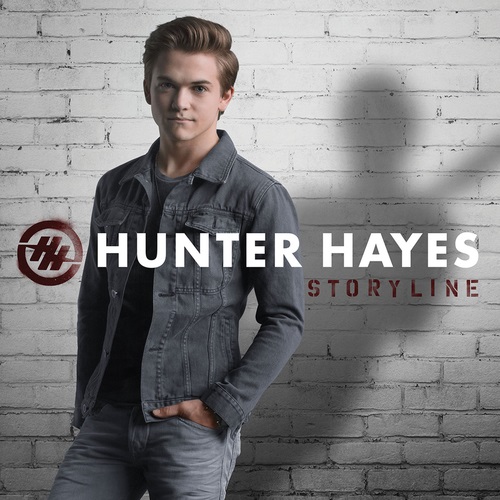
25. Hunter Hayes - Storyline

One of the great pop albums this year came from Hunter Hayes, a mainstream country crooner evidently interested in following in Taylor Swift's footsteps. Hayes recorded Storyline, his sophomore full-length album, with Dann Huff, a 2004 and 2009 Academy of Country Music honoree for Producer of the Year. But while Huff's wheelhouse is Americana, Hayes draws his own inspiration here from the likes of John Mayer, Jason Mraz, and last year's most notable country music trend-braker, Kacey Musgraves. The result was arguably the summer's most unbreakably infectious set of songs. As far as 2014 went in the "albums for summertime drives" category, Storyline was the ace in the hole, with well-put-together love songs ("Storyline," "Tattoo"), inspirational ballads (the anti-bullying pep talk of "Invisible"), and electric guitar manifestos that suggest Hayes was spending a lot of time with Mayer's Continuum while recording this record ("You Think You Know Somebody," "When Did You Stop Loving Me"). Throughout, Hayes consistently shows off soulful vocals, impressive electric guitar chops, and strong songwriting skills. Clearly, he's one to watch.

Key track: "Storyline"

26. Foo Fighters - Sonic Highways

This was the year of the concise album: 11 of the records on this list have 10 tracks or fewer, while five cut out before even reaching the 10-song mark. One of these is the latest LP from the Foo Fighters, a taut eight-song collection that instantly ranks as their most consistent and cohesive work to date. Even as a standalone, Sonic Highways is special, sporting excellent examples of the dark slow-burns ("Something From Nothing") and anthemic rockers ("I Am The River") on which the band has built its 20-year legacy. As the companion to the HBO show of the same name, though, Sonic Highways becomes something more. It has, of course, been argued that the record sounds safe and predictable compared to its television counterpart. But watch the TV series—which frontman Dave Grohl assembled from 1,300+ hours of footage—and this album grows in depth, meaning, and overall enjoyability. There's something about watching the band craft "Congregational" in a rustic Nashville studio, built in the heart of an old church, that makes the song's southern rock intensity really come alive, and something similar can be said for each of the other seven songs on this great rock and roll travelogue.

Key track: "Something from Nothing"

27. The Hold Steady - Teeth Dreams

Though it's probably the weakest album in the Hold Steady's storied catalog, and though it may be the most top heavy LP this side of Hot Fuss, Teeth Dreams is still a terrific pile-driving rock and roll record, meant to be played as loud as possible, in the car, with the windows down, on a hot as hell summer evening. The production gets a bit too "generic radio rock" at times, and there's nothing as transcendent as the highlights from Boys & Girls in America or Separation Sunday. However, songs like "The Only Thing" or the dusky "Oaks" are still among the best material this band has ever written. In fact, the first half of the record is damn-near flawless, from the relentless drumbeat of "I Hope This Whole Thing Didn't Frighten You" to the rip-roaring dueling guitars of "Spinners," all the way to the bar that's lost its liquor license in "The Ambassador." The back half is a bit more stacked with filler, but even then, no one does filler material with quite the conviction and fire of Craig Finn and Tad Kubler.

Key track: "The Only Thing"

28. Moose Blood - I’ll Keep You in Mind from Time to Time

One of the biggest surprises of the year for me was this record, the full-length debut from Canterbury-based emo band, Moose Blood. The record is not perfect: after the astounding opener "Cherry," a Clarity-esque slowburn with some of the year’s most haunting lyrics, I’ll Keep You in Mind… settles into a rather one-dimensional mid-tempo rock sound for the remaining 10 tracks. Some of the songs are rather juvenile, making repeated references to drinking and "half-smoked smokes." But even with these reptitions and flaws considered, there’s still an awful lot of promise in these songs. Take the lead single, "Anyway," a kinetic rock song with a grandiose guitar riff and a big chorus worthy of being shouted along by a sold out club audience; or "Bukowski," which actually makes reference to the Jimmy Eat World record these guys are trying to sound like. Seriously, if "I'll introduce you to Clarity/Teach you the words to 'The Sound of Settling'/Make you watch High Fidelity/On a Sunday, maybe one day" isn’t the most gloriously homage-filled lyric of 2014, I don’t know what is. These songs are catchy and relatable, and even if this album has its faults, I frankly can’t wait to see where Moose Blood go next.

Key track: "Cherry"

29. Better Than Ezra - All Together Now

Sometimes laugh-out-loud clever, sometimes the musical equivalent of a big, dumb, fun Hollywood action flick, All Together Now was the year’s most gleefully ridiculous pop album. Prior to this record, 90s alt-rockers Better Than Ezra (known as one-hit wonders for their song "Good") hadn’t released an album in five years (and hadn’t released a great one since 2006’s Before the Robots). Here, though, the band reconvenes without missing a beat. From the album’s wry opening lyric ("There are six and three-quarter billion people in this world/And 51 percent of them are girls/You roll your eyes like I’m full of it/But I Googled that shit"), All Together Now spits the catchiest, most sarcastic pop-rock songs this side of Butch Walker. Frontman Kevin Griffin sure knows his way around a hook, and legitimately every song on this album, from the falsetto-laden "Crazy Lucky" to the SoCal guitar pop of "Sunflowers," is an earworm. Sometimes, Griffin’s hooks are actually too infectious, (the zippy "Diamond in My Pocket" is, in a word, annoying). But when the band drops the tempo, like on the luminescent "Before You" or the slow-burn, Petty-referencing "The Great Unknown," it becomes clear that there aren’t many better melodists in the game right now. The only question is how these guys never had more hits.

Key track: "The Great Unknown"

30. Tom Petty & The Heartbreakers - Hypnotic Eye

I spent a lot of time with the music of Tom Petty this year. A week before my wedding, "Wildflowers" was the soundtrack to a perfect summer boat trip taken with my soon-to-be in-laws. "Learn to Fly" was the first song I played as I hit the highway on my way out of Illinois and toward a new home in Michigan. And this record, Petty's best in two decades, was in constant rotation as the summer dwindled and disappeared. Blending the anthemic heartland rock of Petty's best material with the relentless 12-bar blues of his last record (2010's Mojo), Hypnotic Eye strikes the perfect balance between big choruses and deep rock and roll grooves. The album's ineffable opening trio ("American Dream Plan B," "Fault Lines," and "Red River") stay in the former vein, while the highway-ready riff from "All You Can Carry" runs straight down a dream toward the latter. Petty and his Heartbreakers even find time to drop the tempo, turning in a jazz club ready slow-burn in the form of "Full Grown Boy." The record's second half doesn't hold a candle to its first, and there's nothing as great as "American Girl," "Free Fallin'," or "You Got Lucky," but Hypnotic Eye sounds vital and fierce in a way that suggests the 54-year-old Petty might still have another half-dozen great records under his sleeve.

Key track: "Red River"

My Top 30 Albums of 2013


What a year.

In terms of notable life events, I'd say that 2013 was probably the most important year of my life. I won last-minute scholarships and awards. I graduated from college. I left my hometown - and state - behind, all to search for post-university opportunities. I moved in with my girlfriend. I got my first job. I quit my first job. I took up a career as a freelance writer. I stopped being a freeloader and became a (mostly) self-sufficient human being. I asked my girlfriend to marry me. She said yes. I started planning my wedding. I turned 23. I listened to over 200 records. I wrote tens of thousands (and perhaps even hundreds of thousands) of words, spanning all manner of different subjects. I wrote 60 reviews for Absolutepunk.net. I wrote 10 "My Back Pages" features with my bud Chris Collum (look for more of those in 2013). And I wrote the 13,000 words that you are (hopefully) about to consider reading. I'll reiterate my offer from last year: if anyone reads this whole thing, I'll give them a cookie.

Suffice to say that it's been a remarkable year. It wasn't always easy and it wasn't always fun, but in the moments of triumph and strife alike, I had this year's host of terrific albums at my back, spurring me forward. I frankly can't remember a year more stacked with great music than this one. And I probably say that every year, but I think the fact that I wrote 60 blurbs below (50 for LPs, 10 for EPs) speaks to just how much notable material found its way to my ears in 2013. Some of those records were populist radio-ready selections; others were critically-acclaimed indie favorites; a few were cut from the cloth that has served as this scene's bread and butter for years; and still others were written by complete or relative unknowns. I like to think my list spans quite a range of different artists and genres, and I hope that, if your tastes match up with mine, you will find something new to love here.

As I look through this list one last time, after weeks spent writing blurbs, picking key tracks, and sweating about the order (spoiler alert: I'm still not quite happy with it), I think the time has finally come for me to lay my pencil down and call it a year. It's been a gift writing for Absolutepunk in 2013, and I hope that 2014 will bring as much great music and as many notable life events as this one did. Since I'm getting married in July, I have no doubt those hopes will be realized. So Happy New Year, happy listening, and let's all have a kick ass 2014.

01. Will Hoge - Never Give In

When I found out that Will Hoge was releasing a new album this year - and heard the first single, a Chevrolet ad campaign song called "Strong" - I certainly didn’t think it would end up at the top of my year-end list. Hoge’s most recent records, while good, have not lived up to the career defining work of 2007’s Draw the Curtains. But when this album showed up in my mailbox, sometime during a golden and unseasonably warm Chicago autumn, it just clicked. From start to finish, Never Give In is the best full-album distillation of Hoge’s talents that the country singer songwriter has yet captured on record. Right from the outset of "A Different Man," the towering Springsteenian anthem that opens the album, I knew I was going to love Never Give In, and the other 10 tracks certainly didn’t disappoint. Indeed, this album is an embarrassment of riches, filled with powerful storytelling, soaring hooks, towering guitar solos, shimmering instrumental breaks, forceful gospel choirs, nostalgic B3 organ, and mournful pedal steel. It was a difficult choice for my album of the year title this year, but ultimately, it just came down to likability, and frankly, I don’t think I’ve liked an album as much as Never Give In in quite some time. (Read my review here.)

Key tracks: "A Different Man," "Never Give In," "Home is Where the Heart Breaks"

02. Jimmy Eat World - Damage

On their best album since 2004’s Futures, Jimmy Eat World ditch the studio sheen of their last few records in favor of the dirtier and grungier sonic palette that better reflects their live performances. Some wrote the record off for its muddy production - courtesy of first-time JEW producer Alain Johannes - but for me, the songs were too good to deny. The band channels their vitriolic punk influences on the ringing anthem that is "How’d You Have Me," their 1990s emo roots on the climactic "Byebyelove," and their poppier elements on "Damage," holding the whole thing together as a semi-conceptual piece that frontman Jim Adkins described as "a grown-up break-up album." For me, it was way more than that. Serendipitously, this album entered my life during the final weeks of college, and every song will forever be tied to the bittersweet finality of those last days. From the yearning emotion of "Please Say No" to the resigned farewell of "You Were Good," I couldn’t have dreamed up a better soundtrack for driving away from four years of friends, good times, and self-discovery, and striking out toward adulthood and whatever came with it. (Read my review here.)

Key tracks: "Appreciation," "Damage," "Please Say No"

03. The Civil Wars - The Civil Wars

The second (and likely, last) album from songwriting duo Joy Williams and John Paul White is the closest thing to Rumours our generation will probably ever hear. Torn apart by "internal discord and irreconcilable differences of ambition," The Civil Wars - a folk/alt-country act that looked on the brink of superstardom just two years ago - seem to be waging a war of their own on this self-titled record. The songs get more dynamic, emotional, and electric as a result, sparking with tension on explosive rock-tinged highlights like "I Had Me a Girl" and "Oh Henry," or wallowing in beautiful despair on the lonesome suite of songs ("Same Old, Same Old," "Dust to Dust," and "Eavesdrop") that marks this record’s first half as the most bulletproof musical statement anyone made in 2013. The album tapers off a bit toward the end, losing some of its taut intensity on a pair of closing tracks ("Sacred Heart" and "D’Arlene") that would have sounded more at home on the first record. But the smoky whirlwind of rootsy instrumentation on display here - and especially the tour-de-force vocal performances - still make The Civil Wars arguably the "greatest" record of the year. (Read my review here.)

Key tracks: "I Had Me a Girl," "Dust to Dust," "Oh Henry"

04. Dawes - Stories Don’t End

I was a big fan of Dawes’ last record, 2011’s Nothing is Wrong, which landed at number 20 on my list two years ago. However, that particular Laurel Canyon folk-indebted gem didn’t prepare me for Stories Don’t End, which is easily the group’s best work to date and one of the finest records of the year. Where Nothing is Wrong painted a picture of a band living in the shadow of classic rock legacy, Stories Don’t End sees them balancing those influences with a more modern musical palette and production style. The result is not only the first record that captures Dawes’ dynamic live show energy, but also one that posits the band as torchbearers for the next phase of modern folk rather than as four guys consistently living in their record collections. Every moment of Stories Don’t End is great, from the grandiose harmony swells of "Just Beneath the Surface" to the multi-tracked vocal climax of "Most People," or from the kinetic guitar solo of first single, "From a Window Seat," to the B3 organ swells of "From the Right Angle." The highlight is "Something in Common," a stirring and poetic ballad that feels almost church-bound in scope and instrumentation. But even the minor tracks - stuff like "Hey Lover," a spontaneous Blake Mills cover, or "Someone Will," a bass-heavy piece of sunburned California country - are never anything less than infectious. (Read my review here.)

Key tracks: "Most People," "Something in Common," "From the Right Angle"

05. Jason Isbell - Southeastern

Jason Isbell and Will Hoge (at the top of this list) are good friends who have made very similar music in the past (see "Go It Alone" from Isbell’s last record, 2011's Here We Rest, and "Just Like Me" from Hoge’s 2009 album, The Wreckage). But the inherent similarities between Hoge and Isbell as songwriters and genre contemporaries make it all the more surprising how different their 2013 works are. Where Hoge goes for bombastic production, fully-fleshed out arrangements, and lots of big classic rock songs, Isbell dials things back to a beautiful level of restraint on Southeastern, leaving little more than acoustic instrumentation and spartan, classic country production to fill out these 12 tracks. Southeastern is a record all about the lyrics, whether they are uplifting, as on album opener "Cover Me Up" ("I sobered up, I swore off that stuff forever this time," Isbell croons) or utterly heartbreaking, as on "Elephant," the year’s most perfect piece of songwriting and the best song ever written about cancer. Elsewhere, Isbell sings about the hopelessness of ongoing loneliness ("Traveling Alone"), the battle of a former serial killer to change his ways ("Live Oak"), and the power of music to bring a person back after they've walked away ("Songs That She Sang in the Shower"). Add some infectious rockers ("Flying Over Water," "Super 8") and the year's best closing track ("Relatively Easy"), and you've got the makings of a masterpiece. (Read my review here.)

Key tracks: "Cover Me Up," "Elephant," "Relatively Easy"

06. Arcade Fire - Reflektor

For a band that seemed to unite everyone with their debut record nine years ago, Arcade Fire have been releasing incredibly divisive music pretty much ever since. Reflektor, a sprawling double album where the average track length is about 5:22 – and that’s only with the blatantly unnecessary ocean of noise at the end of "Supersymmetry" excised – is the band’s most polarizing album to date. It’s also one of their best, parlaying influences from dance music and Greek mythology (to name a few) into a collection that is reminiscent of U2’s Achtung Baby in the way it departs from the band’s past work, but still keeps their core elements (stadium-sized earnestness, full-bodied arrangements, a reverence for classic rock and pop music) intact. Davie Bowie shows up on the glammy title track, "Joan of Arc" is kinetic Talking Heads new wave, and "Awful Sound" is downright Springsteenian in its escapist themes. Elsewhere, the band sets fire to the proceedings on "Normal Person," a venomous, Stones-like rocker with a blistering guitar riff, while "Here Comes the Night Time" uses Haitian grooves and spinning wheel piano chords to create a topsy-turvy carnivalesque atmosphere. Finally, frontman Win Butler provides the album’s most emotive moments on the late-album one-two punch of "Porno," an electro-pop disco ballad, and "Afterlife," a masterful gem which continues Arcade Fire’s tradition of leaving huge album highlights in the penultimate slot. None of it is as perfect or immediate as "Wake Up" or "Rebellion (Lies)," but it all does justice to the indulgent double album format in a way no other band has in years.

Key tracks: "Normal Person," "Porno," "Afterlife"

07. The National - Trouble Will Find Me

As someone who has always liked the National, but never quite understood the Messianic praise they receive, Trouble Will Find Me was a surprising record for me. Right from the moment the gorgeous hum of "I Should Live In Salt" crackled through my speakers, its dark, lovelorn vibe recalling "Sweetness Follows" from R.E.M.’s seminal LP, Automatic for the People, I knew I was going to feel differently about this album than I had about past work like High Violet or Boxer. It’s a long LP - potentially longer than it needs to be at 55 minutes and 13 tracks - but the unhurried ebb and flow of these songs is something that not a lot of bands today can muster. Maybe it’s all because of Matt Berninger’s booming baritone - so beautifully displayed on early album stand-outs like "Demons" or "Don’t Swallow the Cap" - and how it never sounds strained or inadequate, even on songs that rely on dynamic and explosive crescendos ("Graceless," "Sea of Love"). Ultimately though, it’s the back half of the record that gets me, from the low-light slow burn of "Humiliation" to the never-ending swell of "Pink Rabbits," all the way to "Hard to Find," the warm and inviting lullaby of an album closer. (Read the AP.net staff roundtable discussion here.)

Key tracks: "I Should Live in Salt," "Pink Rabbits," "Humiliation"

08. Frank Turner - Tape Deck Heart

It figures that Frank Turner’s most consistent and focused album to date comes as the result of heartbreak. On Tape Deck Heart the famously scattershot British songwriter is at his very best thanks to the break-up album theme, slinging monstrous hooks ("Recovery"), Counting Crows-esque folk rock ("Losing Days," "The Way I Tend to Be"), and poignantly lonely dirges ("Broken Piano," about an instrument that can only play minor chords) for a record that is both sobering and blisteringly uplifting. On album highlight "Good & Gone," Turner blames Hollywood and Motley Crue for giving him an unrealistic portrait of love; on "Plain Sailing Weather," he envisions himself as the guy who can "fuck up anything," and on "Tell Tale Signs," he compares an oblivious heartbreaker of a girl to a scar that never quite fades away. Of course, Turner can’t quite resist his knack for eclecticism: "Four Simple Words" blends baroque musical theater with pirate punk rock for an anthem clearly meant for live show performance, while "Oh Brother" is about the unbreakable ties of a tight-knit friendship. But when the sun breaks through the clouds - on songs like "The Fisher King Blues," an ode to a life without constraints, or "We Shall Not Overcome," a resilient b-side that remind us how we’re all figuring things out as we go - the album gains a whole extra layer of thematic force.

Key tracks: "Recovery," "The Way I Tend to Be," "Good & Gone"

09. John Mayer - Paradise Valley

John Mayer’s weakest album in over a decade is still a terrific collection of songs, playing off the 1970s California folk of last year’s Born and Raised - a top 5 finisher on my 2012 list - for another venture into roots-based music. The style isn’t as consistent this time around, flitting from throwback AOR ("Wildfire") to folky arena rock (the wordless climax of "Dear Marie"), and from guitar-oriented blues (the slightly unnecessary, but wholly enjoyable cover of "Call Me the Breeze") to redneck country music ("You’re No One Until Someone Lets You Down). In between, Mayer hits the soft-rock palette his radio fans appreciate, on numbers like the Taylor Swift-referencing "Paper Doll" or the Katie Perry-featuring "Who You Love," but his best moments come when he goes for more lyrical, personal territory, like on the soul-searching lullaby that is "Waiting on the Day," the wandering cowboy treatise of "Badge and Gun," or the poetic end-of-summer hymn, "On the Way Home." Best or not, Paradise Valley is the sound of a guy who has never made a bad record and isn't planning on doing so anytime soon. (Read my review here.)

Key tracks: "Dear Marie," "Badge and Gun," "On the Way Home"

10. The 1975 - The 1975

Sometimes, music just has perfect timing. In any other year, the 1975’s full-length debut album probably wouldn’t have cracked my top 10. I would have considered it a solid pop album with strong hooks and terrific production, but it likely would not have had the personal resonance necessary to rank above 15 or 20. But then serendipity played a role. The day this album streamed for the first time was the day before I asked my girlfriend of three years to marry me. A hastily downloaded webrip ensured that I had the album on my iPod for the five-hour drive to our hometown that Friday evening. The next day, the album soundtracked my life the next day as I drove around my childhood hometown, picked up an engagement ring I’d had made at a designer jewelry store downtown, and traveled the sun-drenched waterside roads to my soon-to-be fiancĂ©e's house. After I’d popped the question, we shared a glorious end-of-summer evening out on the town with our families, along the way dispensing our big news to friends, relatives, and loved ones via phone calls and text messages. The whole day was perfect, and the way this album framed it all is something I will never forget. From triumphantly driving past my old school late that night while the emotional climax of "Robbers" rang through my car to reconnecting with my absentee father and picking a best man on the same weekend that songs like "Is There Somebody Who Can Watch You" and "Menswear" came into my life," this entire album felt like it was written for me on that specific day. You can bet that I’ll hold it near and dear to my heart for the rest of my life as a result.

Key tracks: "Sex," "Robbers," "Menswear"

11. Night Beds - Country Sleep

Released on February 5 - and leaked to the internet significantly ahead of that date - Night Beds’ Country Sleep was 2013’s first great album. 10 months later, it still stands up as one of the best records I heard this year, marked by yearning reverb-drenched vocals (the a cappela mood-setter that is "Faithful Heights"), Ryan Adams-esque heartbreakers ("Cherry Blossoms"), and surprisingly infectious pop singles ("Ramona"). Quite often, it’s easy to write off Winston Yellen - the mastermind behind the band - as little more than the sum of his influences. Adams is the most obvious parallel - from the driving nighttime folk of "22" to "TENN," the semi-autobiographical closer - but traces of Fleet Foxes, My Morning Jacket, and Bon Iver abound elsewhere. Ultimately though, the album transcends homage, simply because it’s virtually impossible to pick a track where Yellen sounds anything less than completely genuine. (Read my review here.)

Key tracks: “Ramona,” “22,” “Cherry Blossoms”

12. Matt Nathanson - The Last of the Great Pretenders

Matt Nathanson has long been one of my favorite singer/songwriters, and his latest record - while it largely forsakes his usual hook-heavy pop songwriting territory in favor of more exploratory pastures - did nothing to change that. Where 2007’s Some Mad Hope began with a chiming anthem in the form of "Car Crash," and where 2011’s Modern Love kicked off with the heartthrob teen pop of "Faster," this year’s Last of the Great Pretenders opens in a markedly more menacing vein. "Earthquake Weather," the record’s first taste, is a scathing shot of adrenaline, marked by unsettling piano keys and beat-heavy production. "Mission Bells," the second track and lead-off single, reprises the same hip-hop ready production and partners it with a Mat Kearney-esque chorus. And "Last Days of Summer in San Francisco," the album’s finest hour (and one of the best songs of the year) splits the difference between a classic Nathanson pop song and a soaring U2 anthem. The album is never as strong as it is on those first three tracks, but plenty of other moments, from the Cheap Trick-flavored power pop of "Annie’s Always Waiting (For the Next One to Leave)" to the classic singer/songwriter vibe of "Sunday New York Times," all the way to the stirring New Year’s finale that is "Farewell December," sound like mixtape standards in the making. (Read my review here.)

Key tracks: “Earthquake Weather,” “Last Days of Summer in San Francisco,” “Sunday New York Times”

13. Justin Timberlake - The 20/20 Experience

Before The 20/20 Experience became a sprawling double album, it was the ambitious comeback project of a guy who had been away from the music game for the better part of seven years. The album’s first single, the sultry "Suit and Tie," played the return safely, steering toward Timberlake’s wheelhouse dancefloor pop and getting one of his famous friends - an out-of-place Jay Z - to endorse it with a guest feature. However, from the moment The 20/20 Experience started streaming on iTunes, it was clear that this JT was a different one than the guy we’d left in 2006. Gone were the urban rhythms and dark atmospherics of FutureSex/LoveSounds, replaced here by swooning neo-soul on the classic-soundtrack-worthy opening track, an eight-minute melange of orchestral string sections and gorgeous falsetto lines called "Pusher Love Girl." The rest of the record was every bit as ambitious, with an average track length of seven minutes and with songs that featured towering eighties-style guitar solos (the Prince-aping "Spaceship Coupe"), hip-shaking Latin grooves (the steady crescendo of "Let the Groove Get In"), and arena rock textures ("Mirrors"). Sure, Timberlake can still swing a perfectly simplistic pop song without breaking a sweat (see "That Girl"), and his vocals have never been better than on the sobering and restrained "Blue Ocean Floor." But in an age of boring blockbuster pop albums, filled to the brim with lyrical cliches, cookie-cutter melodies, and repetitious production techniques, Timberlake proved that he could still be a relevant industry modern fixture not simply for his voice, hooks, or looks, but also for his willingness to push the envelope and create music that is at once challenging, creative, and cool. (Read my review here.)

Keys tracks: "Let the Groove Get In," "Mirrors," "Blue Ocean Floor"

14. CHVRCHES - The Bones of What You Believe

While The Bones of What You Believe is actually the third debut album on my list this year - after the 1975 and Night Beds - I would argue that no artist took me more by surprise in 2013 than CHVRCHES. From the get-go, Night Beds was a slam dunk (Sad bastard folk music? Sign me up!), while the 1975 could win over just about anyone with an anthemic single like "Sex." CHVRCHES though, with the way they straddled the boundaries between electronic and pop music, were a bit outside my wheelhouse. I initially dismissed this record after a single listen, but repeated praise for it from publications I read and listeners whose opinions I trust brought me back to it. I’m glad they did. Lead singer Lauren Mayberry is great at handling soaring hooks when the band decides to play up the "pop" side of their electropop genre distinction (as on album highlights like "The Mother we Share" and "We Sink"), but the band is actually more interesting when they embrace the inherent darkness in their sound. For instance, the fragile "Lies" seems to find Mayberry about one verse shy of breaking down in some dim and hazy nightclub, while the album closer, a luminescent and lush ballad called "You Caught the Light," brings synth player Martin Doherty to the mic for an M83-esque slowdance.

Key tracks: "We Sink," "Lies," "You Caught the Light"

15. The Lone Bellow - The Lone Bellow

Joy Williams dominates most of the second Civil Wars album from a vocal perspective, and she absolutely kills it. But since I always preferred John Paul White on the first album, I found myself longing for a bit more of his soaring emotive vocals. While The Lone Bellow don't quite fulfill that desire - to be fair, this band is not a John Paul White side project - they certainly come close. Lead vocalist Zach Williams is the band's secret weapon, singing with hushed subtlety in the quieter moments and belting with the same reckless abandon as other emotive folkies (John Paul White and Glen Hansard are the names that come to mind right away) for the album's triumphant peaks. The Lone Bellow, like so many other bands this year, expend their best song in the opening slot, a rousing, instant-classic folk anthem called "Green Eyes and a Heart of Gold." But the steady crescendo of "Tree to Grow," the gentle restraint of "Two Sides of Lonely" or "You Can Be All Kinds of Emotional," and the kinetic Fleetwood Mac feel of "Bleeding Out" all do their part to posit this band as one worth watching. Less mainstream and more traditional than the current crop of popular Americana bands, but with the talent and promise of acts twice their age, it's hardly surprising that critical acclaim was there to meet this trio upon their January arrival. And with Charlie Peacock, the producer of The Civil Wars, behind the boards, it's fair to call this album a perfect companion piece to the near-fautless record I placed in my number 3 slot.

Key tracks: "Green Eyes and a Heart of Gold," "Tree to Grow," "Bleeding Out"

16. Vampire Weekend - Modern Vampires of the City

Modern Vampires of the City, the internet's favorite album of the year, very nearly missed my top 30. For the entire summer and most of the fall, this was a record that I liked a pleasant amount - especially considering my previous distaste for Vampire Weekend - but one that I didn't love nearly as much as everyone else seemed to. But a late-year gravitation to this album's breezy and resilient indie-pop sound caused me to reconsider. Track after track, hook after hook, from the smoggy New York City sunrise of "Obvious Bicycle" to the pastoral lullaby of album coda track, "Young Lion,"Modern Vampires of the City serves up one infectious and unforgettable musical feast after another. Frontman Ezra Koenig's pristine vocals on huge pop songs like "Unbelievers" and "Diane Young" are, quite literally, only the tip of the iceberg here. Arguably the most impressive aspect of this album is how it blends an array of organic instrumentation - tinkling pianos, pounding drums, and ringing organ - with studio flourishes and unique orchestrations. Explosive synth lines, warped electric guitar, weird vocal effects (all over album highlights like "Step" and "Diane Young," and veritable bursts of sonic force (on the rapidfire patter song that is "Worship You") add a ton to this album, but do so without ever sacrificing the effortless feel of the songs.

Key tracks: "Unbelievers," "Step," "Diane Young"

17. Los Campesinos - No Blues

Prior to this year, I'd never listened to this band, a six-piece indie pop act hailing from Cardiff, Wales. But after spending a lot of time with the catastrophically catchy hooks, grooves, licks, and vocal inflections of No Blues, their fifth full-length album, I know I'm going to have to correct that oversight. From the unspooling tape deck surge of opener "Flotsam Jetsam" to the infectious hook of "Avocado, Baby," and from the synth-layered darkness of "What Death Leaves Behind" to the euphoric back-up vocal congregations of "As Lucerne/The Low," this record's songs somehow manage to be sugary without being cheesy, hook-filled without ever feeling like pop radio, and funny or ironic without ever sacrificing the epic sweep of their arrangements. Like the bubblegum pink smoke cloud on the cover suggests, this album is a colorful experience from start to finish, and it frankly has to be heard to be believed.

Key tracks: "Flotsam Jetsam," "What Death Leaves Behind," "Avocado, Baby"

18. Kacey Musgraves - Same Trailer, Different Park

Reminiscent throughout of Fearless-era Taylor Swift, Kacey Musgraves' Same Trailer, Different Park provided a nice dose of indelible, catchy, and moving pop country in a year where Swift was busy touring stadiums. Same Trailer, Different Park doesn't have the same adventurous spirit as Swift's best work (suffice to say that there was a reason Red landed in my top 10 last year), but Musgraves is certainly cut from a similar cloth. Throughout this record, Musgraves has a remarkable ability to write songs that come across as cute, funny, and strikingly sad all at once. Case in point is "Merry Go Round,” a hit on mainstream country radio which, instead of extolling the virtues of a maverick rural lifestyle - as most of Musgraves' contemporaries do -paints the small town as a Springsteenian construct, a place that must be escaped lest you wish to burn out and fail. It's a reductive statement, to be sure, but the song's mournful banjo and acoustic guitar accompaniment, along with the gentle twang of Musgraves' voice and her clever twists on conventional childhood nursery rhymes, paint her as a young person whose dreams and naive optimism are slowly being torn asunder by a town she's outgrown. Elsewhere, "Follow Your Arrow" takes on the poisons of a judgmental society, "Silver Lining" plays as a hymn about taking risks and living life with resilient resolve, and songs like "I Miss You," "Back on the Map," "Keep it to Yourself," and "It is What it Is" make lovelorn loneliness sound prettier than it has any right to. Most of the time, Musgraves is refreshingly self-aware and innovative with her lyrics - especially for a genre that has long relied on the same generic themes - but even when Musgraves embraces the tropes of mainstream country, she is talented enough to stand apart from the crowd. I'll be surprised if, in a few years, we don't look back at this album and see it as the birth of a star.

Key tracks: "Merry Go Round," "Keep it to Yourself," "Follow Your Arrow"

19. Sara Bareilles - The Blessed Unrest

While The Blessed Unrest, Sara Bareilles’s fourth full-length studio album and her third on a major label, doesn’t quite live up to the levels of 2010’s Kaleidoscope Heart, it still stands as one of the year’s finest mainstream pop releases. Everyone who turned on a radio this year probably heard "Brave," the album's lead-off single, opening track, and weakest moment. But The Blessed Unrest is much more than just a hit vehicle. Sure, there are other potential hits here, like the stirring piano pop of "Chasing the Sun" - which perfectly encapsulates the record’s "life in New York City" theme - or the night-on-the-town fluff of "Little Black Dress." But as with her last record, Bareilles is considerably more interesting when she is steering away from the mainstream. "Hercules" evokes Fiona Apple, "Eden" recalls Prince, and the classy jazz club piano balladry of "Manhattan" sounds instantly timeless. Bareilles also takes an active interest in production this time around, leading to stunningly lush and startlingly emotional highlights like "Satellite Call" and "Islands." Still, it’s clear that Bareilles doesn’t need the aid of the studio to sound great: just listen to her top-notch 2013 live album, Brave Enough and the innumerable stunning vocal moments contained therein. (Read my review here.)

Key tracks: "Manhattan," "Satellite Call," "Islands"

20. Justin Timberlake - The 20/20 Experience Part 2 of 2

When the first part of The 20/20 Experience hit shelves back in February, the biggest complaint surrounding it was that Timberlake was being self-indulgent, overreaching into sprawling song lengths that he couldn’t quite make work, and turning his comeback to the pop world into an overlong and exhausting listen with startlingly little pop immediacy. When JT announced that The 20/20 Experience was, in fact, a two-part album, the complaints of length suddenly got a bit more serious. After all, the combined 20/20 Experience might just be the longest double album ever released by an established artist, clocking in at a total of 144 minutes. (Comparatively, the longest double albums I have in my iTunes collection, the Smashing Pumpkins’ Mellon Collie & the Infinite Sadness and Red Hot Chili Peppers Stadium Arcadium, both barely scrape past the 2 hour mark.) The 20/20 Experience: Part 2 of 2 doesn’t do much to trim back the track lengths of its predecessor, but it does bring a bit more pop accessibility to the table, with striking hooks abounding on the whiskey-drenched country of "Drink You Away," the Michael Jackson rave-up of "Take Back the Night," the 1990s boy band pop of "Not a Bad Thing," and the kinetic guitar rock of "Only When I Walk Away." There’s a greater range of quality than with the first part, with Timberlake’s best and worst qualities as an artist frequently coming to the forefront (sometimes all in the course of a single song, as with "TKO," which has a strong hook but distracting production flourishes, or "Murder," which would be a bona-fide pop smash were it not for the worst guest verse of Jay Z’s career). But when Timberlake makes contact, he hits home runs. Case in point is "Amnesia," which balances the performer’s dark dance floor roots with his propensity for dreamy vocal soundscapes. (Read my review here.)

Key tracks: "Take Back the Night," “Drink You Away,” “Amnesia”

21. The Dangerous Summer - Golden Record

In 2009, the Dangerous Summer topped my year-end list; in 2011, they did it again. This year, with their third full-length record scheduled for a late summer release, I had no reason to believe that this band’s near-unparalleled ability to appeal directly to my emotions would wane. But for whatever reason, be it new members, the band’s propensity for causing drama, or my own transition from summers of carefree youth to summers of responsibility and adulthood, Golden Record failed to connect in the fashion that made Reach for the Sun and War Paint two of my all-time favorite records. It’s tempting for me to call this my biggest disappointment of the year, and I almost left it off this list as a result. But once the dust cleared and I was able to listen to this record with a level head, I realized that I still had a connection to the band’s music, even if it wasn’t as powerful as before. Sure, it took changing the sequencing and re-approaching the album from a different direction for me to really appreciate it (the band’s chosen track order is abysmal), and even then it’s undoubtedly the band’s weakest work to date. But songs like "Catholic Girls" and "Miles Apart" are as good as anything in the Dangerous Summer catalog, and gems like "Sins," "Honesty," "We Will Wait in the Fog," and "Anchor" display the same infectious melodies and towering emotion that turned me into a fan of this band in the first place. (Read my review here.)

Key tracks: "Catholic Girls," "Miles Apart," "Anchor"

22. The Head and the Heart - Let’s Be Still

2012 kickstarted - among other things - a massive revival of folk and bluegrass music in the mainstream. Between Mumford & Sons' Babel - which won a contentious album of the year Grammy for its mainstream success and poppy distillation of traditionally Americana textures - Of Monsters & Men's rousing boy/girl folk pop singles, and the Lumineers' winterish, heart-on-the-sleeve brand of bluegrass, modern folk had a banner year in 2012. Cut from the same cloth is the Head and the Heart, a Seattle indie folk group who, on their second record, combine the male/female dynamic of Of Monsters & Men with the kick drum rhythms of Mumford and the wistful nostalgia of the Lumineers for an album that has mainstream potential, but never sacrifices its pure backwoods authenticity for radio appeal. There are a wealth of great songs here, from the infectious "Shake," the band's best bid for the Lumineers' slot on the radio, to the mid-tempo, autumnal drive of "10,000 Weight in Gold." Album highlight "Josh McBride" slows things down for a poignant photo album reminiscence of grandparents and simpler times, while the sound of passing trains flicker through "Gone," the album's towering, near-symphonic closer. None of it reinvents the wheel, and the people who have spent the past few years attacking bands like Mumford for their lack of creativity probably won't find much to love here. However, the Head and the Heart write songs which are warm, inviting, and memorable, and I can see this being a go-to album for brisk fall nights and dim winter afternoons for years to come.

Key tracks: “Homecoming Heroes," "Josh McBride," "Gone"

23. City and Colour - The Hurry and the Harm

A lot of people took issue with The Hurry and the Harm, the fourth full-length studio album from singer/songwriter Dallas Green's City and Colour project. For me, this record was the first since Green's C&C debut (2005's Sometimes) to really live up to the songwriter's penchant for desolate, lonesome folk-pop. Though it opens in a vein of gorgeous alt-country (on the irresistibly great title track) and sun-soaked California folk (the acoustic-based "Of Space and Time"), The Hurry and the Harm is actually a very dark record, from the electric scratch of "Thirst" to the cinematic late-night highway dirge of "Two Coins," all the way to the climactic heft of "Ladies and Gentlemen" or the haunting backing vocals of album closer, "Death's Song." It's not a perfect record, as emphasized on songs like "Commentators," an irritating bop that serves as the worst possible vehicle for Green's serene high tenor voice. But when Green turns to his trademark nighttime songwriting as on "Take Care," the lonely City and Colour sound that made Sometimes cuts like "Hello, I'm In Delaware" and "Day Old Hate" so wrenching feels like it's been resurrected for the first time in years. (Read my review here.)

Key tracks: "The Hurry and the Harm," "Two Coins," "Take Care"

24. Haim - Days Are Gone

When the percussive indie pop of Haim's debut full-length first starts pouring through the speakers on the fantastic lead-off track, "Falling," it legitimately sounds like a record from another era. These three sisters so perfectly capture the sonic spirit of 1970s classic rock, R&B, and singer/songwriter records that it's a bit remarkable they made this album in 2013. From the steady rain patter rhythm of "Falling" to the sultry falsetto vocals of the title track, this album is a maze of infectious melodies, lush vocal harmonies, and gorgeously crisp guitar tones. It's also the rare kind of top 30 album where I neither have many specific things to say about it, nor think there are really standout tracks (though the booming darkness of "My Song 5," which blends a sludgy and muscular guitar riff with a Timbaland-esque, dub-infused groove, certainly makes a case for itself). Instead, Days Are Gone thrives on the irresistible atmosphere and flow it cultivates between track 1 and track 12. From first note to last, the spell of this record never once breaks - a feat that a lot of much older, much more seasoned musicians could stand to learn from these three young sisters from L.A.

Key tracks: "Falling," "Days Are Gone," "My Song 5"

25. Josh Ritter - The Beast in its Tracks

I’ve cooled off considerably on this record since I gave it an 8.5 early in the year, mostly because Ritter is not my favorite vocalist and I can’t return to his records as frequently as I do with some others. With that said, there’s a lot to love about The Beast in its Tracks, a collection of songs that Ritter wrote following the dissolution of his marriage. Predictably, the album’s best songs are the ones that most closely address Ritter’s heartbreak, from the narrative sweep of "Hopeful" (a song I described back in March as Ritter’s "Tangled Up in Blue") to the biting kiss-off that is "New Lover." The concise, breezy folk tracks that litter the rest of the record are still wholly enjoyable, but it’s arguably to the album’s detriment that its highlights stand out in such strong relief. See "Joy to You Baby," which effortless distills the albums themes, both thematic and musical, into the space of 4.5-minutes. The chiming, evening-time mood of that song has landed it on virtually every mixtape I’ve made this year, but its redemptive lyrical arc ("I guess it all adds up to joy in the end," Ritter sings at the end, letting go of his anger and heartbreak and resigning himself to moving on) make it essential in a way that I don’t think the full album quite is. Still, that I can say all this while putting The Beast in its Tracks as my 25th favorite album of the year only speaks volumes of Ritter’s undeniable skill as a songwriter. (Read my review here.)

Key tracks: "Hopeful," "New Lover," "Joy to You Baby"

26. Have Mercy - The Earth Pushed Back

Three or four years ago, Have Mercy would have been a legitimate album of the year contender for me. For a long time, the music featured on this album - dark, angsty, heartbroken emo - was precisely what I wanted for muggy late night summer drives. As I’ve gotten older, I’ve begun growing out of this kind of music - hence the few-and-far-between nature of the emo/pop-punk/scene releases on this list. However, The Earth Pushed Back, the first full-length album from Baltimore-based alt-rockers Have Mercy, still struck an emotional chord with me, not because I can relate many of the lyrics to where I am in my life right now, but because the songs act as time capsules of sorts to a time dominated by loneliness, unrequited longing, and other patent adolescent feelings. Listening to this record reminds me of the first time I heard The Dangerous Summer’s Reach for the Sun. As with that record, it’s the diaristic lyrics and the reckless emotion of the vocals that set Have Mercy apart from a formulaic genre, with lines like "I still listen to your favorite songs/Wishing you were in my arms" ("This Old Ark"), "We laughed in the sun, we laid in the grass/And I felt the Earth pushing back, it pushed back" ("Weak in the Knees"), or "You said that you would be there when I dream/So why are you not next to me?" ("When I Sleep") hearkening back to a time when your AIM away message needed to express all of the things you could never find the words to say on your own. It’s nothing revolutionary from a musical perspective, but I’d imagine that, for those who found this record at the right time, it was still a game changer.

Key tracks: "Hell," "Let’s Talk About Your Hair," "Living Dead"

27. Goo Goo Dolls - Magnetic

Surprised? Me too, though I never claimed this list was going to be trendy. On their best album since the 1998 radio rock classic, Dizzy up the Girl, these ‘90s fixtures recaptured my attention in a way that I never thought they would again. 2010’s Something for the Rest of Us was a relatively joyless bore, without the hits or hooks that made the Goo Goo Dolls famous, while 2006’s Let Love In had a few strong singles, but mostly fell flat in the "deep cuts" category. Magnetic finds the band in an interesting position where they can probably still sell out amphitheatres in any state, but likely won’t ever again pen a genuine hit song. Frontman Johnny Rzeznik and company respond remarkably well to that conundrum, slinging songs that aren't built for the radio, but which surely sounded immaculate coming from the stages of outdoor venues on hot summer evenings. The aptly titled "Last Hot Night" is the most obvious play for that style, a driving anthem that opened all of the band’s tour dates this summer. But the rest of Magnetic sees a band that has always had a gift for hooks coming up with some of their finest melodies in years. The highlight is "Keep the Car Running," the bombastic and climactic closer, but the shameless summer pop of "Rebel Beat," the acoustic-driven "Come to Me," and the paean to undying devotion that is "When the World Breaks Your Heart" all reach mixtape gold standards by hearkening back to a time to a time in my life when hearing these guys on the radio every morning on the way to elementary school was the highlight of my day.

Key tracks: "When the World Breaks Your Heart," "Last Hot Night," "Keep the Car Running"

28. The Summer Set - Legendary

If I were to make a list of songs that should have been huge hits during the summer of 2013, then "Jukebox (Life Goes On)" would be at the top of it. If I had any cred left after including the Goo Goo Dolls, it’s surely gone with this entry, from the most shamelessly poppy pop-punk band in all the land. But you can’t fuck with timing, and these songs, which arrived in my inbox about halfway through April, had the timing part of the equation down in spades. If you had been in my situation, I reckon you'd understand. After all, hearing a song like "Jukebox" during your final weekend of college parties and your last night out sharing a beer (or five) with the guys who made your college years worth it, that’s the kind of serendipitous meeting of song and life occurrence that seems determined by fate. The rest of Legendary, which ranges from similarly anthemic night-out-on-the-town pop ("Maybe Tonight") to blissfully hooky break-up songs ("Happy for You," "The Way We Were"), fairly easily earns this record the title of "year’s catchiest album" for me. Trim this fucker down to eight or ten tracks and it’s the best pop album of the year, period, but grating missteps like "Boomerang" and "Fuck U Over" hamper the interim a bit. Luckily, the high points - from the Springsteen reference in “Jukebox” to the Dia Frampton appearance in “Heart on the Floor” - far outweigh the duds, and they left me unwilling to trim this album from my list. Call it a guilty pleasure if you want, but with hooks like these, there’s nothing to feel guilty about.

Key tracks: "Jukebox," "Heart on the Floor," "Someday"

29. Jeremy Porter - Partner in Crime

One of the things I miss most about college is working at the student newspaper as the Arts & Entertainment editor. While in that post during my senior year, I spoke with a slew of really genuine, music-loving local musicians and heard a lot of great records that I'd wager a lot of the people around these parts would love. Partner in Crime, from Detroit-based throwback rockers Jeremy Porter & the Tucos, was the best of those for 2013. Blending influences from 1970s power pop, 1980s punk rock, and 1990s alt-country, Partner in Crime is a personality crisis of a record that balances Cheap Trick sugar-rush pop (the opening one-two punch of "Castaways" and "Little Miss Awesome"), Replacements-esque punk rock ("Make Out King," "You Owe Me a Heart"), and radiant Whiskeytown-flavored roots balladry ("Wandering Eye," "Partner in Crime") for a collection that loves rock 'n' roll as much as its creator. As for best songs of the year, Partner in Crime offers up a notable nominee in the form of "Barely All the Time" a dusky, electric guitar-based slow-burn whose opening lyric (“I don't need no remindin' that it's the end of summertime) earned it a closing slot on virtually every summer mixtape I made this year. (Read my review here.)

Key tracks: "Castaways," "Partner in Crime," "Barely All the Time"

30. The Wonder Years - The Greatest Generation

I’ve talked a few times over the course of this list about how music can hit you at the perfect time and become something bigger than notes and lyrics. But what about when music arrives at the wrong time and soundtracks a time of your life you’d rather forget? In some ways, that’s what my situation was with The Greatest Generation. When this record hit, it was the beginning of May. The weather was finally starting to warm up, I was a college graduate, I was living with my girlfriend of three years - finally, after too much time spent residing in different zip codes - and I had a few decent prospects for my first post-college job. By all means, this album should have been the soundtrack to the most triumphant summer of my life. It should have been the sound of a promising twentysomething finding his feet in one of the biggest cities in the country.

But then, I took the wrong job, and everything went to hell - this record included. I guess it figured. I played this album on my commute the first morning of that new job, acting as if songs like "Passing Through a Screen Door" or "We Could Die Like This" or "Teenage Parents" or "Dismantling Summer" were bona fide anthems, even though their lyrics spoke of stagnation, heartbreak, and failure. Two weeks, a car crash, and plentiful frustration and misery later, I quit that fucking job and drove what was left of myself back from whence it came. I still had my whole life ahead of me, I still had possibilities, and I still had the girl I was going to marry. But listening to "Passing Through a Screen Door" in the wake of those disastrous two weeks and hearing the climactic lines ("Jesus Christ, I’m 26, all the people I graduated with/All have kids, all have wives, all have people who care if they come home at night"), it made me feel about as low as I’ve ever felt. I still love this record: I think it’s the best thing these guys have done by a long shot, and it would have been dishonest for me to leave it off this list for how big a part it obviously played in my 2013 soundtrack. But suffice to say that I’m going to need a little more time before this one goes back into regular rotation again.

Key tracks: "There, There," "Passing Through a Screen Door," "I Just Want to Sell out My Funeral"

Thursday, January 21, 2016

Album of the Day: Randy Rogers Band - Nothing Shines Like Neon

In the week where we lost Glenn Frey, the Eagles guitarist who played on and co-wrote "Take it Easy" (among several other hits), it seems appropriate to focus a blog on an album that draws a huge amount of inspiration from the Eagles' music. The album in question, Nothing Shines Like Neon, is the latest record from Texas country outfit Randy Rogers Band. Like Front Row Seat by the Josh Abbott Band, Randy Rogers is an artist that I've only recently become familiar with, and this is the first full album of his that I've heard (aside from Hold My Beer his 2015 collaboration with Wade Bowen). In other words, I can't comment on the influences that run through the entire Randy Rogers Band discography, but I can say that Neon is so drenched in the sound and atmosphere of 1970s Mellow Mafia folk-rock that it's legitimately baffling this album is only a week old. I mean hell, even the production on this thing sounds classic, giving the songs a dusty, organic feel that is a far cry from the airbrushed gloss and brickwall compression that you hear on most mainstream-leaning country albums these days.

Looking at the cover and reading the title for this album, I thought for sure it was going to be a sell-out record. Sure, I didn't know a thing about the Randy Rogers Band's past, but the word "neon" in music tends to align with synthesizers and poppy choruses--whether you're talking the neon lights of that first Killers albums or the better-left-forgotten era of "neon pop punk." Add the album cover, which, like so many other recent country records, evokes Friday night at the bar, and I was bracing myself for something I probably wouldn't enjoy when I pressed play.

Needless to say, I was surprised at what these 11 songs actually contained. It turns out that the bar actually is the main setting for most of the songwriting here. However, instead of romanticizing a night of drinking like so many members of the "bro-country" persuasion do, Rogers finds the humanity in the gin joints and honky tonks of his native Texas. Indeed, rather than being loud and celebratory, most of Nothing Shines Like Neon is reserved and achingly sad.

That's not to say this record is one filled with oppressive heartbreak or tragedy, but there's a certain melancholy in how it depicts normal people and their reasons for heading out to the bar on a Friday night. In "Neon Blues," the focal point of the song is a woman who "ain't in the mood for anymore lies or pickup lines," but who comes to the bar every night to drown her sorrows and forget about the man who walked out of her life. "Tequila Eyes" sees the narrator meeting a new potential love interest in a bar, but instead of the initial moment of attraction coming due to looks, the song is poignant, gentle, and classy, portraying the thought process of a man who senses a wounded heart and wants to mend it. And "Meet Me Tonight" is a softly wrenching ballad about a husband trying to recapture the magic of a romance whose flame has long since gone out. "Meet me tonight/In a memory somewhere back in time/That old dive just south of Santa Fe/When you used to look at me that way," Rogers sings in the first verse. It's a simple bit of plainspoken poetry, but the way Rogers delivers it, in a weary and weather-worn voice, truly conveys the fatigue of a relationship that may or may not have lasted past its expiration date.

Surprisingly, given the album's title, the majority of Nothing Shines Like Neon is made up of mid-tempo balladry. There's also a road trip song (opener "San Antone"), a whiskey-soaked bar band rocker ("Takin' It As It Comes"), and a B3-washed groover ("Rain and the Radio"), but for the most part, Neon thrives on slow-flowing beauties that examine the romances and heartbreaks of heartland America. Country music, of course, is a traditionally "sad bastard" genre of music. Following a breakup with a longtime girlfriend, my cousin once said to me: "She dumped me and took my dog; I feel like I'm living in a country song," and that's about the best and funniest encapsulation of this genre I've probably ever heard. But the characters on Nothing Shines Like Neon are resilient, willing to keep trying and to put themselves out there again even after they've had their hearts broken over and over again. What could be more human than that?

Wednesday, January 20, 2016

Album of the Day: Brothers Osborne - Pawn Shop


"Let's put our hearts together/Two parts love and a pinch of good weather/And top it all off with the sun and mix it with rum," sings T.J. Osborne in "Rum," Brothers Osborne's first hit on the country charts. On record, those lines signify Osborne's recipe for a good time. A similar recipe could describe what makes the band's debut album, called Pawn Shop and released last Friday, such an enjoyable powerhouse. Mix the sunniness and gloss of mainstream country music with the wistful romanticism of 1980s rock and roll, douse it in whiskey and top it off with a singer whose voice is equal parts Bruce Springsteen and Chris Cornell, and you've got a pretty good idea of whats makes this record spin.


Unlike yesterday's "album of the day" (Front Row Seat by the Josh Abbott Band), there's not a ton of depth to these songs. Brothers Osborne aren't aiming for the detailed character studies of Jason Isbell with their brand of country music. They're more along the lines of Chris Stapleton, delivering a soulful sound (and more than a few mentions of booze) and then decorating them them in more mainstream-appropriate wrapping paper. "Rum" is basically a sunnier version of Stapleton's "Tennessee Whiskey" (which was itself a cover), while the surging, riot-starting closer "It Ain't My Fault" sounds like it would have been right at home on the raucous back half of Stapleton's Traveller.

Pawn Shop isn't as good as Traveller, of course, but it's a promising step forward for the radio country crop. "Rum" was a minor hit last year," as Brothers Osborne broke through with a promising EP, while second single "Stay a Little Longer" has wormed its way very close to the top of the charts. The latter is the obvious highlight on this record, a fairly straightforward song about a friends-with-benefits arrangement that quickly blossoms into something more--regardless of how much the narrator tries to deny his true feelings. The chorus hook is infectious and hummable, but the song's defining feature is an epic three-minute guitar solo from the second brother of Brothers Osborne, John. This is the kind of free-form, southern-rock-tinged solo that we simply don't hear anymore, a technically magnificent and intentionally overblown bit of indulgence that will probably mark "Stay a Little Longer" as the climactic moment every live set these guys ever play. It ain't "Freebird," but it's closer than you might think.

The songwriting on Pawn Shop is solid and varied, ranging from big road trip anthems like "American Crazy" to swampy groovers like "Dirt Rich." But it's the musicianship that really sets these guys apart. Similarly to A Thousand Horses, who scored a number one country hit last year with "Smoke," Brothers Osborne are a band who you can tell are a terrific live outfit just from listening to their album. Producer Jay Joyce (Eric Church, the Wallflowers) takes care to make sure everything on the LP sounds organic and live, but the distinctive talents of John on the guitar and T.J. on the vocals do most of the heavy lifting.

Indeed, T.J. Osborne's whiskey-soaked baritone is brewed with a perfect mix of blues and rock, lending a smoky otherworldliness to ballads like "Loving Me Back" (which features an effective vocal feature from Lee Ann Womack) and plenty of yearning earnestness to "21 Summer" (a wistful beauty that recalls the back half of Born in the U.S.A.). Not every song hits: "Greener Pastures," for instance, is a bit to on-the-nose in its depiction of the weed-smoking lifestyle to be effective. But for the most part, Pawn Shop is a remarkably accomplished and enjoyable LP, an album where the band finds such a natural groove that it's hard to believe they're playing on a debut. The biggest complaint I have is that I have to wait five months to blast this record in my car this summer.

Tuesday, January 19, 2016

Album of the Day: Josh Abbott Band - Front Row Seat

Okay, so an intro: I want to get back to blogging more over here, and writing shorter bits of content in addition to what I've been doing at AbsolutePunk.net. With that in mind, I'm launching an "album of the day" series where I'll give recommendations of new albums that I'm really digging or old favorites that jump back into my rotation on any given day. Or new discoveries from years past. There's a good chance that I won't post every day, but I will try to keep up with it and shine a light on more albums (and hopefully, more unheralded albums) than I've been able to do just writing long form reviews. I didn't get a chance to write about a lot of my favorite albums and EPs from last year, just because there was so much stuff that I fell in love with. I hope that, with this series, I will be able to chart my year of listening a bit more comprehensively.

To start this series, I'm featuring Front Row Seat, an album that Texas country stalwarts the Josh Abbott Band released in November of last year. This is a record that an AbsolutePunk user recommended to me in the thread for my Best of 2015 list, which means that it didn't make it onto that list. However, after spending a lot of time with this album over the past week or so, it probably would crack any revisited top 30 I might compile for the year. Ever-changing lists: such is the life of a music fan.

Front Row Seat starts out as a bright, mainstream-leaning country record. The hooks are big, the fiddles sparkle like sunlight, and the lyrics are about stuff like drinking with your buds, falling in love, and making every second the night count. The opening track, "While I'm Young," is a pretty standard boy-meets-girl-in-a-bar story, the kind of story that we've heard from a million different country songs at this point in time.

The difference with "While I'm Young" is that it isn't the whole story, but just the start of it. For Front Row Seat, frontman Josh Abbott decided to go the autobiographical route, charting his entire relationship with his wife--from their meeting to their divorce--over the course of a five-act, 16-song LP. So while this album starts with the euphoria of falling in love, that's not where it stays.

The first eight or nine songs on this record are uplifting and invigorating, perfectly capturing the electricity of meeting someone who you know is going to be incredibly important in your story. "Live it While You Got It" is a send-up of taking chances and being adventurous with the person you love, while "Wasn't That Drunk" sees two lovers (with the female perspective personified by a note-perfect feature from up-and-comer Carly Pearce) allowing the lowered inhibitions of a wine-drenched night to finally kickstart a romance they've both been yearning for. The title track, meanwhile, is the album's centerpiece, a big-hearted, big-chorus piece of roots-pop about how, when you fall in love with someone, you are the only person in the world who gets a front row seat to their life and to everything they do and everything they are.

With songs that feel this alive and that capture the spirit of being young and in love so perfectly, it's tough not to wish that this album could just stay in that vein for always. But on the sobering "Born to Break Your Heart," everything takes a turn for the worst, and soon, we're past the path of no return. Abbott's marriage--which was the subject of at least one of his previous albums--obliterated after he cheated on his wife, presumably while on the road and living some incarnation of the rock and roll lifestyle. The last seven tracks of this album chart the disintegration of the relationship and find Abbott wallowing in progressively deeper pits of longing and despair. On "Ghosts," you can hear him choke up right before launching into the second chorus. On "This Isn't Easy," he sings a song from his ex-wife's point of view, with clear understanding of how much he hurt her. And on "Anonymity," he closes out what began as a bright and warm Texas country record with a dark, cold acoustic heartbreaker, a song so raw and barren that it almost hurts to listen to.

We've all heard albums about falling in love before. We've all heard albums about heartbreak. What makes Front Row Seat fascinating isn't just that we get both, packed into one cohesive narrative, but also that Abbott actually stops being the protagonist midway through. Even if you go into this album not knowing that Abbott cheated on his wife, not knowing that his own unforgivable mistakes destroyed a huge part of his life, you can hear it in his voice on those last few songs that he knows he's not the hero. What makes a song like "Amnesia" so powerful is that, even as Abbott is singing about how forgetting his ex-wife entirely might be better than learning to live without her, it's so obvious that he knows he doesn't deserve "better"--whatever that is. He's in hell because he put himself there, because he drank too much and cared too little and let himself get sucked into a moment of temptation that decimated everything. This is not a "How could you do this to me?" kind of breakup record; it's a "how could I do that to you" breakup record, and it's all the more devastating as a result.

Listen to Front Row Seat here.